
Basement power setups often place tools, chargers, entertainment gear, and household appliances far from the nearest wall outlet. A heavy-duty extension cord solves the reach problem, but outlet count, cord length, surge protection, and a rugged housing determine whether it fits the job. These DEWENWILS options serve garages, workshops, finished basements, and utility rooms, with distinct combinations of reach, capacity, and outlet spacing.
A Closer Look At The Lineup

DEWENWILS 6-Outlet Power Strip, 25-Foot Cord
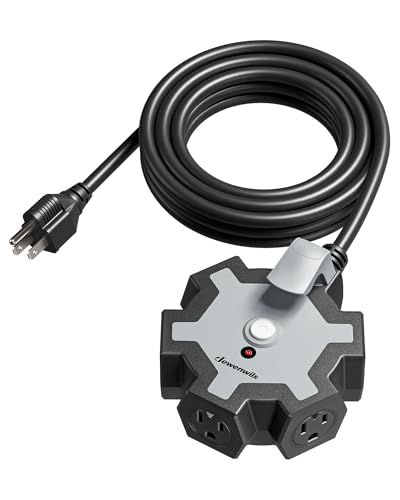
DEWENWILS 15-Foot Industrial Power Strip

DEWENWILS Metal Power Strip Surge Protector

DEWENWILS 8-Outlet Metal Strip With USB

DEWENWILS Long Power Strip, 6-Foot Cord

DEWENWILS 10-Outlet Metal Surge Protector
The Details Behind The Selections
The 25-foot cord gives a basement workbench, dehumidifier area, or storage wall much more placement freedom than a six-foot strip. Six grounded outlets are divided across two sides, so bulky adapters have room to sit without fighting neighboring plugs. That spacing makes the design more practical during busy workshop sessions, where several tools may share one temporary power hub.
Compared with the DEWENWILS 15-Foot Industrial Power Strip, this model supplies substantially more reach, making it the stronger fit for unfinished rooms and distant work zones. The trade-off is its larger footprint, which may take more time to coil and store. Assuming a standard 15-amp branch circuit, its 1,875-watt capacity suits many common household and light workshop loads.
A Strong Showing
- The 25-foot reach reduces the need to daisy-chain cords across a room.
- Six outlets support tools, chargers, and household equipment in one location.
- Widely separated sockets accommodate bulky workshop adapters.
- A resettable 15-amp breaker responds to overloads and short circuits.
Minor Gripes
- The long cable requires careful looping during storage to prevent tangling.
- Six outlets may still be limited for a large entertainment wall or workshop bank.
Key Specs
Built With In Mind
This model suits basement DIYers who need long reach, multiple outlets, and room for large power adapters.
A Better Fit Elsewhere
Choose the DEWENWILS 15-Foot Industrial Power Strip instead for a smaller footprint and a less demanding storage routine.
A 15-foot lead lands neatly between the generous reach of the first DEWENWILS option and the shorter reach of the six-foot strip. Its five sockets form a circular hub, leaving useful separation between adjacent plugs. That layout works well for portable tools, battery chargers, a bench light, or a temporary entertainment station.
The supplied option is a two-pack, so separate work areas can each have dedicated power without carrying one long strip between rooms. One item may still be enough for a single toolbench, depending on your storage and reach. Compared with the DEWENWILS 6-Outlet Power Strip, 25-Foot Cord, it trades ten feet of reach for a more manageable cable and a tighter outlet arrangement.
What Stands Out
- The two-pack supports separate basement and workshop zones.
- Five circularly arranged outlets help reduce plug crowding.
- A 15-foot lead provides useful middle-ground reach.
- The resettable breaker adds an accessible overload reset.
Small Caveats
- Five outlets are fewer than the six-outlet 25-foot model.
- Owners managing two cords still need separate storage for each unit.
Quick Facts
Made For
You’ll get the most value from this model in a garage, basement workshop, or craft room with moderate distance from an outlet.
Swap It Out When
The DEWENWILS 6-Outlet Power Strip, 25-Foot Cord offers a better fit when maximum reach matters more than managing a two-pack.
A metal housing gives this strip a more substantial feel than a lightweight plastic power block, which can be reassuring in a utility room or workshop. Six grounded outlets handle entertainment equipment, routers, charging bricks, and household appliances. Two positions provide extra spacing for larger plugs that would otherwise crowd the row.
Surge protection, defined as circuitry that diverts or limits voltage spikes, is rated at 900 joules here. An indicator shows its operating status, while a manual reset and off control manages the 15-amp breaker. Unlike the DEWENWILS 8-Outlet Metal Strip With USB, this model lacks USB charging ports, so plan on keeping wall adapters for phones and speakers.
Where It Delivers
- The metal shell suits utility rooms and frequently handled work areas.
- Six grounded outlets support mixed household devices.
- Two spaced sockets accommodate bulky adapters.
- Surge protection adds a layer of support for sensitive electronics.
Worth Noting
- The listed information does not provide a cord length, so room layout deserves attention.
- USB charging would require separate wall adapters.
Who It Suits Best
This option fits basement media areas where a metal enclosure, surge protection, and six grounded outlets matter more than built-in USB ports.
Where A Sibling Pick Shines
The DEWENWILS 8-Outlet Metal Strip With USB serves you better when charging several USB-accessible devices at once.
Eight outlets make this the most flexible mixed-device option in the group, especially for a finished basement with a television, game system, speakers, router, and several chargers. Three widely spaced positions leave room for bulky power bricks. The metal enclosure also fits a workshop cabinet or entertainment console where a plastic strip may look out of place.
Two covered USB ports reduce the need to occupy wall outlets with basic charging adapters. That’s convenient in a media room, though the ports add only one charging method and do not expand the strip’s 15-amp AC capacity. Compared with the DEWENWILS Metal Power Strip Surge Protector, it raises outlet count and surge capacity while adding USB convenience.
What Makes Sense
- Eight outlets reduce the need for a second power block.
- Two USB ports simplify everyday device charging.
- Three wide spaces accommodate larger adapter plugs.
- The 1,440-joule surge rating suits mixed electronics.
Points To Note
- USB ports are useful only for devices and cables that support them.
- Owners should keep dust away from covered ports during long-term storage.
- The supplied details do not state the cord length.
Feature Snapshot
The Right Fit
You’ll appreciate this model in a finished basement or media room combining several powered devices with frequent USB charging.
Consider Something Else When
The DEWENWILS 10-Outlet Metal Surge Protector is a stronger match for a room with more AC appliances and little need for USB ports.
A six-foot lead fits beneath a desk, along a basement shelf, or beside a compact workbench without taking over floor space. The 14-gauge cord supports a 15-amp, 125-volt load, and the wide spacing makes room for larger plugs. That combination makes it a sensible local hub rather than a long-distance connection.
For sensitive equipment, 600 joules of surge protection adds useful voltage-spike handling, while indicator lights show grounding and surge status. Compared with the 15-foot DEWENWILS industrial strip, the shorter lead is easier to route around furniture but reaches much less far. In tight spaces, that focused reach may matter more than maximum flexibility.
Practical Pluses
- The six-foot cord fits neatly under desks and shelving.
- Wide socket spacing helps with large adapters.
- Surge and grounding indicators make status easier to check.
- The reset breaker can be restored after an overload clears.
Possible Compromises
- Six feet offers limited reach from wall outlets.
- The 600-joule rating is lower than the 1,440-joule options.
- Several heavy loads could demand a more substantial circuit.
Who Should Grab It
This strip fits compact basement desks, shelving units, and work areas positioned close to a wall outlet.
Look Elsewhere When
The DEWENWILS 6-Outlet Power Strip, 25-Foot Cord offers a better fit for unfinished rooms where distance dictates the layout.
Ten grounded outlets turn this strip into a central hub for a finished basement entertainment wall, exercise corner, utility shelf, or extensive tool setup. You can organize numerous wall-powered devices around one reset control, while two spaced outlets accommodate bulky adapters. Its metal housing also suits rooms where the strip will remain visible or be handled often.
The 1,440-joule surge protection matches the eight-outlet model, providing more shared surge capacity than the lower-rated options. A resettable 15-amp breaker handles overload conditions, but the full 1,800-watt capacity applies across the strip rather than to each outlet. Compared with the DEWENWILS 8-Outlet Metal Strip With USB, you gain two AC outlets and lose USB charging.
Strong Points
- Ten outlets suit large device groups without another hub.
- Spaced sockets reduce competition between large plugs.
- The metal housing suits workshop and utility-room storage.
- Higher surge capacity fits broader mixed-device setups.
Trade Offs To Consider
- The larger housing takes more shelf or wall space.
- USB-dependent devices still require charging adapters.
- Several high-draw appliances can overload the shared breaker.
Technical Highlights
Whose Shelf It Belongs On
This model serves home-office, entertainment, and utility setups that need many grounded AC outlets in one compact hub.
Another Choice May Suit
The DEWENWILS 8-Outlet Metal Strip With USB fits you better when two USB ports matter more than the two additional AC outlets.
What Basement Power Distribution Actually Requires
Start with reach. Measure from the wall outlet to the intended equipment location, then add enough slack to route the cord around trim, furniture, and work surfaces. A 25-foot strip handles distant walls, while six feet works better beside a desk or shelving unit. Cord diameter also matters, since a 14-gauge lead provides a useful margin for heavier loads than a lighter cord.
Next, separate circuit capacity from outlet count. A 15-amp strip rated at 1,875 watts shares that capacity across every connected device. Several moderate loads can add up quickly, so avoid assuming that ten outlets permit ten full-capacity appliances. High-draw heaters, power tools, and entertainment systems need careful load management on a standard branch circuit.
Outlet spacing determines how cleanly the strip works. Wide spaces accommodate large charging bricks and industrial adapters without preventing neighboring plugs from seating. That matters in a basement workshop where several battery chargers share one hub, and in a media area where power supplies can be wider than expected.
Finally, decide how much surge protection your devices require. Higher joule ratings indicate greater surge-handling capacity, which is useful around computers, televisions, network equipment, and other sensitive electronics. The metal housing options also suit high-use utility rooms, though a damp location still calls for careful placement and dry connections.
Buying Mistakes To Avoid In Basement Extensions
Common Shopping Slip Ups
Measuring only the straight-line distance can leave too little cable for a routed path. Map corners, furniture, and doorways before choosing a length, then route the extension to prevent tight bends and trip hazards.
Overloading is another common error. Add the wattage of connected equipment and keep the total below the strip’s stated capacity. A larger outlet count does not create additional circuit capacity.
What Separates Premium From Basic
Higher-rated models add surge capacity, heavier cord construction, metal housings, or more widely spaced sockets. Those upgrades suit basements with sensitive electronics, frequent tool use, and crowded outlet layouts. A compact strip near a wall outlet can be enough when the equipment mix and reach requirements remain modest.
Frequently Asked Questions
How Long Should An Extension Cord Be For A Basement?
Measure the full routing path rather than the straight-line distance to the wall outlet. Add enough slack to avoid sharp bends, crowded walkways, and tension at either connection point.
Do More Outlets Increase The Power Capacity?
No. The strip’s amperage and wattage ratings apply to the combined connected load. Ten outlets provide more connection positions, not ten separate 15-amp circuits.
Which Cord Works Best For Workshop Tools?
A 14-gauge cord rated for 15 amps provides a practical capacity match for many common workshop setups. Keep the combined tool load within the rating and use a properly rated circuit.
Is Surge Protection Useful In A Basement?
It adds protection for sensitive electronics against sudden voltage spikes. Its value rises around computers, televisions, network gear, and other equipment with circuit boards.
Should A Basement Extension Cord Be Stored Loosely?
Loose storage helps prevent twisting, kinks, and insulation damage. Loop or coil the cord gently after disconnecting every load, and keep it away from standing water.
