
Heat Guns serve different purposes despite sharing the same basic name. High-output hot-air tools suit plastic welding and roofing repairs, compact models fit craft and electronics work, and soldering guns provide controlled heat for joining electrical components. Your task, material, and control needs should determine which one deserves a place in your toolkit.
A Fast Comparison Of The Options

LEMOTE 1600W 110V Plastic Welding Heat Gun

LEMOTE 1600W 110V Six-Set Heat Gun Kit

TorqTac 400W Mini Heat Gun

Weller D650PK 300-Watt Soldering Gun Kit
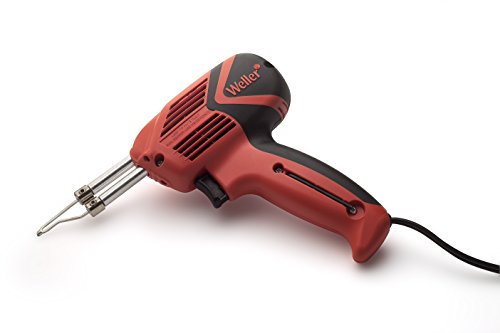
Weller 9400PKS 140W/100W Soldering Gun Kit

Weller D550 Dual Heat Soldering Gun
A Breakdown Of The Leading Choices
Building plastic assemblies or repairing roofing material calls for sustained airflow and a broad temperature range. This LEMOTE model combines 1,600 watts of power with adjustable heat up to 650°C, making it more specialized than the compact TorqTac option reviewed later.
Its 1.27-kilogram weight and three-meter cord balance stationary bench work with reasonable freedom of movement. Depending on your technique, the included flat nozzle and silicone pressure roller can support both heating and seam-finishing tasks.
What Earns Its Place
- The 0–650°C range covers many plastic-welding and heat-forming tasks.
- Maximum airflow of 260 liters per minute supports demanding fabrication work.
- Static pressure of 3,000 Pa helps direct heat through a narrow nozzle.
- The included roller adds value for controlled plastic seam work.
- A three-meter cord reduces the need to remain close to a wall outlet.
Worth Noting
- The listed noise level stays below 67 dB, so high-output work can still be loud.
- A replacement heating element is included, though the nozzle and roller remain task-specific accessories.
Key Specs
Built With In Mind
This model suits DIYers and repair technicians who regularly join plastic, repair roofing material, or perform fabrication bench work.
Where Another Pick Shines
Choose the TorqTac 400W Mini Heat Gun instead for compact electronics work and heat-shrink applications that need lighter, more localized heat.
Multiple LEMOTE tools make sense in a busy household, classroom workshop, or maintenance operation where equipment gets shared. This package is listed as a six-set, 1,600-watt, 110V kit, giving you several units for plastic and roofing work rather than one heavily used tool.
The available operating guidance emphasizes beginning at the lowest level, letting the barrel cool with airflow, and avoiding contact with the hot barrel. The approach suits organized crews, although the limited material details make the package less transparent than the single-tool LEMOTE model.
Notable Upsides
- Six sets provide practical distribution across a shared workshop.
- The 1,600-watt output targets more demanding heating tasks than a 400W mini gun.
- A shared fleet reduces downtime caused by a single damaged tool.
Small Caveats
- Owners must let the barrel cool before shutdown to follow the listed operating guidance.
- Storage space becomes a real issue when six full-size units share a cabinet.
- Fewer accessory and airflow details are provided than for the single-set LEMOTE model.
- Independent labeling and organization of each tool may be necessary in a shared shop.
Made For
Shared workshops, repair crews, and busy households benefit most from keeping several complete heat guns available.
Another Choice May Suit
One household needing occasional plastic repairs will likely find the single LEMOTE 1600W model easier to store and manage.
A crowded workbench makes the TorqTac 400W Mini Heat Gun more appealing than either 1,600-watt LEMOTE option. Its compact body and low-power design support craft projects, electronics maintenance, and heat-shrink tubing without occupying a full equipment corner.
Two temperature settings cover 300–556°C, giving you a choice between lower and higher heat. The included curved nozzle and tubing make the tool more useful out of the box, though its smaller output rules it out for heavy plastic welding.
Positive Points
- The lightweight form remains easier to hold during long crafting sessions.
- Dual settings help you match airflow and heat to the material.
- A curved nozzle supports focused work around connectors and small components.
- Included heat-shrink tubing gives you material for a common electronics task.
Practical Considerations
- The 400W rating is modest beside the two LEMOTE plastic-welding models.
- Compact size may limit positioning around larger or bulky assemblies.
Quick Facts
Right Fit For
Crafters, electronics hobbyists, and apartment dwellers benefit from its compact frame and focused accessory set.
Reach For A Different Pick When
Choose the LEMOTE 1600W 110V Plastic Welding Heat Gun for sustained seams, roofing repairs, and larger plastic components.
The D650PK belongs on a repair bench rather than in a small craft drawer. Its 300-watt soldering-gun format applies concentrated heat through a replaceable soldering tip, making it more purpose-built for wire connections and electrical assemblies than broad-airflow heat guns.
A pistol-grip shape can support steady bench work, although the sparse listing details leave heating time and tip options unconfirmed. Compared with the 9400PKS, this model’s defining strength is its higher stated output, which may suit larger joints and demanding service tasks.
Noteworthy Benefits
- The 300-watt rating provides substantial heat for soldering applications.
- Focused tip heating differs from the wide airflow produced by hot-air guns.
- The pistol format can feel natural during prolonged bench sessions.
Details To Watch
- Keep replacement tips dry and free of residue to support reliable heat transfer.
- Its 300-watt output is excessive for small, heat-sensitive electronics work.
- The available listing provides limited detail about included accessories.
Who Will Love This
Electronics repair technicians and experienced hobbyists benefit from the concentrated output and dedicated soldering-gun format.
A Better Fit Elsewhere
The Weller 9400PKS offers a clearer dual-power choice and built-in lighting for mixed electronics work.
The 9400PKS balances two power levels with visibility features that are genuinely useful on a crowded electronics bench. Its 140W and 100W trigger positions let you choose stronger heating or a lower setting for lighter connections, depending on the component and your working method.
Three built-in LEDs reduce tip shadow where cables and enclosures often block light. A listed six-second warm-up period also shortens setup between jobs, while the WXP65 tip and soft pistol grip suit technicians who alternate between connectors and larger electrical joints.
A Strong Showing
- Two trigger positions provide more control than a fixed-output design.
- Built-in LEDs illuminate joints tucked inside housings or crowded assemblies.
- The six-second warm-up claim supports faster workstation transitions.
- The non-slip grip supports comfortable control during detailed repairs.
- Compatibility with WXP65 tips broadens future replacement options.
Possible Compromises
- Its 140W maximum output is lower than the D650PK’s stated 300W.
- Tip maintenance remains important because residue can interfere with solder flow.
Technical Notes
Built With In Mind
This model serves electronics hobbyists and service technicians who need adjustable heat and clear visibility.
Swap It Out When
Choose the Weller D650PK instead for heavier connections that benefit from its higher 260W or 200W output settings.
The D550 brings selectable heat to repeated bench work, filling the gap between the 9400PKS’s 140W maximum and the D650PK’s 300-watt output. Its 260W and 200W settings let you match the available heat to different terminal sizes and joint demands.
For technicians moving through a queue of control boards, power connections, or service work, that control can be more useful than carrying multiple tools. A listed six-second warm-up period helps maintain momentum, while fingertip trigger operation places heat control directly under your hand.
Bright Spots
- Selectable 260W and 200W levels support different joint requirements.
- The six-second warm-up period supports fast bench turnover.
- Dual heat options reduce the need to change tools between lighter and heavier jobs.
- Fingertip trigger control keeps adjustment within reach.
Where It May Fall Short
- The listing does not mention built-in lighting, unlike the 9400PKS.
- Both settings may be more than delicate circuit work requires.
- Replaceable tips still need regular inspection and residue-free cleaning.
Feature Overview
Whose Shelf It Belongs On
Repair benches, maintenance departments, and advanced electronics workrooms benefit from its two-stage output.
Consider Something Else When
The Weller 9400PKS fits you better when built-in lighting and lower power settings matter more than maximum output.
What To Prioritize Before Choosing
Match The Tool To The Task
Hot-air welding guns move heated air across a broad area, which suits plastic seams, roofing materials, and heat-shrink applications. Soldering guns concentrate heat at a metal tip, making them more appropriate for electrical terminals and wire joints. Treat the two formats as different tools rather than interchangeable versions of the same device.
Check Heat And Airflow Controls
Adjustable temperature helps prevent a fixed setting from overheating smaller parts. Airflow matters just as much because too little movement can leave the nozzle hot while the workpiece remains below the required temperature. The TorqTac’s two settings suit compact work, while the LEMOTE offers broader adjustment for plastic fabrication.
Consider The Work Area
A garage bench can accommodate a full-size tool, three-meter cord, and separate pressure roller. Apartment work calls for a smaller body that stores easily, such as the TorqTac. Six full-size LEMOTE tools make sense only where storage and shared access have already been arranged.
Match Power To Joint Size
Soldering-gun wattage indicates electrical input, not the temperature reaching the work. Larger terminals and heavier solder may benefit from higher-output models, while compact electronics often favor lower settings. Confirm tip compatibility, warm-up behavior, voltage, and your most common joint size before choosing.
Heat Tool Details That Prevent Regret
Pitfalls Shoppers Hit
Choosing by power alone can leave airflow, temperature control, storage, and accessories unresolved. Check whether your task needs concentrated tip heat or wide hot-air flow, and confirm that the cord suits your work area. Never use a tool near combustible material, and keep the nozzle directed away from people and sensitive surfaces.
What Separates Premium From Basic
Higher-output models mainly add heat capacity, faster warm-up behavior, adjustable power, or task lighting. Those details matter during repeated professional work but may be unnecessary for occasional crafting. Your workload and required attachments should determine whether an upgrade is useful.
Frequently Asked Questions
Can A Heat Gun Melt Plastic?
Yes, some heat guns soften or melt plastic, while plastic-welding kits add nozzles and rollers for joining pieces. Temperature control and airflow determine how precisely the material responds.
Are Heat Guns And Soldering Guns The Same?
No. A heat gun moves hot air across an area, while a soldering gun transfers heat through a metal tip. Choose the format that matches your material and joint.
What Does Airflow Mean In A Heat Gun?
Airflow describes the volume of heated air moving through the tool. Higher airflow can distribute heat more consistently, while lower or localized airflow gives you greater control around small components.
Do I Need Adjustable Temperature?
Adjustable temperature is valuable when you handle different plastics or electronic components. A fixed setting can be workable for one repetitive task, yet it offers less flexibility as materials change.
Can You Use A Heat Gun Outdoors?
Only in a suitable area with dry conditions, secure materials, and ample ventilation. Keep people and flammable objects away from the hot nozzle, and do not use weather-exposed electrical equipment.
