
Contractors need drilling tools that fit the job, not simply everything in one oversized bag. A hammer drill handles masonry, a compact drill driver handles everyday fastening, and a rotary hammer tackles concrete demolition with very different levels of force and control. This roundup covers those distinctions, with cordless convenience and corded muscle power both represented.
The Leading Options At A Glance
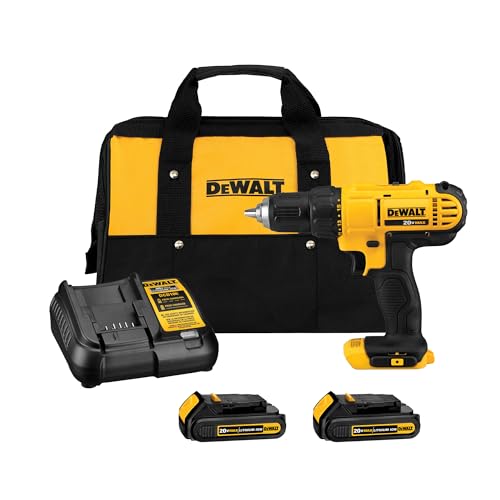
DEWALT 20V MAX Cordless Drill Driver Set DCD771C2

DEWALT 20V MAX Drill and Impact Driver Combo Kit DCK240C2
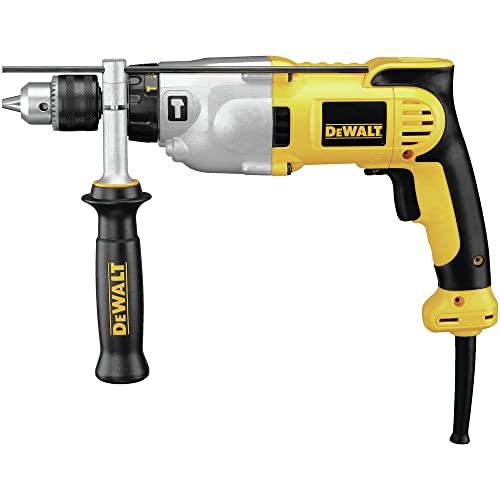
DEWALT 1/2-Inch 10-Amp Hammer Drill DWD520

DEWALT 20V MAX 5-Tool Combo Kit DCK551D1M1

XtremepowerUS 1180W SDS-Plus Demolition Hammer Kit

DEWALT 20V MAX Brushless Drill Driver DCD777D1
A Closer Look At Each Pick
The DCD771C2 handles cabinet installation, wall anchors, framing fasteners, and repetitive drilling without requiring a wall outlet. Its compact 20V MAX drill/driver body is easier to control in cabinet interiors and other confined work areas.
This isn’t a dedicated hammer drill, so masonry impact mode isn’t part of its job. Compared with the larger systems later in this list, it prioritizes portability, straightforward operation, and a contractor bag for organized transport.
Practical Advantages
- The two-speed transmission balances faster drilling with controlled fastener driving.
- Two compact 1.3Ah batteries allow one to charge while the other supports continued work.
- The 20V MAX platform offers cordless freedom around ladders, unfinished rooms, and outdoor job sites.
- A contractor bag helps contain the drill, batteries, charger, and loose accessories.
Points To Note
- The smaller batteries provide less sustained output than the 2.0Ah and 4.0Ah packs in the five-tool kit.
- Concrete and brick work calls for the DEWALT DWD520 or a rotary hammer rather than this drill/driver.
- Keep the chuck and battery contacts clean, particularly on dusty framing sites.
Feature Snapshot
Made For
You benefit most from this set during residential renovation, finish carpentry, cabinet installation, and general fastening that fits within a compact drill/driver.
A Better Fit Elsewhere
Choose the DEWALT DCK551D1M1 instead when your work routinely includes cutting, reciprocating, and oscillating tasks beyond drilling and fastening.
Pairing a compact drill/driver with a 1/4-inch impact driver gives you more useful coverage than a single drill on framing or remodel sites. The impact driver adds rotational force, a technical feature commonly called impact energy, for driving long screws into dense lumber.
It sits in a practical middle ground: broader than the DCD771C2 alone but lighter in tool count than the DCK551D1M1. You still won’t get a masonry hammer mode from this pair, depending on your recurring drilling needs.
Features That Help
- Separate drill and impact-driver functions support precision drilling and high-force fastening.
- Two batteries improve workflow during a full shift without a cord.
- The matching 20V MAX platform simplifies battery and charger management.
- The carrying bag keeps the main tools together between installations.
Worth Noting
- An impact driver isn’t a substitute for a hammer drill because it doesn’t provide a masonry impact setting.
- Large-diameter holes in structural lumber can remain demanding in ordinary drill mode.
- A common ownership habit is to wipe dust from vents and contacts after prolonged drywall or masonry work.
Right Fit For
Framers, trim carpenters, remodelers, and service technicians get the strongest fit from this combo’s division between drilling and repetitive fastening.
Another Choice May Suit
The DEWALT DCD777D1 is the cleaner choice for a single compact drill/driver with a brushless motor and 1/2-inch chuck capacity.
The DWD520 is the most conventional hammer drill here, combining a 10-amp motor with a 1/2-inch chuck for concrete anchors, masonry holes, wood, and steel. Hammer mode adds rapid impacts that help masonry bits break through brittle cementitious material.
That corded design makes it well suited to a garage, unfinished interior, or fixed workstation, though mobility drops outside those settings. The soft-grip handle and two-finger trigger support control, but the honest read is that this remains a full-size tool rather than an overhead-friendly compact.
Notable Upsides
- Dual-mode operation changes between ordinary drilling and impact-assisted masonry work.
- The 1/2-inch chuck accepts a broader range of drill bits and masonry bits than many compact drills.
- Constant corded power suits repeated drilling where battery packs would become an added interruption.
- The overload-protection design focuses on motor durability during demanding use.
Small Caveats
- Its cord limits freedom on ladders, outdoor installation areas, and large job sites.
- No impact driver is included for driving structural screws.
- For heavy concrete chiseling, the XtremepowerUS rotary hammer has a more specialized design.
Key Specs
Who Will Love This
You get the best fit from this hammer drill when anchor installation and masonry drilling occur near a reliable outlet in a workshop or partially finished building.
Reach For A Different Pick When
The DEWALT DCK240C2 is more suitable for cordless framing and fastener work where you need an impact driver rather than sustained masonry drilling.
This kit spreads across common remodel tasks with a drill/driver, impact driver, reciprocating saw, 6-1/2-inch circular saw, and brushless oscillating multi-tool. The 6-1/2-inch circular saw can crosscut 2×4 material at a 45-degree angle in one pass, according to the supplied model information.
Its 2.0Ah and 4.0Ah batteries offer a useful balance between compact handling and longer runtime. The tradeoff is bulk: a five-tool bag may be excessive for a specialist who only needs a compact drill and impact driver.
What Earns Its Place
- Five tools cover drilling, fastening, cutting, pruning, and flush-cutting or scraping tasks.
- Two battery capacities give you a smaller pack for light work and a higher-capacity option for heavier jobs.
- The brushless multi-tool is useful for controlled material removal where a larger saw would be cumbersome.
- Everything shares the 20V MAX platform, limiting the need for separate battery systems.
Trade-Offs To Consider
- The package does not provide a dedicated corded hammer drill for intensive masonry work.
- Five tools create a larger carrying and charging workload than a focused two-tool kit.
- Owners commonly keep blades, bits, and battery contacts clean to prevent reduced performance from construction dust.
Feature Facts
Built With In Mind
This bundle serves remodelers, property-maintenance teams, and finish contractors who rotate among drilling, fastening, cutting, and detail work.
Where A Sibling Pick Shines
The DEWALT DWD520 is the better fit for contractors whose priority is sustained anchor drilling and masonry impact mode with corded power.
This SDS-Plus rotary hammer is built for concrete drilling, brickwork, tile removal, plaster removal, and chiseling rather than ordinary cabinet fastening. Its 1,180-watt motor and 20-joule impact energy give it a more forceful operating character than the DWD520.
The included case, chisels, and drill bits make it a more self-contained demolition package, which is useful on renovation days that mix drilling with material removal. For a single professional specialty, its focused design is sensible; as an everyday carry, it’s too specialized.
Where It Excels
- Twenty-joule impact energy targets heavy concrete, masonry, and demolition applications.
- The 1-1/4-inch SDS-Plus platform supports appropriate rotary bits and chiseling attachments.
- Drilling and demolition functions in one tool reduce equipment changes during renovation work.
- A carrying case keeps the accessory set organized between contracted jobs.
Details To Watch
- It’s substantially more specialized and potentially cumbersome than a cordless drill/driver.
- Continuous rotary-hammer use calls for regular ventilation around the motor housing.
- SDS-Plus accessories must match the chuck system; ordinary hammer-drill bits won’t fit.
Made For
Masonry contractors, demolition crews, and renovation specialists get the strongest fit for repeated concrete drilling and chiseling work.
Look Elsewhere When
The DEWALT DCD777D1 fits you better for general-purpose cordless drilling, fastening, and access inside cabinets or electrical enclosures.
The DCD777D1 combines a 340-unit workpiece output rating, a 1/2-inch chuck, two-speed transmission, and a brushless motor in a compact cordless body. That combination makes it the most balanced single drill/driver here for everyday contractor tasks from anchors to finish work.
A brushless motor uses electronic controls rather than carbon brushes, supporting improved runtime relative to a comparable brushed design. The supplied 2.0Ah battery keeps the package simple, although an additional pack would reduce charging interruptions during a full day.
Practical Pluses
- The brushless motor supports efficient operation across general drilling and fastening.
- A 1/2-inch chuck provides a useful middle ground for everyday bits and larger boring applications.
- The compact shape improves access inside cabinets, walls, and other tight work areas.
- The two-speed transmission lets you control speed according to the drilling or driving task.
- An LED light supports visibility inside dark work areas.
A Few Limitations
- It lacks a masonry impact setting despite its larger chuck capacity.
- Only one 2.0Ah battery is included, so charging pauses are more likely on a continuous workload.
- Periodic chuck cleaning helps maintain grip after dusty masonry or fabrication work.
Quick Facts
The Right Fit
General contractors, installers, and finish trades benefit most from a portable drill/driver that handles mixed drilling and fastening without specialized masonry mode.
Swap It Out When
The XtremepowerUS 1180W SDS-Plus Demolition Hammer Kit is the better fit for concrete chiseling and heavy masonry work that exceeds a drill/driver’s intended range.
What Matters Before Choosing A Hammer Drill
Chuck capacity determines the largest bit shank you can mount. A 1/2-inch chuck accepts a broader range of boring and masonry bits than a compact 1/2-inch drill/driver, while a smaller chuck may be more convenient for fastening accessories.
Power delivery should follow the material and trigger frequency. Drill mode is suited to wood, steel, and ordinary holes, while hammer mode adds impacts for masonry. A rotary hammer goes further for concrete drilling and chiseling.
Portability depends on the job’s power demands and access to charging. Cordless tools remove extension cords and make ladders, outdoor areas, and unfinished rooms easier to work in, while corded models provide steady output near an outlet.
Tool-system compatibility can matter more than the individual machine. Matching 20V MAX tools and batteries lets you charge or carry fewer pack types. Include a second battery for trades that consistently use the drill throughout a shift.
Matching Tool Type To The Work
Mistakes Worth Dodging
Choosing an impact driver for masonry is a common mismatch because its rotating impact is designed primarily for fasteners. Check the material, bit type, and chuck compatibility before adding a tool to your kit.
Overlooking battery count also disrupts work more than many shoppers expect. A second 2.0Ah or 4.0Ah pack can keep drilling underway while another charges, particularly during long renovation days.
What Separates Premium From Basic
Brushless motors, stronger chucks, variable speed control, and specialized impact systems improve the tool’s operating range. Those additions matter most for frequent use, dense materials, or repetitive fastening.
For occasional cabinet installation, a compact drill/driver is often enough. Demolition and concrete work justify spending more on a dedicated rotary hammer or fuller cordless combination package.
Frequently Asked Questions
Are cordless hammer drills suitable for contractor work?
Cordless models suit sites without reliable power and many finish tasks. Heavy concrete drilling favors a corded hammer drill or rotary hammer with sustained power.
What chuck size handles common anchors?
A 1/2-inch chuck offers useful versatility for masonry anchors, boring bits, and common drill bits. A smaller chuck may be enough for your usual fasteners and pilot holes.
Is an impact driver a hammer drill?
No. An impact driver concentrates on driving long fasteners, while a hammer drill uses impact-assisted rotation to penetrate masonry.
Should contractors share one battery platform?
A shared platform simplifies charging, carrying, and spare-purchase decisions. It matters most when your work regularly moves between several cordless tools.
Are five-tool kits worth the extra weight?
A five-tool kit is useful for broad remodel work and mixed trades. Focused drill users often gain more flexibility from a smaller set with a second battery.
