
6 Essential Wall and Moisture Detection Tools
Finding a stud or checking hidden moisture calls for more than a basic magnet. These six options serve distinct roles: four measure dampness, while the FOLAI, Jurgen K, and Zircon tools locate framing and wiring behind finished surfaces. You’ll want a pinless moisture meter for quick surface scans, pin-style probes for direct material checks, or a wall scanner for hanging shelves and mounting hardware. The list combines focused moisture tools with multi-function scanners, so you can select the instrument that matches your project instead of forcing one device to handle every wall.
The Essentials At A Glance

General Tools MMD7NP Moisture Meter
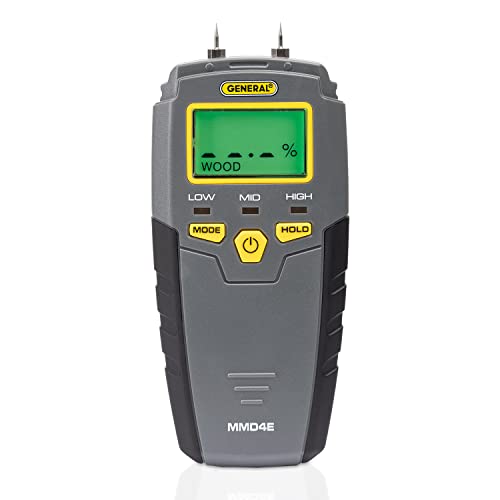
General Tools MMD4E Pin Meter

FOLAI 5-in-1 Smart Wall Scanner
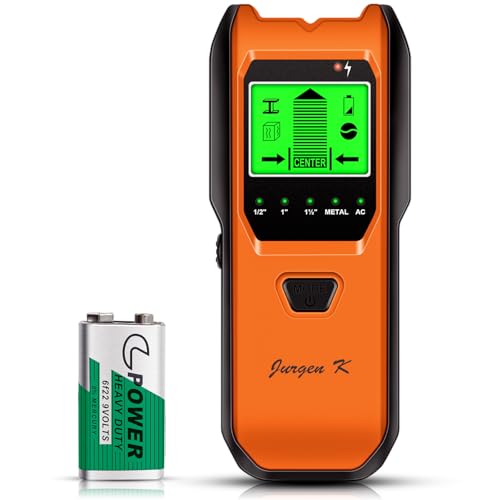
Jurgen K 5-in-1 Smart Stud Locator, Orange

Zircon StudSensor e50 Live Wire Stud Finder

General Tools MMD950 Pin and Pinless Meter
What Each Pick Brings To The Table
The MMD7NP favors fast, non-invasive checks, meaning it scans across a surface without leaving pin holes. That approach suits landlords, homeowners, and maintenance teams moving around a basement, bathroom, or recently repaired wall after a spill.
Unlike the MMD4E later in this list, the MMD7NP keeps the inspection surface undisturbed. For a first sweep of a large area, it looks more convenient, although you may want a pin meter later for a closer material reading.
Where It Excels
- Pinless operation allows broad scans without puncturing finished surfaces.
- The handheld format suits routine checks around plumbing leaks and damp areas.
- It offers a practical starting point before you decide which materials need closer attention.
Points To Keep In Mind
- Surface readings can vary with material, thickness, and contact conditions, so compare nearby areas rather than relying on one number.
- Wipe the sensing area before use because surface dirt can affect consistent contact.
Made For
You benefit most from the MMD7NP during quick, non-invasive inspections of finished walls, floors, and large suspect areas.
Consider Something Else When
The General Tools MMD4E suits you better when direct pin measurements in wood, drywall, or subfloor materials are the priority.
Direct measurements make the MMD4E a different tool from the MMD7NP. Its stainless steel pins enter the test material, which can be useful when checking wood, concrete, drywall, or a subfloor rather than merely scanning the surface.
The compact body fits one hand, while the LCD gives you a straightforward numerical result. For contractors, woodworkers, and methodical homeowners, that direct approach is the honest reason to choose it over a non-invasive model.
Where It Helps
- Metal pins support direct measurements in several common building materials.
- The one-hand format keeps repeated checks manageable during inspection work.
- A readable LCD reduces the guesswork associated with simple indicator lights.
- It is better suited than the MMD7NP to small, targeted test areas.
Minor Gripes
- Puncture marks make it unsuitable for finished surfaces you intend to preserve.
- Clean and dry the pins after use to limit residue and surface corrosion.
Right Fit For
You’ll find the MMD4E most useful for building-material checks where two pin probes provide more relevant information than a surface scan.
A Better Fit Elsewhere
The General Tools MMD7NP is the easier choice for you when scanning broad finished areas without making holes.
Moving from moisture meters to wall scanning, the FOLAI targets concealed framing, pipes, reinforcement, and wiring. Five modes cover different materials, and the listed scan depth reaches 60 millimeters, which matters for thicker walls and deeper framing layouts.
The HD LCD and audio alarm give you both visual and audible guidance while the sensor moves across a surface. Compared with the simpler Zircon e50 later, this model carries a broader material menu, though the stated depth is less clearly defined by mode.
Where It Delivers
- Five modes cover wood framing, metal pipes, reinforcement, and live AC wiring.
- A listed 60-millimeter depth supports deeper scanning than a shallow surface pass.
- The LCD helps track changing signals more precisely than sound alone.
- An audible alarm reduces the need to stare continuously at the display.
- Battery operation supports mobile use around renovation areas.
Things To Weigh Up
- Multiple modes can complicate comparisons between materials, so select the appropriate setting before scanning.
- Store the unit dry and remove the battery during long periods without use.
Feature Snapshot
Built With In Mind
The FOLAI scanner fits DIYers handling shelves, wall mounting, and renovation checks that may involve several concealed material types.
Reach For A Different Pick When
The Zircon StudSensor e50 suits you better when defined depth figures and dedicated live-wire warning are your main priorities.
The Jurgen K scanner turns a basic stud search into a broader concealed-material scan. Its five functions target stud and joist edges, metal, pipes, and live AC wiring behind walls, floors, and ceilings.
An HD display and audio alarm support two forms of feedback, which is useful while keeping your eyes on shelf marks or drill points. The tropical-orange finish also makes the scanner easier to identify in a crowded toolbox, a small but genuine ownership benefit.
Positive Points
- Five functions cover common framing and wiring obstacles.
- Visual and audible signals make the scan easier to follow.
- The orange finish stands out among similar dark-colored tools.
- It suits picture hanging, shelving, television mounting, and renovation planning.
Small Caveats
- No specific maximum depth is stated, making it harder to compare directly with the FOLAI or Zircon.
- Keep the housing dry and follow the selected mode consistently during repeated scans.
Who Should Grab It
The Jurgen K model suits homeowners who want audible guidance, broad material coverage, and an easy-to-spot tool for routine mounting work.
Swap It Out When
The FOLAI 5-in-1 Smart Wall Scanner offers a more suitable fit when a stated maximum scanning depth matters to your installation.
The Zircon e50 stands apart through clearly defined scanning limits. It finds wood or metal stud edges to three-quarter-inch depth, while DeepScan extends stud detection to one and one-half inches for thicker assemblies.
WireWarning signals live wiring up to two inches, giving you advance notice before committing to a drilling point. For measured installation work, those concrete limits are more informative than the broader but less quantified menus of the Jurgen K and FOLAI.
What It Does Well
- Standard stud-edge detection reaches three-quarter-inch depth.
- DeepScan mode doubles the stated stud-detection depth to one and one-half inches.
- WireWarning indicates live wire presence up to two inches.
- The LCD shows when a stud edge is approaching, helping slow the scanning pace.
Potential Drawbacks
- Its material focus is narrower than the five-mode FOLAI and Jurgen K scanners.
- Use protective eyewear and appropriate site precautions around wiring, and never treat scanner results as the sole basis for drilling.
Quick Technical Notes
Who Will Love This
The e50 fits professional installers and careful DIYers who value stated detection depths and live-wire guidance before drilling.
Another Choice May Suit
The FOLAI 5-in-1 Smart Wall Scanner suits you better for projects that also require scanning pipes, reinforcement, and several concealed material types.
The MMD950 combines pinless scanning and pin measurements in one moisture meter, giving it broader flexibility than either the MMD7NP or MMD4E. That makes it useful for carpet, ceilings, subfloors, wood, drywall, and concrete checks.
A large LCD sits alongside a 40-dot, three-color indicator bar, so you can view exact and relative information without changing tools. Its spherical pinless sensor suits broad surface sweeps, while the pin mode supports closer investigation of a suspect area.
Useful Strengths
- Dual modes support both surface scans and direct pin measurements.
- The spherical sensor helps inspect carpets, ceilings, and subfloors non-invasively.
- The large LCD and indicator bar provide two ways to interpret the measurement.
- Selectable automatic shutoff helps conserve battery life during intermittent work.
- One meter reduces the need to carry separate pinless and pin-style devices.
Trade Offs
- Using pins on finished surfaces still leaves small insertion marks.
- Clean the spherical sensor and pins after damp or dirty inspections to preserve consistent contact.
Core Details
The Right Fit
The MMD950 serves contractors, woodworkers, and homeowners who want one moisture meter for both quick scans and closer material checks.
Look Elsewhere When
The General Tools MMD4E suits you better when compact pin-only handling takes priority over dual-mode flexibility.
Choosing The Right Detection Tool
Start with the material you expect to investigate. Pinless meters are useful for fast surface scans, pin meters provide direct contact with wood or building materials, and wall scanners target framing, pipes, reinforcement, or wiring. A mixed toolset is most helpful only when your projects regularly require both categories.
Depth figures deserve close attention. A scanner listing a maximum depth can help separate nominal drywall from deeper assemblies, but the stated limit may not apply to every material or mode. Compare that number with the construction of your wall rather than assuming every scan reaches the same distance.
Display design changes the pace of installation work. An LCD supports closer interpretation, while an audio alarm lets you concentrate on the moving sensor and your marked drilling points. Devices offering both are convenient, although the extra features matter less when your projects require only ordinary stud locations.
Maintenance is simple but easy to overlook. Clean pin contacts, keep pinless sensor faces free of dust, remove batteries during extended storage, and avoid moisture inside the housing. These habits help maintain consistent contact and reduce corrosion around frequently handled probes.
Matching The Tool To The Task
A broad leak investigation begins with quick, non-invasive scanning. Once you identify a suspicious zone, dual-mode or pin-style measurements can provide a more focused follow-up. This staged approach is more efficient than making puncture marks across an entire wall.
For mounting hardware, prioritize a wall scanner with the material types and depth relevant to your project. Confirm every reading from multiple positions and account for other wall contents, especially wiring, before drilling.
Practical Details That Shape Your Choice
Mistakes Worth Dodging
Treating a stud finder as the only source for concealed-object information can lead you into a drill. Verify results, scan from several starting points, and remain alert for pipes, insulation, and wiring. A moisture meter also has limits, so compare readings with visible staining, recent leaks, and material type.
What Separates Premium From Basic
Advanced models tend to add deeper modes, larger displays, audible guidance, or multiple material detection. Those additions help during complex renovation work, while a simple moisture meter remains more appropriate for occasional surface checks. Pay for functions your next project will actually use.
