
Outdoor repairs rarely arrive neatly sorted into categories. A loose handrail may need a ferrule crimper, a damaged battery lead calls for a heavier cable tool, and weekend networking projects depend on a modular plug crimper instead. I’ve organized nine options around the conductor, terminal, and material each one handles, so I can quickly narrow the field for fence repairs, garage projects, outdoor lighting, and equipment maintenance.
The Lineup, Simplified

Tivorex 5-Blade Gutter Crimping Tool

ARROW 9.5-Inch Wire Crimper/Cutter

SOMELINE 24-8 AWG Ferrule Crimping Kit
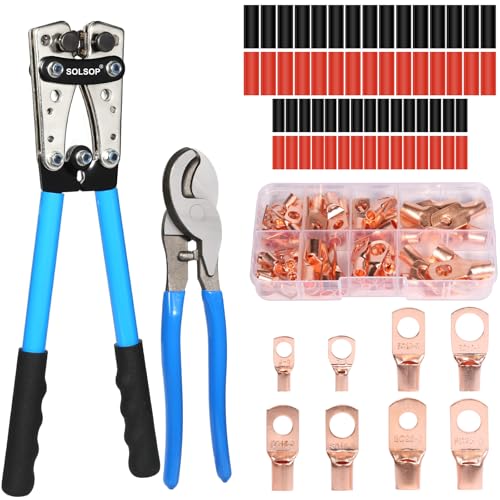
Solsop Battery Cable Crimper AWG 10-1/0

SOMELINE AWG 24-8 Ferrule Kit

Solsop Pass Through RJ45 Crimping Kit

Solsop RJ45 Crimper and Tester Kit

Solsop 10-Ton Hydraulic Crimper Kit

Sanuke Wire Rope Crimper and Cutter
Meet The Standout Selections
This hand crimper serves a different trade from the electrical tools farther down the list. I reach for it around gutters, stove pipes, and thin HVAC sheet metal, where a five-blade jaw can shape a more uniform edge than a lightweight terminal tool.
The 1.7-inch throat gives a repair technician some freedom across narrow seams, though larger sheet-metal work may exceed its opening. For homeowners restoring a downspout or metal trim, the supported 22-28 gauge range makes this a focused, useful addition to a basic tool kit.
Positive Takeaways
- Five blades support repeated, evenly formed crimps.
- The adjustable throat depth adds flexibility across sheet edges.
- Compatibility with galvanized and stainless steel broadens outdoor applications.
- Its compact hand format suits downspout, stove-pipe, and trim repairs.
Small Caveats
- It is limited to 22-28 gauge material and does not suit heavy electrical cable.
- The moving jaws need a light wipe after each session so metal residue does not settle around the crimping edges.
Technical Highlights
Right Fit
This tool best suits a homeowner or repair technician handling gutters, stove pipes, downspouts, and light sheet-metal trim.
Where Another Pick Shines
ARROW 9.5-Inch Wire Crimper/Cutter is the better fit for copper or aluminum electrical wire rather than formed sheet metal.
ARROW combines two jobs in a familiar 9.5-inch hand tool: trimming conductor and securing a terminal. That makes it more useful than a single-purpose crimper for an outdoor lighting enclosure, vehicle lead, or small control box, particularly where space for multiple tools is limited.
I see it as the most versatile general electrical option here, though the 10-22 AWG range remains much lighter than the heavy cable tools reviewed later. The dipped handle profile should help during repetitive bench work, but AWG describes conductor diameter, not a universal crimp profile for every terminal.
Strengths Worth Knowing
- Handles 10-22 AWG copper and aluminum wire.
- Works with insulated and non-insulated terminals.
- Built-in cutting reduces tool changes during panel repairs.
- Thick dipped grips suit extended terminal work.
- Forged chrome-vanadium steel provides a metal body suited to regular shop use.
Practical Considerations
- Terminal and conductor must match both the AWG range and the crimper’s die profile.
- Light-gauge wire may need more support than thicker stranded cable.
- Joint residue and grit should be brushed from the jaws during routine storage.
Made For
It fits technicians, mechanics, and homeowners making small electrical or automotive terminal repairs outdoors.
Another Choice May Suit
SOMELINE 24-8 AWG Ferrule Crimping Kit is more appropriate for a project centered on cylindrical wire ferrules.
A ferrule is a metal sleeve placed around stranded wire, so this kit targets a more specialized termination than the ARROW tool. The square crimping dies compress the sleeve around individual conductors, which matters in control cabinets, speaker wiring, and weather-resistant low-voltage enclosures.
Nine ferrule types cover AWG 24-8 wire, giving me enough variety for several small outdoor systems without carrying a separate case of every sleeve. The honest catch is terminal specificity, since ferrule length, conductor count, and die profile must align.
Strong Points
- Supports insulated and non-insulated ferrules.
- Square dies concentrate pressure around stranded wire.
- Nine included connector types support varied control-panel wiring.
Points To Note
- Wire range does not extend beyond AWG 24-8.
- A ferrule with a mismatched length or conductor count may not compress correctly.
- The storage case deserves a dry place in an outdoor workshop to limit moisture exposure.
- The larger 23-piece SOMELINE kit may reduce the need to track several sizes separately.
Key Specs
Who Should Grab It
This kit suits control wiring, low-voltage systems, and hobby projects using standard AWG 24-8 ferrules.
Reach For A Different Pick
ARROW 9.5-Inch Wire Crimper/Cutter better serves a mixed repair involving loose-ended wire and common electrical terminals.
The scale here jumps sharply from signal wiring to battery and solar cable. Six crimp positions cover AWG 10 through 1/0, making this suited to vehicle starts, outdoor equipment, and larger solar connections where a lightweight hand tool would be a poor match.
A rotating head changes dies without loose pieces, which looks helpful in a crowded garage. The 62-piece copper-lug and heat-shrink assortment supports a complete termination job, although users should still match lug geometry to the conductor size before applying substantial hand pressure.
Good Reasons To Consider
- Six die positions cover AWG 10, 8, 6, 4, 2, and 1/0.
- Metric sizes from 6 to 50 square millimeters support wire-to-wire matching.
- A rotating head keeps the active dies together during cable changes.
- Copper lugs and heat-shrink tubing cover the main installation steps.
- Hexagonal compression leaves a shaped, inspectable termination.
Trade-Offs To Consider
- The larger cable capacity makes it unnecessary for most small control wires.
- Lugs and heat-shrink pieces need sorting to keep a mixed outdoor kit organized.
Built With In Mind
It best fits vehicle, garage, and renewable-energy work involving AWG 10 through 1/0 cable.
A Better Fit Elsewhere
Solsop 10-Ton Hydraulic Crimper Kit is the stronger option for demanding terminations or AWG 2 through 2/0 conductors.
The wider SOMELINE assortment expands on the earlier nine-piece ferrule kit with 23 terminal types and a storage box. For a technician handling several panels or hobby projects, that variety reduces the need to source each sleeve separately.
Wire coverage remains AWG 24-8, so this remains a fine-wire tool rather than a battery-cable solution. The tinned copper ferrules and nylon insulating sleeves suit exposed control-panel work, but sealed outdoor boxes still deserve priority for keeping moisture away from terminations.
Useful Highlights
- Twenty-three ferrule types cover varied lengths and conductor arrangements.
- The included box helps separate small pieces after outdoor work.
- Tinned copper supports electrical conduction while adding a corrosion-resistant surface.
- Nylon sleeves add insulation to compatible ferrule assemblies.
Where It May Fall Short
- The assortment adds unused pieces for a single simple connection.
- It cannot handle the heavier conductors served by the Solsop battery tools.
- Color and length coding should be checked closely before installing in a crowded panel.
Feature Breakdown
Best Suited To
This assortment fits panel builders and hobbyists completing several AWG 24-8 ferrule terminations.
Consider Something Else
SOMELINE 24-8 AWG Ferrule Crimping Kit is leaner for someone needing only a few of the nine common ferrule types.
This tool moves away from bare electrical conductors and into modular networking plugs. A pass-through connector leaves the conductor order visible as the cable enters the plug, reducing the backtracking associated with blind terminations on outdoor cameras, access points, and weather-resistant junction boxes.
Its broad cable support runs from CAT5 through CAT7, while RJ11 and RJ12 options extend the scope to conventional telephone wire. Shielded and unshielded plug support adds useful flexibility, though the plug’s metal shielding and dovetail clip must match the connector being installed.
Positive Points
- Supports CAT5, CAT5e, CAT6, CAT6A, and CAT7 cable.
- Handles RJ45, RJ11, and RJ12 terminations.
- Visible wire order simplifies pass-through plug alignment.
- Accepts shielded and unshielded modular plugs.
Less-Strong Areas
- The broad platform may take practice on a first basic cable.
- Connector hardware must correspond with the cable’s shielding and clip style.
- Fine blade edges need protection from grit before outdoor cable work.
The Right Fit
It suits installers terminating outdoor Ethernet, voice cable, cameras, or access points near a protected junction point.
Swap It Out When
Solsop RJ45 Crimper and Tester Kit is more convenient for straightforward network plugs that also benefit from included test hardware.
Where the preceding Solsop network tool emphasizes category coverage, this package prioritizes putting a complete termination station within reach. Fifty pass-through RJ45 plugs, 50 covers, a cable tester, pliers, and a mini stripper cover the main steps for a small extension or patio-office run.
Pass-through construction preserves the visible wire sequence during insertion, which can be easier to manage than a blind crimp. For larger installations, the 50-piece quantities may disappear quickly, and the tester is more useful as a basic continuity aid than a complete diagnostic system.
Notable Gains
- Fifty RJ45 plugs and covers support multiple network runs.
- Pass-through design keeps conductor order visible.
- The included tester provides a basic post-installation check.
- Pliers and a mini stripper consolidate common termination tasks.
- Replacement blades are noted for the stripper.
Details To Watch
- Consistent access to a suitable Ethernet cable and connector remains essential.
- Limited plug inventory may require another box for larger projects.
- Replacement stripper blades can wear during repeated rough cable work.
On Whose Bench
It fits a homeowner or network installer completing a modest batch of outdoor Ethernet terminations.
Look Elsewhere When
Solsop Pass Through RJ45 Crimping Kit offers a better fit for shielded CAT cable and phone-connector work.
Hydraulic assistance is the defining feature here, applying controlled mechanical force instead of relying entirely on arm strength. A 10-ton rated tool with a 0.45-inch stroke suits battery, welding, and power cables from AWG 12 through 2/0, particularly in a professional workshop handling recurring terminations.
Nine wire-cut dies add size flexibility, including a 1/8-inch cavity for stainless steel rope. Compared with the rotating Solsop battery crimper, this kit reaches larger conductors and reduces squeeze fatigue, but its operating and storage demands are less casual.
Well-Handled Touches
- A 10-ton hydraulic mechanism assists with larger cable sizes.
- The 0.45-inch stroke supports firm terminal compression.
- Nine dies cover AWG 12 through 2/0 plus 1/8-inch rope.
- Wire-cut die construction is intended to reduce burrs around cable ends.
Trade Offs
- The powered-style mechanism is more complex than a simple hand crimper.
- Matched dies and connectors remain necessary for each cable size.
- Outdoor work requires a dry case and careful release of hydraulic pressure before adjustments.
Technical Reference
Whose Shelf It Belongs On
It fits technicians and serious hobbyists who routinely terminate heavy battery, welding, or power cable.
Not Your Match When
SOMELINE AWG 24-8 Ferrule Kit is the practical choice for small stranded wires and cylindrical ferrules.
Wire rope brings a different physical structure to the list: multiple strands must be compressed inside a metal sleeve through a process called swaging. Four positions cover 3/64-inch through 1/8-inch cable, making this a focused option for gates, tension systems, and small outdoor assemblies.
The matching cutter handles stainless steel rope up to 5/32 inch, which keeps preparation in the same two-piece system. High-carbon steel, heat-treated jaws, and a black oxide finish support durability, though exposed outdoor storage still calls for drying and light surface maintenance.
A Few Strong Suits
- Four crimping positions cover common small wire rope.
- Heat-treated jaws support clean sleeve compression.
- Black oxide adds a corrosion-resistant surface.
- The included cutter handles rope up to 5/32 inch.
Honest Caveats
- Its range does not extend to thick battery or welding cable.
- Sleeve dimensions must correspond with both rope and jaw position.
- Salt-laden air can shorten the useful life of untreated tools, so wiping and dry storage matter.
Core Details
Built For
It fits gate repairs, outdoor tensioning, and hobby work involving stainless wire rope up to 1/8 inch.
A Different Choice May Suit
Solsop 10-Ton Hydraulic Crimper Kit better serves stranded copper cable and larger electrical lugs.
Match The Tool To The Connection
I start by identifying the material being joined, because “wire crimper” can describe sheet-metal jaws, terminal dies, ferrule sleeves, modular plugs, or wire rope. AWG measures conductor diameter, while ferrule and lug dimensions are separate matters; treating those specifications as interchangeable leads to poor fits and uncertain connections.
Match Conductor And Terminal Size
For light-gauge electrical work, ARROW 9.5-Inch Wire Crimper/Cutter covers 10-22 AWG conductor and common insulated or bare terminals. Ferrules need a dedicated square-die tool such as SOMELINE 24-8 AWG Ferrule Crimping Kit, with sleeve length, conductor count, and wire range checked before compression.
Account For Cable Force
A hand crimper is sensible for routine small wires and many medium-gauge leads. Heavy battery or solar work calls for broader dies, while high-force hydraulic assistance becomes relevant for demanding cables through 2/0 AWG. The tool should feel controlled without forcing alignment to compensate for the wrong die.
Separate Wire From Sheet Metal
Sheet-metal crimping changes the profile of a metal edge, often for gutters, stove pipes, or HVAC ductwork. Tivorex serves that purpose with five blades and a 1.7-inch throat. Wire rope requires a closed sleeve rather than a loose terminal, placing it in a separate category from both electrical cable and sheet metal.
Check Network And Shielding Needs
An RJ45 crimper must suit the plug design, cable category, and shielding. The broad Solsop Pass Through RJ45 Crimping Kit handles shielded and unshielded options, while Solsop RJ45 Crimper and Tester Kit packages plugs, covers, and a network/phone cable tester for smaller batches. A pass-through plug exposes the conductor order during insertion, which makes sequence errors easier to notice.
Avoiding Common Connection Errors
Common Shopping Slip Ups
Wire gauge, terminal profile, and insulation type must agree before any purchase. I also avoid treating a sheet-metal crimper as a wire tool or using a ferrule crimp for a standard lug, since the jaws create fundamentally different shapes.
The Case For Spending Up
Hydraulic tools cost more in complexity and become more useful as cable diameter and repetition increase. I favor that expense for heavy battery or welding work, while a compact hand crimper remains more practical for occasional light-gauge repairs.
Frequently Asked Questions
Which crimper suits outdoor battery cables?
Solsop Battery Cable Crimper AWG 10-1/0 covers six common sizes through 1/0 AWG. Larger conductors beyond that range favor a higher-force tool such as Solsop 10-Ton Hydraulic Crimper Kit.
Can one crimper handle gutters and electrical wire?
No. Gutter crimping forms sheet metal, while electrical crimps compress terminals, ferrules, or sleeves around conductors. Tivorex 5-Blade Gutter Crimping Tool and ARROW 9.5-Inch Wire Crimper/Cutter serve different materials.
Are pass-through RJ45 plugs easier to install?
Their exposed wire order makes alignment easier to inspect before the plug closes. I still check each conductor position and shield contact, since a pass-through design cannot correct an incorrect sequence.
What matters for wire-rope swaging?
Rope diameter, sleeve dimensions, and the matching crimp position must correspond. The Sanuke tool covers 3/64-inch through 1/8-inch rope, while its separate cutter accommodates stainless steel rope up to 5/32 inch.
Should outdoor crimping tools stay in a damp shed?
I would avoid it. Moisture and salt can promote surface corrosion, so I wipe metal components, keep cases dry, and store fine dies away from grit.
Final Verdict
I find that the right outdoor crimper depends entirely on the joint: sheet metal needs a forming jaw, stranded electrical wire needs a matching terminal die, ferrule work requires square dies, network cable needs an RJ45 platform, and wire rope needs a swaging sleeve. My most useful all-around electrical option is ARROW, while Solsop covers heavier battery work and hydraulic force, and Sanuke handles small wire rope. Match the exact conductor, terminal, and material first, then choose the tool that shapes them correctly.
