
Accurate layout work starts with the right reference line. A laser level projects straight beams across floors, walls, and work surfaces, helping you hang cabinets, align shelving, place trim, and mark framing points without repeatedly measuring from a chalk line. You’ll find different levels suited to compact apartments, active job sites, and moisture inspection work, with each option offering a distinct balance of coverage, power, and measurement method.
Your Options, Compared

CIGMAN S03 3×360° Green Laser Level

General Tools MMD7NP Pinless Moisture Meter

12V Max Connected Green-Beam Cross-Line Laser

Fanttik D12 ACE 16-Line Laser Level
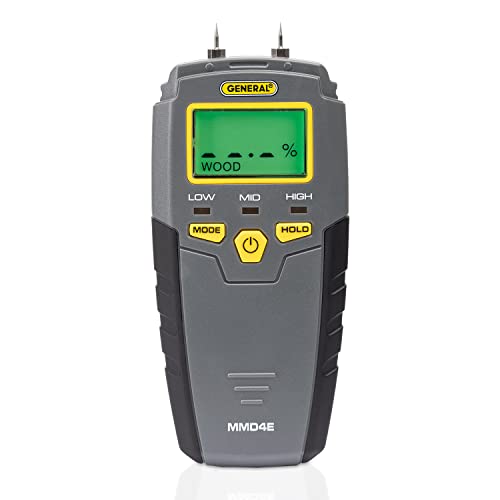
General Tools MMD4E Moisture Meter

General Tools MMD950 Dual-Mode Moisture Meter
Why These Options Stand Out
The S03 is built for broad indoor layouts where a single cross line is not enough. Its one horizontal and two vertical 360-degree planes create a 12-line reference pattern across floors, walls, and ceilings, making it useful for cabinet installation, tile alignment, and furniture placement. Compared with the Bosch GCL165-82CGL, the CIGMAN covers more intersecting planes, while the Bosch offers a more compact cross-line format.
The side LCD provides mode, leveling, and battery information at the tool rather than only through an accessory display. That matters in a busy renovation, especially while your hands are occupied with a ladder or drill. You may find the app and remote controls useful for changing brightness or lines, though the added functions make this a fuller setup than a basic two-line level.
Points In Its Favor
- Twelve self-leveling lines cover multiple room planes at once.
- Side LCD keeps operating status visible during installation.
- Bluetooth app and remote control reduce repeated physical adjustments.
- The USB-C rechargeable batteries support cordless placement.
- Pulse mode offers compatibility with receiver-based layouts.
Trade Offs
- Its full line pattern needs more room than a simple cross-line tool.
- App-dependent controls add setup steps for straightforward layouts.
- Receivers and compatible mounting hardware can add ownership cost.
Made For
This level suits DIYers and renovation-focused users who need several reference planes while installing cabinetry, shelving, or wall features.
A Better Fit Elsewhere
The Bosch PRO GCL165-82CGL suits professionals who prefer a smaller cross-line tool with flexible battery options.
The MMD7NP belongs in moisture investigation, not line-level layout. Pinless detection means you can scan a wall, floor, or cabinet surface without driving probes into finished material, which is valuable after a spill or a suspected roof leak. It gives homeowners a practical first pass before opening a wall or calling in a remediation professional.
The trade-off is measurement method. A pinless reading gives a useful indication, but material thickness, surface condition, and local moisture can influence the result. For a tight workshop, the small handheld format is easier to keep nearby than a laser with a hard case, though it cannot project level lines or mark vertical references.
Positive Points
- Non-invasive scanning helps protect finished walls and flooring.
- Useful for checking areas after spills, leaks, or water damage.
- Compact enough for routine household inspections.
Worth Noting
- Surface texture and material depth can affect readings.
- It does not provide a projected layout line.
- Pin-based comparison requires another meter.
Who It Suits Best
This meter suits homeowners checking suspicious dampness before damage becomes a larger repair.
Consider Something Else When
The Fanttik D12 ACE is the better choice for marking straight lines across a room rather than assessing moisture.
The GCL165-82CGL is a focused cross-line option for installers who want a compact reference point rather than a room-filling grid. Its green beam is easier to distinguish against many indoor surfaces, and the added plumb points help carry alignment from floor to ceiling. Compared with the CIGMAN S03, it covers fewer planes but presents a simpler workflow for trim, cabinets, and repetitive installation tasks.
Power flexibility gives it a practical advantage on job sites. The included 12V Max battery supports regular work, while AA power can keep the tool available during a battery change or in a location where charging is inconvenient. You’ll need to account for the separate AA supply, and the green-beam format still benefits from a stable surface and a clear line of sight.
Reasons It Performs
- Green-beam cross-line visibility supports detailed indoor layouts.
- Plumb points support vertical alignment tasks.
- 12V Max and AA power options reduce work interruptions.
- Connected design suits users who want remote monitoring.
Points To Keep In Mind
- AA batteries are not included with the stated setup.
- It provides less line coverage than 12- or 16-line models.
- Green beams can be less comfortable for some users.
Right Fit For
Professional trim installers and serious DIYers benefit from the focused cross-line and dual power options.
Where A Sibling Pick Shines
The CIGMAN S03 suits anyone who needs broad 12-line coverage for cabinetry and whole-room alignment.
The D12 ACE is built for users who want more layout freedom than a conventional cross-line level provides. One horizontal and two vertical 360-degree beams create five selectable line combinations, so you can reduce the pattern in a narrow hallway or open it up for floor, wall, and ceiling work. That flexibility is a better match for renovation work than a fixed two-plane pattern.
Its ABS-and-PC housing and rubber edging are designed for active construction environments, while metal-sealed laser modules support consistent beam output. You may find the extra lines useful during framing and installation, though visual clutter can make precise interpretation harder on patterned surfaces. Keep the lens clean and store the tool in its case to protect the housing and optics.
Everyday Advantages
- Five beam combinations adapt to different room shapes.
- 360-degree planes support floor, wall, and ceiling layouts.
- Metal-sealed laser modules suit repeated construction use.
- Rubber edging adds handling protection on busy sites.
Practical Considerations
- Multiple lines can create visual clutter in tight spaces.
- Its larger coverage is unnecessary for one short shelf.
- Outdoor visibility depends on ambient light and surface contrast.
Built With In Mind
This model fits renovation crews and experienced DIYers working across multiple rooms and surfaces.
Another Choice May Suit
The Bosch PRO GCL165-82CGL is more suitable for installers who want a smaller, dedicated cross-line reference.
The MMD4E serves a different part of home maintenance: checking moisture in wood, drywall, concrete, and subflooring. Pin-type measurement makes it useful when you need a direct reading from a material rather than a surface scan. The handheld size fits naturally into a workshop or maintenance kit, and the display gives you a quick reference while assessing suspected water damage.
Unlike the MMD7NP, the MMD4E is more useful when you can accept small probe marks in a material that will be repaired or refinished later. It does not project a line, so it does not compete directly with the three laser levels in this list. For water-leak investigation, readings are a starting point rather than a complete diagnosis, especially across materials with different moisture behavior.
Good Reasons To Consider
- Pin-type probes support direct material readings.
- Useful across wood, drywall, concrete, and subflooring.
- One-hand size supports portable maintenance work.
Minor Gripes
- Probes can leave small marks in finished materials.
- It cannot mark level or vertical layout lines.
- Readings require careful interpretation by material.
Who Will Love This
Homeowners and renovation workers benefit from this meter when inspecting wood framing, flooring, or suspect wall areas.
Look Elsewhere When
The MMD950 offers a pinless mode for quick surface checks, while the Fanttik D12 ACE handles laser layout instead.
The MMD950 combines pin-type and pinless detection, which makes it a sensible maintenance tool for carpets, ceilings, subfloors, wood, drywall, and concrete. Pinless mode helps you scan a larger area quickly, while pin mode gives you a more direct check in selected materials. Compared with the MMD4E, it offers more flexibility for moving between surface screening and closer inspection.
The large LCD and separate indicator bar make the reading easy to interpret at a glance, and automatic shutoff choices help manage battery use between tasks. You may find this mix especially practical during post-leak cleanup, though readings remain sensitive to material and surface conditions. It still belongs beside a laser level rather than replacing one.
Useful Touches
- Two measurement methods suit different materials and stages.
- Large display supports quick readings in dim maintenance areas.
- Pinless scanning helps cover carpets and subfloors faster.
- Automatic shutoff options support intermittent use.
Soft Spots
- The spherical sensor can be affected by uneven surfaces.
- Pin and pinless readings require different interpretation.
- No laser projection is included.
Best Suited To
Home inspectors, woodworkers, and homeowners benefit from the MMD950 for mixed-material moisture checks.
Reach For A Different Pick When
The Bosch PRO GCL165-82CGL is the better fit for a professional installing trim or cabinetry and needing a projected reference line.
Choosing Layout Tools for Home Projects
Start With the Job
Laser levels suit alignment, while moisture meters suit inspection. A cross-line tool works for cabinets, shelving, trim, and wall placement. Pinless and pin-based meters answer different questions about dampness, so your first step is to separate layout from damage assessment.
Match Coverage to the Space
A two-line cross-line model is efficient for simple installations. Three-plane and 16-line tools cover more room surfaces but create a denser pattern. Consider wall color, available floor area, and whether the extra references will save repositioning.
Check Power and Mounting
Rechargeable batteries suit repeat use, while disposable cells can offer flexibility during travel or remote work. Check the mount type, included hardware, and case before purchasing, especially for ladders or uneven job-site surfaces.
Read Moisture Results Carefully
Moisture meters are screening tools. Surface texture, material depth, and probe placement can influence readings. For persistent dampness, use the reading to guide further inspection rather than as the only basis for repairs.
Key Considerations Across These Picks
Common Shopping Slip Ups
Do not expect a moisture meter to project a level line, or assume a laser level can assess water damage. Check the measurement method, beam pattern, power source, and mounting system before ordering.
What The Higher Tier Buys
Higher-end layout tools tend to add broader line coverage, connected controls, stronger housing, and more flexible power options. Those features help during repeated professional work, while a basic cross-line level may be sufficient for a single small project.
