
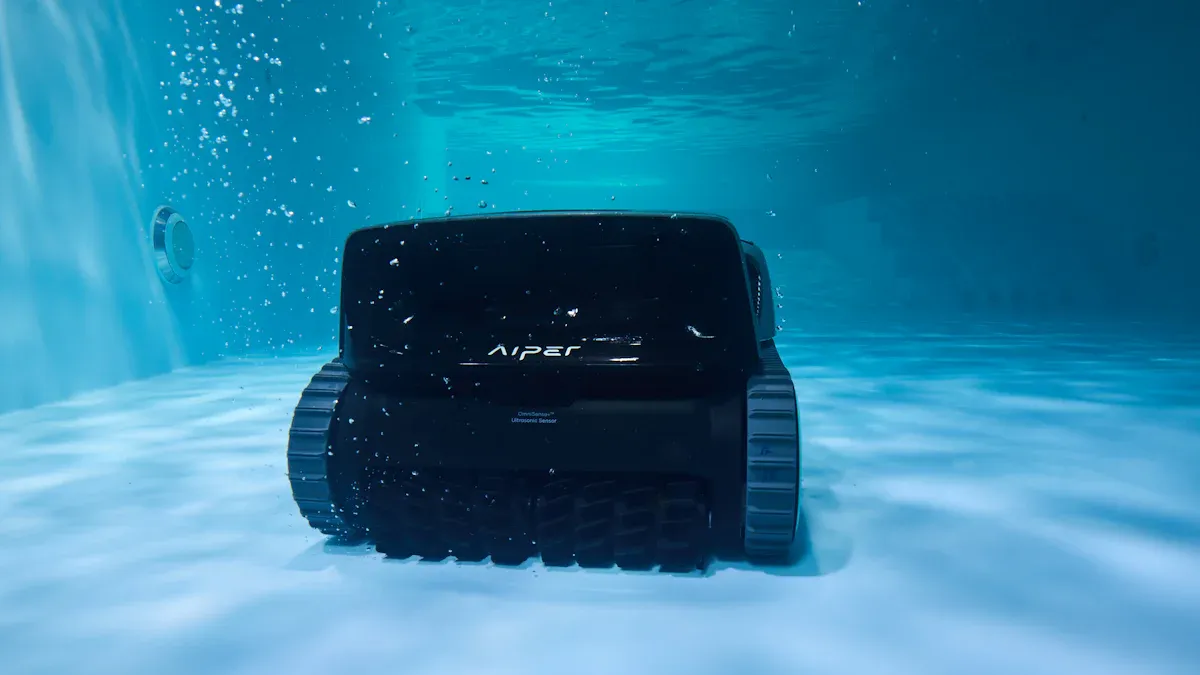
Smart pool systems offer incredible convenience and efficiency for pool owners. You can automate many tasks, which saves you significant time and effort. In fact, traditional pool maintenance often takes around 4.7 hours each week, while smart pool systems reduce that to just 30 minutes. This means you could save nearly 200 hours per year!
Maintaining water quality and cleanliness is crucial for a healthy swimming environment. With advanced technologies, you can ensure your pool remains safe and inviting with minimal hassle.
Key Takeaways
Smart pool systems can save you nearly 200 hours a year on maintenance tasks, allowing you to enjoy your pool more.
Automated pump and chemical management keeps your pool clean and safe while reducing manual labor and extending equipment life.
Robotic pool cleaners provide efficient and consistent cleaning, ensuring your pool sparkles without the hassle of manual effort.
Real-time water monitoring with smart sensors helps you maintain optimal water quality, enhancing safety and reducing health risks.
Investing in smart pool technology not only simplifies maintenance but also increases your property’s value and appeal to potential buyers.
Automation in Smart Pool Systems

Pump and Chemical Automation
With smart pool systems, you can automate your pump and chemical management. This feature allows you to schedule pump operations and maintain water chemistry without constant manual intervention. Automated controllers continuously monitor chemical levels, ensuring they remain balanced. This minimizes the risk of algae growth and equipment damage. As a result, you enjoy a cleaner pool with less effort.
Here are some key benefits of pump and chemical automation:
Efficient Scheduling: You can program your pumps to run during off-peak hours, which reduces electricity costs.
Reduced Manual Labor: Automated systems decrease the need for constant monitoring. This frees up your time for other activities.
Improved Equipment Longevity: By maintaining optimal chemical levels, you extend the lifespan of your pool equipment.
Evidence Description | Impact on Manual Labor |
|---|---|
Automated filtration systems reduce manual interventions and enhance operational efficiency. | Minimizes the need for constant monitoring and manual tasks. |
Traditional methods require constant operator attention, which can detract from other essential duties. | Frees up time for employees to focus on critical responsibilities. |
Automated systems reduce the risk of human error and improve productivity. | Lowers labor costs and increases overall efficiency. |
Lighting and Temperature Control
Smart pool systems also offer automation for lighting and temperature control. You can manage your pool lights and heating systems remotely, enhancing convenience. Imagine adjusting your pool’s temperature or lighting from your smartphone while relaxing indoors. This level of control not only adds comfort but also promotes energy savings.
Consider these advantages of automated lighting and temperature control:
Energy Efficiency: Automated scheduling can reduce pump energy consumption by up to 70%. This can lead to significant savings on your utility bills.
Remote Access: You can control your pool’s lighting and heating from anywhere. This feature allows you to make adjustments without being physically present.
Sustainable Choices: LED lights use up to 90% less energy than traditional bulbs and last up to 25 times longer. This makes them an eco-friendly option for your pool.
By integrating these automation features, you simplify pool management and enhance your overall experience. Smart pool systems not only save time but also ensure your pool remains a safe and enjoyable space.
Smart Pool Technology for Cleaning
Robotic Pool Cleaners
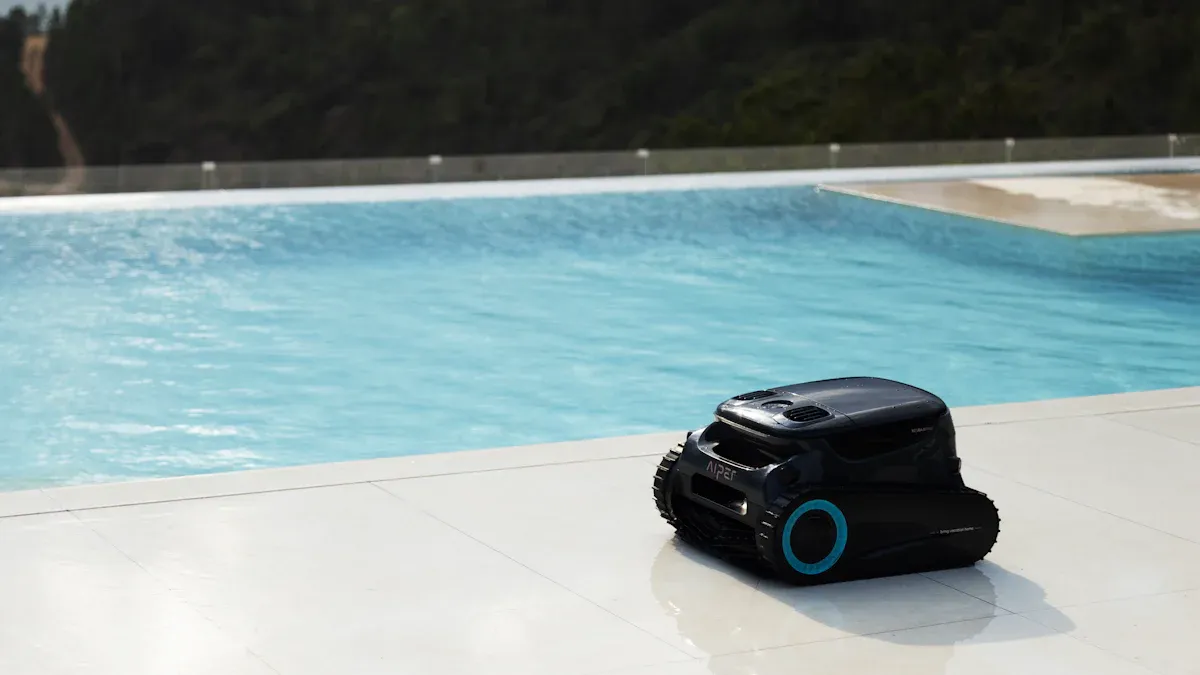
Robotic pool cleaners revolutionize how you maintain your pool. These devices outperform manual cleaning methods by significantly reducing cleaning time and providing consistent coverage. They utilize advanced technology to navigate your pool systematically. This ensures thorough removal of dirt and debris, which manual cleaning often misses. With robotic cleaners, you can enjoy a sparkling pool without the hassle of traditional cleaning.
Here are some key benefits of using robotic pool cleaners:
Time Efficiency: Robotic cleaners can clean your pool in a fraction of the time it takes to do it manually.
Consistent Results: They provide uniform cleaning, ensuring no spot is overlooked.
Less Chemical Use: Cleaner pools require fewer chemicals, which is better for your health and the environment.
Technology | Function |
|---|---|
Robotic Cleaners | Automate scrubbing, vacuuming, and debris collection. |
Smart Sensors | Monitor water quality and send real-time alerts for necessary adjustments. |
Adaptive Navigation | Optimizes cleaning routes based on learned pool layout for efficient coverage. |
Automatic Skimmers
Automatic skimmers continuously remove debris from your pool’s surface. They save you time and enhance efficiency compared to manual skimming. These devices use sensors to detect debris and operate independently. This reduces your workload and helps maintain cleanliness. Additionally, automatic skimmers minimize wear on your pool’s filtration system by removing debris before it clogs the filter. This makes them a more effective option for keeping your pool clean.
Real-Time Water Monitoring
Maintaining optimal water quality is essential for a safe and enjoyable swimming experience. Real-time water monitoring allows you to keep track of your pool’s chemistry without constant manual testing. This technology helps you identify issues quickly, ensuring your pool remains clean and safe for everyone.
Smart Sensors
Smart sensors play a crucial role in real-time water monitoring. These devices continuously measure various water quality parameters, such as pH levels, temperature, and chlorine concentration. With smart sensors, you receive immediate alerts about any changes in water chemistry. This quick response time, often as fast as one second, allows you to take action before problems escalate.
Here are some key benefits of using smart sensors:
Enhanced Accuracy: Automated systems provide precise water chemistry readings, reducing human error.
Time Savings: You spend less time on manual testing and balancing, allowing for more efficient maintenance.
Proactive Maintenance: Continuous monitoring helps you identify issues before they escalate, ensuring better upkeep.
Improved Safety: Real-time alerts prevent dangerous situations like chemical imbalances or contamination.
Increased Property Value: Homes with advanced monitoring systems are more attractive to potential buyers.
Benefit | Description |
|---|---|
Enhanced Accuracy | Automated systems provide precise water chemistry readings, reducing human error. |
Time Savings | Minimizes time spent on manual testing and balancing, allowing for more efficient maintenance. |
Proactive Maintenance | Continuous monitoring helps in identifying issues before they escalate, ensuring better upkeep. |
Improved Safety | Real-time alerts prevent dangerous situations like chemical imbalances or contamination. |
Increased Property Value | Homes with advanced monitoring systems are more attractive to potential buyers. |
pH Monitoring Systems
pH monitoring systems are vital for maintaining optimal pool water conditions. These systems ensure that the pH level remains balanced, which is essential for swimmer comfort and safety. A balanced pH minimizes skin and eye irritation. It also enhances the effectiveness of sanitizers like chlorine, crucial for proper disinfection.
Maintaining the correct pH level protects your pool equipment from corrosion. This extends its lifespan and ensures cost-effectiveness. Regular monitoring helps you avoid common water quality issues, such as:
pH: Affects solubility and toxicity of substances.
Temperature: Influences metabolism and behavior of aquatic organisms.
Dissolved oxygen: Essential for aquatic life health.
Total dissolved solids (TDS): Impacts taste and ecosystem health.
Turbidity: Indicates presence of sediment or algae.
Conductivity: Reflects presence of ions affecting water quality.
Eh (redox potential): Indicates oxidation-reduction potential.
Chlorophyll a: Indicates algae presence.
COD: Measures organic matter; high levels indicate reduced quality.
Ammonia nitrogen: Toxic at high levels; important for ecosystem health.
By integrating pH monitoring systems with chemical automation, you can achieve intelligent water chemistry management. This combination ensures consistent water quality by maintaining balance. It allows for quick identification of chemical imbalances, enabling immediate corrective actions to maintain safety.
Feature | Description |
|---|---|
Automated monitoring of pH and chlorine | Ensures consistent water quality by maintaining balance. |
Continuous flow activity tracking | Monitors water conditions in real-time for optimal quality. |
Quick identification of chemical imbalances | Allows for immediate corrective actions to maintain safety. |
Adherence to health and safety regulations | Ensures compliance with necessary standards. |
Minimizes maintenance efforts and costs | Reduces the workload and expenses associated with pool care. |
Real-time water monitoring, powered by smart sensors and pH monitoring systems, transforms how you manage your pool. These technologies not only enhance safety but also simplify maintenance, allowing you to enjoy your pool without worry.
Smart pool systems offer numerous benefits that enhance your pool experience. You can enjoy significant time savings, reduced energy costs, and improved water quality. For instance, automated cleaning systems can lead to a 40% reduction in energy bills. Additionally, these systems increase your property’s resale value by appealing to modern buyers who appreciate convenience and energy efficiency.
Consider investing in smart pool solutions for long-term advantages. They not only simplify pool maintenance but also promote a healthier swimming environment. Embrace these technologies to transform your pool into a more enjoyable and efficient space.
FAQ
What are smart pool systems?
Smart pool systems automate maintenance tasks like cleaning, chemical balancing, and temperature control. They use technology to enhance efficiency and convenience, allowing you to manage your pool remotely.
How do robotic pool cleaners work?
Robotic pool cleaners navigate your pool using sensors. They scrub surfaces, vacuum debris, and filter water, ensuring a clean pool with minimal effort from you.
Can I control my pool system remotely?
Yes! Most smart pool systems allow remote access via smartphone apps. You can adjust settings, monitor water quality, and schedule maintenance from anywhere.
How often should I monitor my pool’s water quality?
You should check your pool’s water quality at least once a week. Smart sensors can help automate this process, providing real-time updates and alerts.
Are smart pool systems worth the investment?
Absolutely! Smart pool systems save you time, reduce maintenance costs, and improve water quality. They enhance your overall pool experience and can increase your property’s value.