
Keep in mind the time a smart thermostat let a neighbor control your heat mistakenly; that could have been stopped with better device checks. You can start upon listing every device and ranking them based on risk and business impact, then isolate them in network zones and apply strict enrollment and authentication. Pair trusted firmware updates and service hardening with continuous logging and anomaly alerts. Align vendor rules and audits so your response and recovery plans work the moment you need them.
Inventory Every IoT Device on Your Network

Inventorying every IoT device on your network starts with a clear promise: you’re not alone in this, and you can get control.
You’ll begin through gathering device cataloging details like make, model, location, owner, and connection type. Then you’ll map relationships so asset tracking ties devices to users and services. You’ll use simple scans and logs, and invite teammates to observe entries.
You’ll record unsupported firmware and default credentials so you can flag gaps. You’ll keep a shared register that’s easy to update and lets everyone see progress.
As you build trust, you’ll add automated detection tools and routine reviews to catch changes. You’ll belong to a team that watches devices together and keeps the network safer.
Prioritize IoT Devices by Risk and Business Impact
Once you start prioritizing IoT devices according to risk and business impact, consider it like triage in a busy clinic: you’ll sort what’s most likely to hurt operations or expose data initially so you can act where it matters most.
You’ll run a simple risk assessment that checks vulnerability, access level, and data sensitivity. Then you’ll map each device to business impact categories like safety, uptime, and customer trust.
Combine those results so high-risk, high-impact devices rise to the top. Share the list with your team so everyone feels included and clear about priorities.
Keep revisiting this process as devices change. That steady rhythm builds confidence, reduces surprises, and helps you protect what keeps your organization running.
Segment IoT From Critical Systems Using Network Zones
You should put your IoT devices on their own network so they can’t reach your most crucial systems directly.
Start through creating an IoT-only network and then enforce zone-based access rules that limit which devices can talk to which services.
Upon isolating IoT traffic and applying clear access controls, you’ll cut risk and make it easier to spot and contain problems should they happen.
Create IoT-Only Network
If you want to protect critical systems, start through giving your IoT devices their own network zone so they can’t wander into sensitive areas. You and your team will feel safer once devices sit in isolated segments with clear boundaries. Use dedicated gateways to funnel IoT traffic and keep management simple.
That gives you control and reduces risk while keeping everyone on the same page.
- Assign devices to IoT-only VLANs for basic separation
- Route IoT traffic through dedicated gateways for inspection
- Limit lateral movement by keeping services out of core nets
- Monitor IoT segments with focused logs and alerts
- Update firmware from a trusted, isolated update server
This approach helps the group belong to a shared security plan.
Enforce Zone-Based Access
Segregating IoT devices into their own network lanes was a great initial step, and now we’ll put rules around who and what can cross those lanes so your most critical systems stay protected.
You’ll define zones according to risk level and group similar devices together, which helps you apply consistent access control across each lane. Then you’ll set policies that limit traffic between zones, permit only necessary protocols, and log every cross-zone request so you can spot odd behavior promptly.
Zone enforcement uses firewalls, VLANs, and microsegmentation tools you already know and makes them work together. You’ll include role-based permissions, strong authentication, and regular reviews so the group feels confident and responsible for protecting shared systems.
Implement Secure IoT Onboarding: Enrollment & Verification
Once you bring new IoT devices onto your network you need strong device identities so each gadget is known and trusted from the start.
Use zero-touch provisioning to automate secure enrollment so devices get the right keys and policies without manual setup. This approach cuts errors, speeds deployment, and gives you clearer control over who and what can connect.
Secure Device Identity
Because a device’s initial impression matters, you want onboarding to prove identity before it ever talks to your network. You need clear device provenance so you and your team trust each thing that joins. Use cryptographic credentials tied to makers and batches and link them to identity federation systems that let devices present trusted claims across services.
- Issue unique keys at manufacture and record provenance for every device
- Require signed assertions during enrollment and check against identity federation
- Verify hardware roots and secure elements before granting access
- Enforce mutual authentication and least privilege whenever devices connect
- Log attestations and share visibility with your community for trust
You’ll feel more secure once every device proves it belongs, and your team will stay united in protection.
Zero-Touch Provisioning
In case you want devices to join your network safely without a tech fumbling each step, zero-touch provisioning lets them enroll and verify themselves automatically while you stay in control. You’ll feel welcome and confident because automated provisioning removes manual errors and keeps your team focused on higher priorities.
With secure certificates and device fingerprints, each gadget proves its identity during enrollment and accepts policies through remote configuration. You’ll set access levels, update schedules, and network segments before a device speaks to anything.
Whenever something looks off, alerts guide you and allow quick quarantine. This approach builds a sense of shared responsibility across your organization, so everyone contributes to safety. You’ll keep growth steady, reduce attack surface, and welcome new devices with trust.
Enforce Strong IoT Authentication and Least-Privilege Access
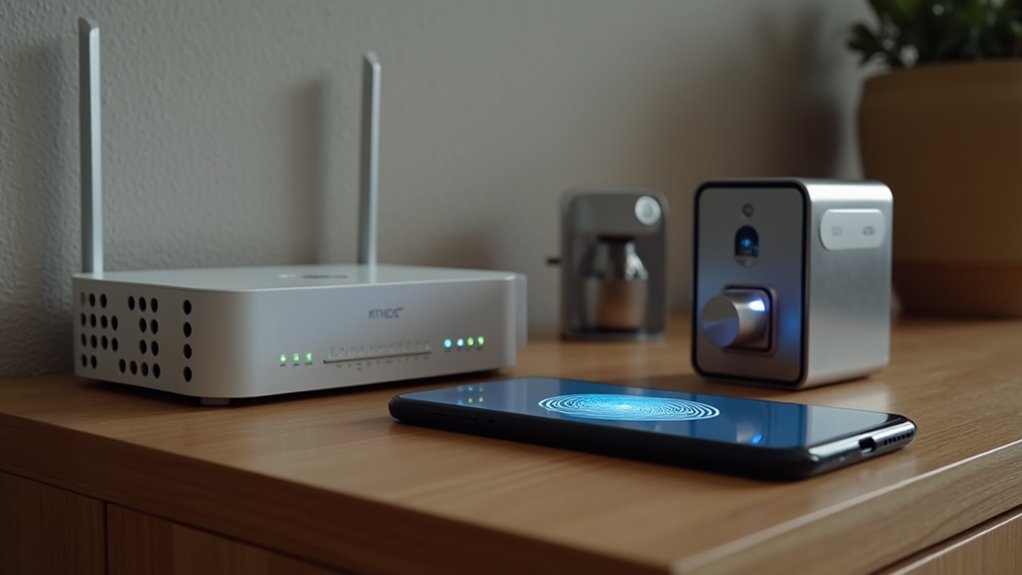
Even as the number of connected devices keeps rising, you can stop many attacks through enforcing strong authentication and strict least-privilege access for every IoT component. You belong in a community that protects each device and each person who uses it.
Start with strong passwords and move to adaptive authentication so access matches risk. Limit accounts and services to the minimum needed, and revoke rights whenever roles change.
- Require unique strong passwords and rotate them regularly
- Use adaptive authentication to add factors whenever behavior looks risky
- Assign least-privilege roles and review them on a schedule
- Monitor access logs and alert your team to unusual patterns
- Automate deprovisioning whenever devices or people leave
These steps help you keep systems usable and secure.
Harden Devices With Secure Baselines and Disabled Services
You should start with building a secure baseline for each device so settings, firmware, and accounts are consistent and minimal.
Then turn off any services and ports you don’t need, since unused features give attackers easy entry points.
Through combining a tight baseline with disabled services you cut the attack surface and make it easier to keep devices safe and manageable.
Establish Secure Baselines
Once you bring new IoT devices into your network, start through setting a secure baseline so every device behaves predictably and safely. You’ll feel confident whenever you use a clear baseline configuration that maps required settings, allowed connections, and update rules.
Use known security models to guide choices so your team shares the same standards and feels included in protecting devices.
- Define minimum firmware and OS versions for all devices
- Standardize credentials, key storage, and rotation schedules
- Enforce network segmentation and access control lists
- Require logging, monitoring, and alert thresholds
- Document approved ports, protocols, and update procedures
These steps help your group act together, reduce guesswork, and make maintenance kinder and more reliable for everyone.
Disable Unused Services
After you set a secure baseline, it’s time to remove features that don’t help your devices do their jobs. You belong to a team that cares, and you can make a real difference through using service minimization and feature deactivation.
Start with listing running services, then stop anything unused. Turn off debug ports, unused protocols, and sample apps that ship enabled. Apply consistent profiles across devices so everyone knows what’s allowed.
Evaluate after each change and rollback should something break. Keep logs of what you disabled and why, and share that with your team to build trust. Automate checks where possible to keep devices aligned.
This approach lowers attack surface, eases patching, and helps your group feel safer together.
Set Up Firmware and Patching You Can Trust
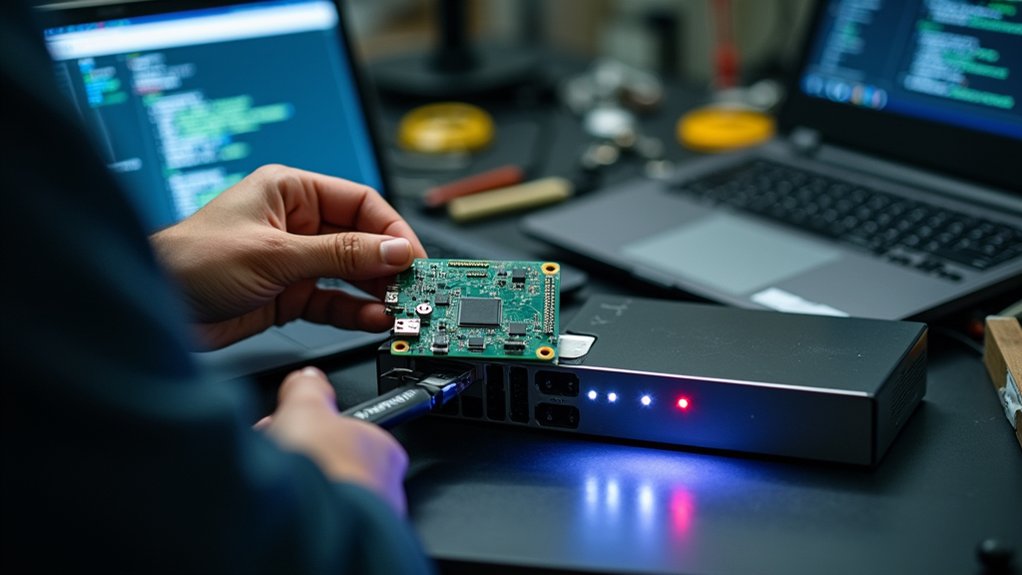
During the period devices run old or tampered firmware, they stop being tools and become risks, so you need a clear, trustworthy patching plan that actually works. You want trusted firmware and automated patching that respect your team and devices.
Start through choosing vendors who sign and verify firmware, and set up secure delivery channels. Then decide at which point devices get updates and how you roll them back should it be needed. You’ll include trials, staged rollouts, and clear owner roles so everyone feels included and responsible.
- Require cryptographic signing for all firmware
- Use automated patching with staged deployment
- Maintain an inventory of device firmware versions
- Examine updates in a safe lab before wide release
- Define rollback and emergency patch procedures
Monitor IoT Behavior With Logging and Anomaly Detection
Because devices rarely behave the same way all the time, you need logging and anomaly detection that watch them closely and tell you anytime something’s wrong. You’ll collect logs from devices, network gateways, and edge nodes so you see normal patterns.
Then you’ll apply behavioral analytics to spot unusual flows, failed logins, spikes, or command injection attempts. Use real time monitoring to alert your team quickly and to show background for each event. You’ll tune thresholds together, so alerts feel right and your team stays confident.
Share dashboards and annotations so everyone feels included in defense. Keep logs safe and searchable, and review them regularly with peers. This builds trust, reduces false alarms, and keeps your IoT system resilient.
Plan IoT Incident Response and Recovery
During the period you plan your IoT incident response and recovery, start through treating devices as people you care about: they need clear roles, quick help, and a path back to normal. You’ll build a kind incident communication plan that tells who speaks, at which point, and how to share honest updates with teammates and partners.
Pair that with recovery evaluation so you can prove fixes work and everyone feels safe returning devices to service. You’ll include playbooks that match device types and impact levels, and you’ll practice regularly with your community so skills stay sharp.
- Assign clear owners for device groups
- Define notification steps and tone
- Script containment actions for device class
- Schedule regular recovery evaluation drills
- Keep a shared, compassionate postmortem routine
Build IoT Security Governance: Vendor Controls and Compliance
You cared for devices during incident response, and now you’ll extend that same attention to the companies that build, sell, and support them. You’ll set vendor audits, require clear service level security promises, and use compliance tracking to watch fixes and updates. You’ll invite partners into a shared plan, so everyone feels responsible and safe. You’ll require patch timelines, secure supply chain checks, and transparent breach reporting. You’ll measure vendor performance and demand proof of evaluation and encryption. You’ll make governance part of everyday contracts and reviews, so your team and vendors move together.
| Policy | Action | Measure |
|---|---|---|
| Vendor audits | Schedule audits annually | Audit score |
| Compliance tracking | Track fixes in dashboard | Time to close |
Frequently Asked Questions
How Do Privacy Laws Affect Data Collected by Consumer Iot Devices?
For example, a smart speaker manufacturer was fined for recording users without obtaining informed permission. To comply, obtain specific user permission for each type of data collected, restrict collection to what is strictly necessary for the feature, keep recordings and logs only as long as required to provide the service, and provide transparent options for users to access, delete, and control their data so they feel informed and respected.
Can Legacy Iot Devices Be Securely Decommissioned Without Data Leakage?
Yes. To decommission legacy IoT devices securely, erase all storage using NIST or DoD approved wiping methods, remove and reset device credentials and API keys, extract or securely delete any certificates, and purge related entries from asset inventories and access control lists. Retain and archive tamper-evident logs that document the wipe and removal actions. If a device cannot be reliably sanitized, perform controlled physical destruction of storage components and dispose of remaining parts through certified electronic waste handlers.
What Insurance Options Cover Iot-Related Cyber Incidents and Extortion?
Consider a Venn diagram: look for cyber insurance that explicitly lists extortion protection, ransomware endorsements, and operational technology endorsements; request quotes covering breach response services, loss of income from interrupted operations, and defense and regulatory expenses, then compare offerings with industry colleagues.
How Do Iot Security Practices Differ for Small Businesses Versus Enterprises?
Small businesses focus on tight budgets, minimal staff, straightforward device setups, and meeting basic legal or industry rules. Enterprises invest larger budgets and dedicated security teams, tolerate more complex risk profiles, operate extensive segmented networks with many device types, and must satisfy rigorous regulatory and audit requirements.
Are There Environmental or Sustainability Impacts of Iot Security Measures?
Yes. Continuous monitoring, cryptographic processing, and on-device or edge AI increase energy draw, and shorter hardware lifecycles create e-waste and material recovery burdens. Adopt power-aware telemetry (dynamic sampling, duty cycling, hardware acceleration for cryptography), extend device firmware support to lengthen service life, and implement standardized take-back and component-refurbishment programs to reduce environmental impact.
