Planning a modern kitchen design is crucial for creating a space that works for you. A thoughtful layout can significantly boost your kitchen’s functionality and aesthetics. When you focus on design, you enhance efficiency and workflow, making daily routines smoother. A well-designed kitchen not only looks great but also increases your home’s appeal to potential buyers. Remember, a functional kitchen can add real value to your home, making it a smart investment for the future.
Key Takeaways
Choose the right kitchen layout to enhance functionality. Open concept layouts promote social interaction, while closed kitchens offer privacy.
Utilize the kitchen work triangle to improve workflow. Position the refrigerator, sink, and cooktop in a triangular layout for efficient cooking.
Select durable materials for countertops and flooring. Options like quartz and porcelain tiles provide both beauty and practicality for busy kitchens.
Incorporate effective lighting to enhance safety and ambiance. Combine ambient, task, and natural light for a well-lit and inviting kitchen.
Maximize storage with innovative designs. Use pull-out shelves, vertical space, and under-sink organizers to keep your kitchen organized.
Best Kitchen Layouts

When planning your modern kitchen design, choosing the right kitchen layout is essential. The layout affects how you move around the space and how you interact with family and friends. Let’s explore the differences between open concept and closed layouts, and how the kitchen work triangle can enhance your cooking experience.
Open Concept vs. Closed Layout
Open concept kitchens have become increasingly popular in recent years. They create a sense of openness and allow for better social interaction. You can easily engage with guests while cooking, making it a great choice for entertaining. However, they do come with some drawbacks. For instance, controlling noise and odors can be challenging since there are no walls to contain them.
On the other hand, closed kitchens offer a more defined cooking space. They provide privacy and help minimize distractions. If you prefer a quieter environment while cooking, a closed layout might be the best fit for you. However, this type of layout can feel isolated, making it harder to interact with family or guests.
Here’s a quick comparison of the two layouts:
Feature | Open Concept Kitchen | Closed Kitchen |
|---|---|---|
Space Utilization | Creates a sense of openness and maximizes daylight. | Offers defined cooking space with more cabinetry. |
Social Interaction | Encourages engagement with guests while cooking. | Provides privacy and minimizes distractions. |
Noise and Odor Control | Less effective at controlling noise and smells. | Walls help contain noise and odors effectively. |
Storage Potential | Limited by fewer walls for cabinetry. | More walls allow for extensive storage options. |
Overall Atmosphere | Bright, welcoming, and part of the living area. | Structured, organized, and focused on cooking. |
Work Triangle Principles
The kitchen work triangle is a design rule that helps improve workflow and efficiency in your kitchen. It involves positioning the three main work areas-the refrigerator, sink, and cooktop-in a triangular layout. This setup allows for smooth transitions between tasks, making your cooking experience more enjoyable.
Here’s how the work triangle works:
Refrigerator: Place it near the kitchen’s entry point for easy access to ingredients and grocery unloading.
Sink: Position it between the refrigerator and cooktop to facilitate washing, prepping, and cooking.
Cooktop: Ensure it’s accessible from both the prep and cleaning areas for a seamless cooking routine.
To optimize your kitchen layout, keep these recommended distances in mind:
Distance Type | Recommended Measurement |
|---|---|
Total Triangle Length | 26 feet or less |
Maximum Individual Leg | 9 feet |
Minimum Individual Leg | 4 feet |
When choosing the best layout for your home, consider your space and functionality needs. Here’s a quick guide to popular kitchen layouts:
Kitchen Layout | Best For | Space Considerations |
|---|---|---|
U-shaped | Medium-sized spaces, entertaining | Can feel cramped in small spaces; too spread out in large ones |
L-shaped | Small spaces, socialization | Ideal for open plans; can be inefficient in large kitchens |
Galley | Efficient users, small to large homes | Great for small spaces; may not suit large families due to traffic jams |
By understanding these layouts and principles, you can create a kitchen that not only looks great but also works efficiently for your lifestyle.
Materials for Modern Kitchens
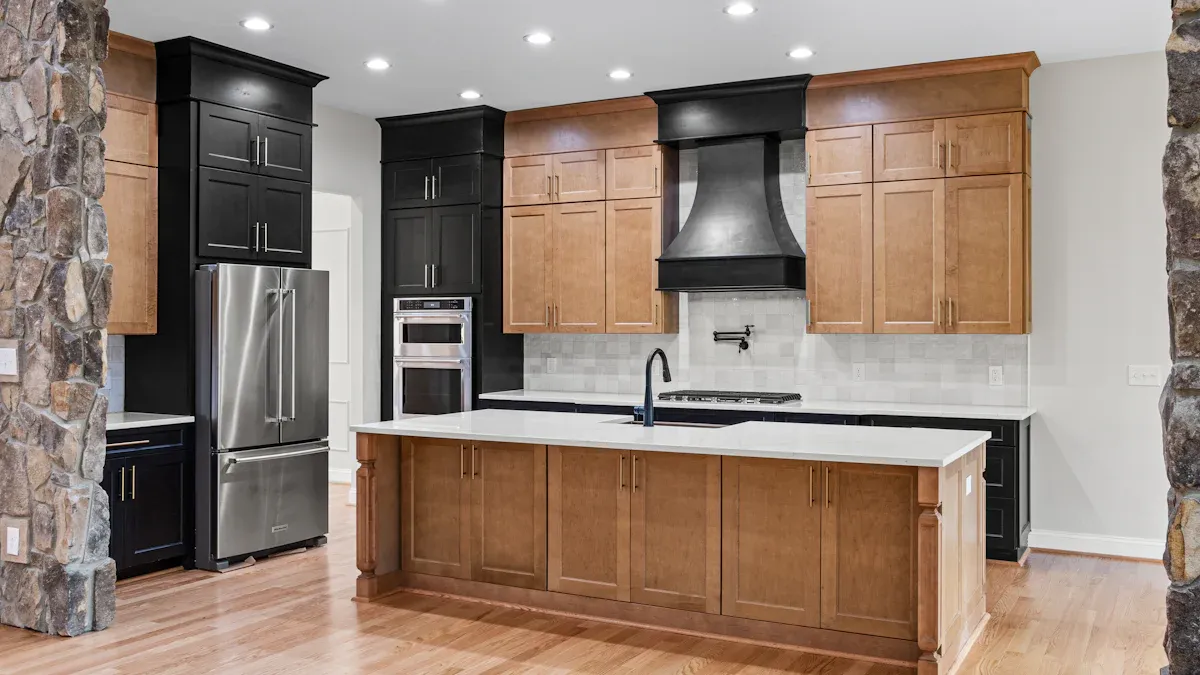
When it comes to modern kitchen design, the materials you choose play a vital role in both aesthetics and functionality. Selecting the right countertops, backsplashes, and flooring can elevate your kitchen’s look while ensuring it meets your daily needs. Let’s dive into some popular options and current trends that can shape your kitchen remodel.
Countertops and Backsplashes
Countertops and backsplashes are often the focal points of any kitchen. They not only serve practical purposes but also set the tone for your kitchen’s style. Here are some popular materials that you might consider:
Material | Durability (Years) | Cost per Square Foot | Maintenance Needs |
|---|---|---|---|
Quartz | 25+ | $50-$100 | Minimal, no sealing needed |
Granite | 20-30 | $70-$175 | Regular maintenance |
Marble | 20-25 | $40-$100 | Regular maintenance |
Porcelain Slabs | 10-20 | $60-$120 | Minimal |
IceStone | 20+ | Varies | Moderate |
Paperstone | 10-15 | $115-$125 | Moderate |
Richlite | 10-15 | $85-$100 | Moderate |
Laminate | 10-20 | Varies | Minimal |
Sintered Stone | 20+ | Varies | Minimal |
As you can see, quartz and granite are among the most durable options, making them ideal for busy kitchens. Quartz is particularly popular due to its low maintenance needs, while granite offers a unique, natural look that many homeowners love.
Tip: When choosing your countertop material, consider how much wear and tear it will face. If you cook often, opt for something durable and easy to clean.
Flooring Options
Flooring is another critical aspect of kitchen design. The right flooring can enhance your kitchen’s functionality while adding warmth and style. Here are some trending materials for kitchen flooring:
Hardwood: Offers warmth and beauty, but requires regular maintenance.
Porcelain Tiles: Highly durable and easy to clean, making them a practical choice.
Cork: Eco-friendly and comfortable underfoot, cork is gaining popularity for its sustainability.
Luxury Vinyl: Waterproof and scratch-resistant, this option is perfect for busy households.
Flooring Type | Durability Features | Ease of Cleaning Features |
|---|---|---|
Waterproof Luxury Vinyl | 100% waterproof core, multi-layer construction for durability, scratch resistance | Low maintenance, easy to clean, stain-resistant, fade-resistant |
Engineered Hardwood | Multi-layer plywood core for stability, better moisture resistance than solid wood | Can be sanded and refinished, durable finish protects against scratches and stains |
Ceramic & Porcelain Tile | Highly durable, superior scratch and impact resistance | Easy to clean, resistant to mold and bacterial growth, requires sealed grout for stains |
Natural Stone (Marble, Slate, Travertine) | High durability, excellent heat and impact resistance | Requires sealing for maintenance, can be easy to clean but porous surfaces need care |
Cork Flooring | Moderate durability, soft surface minimizes fatigue | Requires sealant for water and stain resistance, naturally antimicrobial |
Current kitchen trends focus on warmth, texture, sustainability, and bold patterns. Textured finishes and matte surfaces are preferred for their aesthetic appeal and practical benefits. You might also consider patterns like checkerboard or bold geometric designs to enhance your kitchen’s dynamic look.
Note: Durable materials like quartz and granite not only enhance your kitchen’s appeal but also contribute to its long-term value.
By carefully selecting the materials that shape your modern kitchen design, you can create a space that is both beautiful and functional. Whether you lean towards sleek quartz countertops or warm hardwood floors, the right choices will make your kitchen a joy to use.
Color Palettes in Kitchen Design
Choosing the right color palette can transform your kitchen’s look and feel. Colors affect not only aesthetics but also your mood and the perceived size of the space. Let’s explore how neutral and bold colors can impact your kitchen design.
Neutral vs. Bold Colors
Neutral colors, like whites and soft grays, create a timeless and versatile backdrop. They reflect light, making your kitchen feel larger and more open. On the other hand, bold colors, such as deep blues and vibrant greens, add personality and energy. Here are some popular color palettes in modern kitchen design:
Timeless Whites & Soft Neutrals: Crisp white cabinets are versatile and timeless.
Warm Wood Tones: Natural wood cabinetry offers a warm, organic feel.
Bold Blues & Greens: Deep navy and forest green are popular for adding personality.
Modern Black & Charcoal: Dark cabinets provide drama and sophistication.
Using bold colors as accents can enhance vibrancy without making the kitchen feel smaller. Balancing vibrant hues with neutral tones is key to impactful design. For example, you might paint an accent wall in a bold color while keeping the cabinets neutral.
Color Psychology
Colors also influence your mood and appetite. Here’s how different colors can affect your kitchen atmosphere:
Warm Colors (Red, Orange, Yellow):
Increase appetite and energy.
Red stimulates appetite, while orange promotes warmth and sociability.
Yellow enhances mood and creates a cheerful environment.
Cool Colors (Blue, Green):
Calm the mind and suppress appetite.
Blue is known for its calming effects but can reduce hunger.
Green promotes balance and supports healthy eating habits.
Neutral Colors:
Provide emotional stability in eating environments.
When selecting your color scheme, consider how you want your kitchen to feel. Do you prefer a cozy, intimate space or a bright, open area? By understanding color psychology, you can create a kitchen that not only looks great but also feels right for you.
Maximizing Kitchen Storage
When it comes to modern kitchen design, maximizing storage is key to enhancing functionality. You want your kitchen to be organized and efficient, especially if you’re working with limited space. Let’s explore some innovative cabinet designs and how to effectively utilize vertical space.
Innovative Cabinet Designs
Innovative cabinet designs can transform your kitchen storage. Here are some clever solutions to consider:
Pull-Out Shelves and Drawers: These glider-out shelves make it easy to access deep cabinets. They’re perfect for pantry items or pots.
Vertical Bakeware Dividers: Store baking sheets and cutting boards upright. This saves space and prevents scratches.
Two-Tiered Cutlery Drawers: These slide-out trays keep utensils organized with upper and lower tiers.
Under-Sink Organizers: Use riser glide-outs or adjustable shelves to navigate around plumbing.
Spice and Condiment Pull-Outs: Slim drawers keep oils and spices within reach, preventing spills.
Toe-Kick Drawers: Utilize the shallow space beneath cabinets for discreet storage.
Built-In Appliance Garages: Tuck small appliances into retractable cabinets for a clean countertop.
Corner Cabinet Innovations: Replace lazy Susans with pull-out drawers to maximize corner space.
These designs not only save space but also keep your kitchen looking tidy and stylish.
Vertical Space Utilization
Utilizing vertical space is essential in small kitchens. Here are some effective strategies:
Strategy | Description |
|---|---|
Magnetic Strips | Mount on walls or inside cabinet doors to free up drawer space. |
Hanging Baskets | Hang from ceilings or under cabinets to store fruits and small items. |
Open Shelving | Use empty wall space to display dishes and appliances, or mount under upper cabinets. |
Pegboard | Hang pots and utensils to keep them accessible and off the counter. |
Above-Cabinet Storage | Utilize space above cabinets for infrequently used items in decorative baskets. |
Backsplash Storage | Install pot rails or towel bars to turn the backsplash into additional storage. |
By incorporating these ideas, you can make the most of your kitchen’s layout. Remember, a well-organized kitchen not only looks great but also enhances your cooking experience.
Effective Kitchen Lighting
Good lighting is essential in modern kitchen design. It not only enhances the beauty of your space but also improves safety and functionality. You want to ensure that your kitchen is well-lit for meal preparation and socializing. Here’s how to effectively combine ambient and task lighting while considering natural light.
Ambient vs. Task Lighting
Ambient lighting provides overall illumination for your kitchen. It creates a comfortable atmosphere, allowing you to move around safely. Here are some key points about ambient and task lighting:
General lighting ensures the entire kitchen is well-lit for daily activities.
Task lighting focuses on specific areas, like countertops and islands, enhancing visibility and reducing the risk of accidents.
Accent lighting adds visual interest and highlights important features, contributing to a welcoming atmosphere.
To create a balanced lighting scheme, consider these tips for combining ambient and task lighting:
Position task lighting close to work areas to minimize shadows.
Layer different light sources, such as ceiling fixtures and wall sconces, to create an inviting glow.
Combining various light sources helps avoid harsh shadows and bright spots, providing even light distribution.
Natural Light Considerations
Natural light can transform your kitchen. It enhances beauty and energy efficiency by reducing the need for artificial lighting. Here’s why you should prioritize natural light:
Sunlight contributes to well-being, making cooking and gathering more enjoyable.
Natural light is essential for tasks like chopping and cooking, providing superior brightness and visibility.
Exposure to natural light boosts serotonin levels, improving mood and reducing stress.
Incorporating large windows or skylights can maximize natural light in your kitchen. This investment not only improves comfort but also adds long-term value to your home.
By thoughtfully combining ambient, task, and natural lighting, you can create a kitchen that is both functional and inviting.
Integrating Modern Appliances
Smart Kitchen Technology
Integrating modern appliances into your kitchen can make cooking and meal prep a breeze. Smart kitchen technology is all about convenience and efficiency. Imagine having appliances that you can control with your voice or smartphone! Here are some popular smart kitchen gadgets you might consider:
Multifunctional kitchen gadgets that chop, blend, cook, and clean.
Smart appliances like voice-activated ovens and app-controlled air fryers.
Space-saving tools with clever designs.
Eco-friendly innovations such as reusable tools and electricity-saving appliances.
Compostable materials for kitchen use.
You can also find features like instant hot water taps, ice-making fridges, and wireless temperature probes. These gadgets not only save time but also help you manage energy use effectively. For instance, smart refrigerators can track your food inventory and expiration dates, reducing waste and optimizing energy consumption.
Energy-Efficient Choices
When it comes to energy-efficient appliances, you have plenty of options that can save you money on utility bills. Here are some top-rated choices for 2024:
Top-Freezer Refrigerators: Generally more energy-efficient than side-by-side and French-door models.
Bottom-Freezer Refrigerators: Also noted for their energy efficiency.
Energy Star Certified Dishwashers: Use about half the water and energy compared to older models, costing about $50 a year to run.
Induction Ranges: Use about 15% less power than traditional electric coil options.
By upgrading to modern Energy Star appliances, you could save over $200 annually on energy bills. Older dishwashers made before 1994 consume significantly more water, which can increase your energy costs. Choosing energy-efficient options not only benefits your wallet but also helps the environment.
Integrating modern appliances into your kitchen design can enhance both functionality and sustainability. With smart technology and energy-efficient choices, you can create a kitchen that works for you while being kind to the planet.
Designing your modern kitchen requires careful planning. You want a space that reflects your style while being functional. Remember these key points:
Consider a custom range hood to add a unique focal point.
Use the kitchen work triangle to minimize walking distances between the sink, refrigerator, and cooktop.
Ensure your countertops have at least 158 inches of usable space for efficiency.
Choose colors and materials that create unity and enhance the modern look.
As you plan, think about your personal needs. What works for you? A well-designed kitchen not only looks great but also makes cooking enjoyable. So, take your time and create a space that feels just right for you!
FAQ
What is the best kitchen layout for small spaces?
For small spaces, consider an L-shaped or galley kitchen layout. These designs maximize efficiency and minimize wasted space, allowing for smooth movement and functionality.
How can I make my kitchen feel larger?
Use light colors, mirrors, and open shelving to create an illusion of space. Also, ensure good lighting to brighten up the area, making it feel more open.
What materials are best for kitchen countertops?
Quartz and granite are popular choices due to their durability and low maintenance. They also come in various colors and patterns, fitting any kitchen style.
How do I choose the right kitchen color scheme?
Think about the mood you want to create. Neutrals offer a calm vibe, while bold colors add energy. Balance is key; mix accents with base colors for harmony.
What are some smart kitchen appliances I should consider?
Look for smart refrigerators, ovens, and dishwashers that connect to your smartphone. These appliances can help you save time and energy while enhancing your cooking experience.