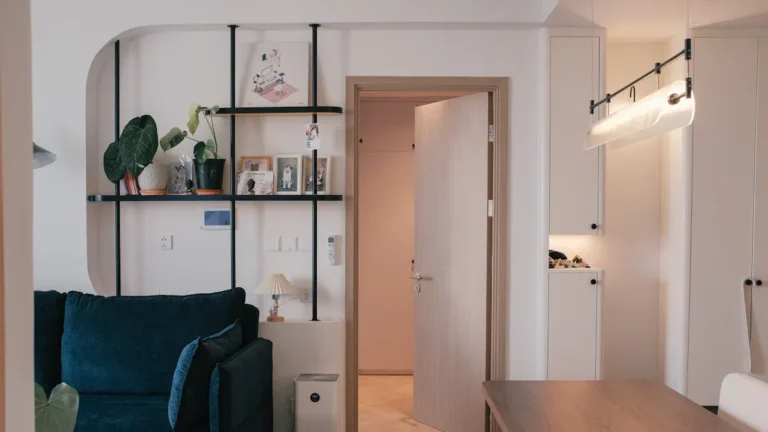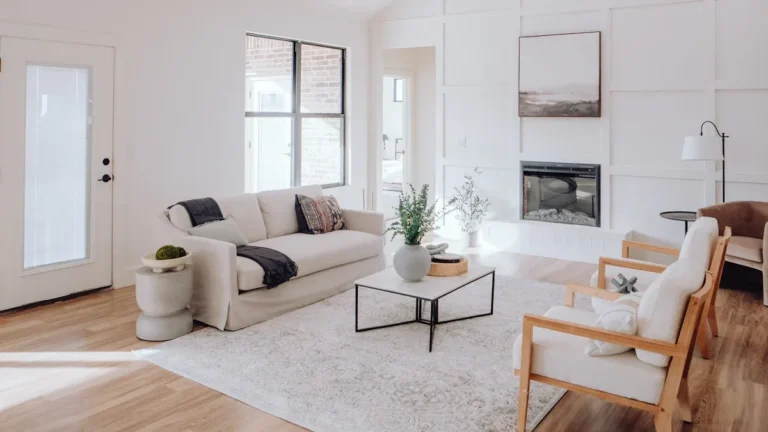
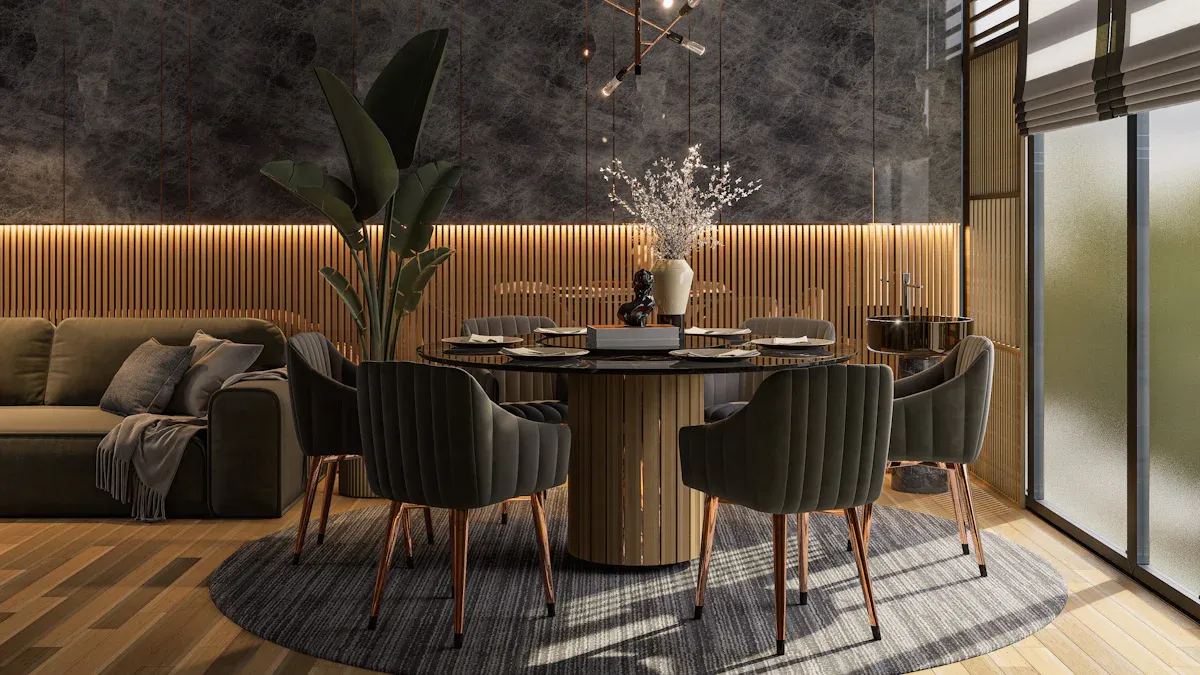
Imagine walking into a room that feels both inviting and stylish. That’s the magic of mixing and matching textures! When you blend different textures, you create a dynamic look that adds warmth and depth to your space. Recent studies show that a mix and match of textures-combining rough and smooth surfaces-can enhance comfort, making your home feel more welcoming. So, don’t hesitate to get creative! Experiment with various textures to find the perfect balance that reflects your style.
Key Takeaways
Mixing textures adds warmth and depth to your space, making it feel inviting and stylish.
Layer contrasting textures, like soft cushions on a firm sofa, to create visual interest and comfort.
Use a neutral base to highlight different textures, allowing them to stand out and enhance your decor.
Incorporate both natural and synthetic textures for a balanced look that combines comfort and durability.
Vary the scale of patterns when mixing them to maintain harmony and prevent visual clutter.
Why Textures Matter
Enhancing Visual Interest
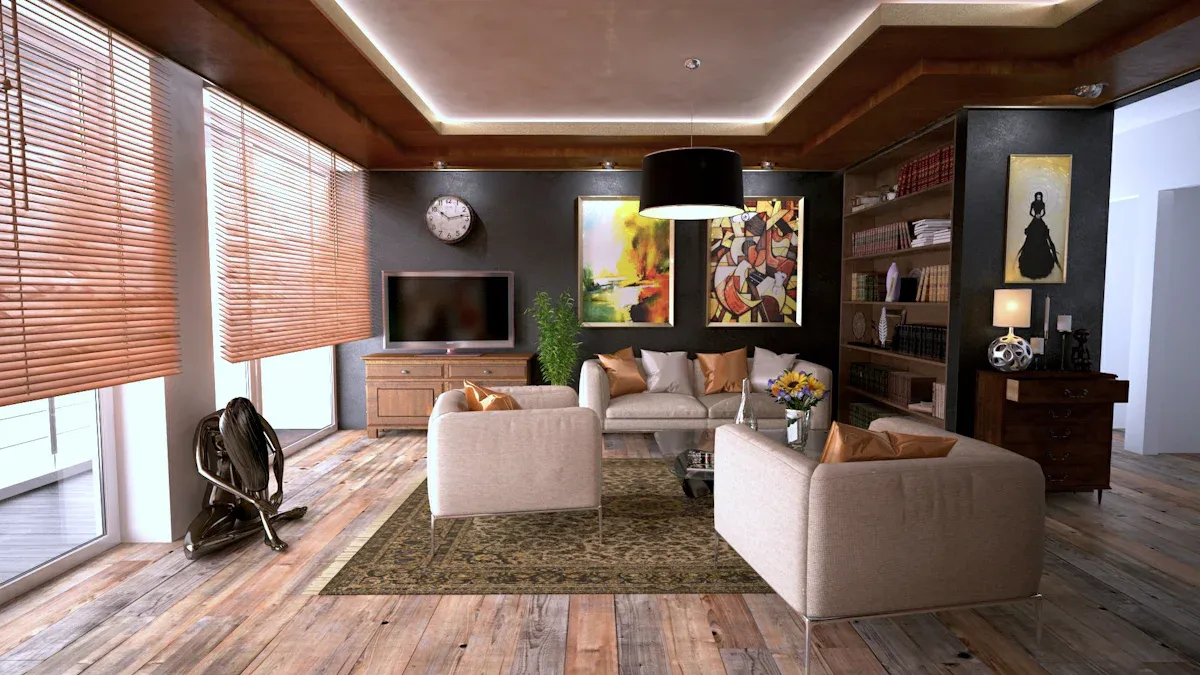
Textures play a crucial role in enhancing visual interest in your space. When you mix and match textures, you create a lively atmosphere that draws the eye. Research shows that different textures can significantly influence how spacious a room feels. For instance, a rough stone wall paired with a smooth glass table creates a striking contrast that adds excitement to your decor. This contrast not only captures attention but also evokes emotional responses tied to the materials used.
Layering different textures can transform a flat look into something dynamic. Think about how plush velvet cushions on a sleek leather sofa can create a cozy yet sophisticated vibe. This layering invites you to touch and interact with your surroundings, making your home feel more inviting.
Creating Depth and Dimension
When you layer textures, you also create depth and dimension in your space. This technique prevents a room from appearing flat or one-dimensional. For example, combining a soft wool rug with a sleek wooden floor adds richness to the overall look. The interplay between these textures enhances the sensory experience, making the space feel more engaging.
Here are some effective ways to create depth through texture:
Layer contrasting textures, like a soft throw blanket over a firm chair.
Use textured focal points, such as a statement wall or unique artwork, to draw the eye.
Incorporate light and reflective textures to expand the perception of space.
By thoughtfully combining different textures, you can achieve a balanced look that feels both inviting and stylish. Remember, the goal is to create a harmonious environment that reflects your personality while keeping the visual interest alive.
Types of Textures to Mix and Match
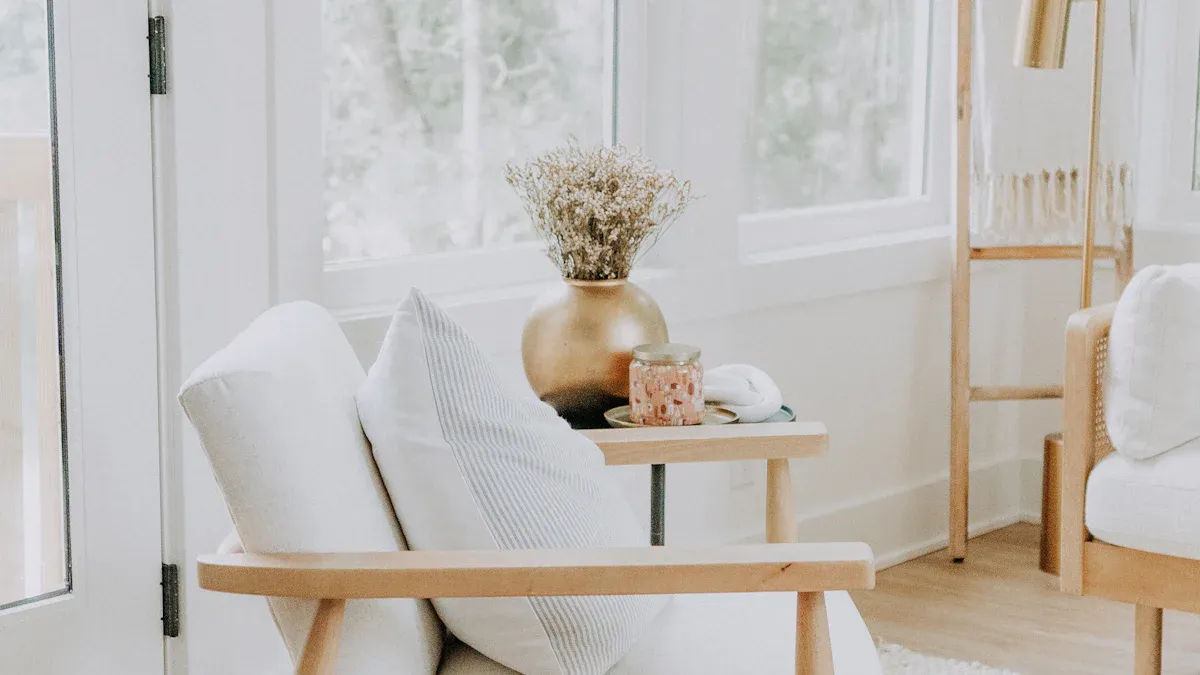
When it comes to mixing and matching textures, understanding the different types can help you create a balanced look. Let’s dive into two main categories: soft and hard textures, and natural versus synthetic textures.
Soft and Hard Textures
Soft textures, like plush cushions or cozy throws, bring warmth and comfort to your space. They invite you to relax and unwind. On the other hand, hard textures, such as metal or glass, add a sleek, modern touch. Combining these two types can create a harmonious feel. For example, placing soft velvet cushions near a marble coffee table not only enhances comfort but also adds visual interest.
Here are some effective combinations to consider:
Layering soft textiles, like a faux fur throw, over a firm leather sofa creates a cozy atmosphere.
Mixing smooth surfaces, such as glass or polished wood, with rough textures like exposed brick adds depth and dimension to your decor.
Natural vs. Synthetic Textures
Next, let’s explore natural and synthetic textures. Natural textures, derived from organic materials, often provide a more inviting feel. Think of wool rugs or cotton curtains that breathe and regulate temperature. They can enhance your home’s comfort and aesthetic.
In contrast, synthetic textures, made through chemical processes, can be more durable and resistant to wear. However, they may lack the softness and warmth of natural materials. Here’s a quick comparison:
Aspect | Natural Textures | Synthetic Textures |
|---|---|---|
Origin | Derived from organic materials | Manufactured through chemical processes |
Durability | High durability with proper care | Resistant to wear but less comfortable |
Environmental Impact | Biodegradable, lower ecological footprint | Higher ecological impact, pollution concerns |
Health Benefits | Better airflow, reduces skin irritation | May cause allergic reactions in some users |
By thoughtfully mixing and matching these textures, you can create a space that feels both stylish and comfortable. Remember, the key is to find a balance that reflects your personal style while keeping the visual interest alive.
Layer Different Textures for Balance
Start with a Base Layer
Creating a balanced look starts with establishing a solid base layer. You want to set the stage for your textures to shine. Here’s how to do it:
Start with a neutral foundation: Use neutral surfaces like hardwood floors or soft-painted walls. This calm base allows other textures to stand out.
Introduce contrasting surfaces: Pair different textures, such as smooth marble with rough wood. This contrast creates visual interest and keeps the eye engaged.
Use textiles for warmth and softness: Incorporate fabrics like rugs and curtains. They add comfort and approachability to your space.
Highlight with accent materials: Use smaller details like brass fixtures or ceramic pieces to enhance the overall design.
Consider scale and proportion: Ensure larger surfaces have simpler textures while smaller details can showcase bolder textures.
By following these steps, you create a strong foundation that invites you to layer different textures effectively.
Add Contrasting Textures
Once you have your base layer, it’s time to add contrasting textures. This step is crucial for achieving balance and visual interest. Here are some techniques to consider:
Curate contrasting materials: Juxtapose smooth with coarse and matte with glossy. For example, pair velvet with linen for a soft yet crisp contrast.
Layer patterns: Start with a dominant pattern and build around it. Mixing shapes and sizes helps avoid a flat appearance and adds balance.
Incorporate height variations: Use objects of varying heights to encourage visual flow. This prevents static surfaces and keeps the design dynamic.
Adjust tones: Incorporate lighter and darker versions of the same color. This adds depth without introducing new colors, enhancing the overall look.
Remember, a cohesive color palette plays a vital role in the success of your layered textures. It creates visual depth and interest, enhancing the effectiveness of your design. Using variations of a single hue with different textures prevents the room from feeling flat or sterile. Texture and light work together to add dimension, making your space feel inviting and sophisticated.
Lighting also plays a significant role in highlighting different textures. Use ambient, task, and accent lighting strategically to showcase various textures within your space. This approach enhances aesthetics and reveals the beauty of your design.
By layering different textures thoughtfully, you can create a balanced and inviting environment that reflects your personal style.
Mix and Match Patterns
Varying Scale of Patterns
Mixing different patterns can add excitement to your space, but you need to pay attention to their scale. Using a mix of large, medium, and small patterns helps each element stand out. This approach prevents overwhelming your space and reduces visual clutter. Here are some tips to keep in mind:
Larger patterns can anchor the space, while smaller patterns provide visual symmetry.
Pairing large and small elements creates balance and harmony in your design.
A layered approach allows each pattern to have its moment without competing for attention.
By varying the scale of your patterns, you create a dynamic look that feels cohesive and inviting.
Pairing Patterns with Solid Colors
When you incorporate patterns into your decor, balancing them with solid colors is essential. This strategy helps maintain visual interest without overwhelming the space. Here are some guidelines to follow:
Start with a color palette that ties your patterns together. This creates harmony and unity throughout the room.
Choose a lead pattern to dictate the color palette and style. This will guide your choices for other patterns and solids.
Use solid colors to provide visual relief and prevent the space from feeling too busy. They break up patterns and create visual breaks.
Stick to odd numbers of patterns for balance and harmony. This approach often feels more natural and visually appealing.
By mixing different patterns and incorporating solid colors, you can achieve an eclectic look that feels both stylish and comfortable. Remember, the key is to have fun while experimenting with your designs!
Room-Specific Texture Tips
Living Room
In your living room, aim for a cozy and inviting atmosphere. Start with a soft area rug to anchor the space. Layer it with plush cushions on your sofa for added comfort. Consider mixing materials like leather and fabric to create a balanced look. You might also want to add a textured throw blanket for warmth.
Bedroom
Your bedroom should feel like a personal retreat. Use a well-placed rug to transform the space from cold to cozy. Here’s a quick look at how textures can enhance your bedroom:
Evidence | Description |
|---|---|
Rug | A well-placed rug can transform a bedroom from cold to cozy, featuring soft, plush fibers that add warmth and texture. |
Layering Textures | Incorporating rugs, curtains, linens, and pillows creates a sense of lushness and luxury, which helps to relax the body. |
Mixing soft linens with heavier fabrics can create a sense of luxury. Don’t forget to include some decorative pillows in various patterns to add visual interest.
Kitchen
In the kitchen, focus on both aesthetics and functionality. Here are some tips to consider:
Use textured backsplash materials like subway tiles or natural stone to enhance visual contrast.
Opt for wooden cabinetry with distressed finishes to add depth and character.
Incorporate woven textiles and rugs to soften hard surfaces and add warmth.
Utilize textured tiles with intricate patterns for visual and tactile interest.
Choose various styles of lighting fixtures to add texture and ambiance.
These elements will help you create a kitchen that feels both inviting and practical.
Bathroom
For a spa-like bathroom, incorporate natural materials such as stone and wood. These textures not only enhance the aesthetic appeal but also create a calming atmosphere. Stone offers durability, while wood adds warmth. Together, they help you unwind after a long day.
When distributing textures throughout your home, remember to keep balance in mind. Pair antique brick with a traditional family room or use barnboard siding in a country kitchen. This approach ensures that your home décor feels harmonious and intentional.
Mixing textures is essential for creating a balanced look in your home. Remember to combine soft and hard textures, and don’t shy away from experimenting with different materials. Here are some tips to keep in mind:
Avoid overly matchy furniture sets. Instead, mix different textures, tones, and silhouettes.
Layer contrasting textures to add depth and visual interest.
Use a neutral palette to let your textures shine.
By following these guidelines, you can create a space that feels inviting and uniquely yours. So go ahead, get creative, and enjoy the process of designing your perfect interior!