
Choosing the best kitchen countertop materials can be overwhelming. You want a surface that combines durability, maintenance ease, cost, and aesthetic appeal. With so many kitchen countertop materials available, how do you know which one suits your needs? Popular choices like granite, quartz, and marble each have unique characteristics. Understanding these differences in kitchen countertop materials helps you make an informed decision for your kitchen remodel or renovation.
Key Takeaways
Granite countertops are durable and can last over 30 years with proper care. They resist scratches but can chip under extreme conditions.
Quartz countertops are non-porous and require minimal maintenance. They do not need sealing, making them a great choice for busy kitchens.
Marble countertops offer a luxurious look but require more maintenance. They are softer and more prone to scratches and stains, needing resealing every 6 to 12 months.
When choosing a countertop, consider your lifestyle. Think about how much maintenance you are willing to do and what look you want for your kitchen.
Costs vary: granite ranges from $40 to $100 per square foot, quartz from $50 to $200, and marble from $90 to $150. Choose based on your budget and needs.
Durability of Kitchen Countertop Materials

Granite Durability
Granite countertops are known for their exceptional durability. They can withstand heat, scratches, and general wear and tear. In fact, granite ranks between 6 and 7 on the Mohs scale of hardness, making it a tough choice for your kitchen. While granite is resistant to scratches, it is not completely immune. Laboratory tests show that granite has a high scratch resistance but can chip under extreme conditions.
Here’s a quick comparison of scratch and chip resistance:
Material | Scratch Resistance | Chip Resistance |
|---|---|---|
Granite | Resistant but not immune | Moderate |
Quartz | Slightly more resistant | Higher |
With proper maintenance, granite can last a long time. Prefabricated granite can last up to 25 years, while slab granite can maintain its appearance and integrity for over 30 years. This longevity makes granite a popular choice among homeowners.
Quartz Durability
Quartz countertops offer impressive durability due to their unique composition. Made of over 90% crushed quartz combined with resin, quartz creates a non-porous surface. This non-porous nature means quartz resists stains and scratches better than many natural stone options. Unlike granite and marble, quartz does not require regular sealing, which simplifies maintenance.
Here’s a breakdown of quartz’s durability compared to other materials:
Material | Composition | Porosity | Durability | Maintenance |
|---|---|---|---|---|
Quartz Countertops | Over 90% crushed quartz + resin | Non-porous | High | Minimal, no sealing |
Natural Stone | 50% to 75% quartz, porous | Porous | Moderate | Requires regular sealing |
This engineered stone provides a consistent look and requires minimal upkeep, making it an excellent choice for busy kitchens.
Marble Durability
Marble, while beautiful, has a different durability profile. It ranks lower on the Mohs scale, between 3 and 5, making it softer than both granite and quartz. This softness means marble is more susceptible to scratches and chips. Its high porosity allows liquids to seep into its structure, increasing the risk of stains if spills are not cleaned promptly.
Here are some key points about marble’s durability:
Different types of marble have varying levels of porosity, with lighter-colored marbles generally being more porous than darker ones.
When a liquid spills on an unsealed marble surface, it can penetrate deep into the stone, leading to permanent stains.
Etching occurs when acidic substances react with the calcium carbonate in marble, causing physical alterations to the surface.
Due to its maintenance needs, marble requires sealing every 6 to 12 months to protect against stains and etching. This frequency is higher than that of granite, which needs sealing only once a year, and quartz, which does not require sealing at all.
Maintenance of Kitchen Countertops
Granite Maintenance
Granite countertops require relatively low maintenance, making them a popular choice for busy kitchens. To keep your granite looking its best, follow these simple steps:
Daily Cleaning: Use a soft cloth or sponge with hot water and a granite-friendly cleaner. This helps remove dirt and grime without damaging the surface.
Immediate Spill Cleanup: Clean spills right away, especially oils and citrus juices. These can stain if left unattended.
Use Cutting Boards and Trivets: Protect your granite from scratches and thermal shock by using cutting boards for food preparation and trivets for hot pots.
To determine if your granite needs resealing, perform a water absorption test. If water beads up on the surface, your seal is intact. If it soaks in, it’s time to reseal. Experts recommend resealing granite every 1-2 years, depending on usage.
Quartz Maintenance
Quartz countertops are known for their easy upkeep. Since quartz is non-porous, it does not require sealing, which saves you time and effort. Here are some maintenance tips for quartz:
Daily Wiping: Use a mild dish soap and warm water to clean the surface. This prevents streaks and keeps your countertop looking fresh.
Immediate Spill Response: Wipe up spills quickly to avoid staining. Quartz is resistant to stains, but it’s best to be cautious.
Avoid Harsh Chemicals: Stay away from abrasive scrub pads and harsh cleaners like vinegar or bleach. These can damage the surface.
For cleaning, consider using products specifically designed for quartz. Here’s a quick comparison of some recommended cleaners:
Product Name | Pros | Cons | Approximate Price | Where to Buy | Instructions for Use |
|---|---|---|---|---|---|
Weiman Quartz Clean & Shine | Adds shine, cleans light stains, no streaks. | Contains chemicals that may irritate sensitive skin. | $6 – $8 for 16 oz | Amazon, Home Depot | Spray on surface, wipe with a soft cloth, avoid hot surfaces. |
Method Daily Granite Cleaner | Eco-friendly, no harsh chemicals, disinfects effectively. | May not handle tough stains well. | $4 – $6 for 28 oz | Amazon, Target | Spray on surface, let penetrate, wipe clean with a soft cloth. |
Granite Gold Daily Cleaner | Cleans, disinfects, prevents stains, designed for stone surfaces. | More expensive than similar products. | $9 – $12 for 24 oz | Amazon, Home Depot | Apply to countertop, wipe with a soft cloth, use daily for best results. |
Marble Maintenance
Marble countertops require careful maintenance due to their porous nature. Here are some essential tips to keep your marble in good condition:
Regular Cleaning: Use pH-neutral cleaning products to avoid damage. Acidic cleaners can etch the surface, leading to dull spots.
Immediate Spill Cleanup: Marble is highly susceptible to staining. Clean spills from liquids like coffee and red wine right away to prevent discoloration.
Resealing: Reseal your marble countertops every 6 to 12 months. This creates a protective barrier against stains and etching.
To maintain the beauty of your marble, consider using trivets, cutting boards, and coasters. These tools help prevent scratches and etching from hot or acidic items. Regular maintenance can enhance the long-term appearance and value of your marble countertops.
By following these maintenance tips, you can ensure that your kitchen countertops remain beautiful and functional for years to come.
Cost of Kitchen Countertops
Granite Countertops Cost
Granite countertops typically range from $40 to $100 per square foot when installed. The price varies based on the grade of granite. Here’s a breakdown of granite costs:
Granite Grade | Price per Square Foot (Installed) |
|---|---|
Grade A | $75 to $100+ |
Grade B | $60 to $75 |
Grade C | $40 to $60 |
Level 1 | $40 to $50 |
Level 2 | $50 to $65 |
Level 3 | $65 to $100+ |
Granite offers excellent durability and long-term value, making it a popular choice for many homeowners.
Quartz Cost
Quartz countertops generally cost between $50 and $200 per square foot, including installation. The price depends on the brand and quality. Here are some typical price ranges:
Budget quartz: $60-$70 per square foot
Mid-range quartz: $60-$100 per square foot
Premium quartz: $100-$150 per square foot
For a standard kitchen project of 30 to 50 square feet, you might spend between $1,800 and $5,000. Quartz provides a consistent look and low maintenance, which adds to its appeal.
Marble Cost
Marble countertops are often seen as a luxury option, with prices ranging from $90 to $150 per square foot. This cost is generally higher than both granite and quartz. Here’s a quick comparison:
Material | Average Cost/sq ft | Best For |
|---|---|---|
Marble | $90–$150 | Visual elegance and luxury |
Granite | $40-$100 | Durability and stain resistance |
Quartz | $50-$120 | Consistency and low maintenance |
Factors contributing to the higher cost of marble include its extraction complexities and aesthetic appeal. Marble’s unique veining and luxurious look make it a preferred choice for high-end projects.
Aesthetics of Kitchen Countertops
Granite Aesthetics
Granite countertops offer a natural beauty that enhances any kitchen. Their unique variations in color and pattern create a one-of-a-kind look. You can choose from a range of options, including:
Neutral tones: Gray, white, and beige are leading choices.
High contrast veining: Increasingly popular for visual drama.
Textured finishes: Honed and leathered textures add depth.
Bold colors: Options like Titanium and Sunset Canyon make a statement.
The natural variations in granite slabs contribute significantly to your kitchen’s design aesthetic. Each slab showcases different colors and veining patterns, allowing you to select styles that reflect your personal taste.
Quartz Aesthetics
Quartz countertops provide stylish options that mimic the appearance of natural stone. Their engineered nature allows for a wide variety of designs. Here’s a look at some customization options:
Color Options | Finish Options |
|---|---|
Solid colors (whites, grays, blacks) | Glossy finish (reflects light, makes spaces look bigger) |
Veined styles (e.g., Calacatta Nuvo) | Matte finish (subtle, elegant look) |
Pastel and earthy tones | Honed finish (natural stone feel) |
Polished finish (durable, modern) |
These features allow quartz to replicate the subtle veining and unique characteristics found in natural stone, appealing to homeowners who desire that aesthetic without the maintenance issues.
Marble Aesthetics
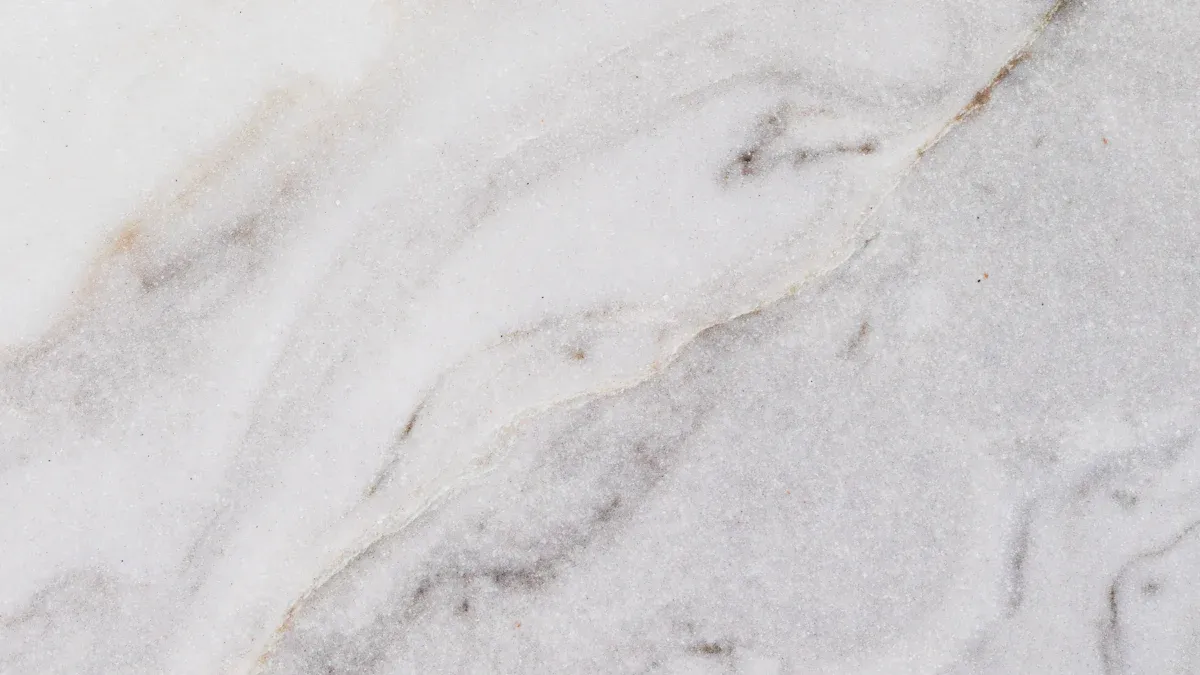
Marble countertops exude timeless elegance and sophistication. Their unique natural patterns and color variations create a luxurious look. Here are some reasons why marble remains a preferred choice for luxury kitchens:
Each slab is one-of-a-kind, adding character and charm.
Glossy surfaces and subtle textures contribute to a soft, luxurious feel.
Marble maintains a naturally cool temperature, ideal for baking and cooking.
The veining patterns in marble add depth and texture, influencing the overall kitchen aesthetics. Bold veins can make a dramatic statement, while subtle veins create a calm ambiance. This versatility allows marble to complement various design elements, enhancing the overall cohesion of your kitchen.
Environmental Impact of Countertops
Granite Environmental Considerations
Granite countertops come with environmental concerns, primarily due to their sourcing and transportation. Most granite slabs used in U.S. homes are imported, which leads to greenhouse gas emissions from shipping. Quarrying granite requires heavy machinery that runs on gasoline, contributing to environmental degradation. The extraction and processing of granite can have significant impacts:
The extraction and processing of granite can have significant environmental impacts. Quarrying granite involves energy-intensive processes and can lead to land degradation and habitat loss. Additionally, the transportation of granite, especially if sourced from overseas, can contribute to carbon emissions.
To mitigate these impacts, consider:
Choosing local suppliers
Opting for recycled granite options
Quartz Environmental Considerations
Quartz countertops offer a more sustainable option compared to natural stones. The manufacturing process of quartz is more controlled than traditional stone extraction methods. This resource-efficient production contributes to the overall sustainability of quartz countertops. Additionally, many quartz products incorporate recycled materials, which help reduce waste and conserve natural resources. Here are some benefits of quartz:
Recycled quartz countertops use post-consumer or post-industrial materials.
Incorporating recycled content conserves natural resources.
Marble Environmental Considerations
Marble extraction poses several environmental challenges. Quarrying practices can lead to soil erosion and deforestation. The mining, processing, and transportation of marble consume significant energy, increasing its carbon footprint. Here are some key concerns:
Deforestation disrupts habitats and biodiversity.
Heavy machinery emits greenhouse gases, contributing to global warming.
High water usage in cutting and polishing processes can be problematic in water-scarce regions.
By understanding these environmental impacts, you can make informed choices when selecting your kitchen countertops.
Choosing the right kitchen countertops involves careful consideration of several factors. You learned about the durability, maintenance, cost, and aesthetics of granite, quartz, and marble. Each material has its strengths and weaknesses.
When selecting a countertop, think about your specific needs and preferences. Do you prioritize durability over aesthetics? Or is maintenance your main concern? Remember, the best choice depends on your individual circumstances and lifestyle.