
Stud finders help prevent misplaced fasteners, damaged wall surfaces, and avoidable rework when mounting shelves, cabinets, artwork, or outdoor accessories. Magnetic models are useful around drywall, siding, and other conventional construction because they locate metal fasteners without batteries or electronics. I focus on detection method, wall compatibility, marking capability, and the extra guidance needed around wiring and metal objects.
A Quick View Of The Lineup

CH Hanson 03040 Magnetic Stud Finder 2 Pack

HMmagnets Magnetic Stud Finder PRO 1 Pack

HMmagnets Magnetic Stud Finder PRO 4 Pack
Calvana Magnetic Stud Finder 4 Pack

Calculated Industries 7356 StudMark Replacement Markers 6 Piece
SKT Innovations Magic Stud Finder Plus 3-in-1

Zircon MultiScanner A200

Zircon SuperScan M4

Zircon StudSensor Basic
A Breakdown Of The Leading Choices
A pocket-sized magnetic finder makes sense for quick drywall work, especially when the task involves repeating screws or nails across a workroom wall. The CH Hanson 03040 uses magnetic attraction to locate metal fasteners, while its soft grip helps keep the tool comfortable during repeated passes. I consider it a practical fit for anyone who wants a simple tool with no charging routine.
Compared with the electronic Zircon models later in the list, this one provides less information about wiring or metal objects. Its advantage is simplicity: slide it across the surface, watch for attraction, and mark the location. For exterior siding or outdoor utility walls, the fastener response may depend on wall thickness and construction.
Noteworthy Benefits
- Soft grip supports comfortable handling during repeated wall scans.
- Compact size fits easily in a pocket or tool pouch.
- No batteries remove charging and battery replacement concerns.
- Two units allow separate stations or a replacement at hand.
Small Caveats
- It detects the metal fastener, not the full width or center of the stud.
- Plaster, thick textured surfaces, and nonstandard siding may reduce magnetic response.
- It offers no electronic warning for hidden wiring.
Quick Facts
Who It Suits Best
This fits weekend DIYers and repair crews handling basic drywall fastening where pocketability matters more than detailed scanning.
A Better Fit Elsewhere
Zircon MultiScanner A200 suits people who need stud, metal, and live-wire information before drilling.
Three neodymium magnets give this magnetic finder a stronger attraction profile than the two-piece CH Hanson set. That makes sense for drywall projects with several fasteners, including cabinet rails, trim, and wall-mounted storage. I see it as a focused choice for people who already know their wall is drywall and need fast, battery-free confirmation.
The listing describes detection through drywall and some surface finishes, while warning against plaster walls. “Neodymium” refers to a rare-earth magnet material known for strong magnetic pull, though actual response still depends on fastener type, wall thickness, and distance.
Positive Points
- Three magnets support repeated detection and clearer tactile feedback.
- No batteries keep the tool ready for quick jobs.
- Single-unit format keeps the kit minimal.
- Useful for drywall, paint, and light surface textures listed in the description.
Trade Offs
- It is not listed for plaster walls, which limits some older homes.
- It cannot identify live electrical wiring.
- Owners may need to reposition the tool repeatedly around deeply set fasteners.
Feature Snapshot
Made For
This suits DIYers working on drywall shelves, cabinets, and trim who prefer a passive magnetic tool over an electronic scanner.
Another Choice May Suit
Zircon SuperScan M4 fits installers who need live-wire alerts and broader material guidance.
The four-piece format makes this HMmagnets option convenient for a shared workshop, rental property, or large drywall job. Each unit uses the same three-neodymium-magnet approach as the single version, so the difference is distribution rather than a different detection system. I favor this setup for crews that lose small tools easily or need one finder per work area.
As with the single version, the product is intended for drywall and compatible finishes rather than plaster. The magnets can help identify screw and nail heads, but they do not map the center of a stud or alert the user to live wiring.
Useful Highlights
- Four units support multiple work zones and replacements.
- Three magnets per unit favor fastener detection in standard drywall.
- Battery-free operation reduces interruptions during a project.
- Small tools are easy to distribute among helpers.
Potential Drawbacks
- Spare units add more items to keep track of in a crowded toolbox.
- The tool is limited to magnetic fastener discovery.
- Thick plaster and some outdoor surfaces may not produce consistent attraction.
Key Product Details
Built With In Mind
This works for renovation teams, property maintenance groups, and serious home projects handling several walls at once.
A Better Fit Elsewhere
CH Hanson 03040 Magnetic Stud Finder is a more compact option for a single household workspace.
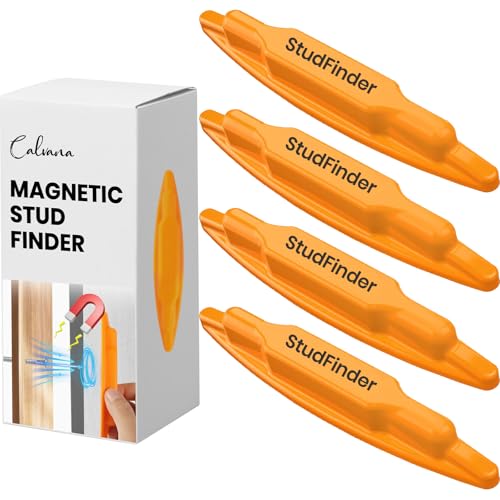
Calvana’s four magnetic finders are a straightforward choice for marking repeated screw or nail locations. The magnets attach to metal fastener heads, giving a physical indication of a likely stud position without electronic readings. For a garage, utility room, or drywall-lined workshop, that is a useful level of feedback for light mounting projects.
Unlike the HMmagnets models, the source details do not specify magnet type or count. That keeps the appeal in the four-unit format and straightforward wall use rather than technical detection features. I would not rely on it alone where buried wiring is a concern.
What Helps Most
- Four units make it easy to mark several areas quickly.
- Magnetic attachment gives a clear physical response at a fastener.
- No batteries simplify storage in a garage or tool bag.
- The four-pack suits shared household projects and replacements.
Points To Note
- It locates fastener heads rather than mapping stud width.
- Wall texture, thickness, and fastener depth can affect attraction.
- No electronic warning is provided for hidden wiring or metal objects.
Right Fit For
This is a sensible fit for homeowners handling light drywall mounting tasks in several rooms or a garage.
Where A Sibling Pick Shines
Zircon MultiScanner A200 provides a more informative choice for installs involving metal objects or electrical wiring.
This is an accessory set rather than a complete stud finder. The six magnetic markers are intended to work with the StudMark and StudMark Plus magnetic stud finders, allowing multiple fastener locations to remain visible while screws are driven. I see the real value in a large drywall installation where a pencil mark can fade or become hard to match with a drill bit.
Because the markers rely on rare-earth magnet attraction, they need compatible metal fasteners and a reasonably flat surface. They are most useful after a finder has located likely stud positions, not as a replacement for an electronic scanner.
Notable Gains
- Six markers support multiple fastening points at once.
- Rare-earth magnets create a clear placement reference.
- Markers can be moved as the installation progresses.
- Useful for repeat layouts and cabinet or shelf mounting.
Where It May Fall Short
- It does not locate studs without a compatible magnetic finder.
- Markers can be misplaced on busy floors or crowded work surfaces.
- The set is less useful for electronic stud-location workflows.
Best Suited To
This accessory suits installers who already own a StudMark or StudMark Plus and need spare markers for repeated drywall layouts.
Consider Something Else When
CH Hanson 03040 Magnetic Stud Finder is a better starting point for someone who needs a portable finder rather than replacement markers.
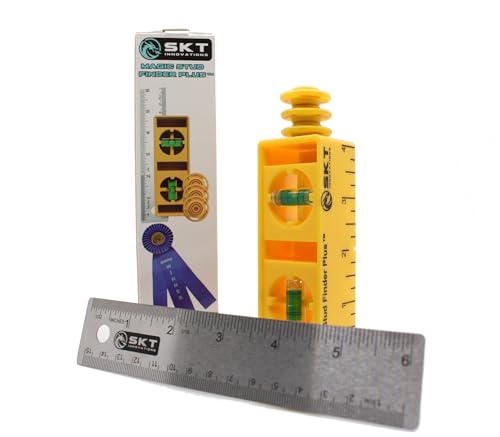
The Magic Stud Finder Plus combines magnetic stud detection with a small level and a 6-inch steel ruler, so the same tool can help with both location and placement. That makes it more practical for mounting a shelf, television, mirror, or piece of art than a finder that only locates a metal fastener. The integrated measuring and leveling features are especially useful for getting a mount level before drilling.
The product description specifically warns that it may not work on lathe and plaster walls. I would keep that limitation in mind for older homes with nonstandard wall construction, where an electronic model may provide a more suitable workflow.
The Good Stuff
- Combines three placement functions in one compact tool.
- Level helps keep mounted items aligned.
- Six-inch ruler supports quick spacing checks.
- No electronics means no battery or charging routine.
Less Ideal Details
- Plaster and lathe wall performance is limited according to the source.
- It does not provide live-wire detection.
- Steel construction may add weight compared with a simple plastic magnet.
Who Will Love This
This fits DIYers mounting household items who want a compact finder, level, and measuring aid in one tool.
Look Elsewhere When
Zircon SuperScan M4 is the better fit for walls where live-wire and metal-object warnings are priorities.
The Zircon MultiScanner A200 is a step up from the simple magnetic picks because it is designed to identify wood and metal studs along with live-wire and metal-object information. That broader readout is useful before installing cabinets, handrails, fixtures, or heavier wall décor. I favor this option for indoor drywall projects where a fastener-only tool leaves too many unknowns.
The phrase “live-wire detection” means the scanner looks for an electrical signal associated with wiring, while metal scanning identifies conductive objects behind the wall. Neither feature replaces caution around older or unusual wiring, but the extra guidance can make installation planning more deliberate.
Where It Helps
- Reports more than a simple fastener location.
- Supports wood and metal stud projects.
- Live-wire detection adds useful information before drilling.
- Suitable for cabinets, mirrors, shelves, and fixtures.
Some Limits To Know
- It requires electronics and regular battery care.
- More readings can make a simple project feel slower.
- Wall construction and wiring layout still influence results.
The Right Fit
This suits homeowners, DIYers, and installers who want a more complete wall scan before mounting fixtures or fastening into framed walls.
Another Choice May Suit
CH Hanson 03040 Magnetic Stud Finder is simpler and more pocketable for basic drywall work.
The SuperScan M4 targets a common problem in framed walls: not every object behind drywall is a stud. Its wood-and-metal stud scanning, WireWarning detection, and Metal Scan mode give it a broader role than the magnetic-only choices. I would consider it for a renovation where cabinets, mirrors, or wall décor must avoid concealed metal and wiring.
Compared with the A200, this model is presented as an advanced option, though the available source data does not list a numeric depth or additional dimensions. I would rely on the displayed alerts and the wall manufacturer’s guidance rather than assuming every older installation is fully represented.
Reasons It Performs
- Locates wood and metal studs before common mounting jobs.
- WireWarning alerts can flag live, unshielded wiring.
- Metal Scan adds a separate check for buried metal.
- Useful around TVs, shelves, mirrors, cabinets, and décor.
Practical Considerations
- Electronic scanning requires batteries and periodic charging.
- Multiple detection modes may be more than a quick screw job needs.
- Older plaster or unusual wall assemblies can reduce scan clarity.
Built With In Mind
This fits installers and homeowners who want a broader pre-drilling check than a simple magnetic finder provides.
Reach For A Different Pick When
SKT Innovations Magic Stud Finder Plus is the more convenient choice when a level and short ruler matter more than electronic alerts.
The Zircon StudSensor Basic is aimed at straightforward indoor projects such as pictures, mirrors, shelves, and light fixtures. It is an electronic edge detector for wood and metal studs behind drywall, which gives it a simpler role than the A200 and SuperScan M4. I appreciate that restraint: beginners get a focused tool without carrying a collection of unrelated functions.
Its stated design finds stud edges up to 3/4 inch deep. That measurement is a stated operating detail, not a promise that every wall or surface will produce the same result, particularly across thicker plaster or unusual building materials.
What Stands Out
- Clear fit for common drywall mounting tasks.
- Finds wood and metal stud edges.
- Supports up to 3/4-inch detection depth as specified.
- Simple operation suits first-time wall-mounting projects.
Minor Gripes
- It focuses on edges rather than providing a broad hazard scan.
- Battery maintenance is required for electronic operation.
- Thicker plaster and unusual wall assemblies may not match standard drywall results.
Who Should Grab It
This suits beginners handling pictures, mirrors, shelves, and light fixtures in standard drywall homes.
Swap It Out When
Zircon SuperScan M4 is a better fit for projects involving concealed wiring or buried metal objects.
Choosing A Stud Finder For Outdoor Walls
Start with the wall construction. Magnetic finders depend on metal fasteners, so drywall, standard siding, and similar surfaces are more approachable than thick plaster or textured masonry. Electronic scanners can provide more information, but they still need room to operate and may not interpret every older wall accurately.
Detection depth matters as much as the feature list. A finder that identifies a screw head may save the first hole, while one that maps stud edges or warns about wiring can support more demanding installations. “Edge detection” describes locating the side of a stud, which is useful for centering a fastener but differs from confirming the full stud center.
Outdoor projects also deserve a closer look at weather resistance, storage, and wall texture. None of the listed source details establishes a complete outdoor-weather rating, so I would keep magnetic and electronic tools dry during storage and use them only on surfaces the manufacturer supports.
A Practical Wall-Fitting Checklist
A compact magnetic model works for light drywall mounting and basic fastener location. A multi-pack helps shared workspaces, while a marker set suits installers who already own a compatible magnetic finder. For cabinets, televisions, handrails, or uncertain walls, the electronic Zircon options add a more informative scanning workflow.
What Matters Most Before Drilling
First, match the tool to the wall: magnetic attraction needs a fastener, while electronic scanning can interpret broader wall conditions. Next, decide how much information is necessary. A simple edge detector may be enough for a picture, while live-wire and metal alerts are more relevant to heavier fixtures and renovation work.
I also consider hands-free convenience, markings, and battery habits. Magnetic tools are easy to carry and require no charging, but markers must be placed carefully on the wall. Electronic scanners need batteries and may be less appealing for occasional use, yet they can provide a better picture of what sits behind the surface.
Questions To Ask Before Mounting
Do I need a fastener finder or a full wall scanner? Will the tool be used on standard drywall, plaster, masonry, or another surface? Do I need edge data, stud-width information, or warnings about metal and wiring? Answering those questions narrows the field faster than comparing every listed function.
Common Shopping Slip Ups
The most common mistake is treating a magnetic tool as a universal wall scanner. Another is assuming that a stud finder’s alert proves the entire cavity is safe. I would also avoid choosing a multi-pack before confirming that multiple stations or replacement tools are useful for the project.
What The Higher Tier Buys
Higher-tier electronic models add information beyond a simple magnetic pull. Zircon’s A200 and SuperScan M4 provide wood and metal stud scanning, with the M4 also emphasizing live-wire and buried-metal alerts. That extra guidance is worthwhile for cabinets, mirrors, fixtures, and unfamiliar walls.
Frequently Asked Questions
Can magnetic stud finders work outdoors?
They can work on outdoor surfaces containing metal screws or nails, but wall thickness, texture, and fastener depth affect the response. The listed magnetic models are not described as waterproof, so dry use and protected storage are sensible.
Do I need a magnetic or electronic stud finder?
Magnetic finders suit basic drywall fastening around known metal fasteners. Electronic scanners are more useful for locating stud edges and identifying possible wiring or metal objects.
Can I use a stud finder on plaster walls?
Compatibility depends on the model. The HMmagnets listings exclude plaster walls, and the SKT Innovations description notes possible limitations with plaster and lathe surfaces.
Do stud finders detect live electrical wiring?
Only models with live-wire detection provide that specific alert. Magnetic tools locate metal fasteners, while basic electronic edge finders may not identify wiring.
What is the best option for mounting a cabinet?
A scanner with stud, metal, and live-wire guidance offers more information than a simple magnetic finder. The Zircon SuperScan M4 is the most relevant choice in this list for that broader preparation.
Final Verdict
The CH Hanson 03040 is my compact choice for basic drywall work, while the HMmagnets PRO models suit people who want a stronger passive magnetic response. The Calculated Industries markers are useful only alongside a compatible finder, and the SKT Innovations model adds level and ruler functions. For broader wall preparation, the Zircon A200 or SuperScan M4 provides more useful information before drilling. Choose the tool that matches the wall and the amount of guidance the project actually needs.
