
Deck restoration rarely needs one universal can of paint. A porous wood surface, damp concrete, a pool surround, and an exposed joint each demand a different level of sealing, adhesion, texture, or flexibility. I’ve separated the list into actual primers, spray marking paint, sealants, and deck finishes, because the useful choice depends on the surface and the repair, not the spray-can format alone.
For quick touch-ups around a workshop or patio, Rust-Oleum 203035 M1800 brings controlled spray application. For larger surfaces, Liquid Rubber Multipurpose Primer and Tuff Coat UT-80 Adhesion Primer provide more substantial bonding options. A bright marking paint and a cool-surface coating serve narrower jobs, while the caulk and textured roller are useful companion products rather than direct substitutes for a primer.
An Overview Of The Picks

Zinsser High Hide Cover-Stain Primer, White

Zinsser Bulls Eye Water-Base Primer & Sealer, White

Rust-Oleum 203035 M1800 Inverted Marking Spray Paint

Liquid Rubber Waterproof Sealant & Adhesive Caulk, White
Tuff Coat Medium Texture Deck Coating, Waterpark Blue

Tuff Coat Textured Roller, 9 Inch

Liquid Rubber Cool Foot Deck Coating, Misty Grey
Tuff Coat UT-80 Adhesion Primer, Gallon Kit

Liquid Rubber Multipurpose Primer, 1 Gallon
Taking A Closer Look At The Options
Zinsser High Hide is the most substantial general-purpose primer here for painted wood that has weathered through repeated sun and rain. Its oil-based formula focuses on hiding old color, sealing porous material, and limiting tannin bleed, which is the dark discoloration wood tannins can create beneath paint.
For most backyards, that makes more sense than reaching for a marking spray or a textured pool coating. The honest limitation is application: an oil-based primer brings stronger odor and requires more care around occupied spaces than the water-based Bulls Eye formula.
Real Benefits
- High-hiding coverage reduces the influence of dark previous colors.
- Seals exterior wood while helping contain tannin discoloration.
- Works across painted drywall, cured plaster, wood, metal, and concrete.
- Blocks difficult smoke, fire, and water stains before repainting.
- Touch-dry in 35 minutes, with coverage stated at up to 100 square feet.
Things To Consider
- The oil-based formula is less suitable for a busy enclosed room.
- Owners must follow the listed safety precautions and allow extended odor clearance.
Feature Snapshot
Who It Suits Best
It suits homeowners restoring previously painted exterior wood with persistent color bleed or tannin staining.
Where Another Pick Suits Better
Zinsser Bulls Eye Water-Base Primer & Sealer, White suits interior projects where fast drying and low odor matter more.
Bulls Eye Water-Base is built for clean, fast-drying interior preparation rather than demanding exterior tannin control. A primer-sealer combines two functions: it prepares the surface and creates a uniform, sandable layer that can receive paint afterward.
That profile makes it useful for an indoor trim wall, a painted door, or woodwork before a color change. On an exposed deck, Zinsser High Hide offers the more relevant weather and stain story, so Bulls Eye is not my automatic exterior choice.
Benefits That Matter
- The low-odor water base suits occupied indoor work areas.
- Fast drying shortens the wait before sanding or top-coating.
- A flat, sandable finish helps create an even painting surface.
- Works on walls, doors, trim, plaster, concrete, wood, and painted surfaces.
Worth Noting
- Its supplied details center on indoor applications rather than exterior deck exposure.
- Cleaning and drying time still depend on room ventilation, substrate moisture, and the eventual top coat.
Quick Facts
The Right Fit
It fits first-time decorators preparing interior wood, drywall, plaster, or painted trim in a well-ventilated space.
A Better Fit Elsewhere
Liquid Rubber Multipurpose Primer, 1 Gallon is a stronger fit for outdoor concrete, wood, or metal preparation.
The inverted tip changes the practical geometry of this spray can. Instead of pushing the nozzle downward, the operator marks a surface above hand level, which is useful for pavement, garage floors, utility areas, and selected deck touch-ups.
This is marking paint, not primer, so it does not belong under a full deck finish. For a bright local correction or a crisp orientation line, its narrow application pattern is the reason to include it.
The Good Stuff
- The inverted precision tip helps control narrow lines and reduces unwanted spray spread.
- Marking coverage can reach up to 250% more linear feet than other brands, according to the stated product information.
- It adheres to hot surfaces and can be sprayed down to 25°F.
- Drying in under five minutes supports quick touch-ups in workable spaces.
Minor Gripes
- Alert orange serves visibility rather than substrate sealing.
- Early fading and chalking resistance do not make it suitable beneath another coating.
Technical Notes
Made For
It suits maintenance crews marking pavement, garage surfaces, hot locations, or above-hand deck details.
Consider Something Else When
Zinsser High Hide Cover-Stain Primer, White is the better choice for sealing and repainting a broad exterior surface.
Liquid Rubber Waterproof Sealant & Adhesive Caulk is a joint treatment rather than a sprayed primer. Its dual-action formula combines adhesion with caulking, so it serves narrow roof transitions, wall joints, and small voids that need a flexible water-resistant seal.
For a deck renovation, I treat it as companion hardware. It can close a troublesome joint before a broader coating or finish project, but filling that line does not prime the whole surface.
Positive Points
- Dual bonding and sealing functions reduce the need for separate materials on small joints.
- Waterproof caulking suits roof edges and exposed exterior transitions.
- The four-pack format supports multiple repairs around a home.
Practical Considerations
- It is intended for joints and voids, not broad deck field coating.
- Owners commonly need careful surface preparation and full curing time before exposing the repair to heavy traffic.
Built With In Mind
It fits property maintainers sealing small exterior joints, roof details, and recurring household leaks.
Look Elsewhere When
Liquid Rubber Cool Foot Pool Deck Coating, Misty Grey is the better fit when an entire pool surround needs a seamless finish.
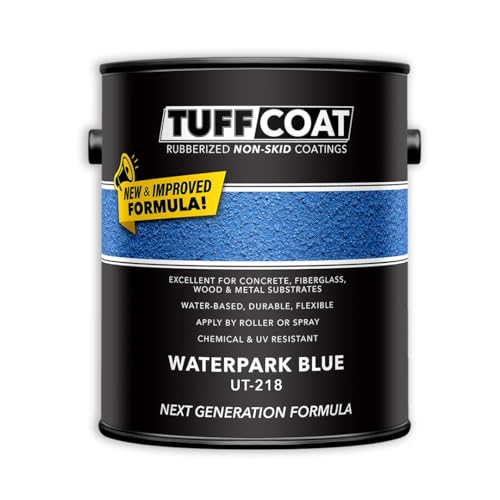
Tuff Coat Medium Texture is a complete rubberized finish built for pool decks, docks, ramps, patios, and busy walkways. Its cross-linked acrylic and urethane structure incorporates recycled rubber granules, producing a flexible, impact-resistant layer with a deliberate non-skid texture.
Unlike a primer, it changes the walkable surface as well as protecting the substrate. That makes it more demanding in appearance and preparation, but useful where bare feet, splash traffic, and repeated footfall define the project.
Strengths Worth Knowing
- Rubber granules create a non-skid texture for wet pool environments.
- The flexible water-based finish suits high-impact, heavily used areas.
- One component simplifies material handling compared with a two-part system.
- Waterpark Blue supplies a distinct finish for pools, docks, and splash areas.
Trade Offs
- Texture can collect dirt, leaves, and debris in busy outdoor spaces.
- Surface preparation and uniform roller coverage strongly influence the final appearance.
- The gallon container may require several units for a broad deck.
Who Should Grab It
It suits pool owners and coastal property maintainers restoring exposed, high-traffic concrete or deck surfaces.
Where A Sibling Pick Shines
Liquid Rubber Cool Foot Deck Coating, Misty Grey is a better fit for reducing solar heat transfer on sun-exposed surrounds.
The nine-inch open-cell foam roller applies the coarse particles embedded in Tuff Coat without compressing the material into a smoother, less consistent finish. Open-cell construction holds coating while allowing the texture to transfer across a larger deck area.
That makes the tool relevant for anyone using Tuff Coat Medium Texture, yet it contributes nothing on its own. It is a preparatory accessory, and the stated two-coat application means careful cleanup between passes is part of ownership.
Good Reasons To Consider
- Nine-inch width covers broad boards and concrete sections efficiently.
- Textured foam helps distribute rubberized deck coatings.
- Washable construction supports repeated coating projects.
Small Caveats
- Residue can settle into the open-cell foam and needs prompt cleaning.
- This roller has no purpose on a masking or fine-paint project.
Who Will Love This
It suits DIY decorators and contractors applying Tuff Coat texture to pool decks, docks, patios, or walkways.
Another Choice May Suit
Liquid Rubber Cool Foot Pool Deck Coating, Misty Grey is a simpler choice for projects applied with a brush, roller, or paint sprayer.
Cool Foot focuses on the heat problem rather than coarse traction. Its solar-reflective white basis can reduce heat transfer by as much as 35% compared with regular paint, according to the supplied information, which makes it relevant around pools and patios in direct sun.
Unlike Tuff Coat Medium Texture, it forms a smoother membrane that can be applied by brush, roller, or sprayer. The catch is straightforward: a cooler surface is not the same feature as a highly textured non-skid finish.
Real-World Strengths
- Solar reflectivity targets uncomfortable heat on exposed pool decks.
- UV stability supports a finish exposed to repeated outdoor sunlight.
- Multiple application tools give DIY decorators flexibility around obstacles.
- Works over wood, concrete, walls, fences, and other suitable substrates.
A Few Limitations
- Misty Grey may not provide the same bright reflective appearance as white.
- Clean, consistent application matters because the product forms a visible membrane.
Core Details
Right Fit For
It fits homeowners with sun-exposed concrete, wood, or composite surrounds that need reflective protection rather than heavy texture.
Not Your Match When
Tuff Coat Medium Texture Deck Coating, Waterpark Blue is a better fit where pronounced non-skid texture takes priority.
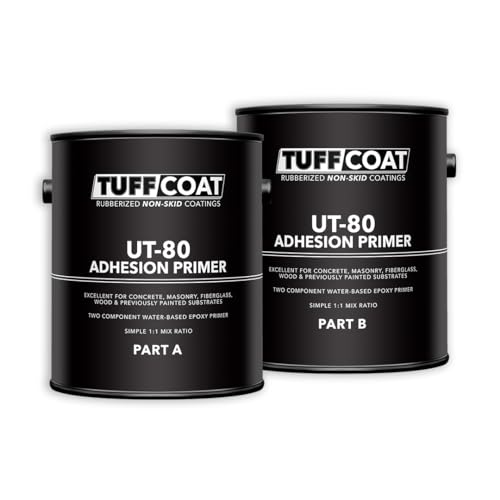
UT-80 is a two-component water-based epoxy primer and sealer, meaning it combines separate resin and hardener components that must be proportioned before use. The 1:1 mixing ratio keeps that setup manageable for careful weekend projects.
Its ability to coat damp concrete and bond to concrete, masonry, fiberglass, wood, or painted surfaces makes it a serious preparation layer for a complete Tuff Coat system. Compared with a simple one-part primer, the mixing requirement adds timing and cleanup.
Strong Points
- Epoxy bonding supports demanding deck and moisture-area applications.
- Damp concrete can receive the primer, reducing sensitivity to early moisture.
- One-to-one mixing provides a straightforward two-part ratio.
- Compatibility with Tuff Coat systems creates a coherent application stack.
Points To Note
- Two components require accurate measurement, mixing, and prompt use within listed working time.
- Application becomes less forgiving once epoxy begins curing.
Built With In Mind
It suits experienced decorators coating wood, concrete, masonry, fiberglass, or painted surfaces in moisture-heavy areas.
Reach For A Different Pick When
Liquid Rubber Multipurpose Primer, 1 Gallon is a simpler fit for routine concrete and wood preparation without a two-part mix.
Liquid Rubber Multipurpose Primer is the practical bridge between Zinsser’s general-purpose primers and system-specific deck bonding layers. A bonding agent improves how a subsequent coating grips a porous substrate, while its listed compatibility covers concrete, wood, high-density polyethylene, and metal.
Fast drying and brush, roller, or spray application keep the product approachable for home workshops. I still confirm the finished coating’s compatibility and follow its preparation directions because adhesion claims cannot compensate for contaminated or inadequately prepared surfaces.
Where It Excels
- Broad substrate coverage simplifies mixed-material preparation.
- Fast drying helps keep a compact repair moving without prolonged odor.
- Brush, roller, and spray options suit different deck geometries.
- Bonding support can reduce blistering between compatible coatings.
Details To Watch
- Metal surfaces still need the specific cleaning and preparation required by the system.
- Full adhesion depends on removing loose material, moisture, and contaminants before application.
Essential Details
Whose Shelf It Belongs On
It belongs on a garage shelf for DIY decorators working across mixed concrete, wood, and metal surfaces.
Swap It Out When
Tuff Coat UT-80 Adhesion Primer, Gallon Kit is the better match for a two-part Tuff Coat system over damp concrete.
What Matters Before Primer And Coating Selection
Match The Primer To The Substrate
Wood, concrete, metal, and previously painted surfaces absorb and react differently. An adhesion primer creates a stable bonding layer between the substrate and finish, while a high-hiding stain primer is intended to equalize color and block discoloration. I prioritize a primer explicitly listed for the material rather than assuming a general paint-store label will handle every outdoor condition.
Decide Between Sealing And Marking
A stain-blocking primer works beneath paint, while inverted marking paint leaves a visible orange line. Spray format alone does not make either item a primer. The purpose comes first: a broad sealed repaint, a textured walking surface, a reflective pool surround, or a narrow utility mark.
Account For The Final Coating System
A primer can only perform as intended when paired with a compatible finish. Tuff Coat UT-80 is a two-component epoxy primer intended to work with Tuff Coat systems, while Liquid Rubber Multipurpose Primer covers several substrates and application methods. The gallon format also matters: broad pool decks can consume material faster than a small patch.
Plan For Real Deck Conditions
Moisture, sunlight, foot traffic, and surface porosity shape the result. Damp concrete favors a primer rated for that condition, pool surrounds need UV-aware finishes, and high-traffic areas benefit from texture. Routine maintenance includes keeping drainage paths open, removing standing water where possible, and inspecting worn edges before they affect the surrounding finish.
Avoiding Common Coating Errors
Mistakes Worth Dodging
Choosing by container size or color before checking substrate compatibility is a common error. Treating caulk, marking paint, primer, and a complete deck coating as interchangeable creates another one. The honest shortcut is to match the product’s stated job to the repair, then confirm compatibility with the finish planned for the next step.
What Separates Premium From Basic
A specialized two-part epoxy primer costs more because mixing, stronger bonding chemistry, and support for demanding or damp substrates add formulation value. A broad single-component primer may make more sense for straightforward wood or concrete work. The upgrade matters most when adhesion conditions are difficult or the finish system specifically calls for that primer.
Frequently Asked Questions
Are Spray Primers Better Than Roll-On Primers?
Spray application can reach narrow areas and complex surfaces quickly, while rollers often provide steadier control over broad boards. I choose by access, coating viscosity, and the application directions for the selected product.
Can Zinsser High Hide Be Used on Exterior Wood?
Yes, the stated uses include previously painted wood and exterior wood needing stain or tannin control. Surface preparation and the listed application conditions still govern the final result.
Is Tuff Coat UT-80 Suitable for Damp Concrete?
The product information says UT-80 can be applied to damp concrete, which differentiates it from primers limited to fully dry surfaces. It remains a two-part epoxy primer and must be mixed at the specified 1:1 ratio.
Is Liquid Rubber Cool Foot a Primer?
No, it is described as a stand-alone protective coating. Liquid Rubber Multipurpose Primer or another compatible bonding primer may serve as a preparation layer where the system calls for one.
Does A Non-Skid Deck Coating Need Special Tools?
A textured roller, such as the Tuff Coat 9-inch model, helps distribute a coarse rubberized coating consistently. Exact tool guidance should follow the finish coat’s application instructions.
Final Verdict
For broad exterior wood repairs, Zinsser High Hide addresses the most relevant stain and tannin concerns. Tuff Coat UT-80 becomes the stronger choice for a complete heavy-use coating system, while Liquid Rubber options cover reflective finishes, general bonding, and joint sealing. The right decision comes down to substrate, finish compatibility, and the surface being protected, rather than spray format alone.
