
Outdoor security cameras work hardest around driveways, backyards, gates, and side entrances, especially during school runs and evening commutes. I focus on seven Reolink options spanning wired Power over Ethernet, battery-powered solar setups, cellular connectivity, optical zoom, and multi-camera recording. The right fit depends less on resolution alone and more on installation access, coverage distance, storage, and how quickly the camera distinguishes relevant activity from moving branches or passing shadows.
A Side-By-Side Look
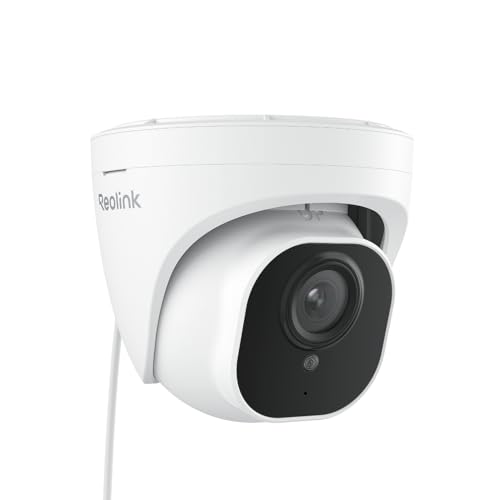
REOLINK RLC-820A 4K PoE Dome
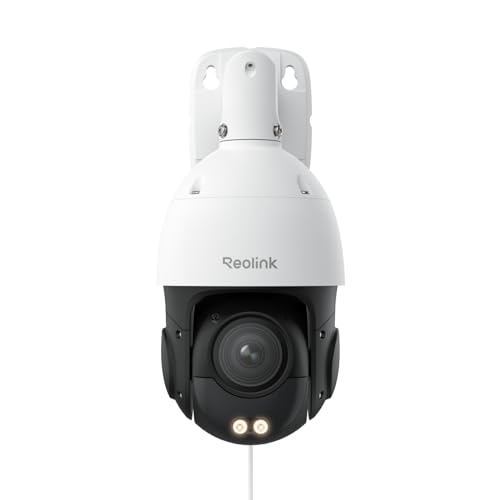
REOLINK RLC-823S2 4K 16X PTZ Camera
REOLINK Duo 3V PoE 16MP Dual-Lens Camera

REOLINK RLK8-520D4-5MP 8CH 2TB System

REOLINK 4K Solar 4G LTE Camera

REOLINK Argus PT Solar 360° Camera
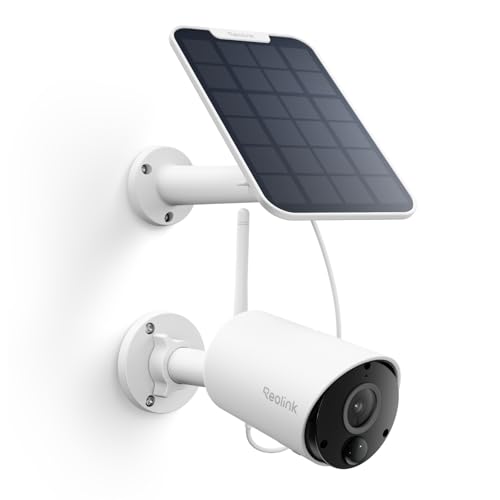
REOLINK Argus Eco Solar 5MP Camera
Taking A Closer Look At The Options
The RLC-820A brings a useful balance of resolution, wired reliability, and compact placement for a front porch, driveway, or garden wall. Power over Ethernet, or PoE, carries power and network data through one cable, which suits families that can route wiring around an exterior wall or attic. Unlike the solar options later in the list, it avoids battery maintenance but requires access to a wired network connection.
Its 4K recording level preserves useful detail across a normal yard, while on-device human and vehicle detection can reduce notifications caused by irrelevant movement. For most backyards, that combination feels more practical than chasing the highest pixel count on the box. The dome shape also resists awkward glare from some ceiling mounts, though the mounting position still matters.
Benefits That Matter
- PoE simplifies a permanent installation by combining power and network cabling.
- On-device person and vehicle recognition helps separate meaningful activity from environmental movement.
- 4K detail is useful for checking faces, packages, and driveway activity.
- The compact dome body fits entrances and covered exterior areas without a large housing.
Points To Note
- A wired connection reduces placement freedom and may require exterior cable routing.
- Owners commonly need to clean the dome occasionally because rain spots and dust can soften the image.
Core Details
Made For
Families with a fixed driveway, front entrance, or covered side yard and access to exterior networking cable.
A Better Fit Elsewhere
REOLINK Duo 3V PoE 16MP Dual-Lens Camera offers a broader field of view for a wide corner or open-frontage property.
The RLC-823S2 solves a problem the fixed RLC-820A cannot: distant subjects across a long driveway, gate, or neighboring field. Pan-tilt-zoom, or PTZ, means the camera can redirect its view, while 16x optical zoom enlarges the image without relying entirely on digital cropping. That makes it a serious fit for properties where a person would otherwise approach the camera to identify an animal or vehicle.
Color and infrared night-view modes give households different ways to handle darkness, and 3D zooming is designed to center a selected area more efficiently. In a large property, this is a meaningful advantage; in a compact yard, the extra mechanical capability may be unnecessary. PoE still requires a fixed cable, and motion tracking deserves careful setup around busy roads.
Real-World Strengths
- 16x optical zoom makes distant gates, driveways, and outbuildings more legible.
- PTZ movement reduces the need for several fixed cameras covering one distant approach.
- Two night-view modes support different low-light conditions.
- 4K resolution adds useful context around zoomed subjects.
Trade-Offs
- The PTZ mechanism introduces more moving parts than a fixed dome or bullet camera.
- Placing a sweeping view toward a street can generate more irrelevant activity notices.
Quick Facts
Who It Suits Best
Households with a long driveway, gate, back field, or other viewing distance that exceeds a fixed camera’s practical range.
Consider Something Else When
REOLINK Argus PT Solar 360° Camera fits flexible wireless placement where close, adjustable coverage matters more than 16x optical magnification.
The Duo 3V PoE uses two lenses to create a 180-degree field of view, giving it a different advantage from the RLC-823S2’s narrow, zoomable reach. That broad view suits a front corner, wide driveway, or yard entrance where activity can enter from either side. One housing can cover more scene area, which may reduce the number of mounting points needed.
Its 16MP combined output, person and vehicle detection, and motion tracking give a family several ways to sort through activity. The IK10 vandal-resistance rating also adds confidence in exposed or reachable locations, although resistance does not make installation careless. Compared with the RLC-820A, this model prioritizes scene width; compared with a dual-camera kit, it handles broad coverage from one wired unit.
Reasons It Performs
- The 180-degree view captures activity approaching from opposing directions.
- Two lenses create broad coverage without requiring separate housings for each half of a scene.
- 16MP output supports detailed review across more of the frame.
- IK10 resistance suits exposed areas where impact risk is a concern.
A Few Limitations
- The ultra-wide scene can make distant objects occupy fewer pixels than they would under the 16x optical zoom model.
- Wired PoE installation still requires cable access and a suitable network location.
- Mounting too close to reflective walls can create glare across the broad view.
Built With In Mind
Families covering a broad entrance, corner, or driveway need useful coverage without adding several adjacent fixed cameras.
Look Elsewhere When
REOLINK RLC-823S2 4K 16X PTZ Camera is the stronger choice for a long approach where small distant subjects matter more than total field width.
The RLK8-520D4-5MP shifts from a single-camera decision to a centralized system for a family monitoring several parts of the property. Its eight-channel network video recorder connects multiple PoE cameras, while the included 2TB hard drive provides local recording capacity. An NVR, or network video recorder, is the central unit that receives and stores camera feeds.
Five-megapixel cameras can capture useful detail around doors and paths, and infrared illumination supports visibility up to 100 feet in darkness. Person, animal, and vehicle detection helps organize a busy household’s alerts. Compared with the individual dome and PTZ models, this kit is less flexible for one remote cabin, but more coherent for a family that wants several fixed views managed together.
The Good Stuff
- Eight camera channels support coverage around several entrances and exterior areas.
- The 2TB drive records locally without relying entirely on a cloud connection.
- PoE camera connections simplify power and network distribution.
- Five-megapixel footage offers a practical balance of detail and system scale.
Worth Noting
- Hard-drive systems need a protected, ventilated installation and ongoing storage management.
- Residential cabling work is more involved than adding a battery-powered camera.
- Five-megapixel resolution provides less fine detail than the 4K models elsewhere in this list.
Feature Snapshot
Right Fit
Households planning several wired exterior cameras and wanting one recorder to manage local footage.
Another Choice May Suit
REOLINK Argus Eco Solar 5MP Camera fits a single shed or gate where installing a complete recorder system would be excessive.
The 4G LTE model serves a fundamentally different need from the earlier PoE cameras: locations without local Wi-Fi or a practical network cable. Cellular connectivity makes it relevant to remote cabins, agricultural buildings, construction areas, and secondary homes, while solar power removes the need for a wired electrical connection. A 3-watt solar panel maintains the internal battery where sunlight is sufficiently available.
Its 4K sensor captures detailed daytime footage, and color night viewing aims to preserve useful color in darkness. Families can reposition the camera more freely than a wired model, although cellular service and sunlight remain hard limits. Owners should account for subscription or data-plan requirements before standardizing this approach across an entire property.
Where It Excels
- 4G LTE removes the need for local Wi-Fi at remote buildings.
- Solar charging supports locations without nearby electrical outlets.
- Wire-free placement makes cabins, worksites, and distant gates practical.
- 4K recording preserves detail in open outdoor areas.
Small Caveats
- Weak cellular reception can limit access or reduce usable video performance.
- Heavy shade, snow, or frequent cloud can reduce solar charging.
- Remote placement makes cleaning and battery checks less convenient.
Technical Highlights
Who Will Love This
Families monitoring cabins, remote outbuildings, or worksites with dependable cellular service and good solar exposure.
Skip It When
REOLINK RLK8-520D4-5MP 8CH 2TB System fits established homes where several cameras can connect to centralized local recording.
The Argus PT trades optical magnification for broad, adjustable movement, giving families a practical way to monitor a patio, driveway corner, or rear garden from one wireless camera. Its head rotates 355 degrees horizontally and tilts 140 degrees vertically, so I can reposition the view remotely without physically turning a fixed bullet camera. The honest catch is that rotation changes direction; it does not equal a simultaneous 360-degree panoramic view.
Unlike the off-grid 4G model, this camera uses 2.4GHz or 5GHz Wi-Fi and depends on a solar panel for sustained battery charging. Color night vision adds visibility after dark, while the 4MP-class output is sufficient for many ordinary yard scenes. It is a good middle ground for families wanting wireless flexibility without cellular service.
Everyday Perks
- Extensive pan and tilt movement covers more directions from one mount.
- Dual-band Wi-Fi offers more connection options than a 2.4GHz-only setup.
- Solar charging avoids a permanent power cable.
- Color night viewing produces more useful detail than a grayscale-only night mode.
What To Weigh
- Wi-Fi reach and wall thickness can limit placement in some homes.
- The battery may need regular charging during extended cloudy weather.
- The movable head may retain a fixed viewing orientation, unlike a true panoramic camera.
Built With In Mind
Families seeking one adjustable solar camera for a patio, driveway, or medium-sized garden within reliable Wi-Fi range.
Where A Sibling Pick Shines
REOLINK Duo 3V PoE 16MP Dual-Lens Camera serves wider fixed coverage when an ultra-wide field and permanent wiring are preferable.
The Argus Eco focuses on the simpler outdoor-security job: watching a gate, shed, side path, or single parking bay without exterior wiring. A 3-watt solar panel replenishes its battery, which reduces routine charging visits in a sunny location. Compared with the Argus PT, this fixed bullet-style camera has fewer moving parts, making it easier to maintain and less likely to be pointed away from its assigned scene.
Its 2K 5MP output records more detail than 1080p footage while staying below the 4K models in this roundup. Intelligent detection is useful for filtering a family’s notifications, though the exact categories and setup should be checked in the current device interface. For a small yard, the lower resolution is often a sensible compromise rather than an empty feature.
The Upside
- A compact solar design makes gate and shed monitoring practical.
- The 5MP sensor improves detail over standard 1080p recording.
- Fixed construction reduces the mechanical maintenance associated with a PTZ head.
- Wireless placement avoids exterior power cabling.
Possible Compromises
- 5MP offers less detail than 4K models for distant activity.
- The camera needs 2.4GHz or 5GHz Wi-Fi access, so signal strength must be checked.
- Solar charging can slow during winter cloud cover or heavy shade.
Key Attributes
Made For
Families wanting simple, wire-free coverage of a shed, side gate, patio, or compact parking area.
Another Choice May Suit
REOLINK RLC-823S2 4K 16X PTZ Camera fits a much longer driveway where distant detail and remote zoom control are essential.
Matching Cameras to Real Family Spaces
Coverage shape should guide the first decision. Dual lenses suit broad corners, PTZ models suit long approaches, and fixed cameras usually offer the simplest mounting arrangement for gates and entrances. Resolution matters after that, since a 4K sensor generally retains more detail when the scene is enlarged.
Power and connection shape the installation
PoE models provide steady wired operation and integrate neatly with a central recorder, but cable routing drives the installation. Solar cameras reduce cable work, though sunlight, battery upkeep, and network reach become important. Cellular connectivity serves remote buildings, while an active cellular plan and local service coverage remain essential.
Detection improves notice management
Human and vehicle recognition can separate meaningful property activity from shadows, branches, or moving animals. Detection still benefits from a carefully chosen field of view, and a camera aimed toward a road may create more unrelated events. Testing detection zones during different times of day helps refine the setup.
Storage should match the camera plan
A single household may manage clips through one camera, while a larger property may need an eight-channel recorder and several terabytes of local storage. Remote cellular installations may also require a recurring data plan. Comparing retention, recorder capacity, and ongoing connectivity prevents an attractive camera from becoming an awkward fit later.
Weather exposure changes placement
Solar panels need useful sunlight, exterior lenses need regular cleaning, and wired cameras need protected cable connections. Wind and heavy rain can affect exposed mounts, while IK10 resistance adds an extra level of impact consideration. I also account for wall material, attachment points, and the distance to a router or recorder before recommending a model.
What Matters Beyond The Camera Specs
Common Shopping Slip Ups
Resolution often distracts from the larger installation. A camera with strong detail still has limits from Wi-Fi distance, sunlight, cable placement, or storage capacity. I also check whether a cloud subscription is required before choosing a remote or cellular model, rather than discovering that requirement after installation.
What Separates Premium From Basic
A higher-tier camera may add optical zoom, wider field coverage, greater resolution, or more convenient movement. Those features matter when a gate sits far from the house or a broad corner must be watched. For a nearby shed, a simpler fixed solar model can deliver the useful coverage at a lower complexity.
