
Outdoor composting turns kitchen scraps and yard debris into a practical home resource, but choosing the wrong container can mean dealing with pests, trapped moisture, or a bin too bulky for the available space. I’ve narrowed the field around capacity, ventilation, weather resistance, assembly, and how each design fits a specific outdoor routine. Multi-stream centers work for organized waste stations, while fabric bags and ventilated bins suit smaller gardens.
The Shortlist At A Glance

Commercial Zone Avante Black Dual-Stream 2-30-Gallon Units

Commercial Zone Avante Black Triple-Stream 55-Gallon Square Center

Commercial Zone Avante Black Triple-Stream 3-30-Gallon Units

INNOLITES 15-Gallon and 34-Gallon Reusable Compost Bags

JupiterForce 80-Gallon BPA-Free Outdoor Compost Bin, Black

Werph 43-Gallon Dual-Chamber Rotating Compost Bin
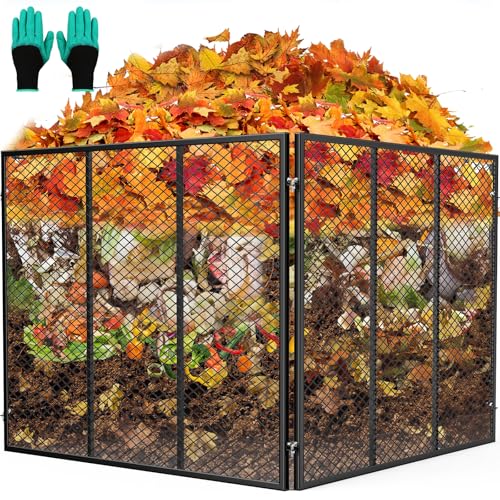
TOP XIAN 172-Gallon Rust-Resistant Wire Compost Bin
What Each Pick Brings To The Table
Two 30-gallon units create a compact sorting station without the larger footprint associated with a three-stream center. The separate openings help keep trash apart from recyclables in a patio, apartment courtyard, or shared outdoor area.
Compared with the composting systems later in this list, this model focuses on collection rather than decomposition. For most shared spaces, that narrower job is a practical advantage, although curbside collection schedules and available footprint still deserve consideration.
A Few Strong Suits
- Two narrow 30-gallon units make sorting straightforward.
- Separate openings reduce accidental mixing of refuse and recyclables.
- The included liners simplify replacement and cleanup.
- Weather, ultraviolet-ray, and graffiti resistance suit exposed locations.
Practical Considerations
- It does not include a dedicated compost stream.
- Two open-top units need adequate space around each liner during service.
Quick Facts
Who Will Love This
This setup suits shared courtyards and multifamily outdoor areas that primarily need organized trash and recyclable collection.
Another Choice May Suit
Households adding food-scrap composting benefit more from the Commercial Zone Avante Black Triple-Stream 3-30-Gallon Units.
A 55-gallon square receptacle paired with a narrower 30-gallon section gives this center a useful capacity imbalance. The larger opening can handle trash or recyclables with slower collection, while the smaller unit creates a distinct destination for compost material.
That mixed sizing makes more sense for a busy property than for a single household with modest waste output. In a spacious outdoor sorting area, the open top should also make liner changes more direct.
The Value In It
- Combines trash, recycling, and compost in one center.
- The 55-gallon section accommodates higher-volume waste.
- A 30-gallon narrow section adds a more compact stream.
- Open access supports routine liner changes.
Details To Watch
- The wider section may be excessive for a small patio.
- Compost material still requires an appropriate decomposition setup nearby.
Core Details
The Right Fit
Large properties, offices, and community spaces benefit most from its high-capacity three-stream layout.
Where A Sibling Pick Shines
The Commercial Zone Avante Black Dual-Stream 2-30-Gallon Units fit smaller shared areas needing only trash and recycling.
Three matching 30-gallon units give trash, recycling, and compost equal standing. That symmetry can make labels and collection routines easier to follow than the mixed-capacity arrangement in the preceding Commercial Zone center.
For a household dealing with frequent food scraps, this is a sorting station rather than a complete processing system. In my view, it works best beside a ventilated outdoor composter with enough room for all three units.
The Upside
- Three equal 30-gallon units simplify stream organization.
- Dedicated compost placement reduces mixed-bin handling.
- Included liners simplify setup and replacement.
- Weather and ultraviolet-ray resistance support exposed placement.
- Open tops make filling and liner changes straightforward.
Trade Offs
- Three receptacles require a wider service area than a dual-stream station.
- The product collects compostables but doesn’t describe a decomposition chamber.
Feature Snapshot
Built With In Mind
Households and small workplaces benefit from the balanced layout when food scraps are collected alongside conventional waste.
Reach For A Different Pick When
A compact courtyard is better served by the INNOLITES reusable compost bags, which avoid a permanent three-unit station.
The two-bag format offers a more mobile starting point than rigid bins, with 15- and 34-gallon options for different collection volumes. Apartment residents and small-garden households can keep scraps near the kitchen, then move material outdoors without first sorting around a fixed receptacle.
Because the source doesn’t identify the fabric or fastening system, I’d inspect the listing details before expecting the bags to handle sharp scraps or heavy wet material. Reuse is convenient, but regular emptying and cleaning remain necessary for an orderly routine.
What Works In Its Favor
- Two capacities support compact and moderate collection.
- Reusable construction avoids a permanent rigid-bin footprint.
- Portable bags suit patios, balconies, and small gardens.
Points To Note
- Material and closure construction aren’t specified in the supplied details.
- Owners must confirm how the bag is secured against pests and spills.
- Yard debris may be less convenient than kitchen scraps in flexible bags.
Made For
Small-space composters benefit from portable collection and the choice between two bag capacities.
A Better Fit Elsewhere
Gardens producing substantial leaf and grass waste fit the JupiterForce 80-Gallon BPA-Free Outdoor Compost Bin more comfortably.
Eighty gallons gives seasonal yard waste room to accumulate without demanding constant emptying. That makes the bin more relevant than the INNOLITES bags for a garden receiving grass clippings, leaves, and regular kitchen scraps.
Ventilation openings admit oxygen into the pile, which supports aerobic decomposition, meaning decomposition driven by air rather than oxygen-poor conditions. Four vents on each side also add airflow when the bin is densely filled, although the open design requires attention to moisture balance.
A Strong Showing
- The 80-gallon capacity handles mixed garden waste.
- BPA-free material suits routine outdoor composting.
- Rain and frost resistance supports year-round placement.
- Side vents encourage airflow through the pile.
- Lightweight construction should simplify repositioning.
Where It May Fall Short
- Its full footprint may crowd a compact patio.
- A large pile still needs balancing, moisture checks, and occasional turning.
Technical Highlights
Best Suited To
Home gardeners with regular leaf, grass, and food-scrap volume gain the most from this capacity.
Another Choice May Suit
Large properties needing extreme bulk capacity may prefer the TOP XIAN 172-Gallon Rust-Resistant Wire Compost Bin.
Two chambers give new and older compost separate homes, a structure that can make batch management easier for first-time composters. The 43-gallon format is also less bulky than the JupiterForce model while offering more conventional storage than a flexible bag.
Assembly looks manageable from the supplied description: most sections arrive assembled, and the unit uses 34 screws rather than the 120-plus common on elaborate designs. I’d still allow room to turn the bin and access each chamber during maintenance.
A Few Highlights
- Dual chambers organize separate compost batches.
- The rotating format supports material movement.
- Preassembled sections reduce initial construction work.
- Included gloves assist setup and handling.
Small Caveats
- Forty-three gallons is modest for large leaf piles.
- Rotating access and chamber movement require unobstructed space.
- The exact chamber materials aren’t included in the supplied details.
Who Should Grab It
Beginners wanting separate batches in a manageable footprint benefit from the dual-chamber layout.
Look Elsewhere When
Gardens focused mainly on high-volume yard waste suit the larger JupiterForce 80-Gallon composter.
At 172 gallons, this wire composter is built around bulk accumulation rather than compact storage. The 37-by-37-by-30-inch body gives a large family or active yard-gardening household room for leaves, garden debris, and kitchen scraps to accumulate together.
Wire mesh naturally exposes the pile to airflow, while the stated rust-resistant coating addresses a common weakness of outdoor metal structures. The trade-off is footprint: this model needs considerably more ground space than the 43-gallon Werph or 80-gallon JupiterForce unit.
Positive Points
- The 172-gallon volume reduces frequent filling.
- Open mesh supports ventilation around the pile.
- The coated metal is designed for outdoor exposure.
- Large dimensions suit leaves and yard waste.
- Assembly is described as straightforward.
Practical Considerations
- The large footprint may overwhelm a modest yard.
- Wide mesh may not contain the smallest finished material.
- Coating condition should be checked periodically during routine cleaning.
The Main Details
Whose Shelf It Belongs On
Large yards and high-volume households benefit most from the 172-gallon capacity.
A Better Fit Elsewhere
Apartment composters with little ground space fit the compact INNOLITES reusable bags more naturally.
Choosing For Capacity, Airflow, And Available Space
Capacity should follow the material you actually generate. Kitchen scraps collect quickly, while leaves and grass can require several times more room. A dual-chamber bin helps separate batches, and an open mesh structure promotes airflow, but larger containers still need proper moisture balance and occasional turning.
Footprint matters just as much as volume. The INNOLITES bags suit compact spaces, while the 43-gallon Werph and 80-gallon JupiterForce designs fit conventional gardens. The 172-gallon TOP XIAN model makes more sense where a large yard can accommodate its 37-by-37-by-30-inch frame.
Waste sorting and processing are separate decisions. The Commercial Zone centers organize trash, recyclables, and compostables, yet they don’t describe a dedicated decomposition chamber. Households needing active processing should pair a sorting setup with a ventilated outdoor composter.
Weather resistance and construction also shape upkeep. Coated metal and UV-resistant receptacles suit exposed areas, while reusable fabric bags require regular emptying and cleaning. Open-top systems are easy to service, although households sensitive to pests may need lids not shown in the supplied details.
Practical Choices Before Composting Outdoors
Common Shopping Slip Ups
A large nominal capacity doesn’t guarantee good composting, since airflow, moisture, and material balance determine the result. Measure the setup area first and leave access for turning, removing compost, and cleaning the container.
What The Higher Tier Buys
Higher-capacity models mainly reduce refilling and accommodate more yard debris. The premium practical advantage appears when bulky materials are frequent, while a smaller well-managed system can serve households producing mostly kitchen scraps.
Frequently Asked Questions
Are Large Outdoor Compost Bins Better For Yard Waste?
Large bins suit leaves, grass, and frequent kitchen scraps because they reduce refilling. Smaller systems are easier to manage for households with modest material volume.
Do Compost Bins Need Ventilation?
Ventilation introduces oxygen and helps maintain aerobic decomposition. It also requires moisture monitoring, since airflow can dry a pile faster than a closed container.
Are Reusable Compost Bags Suitable For Small Spaces?
Reusable bags are practical for patios, balconies, and compact gardens because they lack a rigid frame. They still need regular emptying, cleaning, and secure placement.
Should Compost Systems Be Covered?
Coverage can reduce rainfall entering the pile, but ventilation must remain adequate. Local climate and the amount of kitchen moisture determine how much protection a bin needs.
How Much Compost Space Does a Household Need?
Capacity depends on kitchen and yard output rather than household size alone. Two mixed batches, one large pile, and frequent collection routines call for substantially different space requirements.
Final Verdict
I’d choose the JupiterForce 80-Gallon for most active gardens, the INNOLITES bags for limited space, and the Werph dual-chamber model for simpler batch management. Large properties and serious yard-waste routines may justify the TOP XIAN 172-Gallon unit, while the Commercial Zone centers are strongest when sorting matters more than on-site decomposition.
