
Noncontact voltage detection helps contractors move through outlet checks, panel inspections, and cable troubleshooting without immediately opening every connection. The right instrument depends on the voltage range, environment, and whether I need a simple presence indicator or a broader diagnostic tool. I compare compact outlet checkers, high-voltage detectors, multifunction meters, and a fiber-optic fault locator so the list covers both routine service work and more specialized jobs.
The Lineup, Simplified
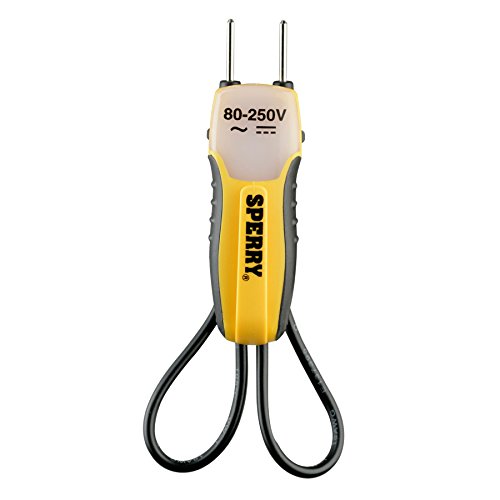
Sperry Instruments ET6102 Voltage Tester

AEMC 2131.12 275HVD High Voltage Detector

KAIWEETS CAT IV 1000V Dual Range Tester

KAIWEETS Dual Range LCD Voltage Tester

Proster TRMS Clamp Meter and NCV Tester
BoltBlaze Rechargeable 30KM Fiber Optic VFL

KAIWEETS KTS02 Voltage Tester Screwdriver
What Each Pick Brings To The Table
The ET6102 is built around a simple need: checking an outlet or accessible conductor for voltage without a full meter setup. Its snap-in probe spacing suits a standard 120V receptacle, which makes it convenient for residential maintenance, equipment checks, and quick troubleshooting.
Unlike the KAIWEETS models later in this lineup, the Sperry keeps the feature set focused. That restraint makes it easy to carry in a tool bag, although a technician working across varied voltage systems may need a broader instrument.
Reasons It Performs
- Detects AC and DC voltage from 80 to 250V.
- Probe spacing fits a standard 120V outlet.
- Compact shape suits routine service calls.
- Simple controls reduce setup time.
Things To Consider
- The limited range does not cover lower-voltage control circuits.
- It is a presence tester, not a full diagnostic meter.
- Keep the probes dry and inspect their attachment points during normal storage.
Key Specs
Who It Suits Best
This model suits residential maintenance technicians who need a straightforward presence check during outlet and equipment service.
Consider Something Else When
For lower-voltage electronics or detailed diagnostics, the KAIWEETS KTS02 is a more flexible fit.
The AEMC 2131.12 covers a much wider voltage span than the Sperry ET6102, reaching from 80V to 275kV. That range makes it relevant to utility crews, industrial maintenance, and contractors working around distribution equipment or long runs of overhead cable.
The self-test function energizes the system and indicators before work begins, which adds a useful routine to daily field use. Its three C-cell power source and lightweight body are more specialized than a household outlet pen, so the extra capability comes with added field gear to manage.
What Helps Most
- Broad 80V-to-275kV detection range.
- Self-test checks the system before use.
- Three standard alkaline C cells.
- Lightweight body reduces end-of-stick fatigue.
Worth Noting
- Its utility-focused range exceeds what routine outlet work needs.
- Battery changes and long-stick handling add field considerations.
Technical Highlights
Built With In Mind
It is a strong match for utility and industrial crews who regularly work with overhead lines or high-voltage distribution systems.
Where Another Pick Suits Better
Residential service contractors will likely find the compact KAIWEETS CAT IV model more proportionate to everyday outlet checks.
This KAIWEETS model is aimed at electricians, maintenance technicians, and home inspectors who need a compact detector with a stated CAT IV 1000V rating. Dual ranging gives it more flexibility than a basic single-range presence pen, while double insulation supports use in demanding electrical environments.
For apartment maintenance, the small footprint is convenient around panels and receptacles. I would still treat the rating as one part of a complete safety procedure, since a noncontact detector does not replace approved test instruments or verification procedures.
Useful Highlights
- Dual range handles varied AC detection needs.
- CAT IV 1000V rating suits higher-energy environments.
- Double insulation supports demanding service use.
- Compact body fits a crowded tool pouch.
Small Caveats
- Noncontact detection is an indicator, not a complete circuit diagnosis.
- Keep the tip clear of moisture and debris during storage.
Feature Snapshot
The Right Fit
It suits apartment technicians and electricians who need a portable dual-range detector for service and inspection work.
Reach For A Different Pick When
The AEMC 2131.12 is the better fit for crews working across distribution voltages far beyond standard building circuits.
The second KAIWEETS option adds a more informative display to the core NCV experience. Its signal percentage, audible alarm, and color display help a technician judge changes in detected voltage or distance from a conductor, which is useful in busy panels and along partially opened walls.
Compared with the CAT IV model, this version leans more toward signal feedback and wire-breakpoint identification. The LCD can make a quick scan easier to interpret, though the extra interpretation still needs to fit the job’s approved testing process.
The Practical Payoff
- Signal percentage gives a visible indication of relative strength.
- Buzzer and red light support multiple alert modes.
- Dual AC ranges cover 12V and 70V–1000V.
- Wire-breakpoint mode supports tracing work.
Honest Caveats
- More display feedback can encourage overreliance on a noncontact reading.
- Complex modes may take practice compared with the Sperry ET6102.
- Store the LCD model away from crushing impacts and moisture.
Best Suited To
It suits technicians who want audible, visual, and percentage-based feedback while tracing conductors or inspecting low- and higher-range AC circuits.
Swap It Out When
The compact Sperry ET6102 is more appropriate for contractors who need uncomplicated outlet presence checks without a larger display.
The Proster combines a true-RMS clamp meter with noncontact AC voltage detection, giving it a much wider role than the pen-style testers. Its clamp jaw measures AC current up to 28mm without opening the conductor, which is useful for service work, vehicle systems, labs, and factory maintenance.
Auto-ranging reduces manual range selection, while resistance, capacitance, frequency, temperature, diode, and continuity functions extend its usefulness. In my view, the added functions justify the larger size for technicians who carry one meter across several jobs, while a basic presence pen remains easier for a single outlet check.
Bright Spots
- True-RMS readings suit variable AC waveforms.
- 28mm clamp fits many common conductors.
- Auto-ranging simplifies field operation.
- NCV detection works without direct contact.
- Supports nine measurement categories.
Trade-Offs
- The larger meter takes more bag space than a pen tester.
- Clamp current checks do not replace circuit-specific diagnostics.
- Keep the jaw and housing clean to maintain practical daily reliability.
Feature Breakdown
Made For
It fits electricians, maintenance technicians, and vehicle-service workers who want NCV detection inside a broader clamp-meter toolkit.
Another Choice May Suit
The KAIWEETS KTS02 is lighter and more convenient for routine outlet checks, while the Proster handles far more measurement types.
The BoltBlaze is not an electrical voltage tester, so it belongs in this lineup only as a related noncontact fault-detection tool. It uses a 650nm red laser to identify visible breaks, bends, weak splices, and cracks in fiber-optic cable, making it useful for network installation and repair crews.
Continuous and flashing modes help distinguish an active cable path from a visible fault point. The stated 30km range and rechargeable design suit extended network work, while the included FC-to-LC adapter supports single-mode 9/125-micron fiber setups.
Benefits That Matter
- Continuous and flashing modes simplify visual fault checks.
- 650nm red light makes fiber faults easier to identify.
- 30km stated range supports long cable runs.
- Rechargeable operation reduces disposable battery handling.
Where It Is Less Suited
- It locates optical faults, not electrical voltage.
- The laser output requires careful handling around eyes and reflective surfaces.
- Adapter compatibility must match the fiber connector being serviced.
Quick Facts
Who Will Love This
It suits network technicians and fiber installers who need to locate physical faults in compatible optical cable.
Look Elsewhere When
For electrical work, the KAIWEETS CAT IV tester is the more appropriate noncontact voltage instrument.
The KTS02 combines a voltage-testing pen with a slotted screwdriver, which is useful during outlet installation, switch replacement, and basic electrical repairs. Contact voltage measurement covers a stated 3–500V AC range, while the noncontact mode helps identify energized wiring before the tip touches a conductor.
Compared with the Proster, it sacrifices the broad meter functions for a narrower, more portable tool. The magnetic screwdriver tip can help keep small fasteners organized during a service call, although the tester should remain separate from the screwdriver’s mechanical role in routine work.
Positive Takeaways
- Two functions fit in one compact tool.
- 3–500V AC contact measurement suits many service circuits.
- Noncontact detection supports preliminary wire checks.
- Magnetic tip helps manage slotted fasteners.
Less-Strong Areas
- It does not cover the current, resistance, and capacitance functions of the Proster.
- Contact measurement requires correct placement and careful handling.
- Store the LCD and tip separately from moisture and impact.
Who Should Grab It
It suits electricians, homeowners, and maintenance technicians handling outlet and switch work where portability matters.
Look Elsewhere When
The Proster TRMS Clamp Meter is the better choice for technicians who need broad electrical measurements and clamp-current checks.
Choosing The Right Electrical Detection Tool
Match the voltage range to the work. A detector that covers household circuits may not suit industrial equipment or distribution lines. The AEMC 2131.12 is designed for a much wider high-voltage range, while the ET6102 centers on an 80–250V AC/DC range.
Decide how much feedback is useful. Simple presence indication works for quick outlet scans. The KAIWEETS LCD model adds percentage, buzzer, color, and wire-breakpoint feedback, which can help in crowded panels or partially concealed cable runs.
Separate voltage detection from measurement. NCV detection identifies an energized conductor without direct contact. Contact measurements, continuity checks, resistance readings, and clamp-current measurements answer different questions, so the Proster is the broader diagnostic option in this group.
Account for the environment. Portable pens suit tool bags and home repairs, utility detectors suit long-stick field work, and the BoltBlaze handles optical cable rather than electrical voltage. Connector compatibility, battery type, storage, and local testing procedures matter as much as the headline range.
Common Sense Checks Before Buying
Common Shopping Slip Ups. A broad voltage number does not tell the whole story. I’d check the detection method, supported measurement type, connector or probe requirements, and whether the tool suits the actual environment before purchasing.
What The Higher Tier Buys. More specialized models add wider ranges, self-tests, clamp jaws, or detailed signal feedback. Those features help when a technician moves between building circuits, vehicles, utility lines, or fiber networks, while a basic pen is more proportionate for one outlet task.
Frequently Asked Questions
What does noncontact voltage detection do?
It helps identify an energized conductor without placing a probe directly on it. The signal is a useful initial indication, not a complete substitute for a meter or approved verification procedure.
Which tester works best for household outlets?
The Sperry ET6102 is a focused choice for standard residential voltage checks. The KAIWEETS CAT IV model offers a wider stated rating and dual range, which may suit more varied service work.
Does a noncontact tester measure current?
No, standard NCV detection identifies voltage presence rather than current. The Proster adds a clamp meter that measures AC current through a suitable conductor.
Is the BoltBlaze suitable for electrical wiring?
The BoltBlaze is designed for fiber-optic fault location, not electrical voltage detection. Electrical contractors should choose one of the voltage-testing options for wiring work.
What should I check before using a voltage tester?
Confirm the voltage range, inspect the housing and probes, install fresh batteries, and follow the manufacturer’s instructions. Keep the tool dry and use it as part of a proper electrical safety process.
Final Verdict
I favor the Sperry ET6102 for straightforward residential outlet checks, the KAIWEETS CAT IV model for compact higher-range service work, and the Proster for broad electrical diagnostics. Utility crews should consider the AEMC 2131.12, while fiber specialists need the BoltBlaze for optical faults. Match the instrument to the circuit, measurement need, and work environment rather than relying on one detector for every task.
