
Outdoor troubleshooting rarely happens in comfortable conditions. A multimeter may need to diagnose a solar panel beside a shed, locate a voltage drop near an RV, or check equipment around a remote campsite, where general-purpose meters may not provide the right measurements. I’ve separated conventional electrical testers from solar-specific instruments and a protective Fluke case so each choice has a clear role.
An Overview Of The Picks
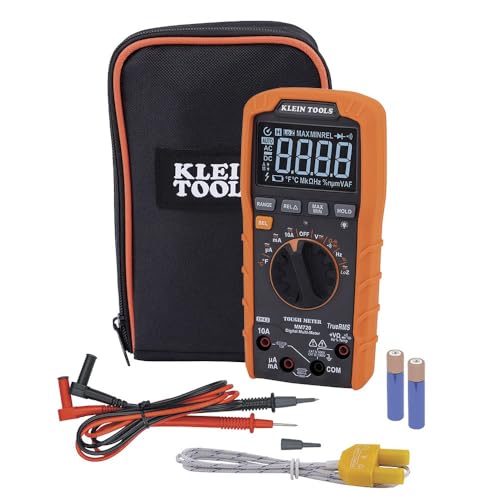
Klein Tools MM720 Auto-Ranging TRMS Digital Multimeter

Aproca Case for Fluke 115, 116, and 117
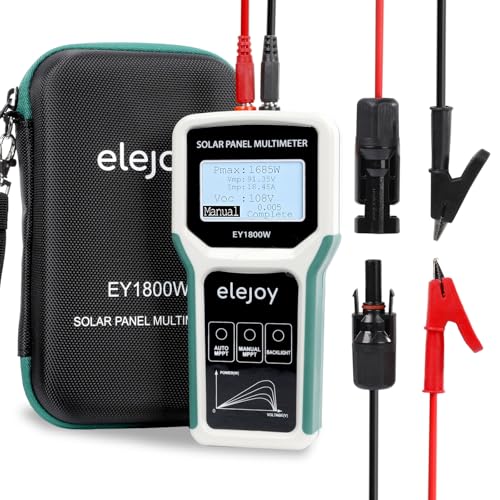
elejoy 1800W MPPT Solar Panel Tester

elejoy 400W Photovoltaic PV Multimeter

elejoy 1600W MPPT Solar Panel Tester

elejoy 800W Digital PV Multimeter

Plusivo 6000-Count TRMS Digital Multimeter
Why These Options Stand Out
The MM720 covers the broad electrical demands associated with outdoor equipment, generators, RV systems, and property maintenance. True root mean square, or TRMS, measurement is valuable for diagnosing AC signals that can give inaccurate results on basic meters, while LoZ mode helps reduce the influence of unwanted current in live circuits.
Unlike the solar-specific instruments later in the list, this model checks voltage, current, resistance, temperature, capacitance, frequency, duty cycle, diodes, and continuity. For a technician handling mixed electrical systems, that flexibility is more useful than a narrow PV-only design.
What Helps Most
- Auto-ranging reduces manual range selection during roadside and field diagnostics.
- A 1,000V AC/DC voltage range covers common property and outdoor equipment checks.
- LoZ mode supports more accurate work around low-impedance circuits.
- High-visibility reverse-contrast display adapts to bright or dark surroundings.
Practical Considerations
- The protection plan varies by product and situation, so I would not treat coverage as automatic.
- Solar-panel performance checks fall outside its basic electrical-measurement focus.
Key Specs
Made For
It suits electricians, RV technicians, and experienced property maintainers who need broad electrical measurements beyond solar output checks.
Look Elsewhere When
The elejoy 400W Photovoltaic PV Multimeter serves solar-focused troubleshooting better for a technician working primarily with small residential arrays.
This is a case rather than a measuring instrument, so its place in an outdoor multimeter list depends on ownership needs. It is designed for Fluke 115, 116, and 117 meters, making it most relevant to an electrician who already owns a compatible model and wants protection during transport.
The handle supports one-handed carrying, while the mesh pocket gives test leads and probes a separate home. Double zippers allow broad opening for packing or inspection, which matters in a crowded van or field bag.
Bright Spots
- Specific fit for three widely used Fluke meter models.
- Handle and structured shell simplify transport between jobs.
- Mesh storage helps keep accessories visible and organized.
Worth Noting
- No meter or test leads are included.
- Compatibility outside the named Fluke models should be checked before purchase.
- Outdoor cases reduce impact and scratch risks, but they cannot prevent damage from crushing or severe moisture exposure.
The Right Fit
It best serves mobile electricians who already carry a Fluke 115, 116, or 117 and need a compact home for the meter and accessories.
Consider Something Else When
The Klein Tools MM720 Auto-Ranging TRMS Digital Multimeter is the better fit for someone who still needs to choose a full-featured measuring instrument.
The 1800W capacity places this model at the upper end of the PV-specific choices here. It suits a technician working with a larger residential array who needs to examine panel output, open-circuit voltage, short-circuit current, and performance at the maximum power point, where a panel reaches its strongest operating output.
Field portability is handled through a lightweight package and an EVA tool kit. Its no-battery design also reduces upkeep because power comes through the connected panel, though the meter cannot perform a meaningful check before an appropriate connection is established.
The Practical Payoff
- The 1,800W range supports higher-output solar panel configurations.
- Maximum-power-point readings reveal output changes that can accompany shading or panel faults.
- Open-circuit voltage and short-circuit current help separate operating symptoms from panel behavior.
- Battery-free operation reduces charging and battery-storage concerns.
Smaller Limitations
- Solar-specific measurements do not replace the broad AC/DC functions of a conventional multimeter.
- Field connectors and leads require careful handling and clean storage between uses.
Quick Facts
Right Fit For
It fits solar technicians handling larger residential panel strings that exceed the capacity of the compact PV meters in this roundup.
Another Choice May Suit
The elejoy 400W Photovoltaic PV Multimeter is more proportionate for a compact off-grid array with a much lower rated output.
A 400W limit makes this a focused instrument for small 12V or 24V solar installations rather than a general array analyzer. That narrower role can be an advantage for a homeowner checking a modest panel set, a van system, or a small off-grid circuit without carrying a larger capacity model.
The clear LCD and listed weight of 460g favor field use, especially around rooftops, sheds, and equipment cabinets. Maximum-power-point tracking can expose reduced output associated with shade, dirt, or damage, giving a maintenance routine more diagnostic context.
Standout Benefits
- Supports 12V and 24V panel checks up to 400W.
- The 460g housing remains manageable during mobile diagnostics.
- A backlit display supports reading in variable outdoor light.
- MPPT analysis helps locate underperforming panels in a connected array.
Possible Compromises
- The 400W ceiling is unsuitable for larger residential panel sets.
- The screen remains vulnerable to scratches, so storing the unit in a padded case would be prudent.
- Protected-plan terms are not a substitute for keeping the meter dry during field use.
Feature Snapshot
Who It Suits Best
It suits homeowners and mobile maintainers working with small 12V or 24V solar systems that remain within 400W.
Where A Sibling Pick Shines
The elejoy 800W Digital PV Multimeter offers more useful headroom for a homeowner whose planned solar expansion exceeds this model’s rated range.
At 1600W, this meter sits between the 800W and 1800W solar options, giving a residential technician more capacity without taking the largest specification in the group. It is a logical fit for a medium-sized array or a collection of smaller panels evaluated as one system.
The measurement set includes output power, operating performance, open-circuit voltage, and short-circuit current. Those readings help distinguish a weak reading from a panel producing less than expected, while the battery-free connection routine limits routine charging.
Practical Advantages
- Mid-to-high PV capacity suits a broad range of residential arrays.
- MPPT analysis provides a clearer view of actual panel output.
- Voltage, current, and power readings support a more structured fault investigation.
- The portable kit supports diagnostics away from a workbench.
- No internal battery is required during panel-connected operation.
Details To Watch
- The 1600W rating still cannot cover every large photovoltaic installation.
- PV-specific functions do not cover general circuit resistance, continuity, or component diagnosis.
- Field leads can accumulate dirt, so connectors should be checked and stored dry.
Core Details
Built With In Mind
It fits residential solar technicians who need broad PV capacity for arrays larger than compact 400W systems but below the 1800W ceiling.
Reach For A Different Pick When
The elejoy 400W Photovoltaic PV Multimeter is more practical for a small fixed system where portability matters more than expansion headroom.
The 800W model offers a practical middle ground for a technician moving between household, cabin, or small commercial solar tasks. Its published range includes panels up to 800W, 12–60V open-circuit voltage, and 0–35A short-circuit current, which gives useful limits before a connection is made.
MPPT tracking locates the strongest operating point and can help reveal an output shortfall linked with dirt, shade, or cell damage. Compared with the 400W option, the added capacity makes this the more flexible choice for planned system growth, though actual panel-string configuration remains decisive.
Where It Helps
- The 800W range accommodates many small and medium residential arrays.
- 12–60V Voc coverage gives technicians a clear input boundary.
- The 0–35A Isc range supports systems beyond compact panel installations.
- MPPT data makes shade and underperformance checks more informative.
Soft Spots
- Some larger solar strings exceed the stated 800W limit.
- Its diagnostic scope remains photovoltaic rather than general electrical.
- A rugged enclosure may be useful for service trucks, but the screen still needs protection from abrasion.
Best Suited To
It suits solar maintainers responsible for small or medium arrays that need more capacity and current range than the 400W model.
A Better Fit Elsewhere
The elejoy 1600W MPPT Solar Panel Tester better serves a technician whose connected residential system regularly operates above 800W.
The Plusivo model brings a dense set of functions to a general-purpose meter, including AC/DC voltage and current, resistance, capacitance, frequency, temperature, continuity, diode checks, and non-contact voltage detection. That makes it more relevant to outdoor electronics, 12V circuits, appliance accessories, and mixed repair work than the solar-only options.
A 6000-count LCD supplies additional display resolution, although count capacity is not the same as overall accuracy. The backlight, data hold, overload indicator, and polarity warning help preserve readings in dim workspaces, while automatic ranging reduces mode setup during routine service.
Noteworthy Benefits
- The broad function set covers common household and electronic circuits.
- A backlit 6000-count display supports detailed low-level readings.
- Three samples per second provide responsive readings during changing signals.
- Temperature and capacitance functions expand its use beyond basic voltage checks.
- Data hold is useful in dim outdoor workspaces where values may be difficult to record immediately.
Where It Is Less Suited
- It does not perform the dedicated PV performance analysis found in the elejoy meters.
- NCV detection is a convenience rather than a substitute for direct electrical measurement.
- Lead insulation and probe condition require regular inspection for safe, dependable use.
Technical Reference
Who Should Grab It
It fits DIYers and repair technicians who diagnose mixed household and electronic circuits rather than concentrating exclusively on photovoltaic systems.
Not Your Match When
The elejoy 800W Digital PV Multimeter is the stronger choice for panel output, shading, and maximum-power diagnostics.
Choosing Diagnostic Tools For Field Conditions
Start with the system being examined. General electrical work calls for AC/DC voltage, current, resistance, continuity, and frequency coverage, while a solar-panel workflow needs open-circuit voltage, short-circuit current, and maximum-power-point performance. A case adds no diagnostic capability, but it can matter during frequent transport.
Match Capacity To The Array Panel capacity, operating voltage, and expected current must all fall within the instrument’s stated range. Extra headroom can accommodate expansion, although an oversized model adds little value to a compact fixed panel. For general electrical work, I also compare the meter’s input range and measurement functions with the equipment in the vehicle.
Readability Matters Outdoors A backlit or high-visibility display saves time in garages, equipment cabinets, and shaded outdoor work areas. Automatic ranging simplifies operation, but a held value remains useful where the display may be viewed at an awkward angle. I also consider the physical controls, lead storage, and whether the meter can sit securely during a measurement.
Treat Outdoor Instruments Carefully Moisture, dust, dropped tools, and tangled leads cause more practical problems than raw function count. I favor a protective case, clean connectors, and a clear storage routine. Solar testers also require correct panel arrangement, so equipment capability alone cannot replace safe system configuration.
Common Outdoor Diagnostic Mistakes
Mistakes Worth Dodging
Choosing a general multimeter for detailed solar output analysis can leave the most useful PV-specific data unavailable. Oversizing the panel capacity adds little for a small fixed array, while undersizing it may create an immediate range mismatch. I would also avoid assuming a case includes a meter, because a protective shell only solves transport and storage.
What Separates Premium From Basic
A premium instrument may add TRMS accuracy, automatic ranging, a clearer display, broader measurement functions, or dedicated MPPT analysis. Those additions matter for AC loads, mixed electronics, or solar fault-finding, while a simpler meter can handle basic voltage and continuity checks. The useful upgrade is the capability needed for real diagnostic work, not simply a longer feature list.
Frequently Asked Questions
Can One Multimeter Handle Both Household And Solar Work?
A broad electrical multimeter can handle many household measurements, but dedicated solar meters add panel-specific readings. I choose the general model for circuits and the PV instrument for array performance work.
What Does TRMS Mean?
TRMS measures the effective value of an AC signal more accurately than many basic meters. It is especially useful for diagnosing variable loads and electronics with non-sinusoidal current.
Is A 400W Solar Tester Enough For A Small System?
A 400W model fits compatible 12V and 24V installations within that limit. I check the panel arrangement and operating values before relying on it for a larger or reconfigured array.
Are Test Leads And Probes Included?
The Plusivo listing includes test leads and probes. The Aproca option is a case only, so a Fluke meter and its accessories must be obtained separately.
How Should An Outdoor Multimeter Be Stored?
I keep the instrument dry, remove loose accessories, and protect the display from abrasion. A padded case helps during transport, but it does not replace careful handling or dry storage.
Wrap Up
The Klein Tools MM720 and Plusivo 6000-Count models serve broad electrical and electronics work, while the elejoy options specialize in panel output from compact 400W systems through larger 1600W and 1800W arrangements. The Aproca case fills a separate ownership role by protecting a compatible Fluke meter in transit. My decision comes down to the equipment being diagnosed, its specified limits, and the conditions where the instrument will be used.
