
Compacted soil turns an otherwise manageable lawn into a hard, water-resistant surface. A manual aerator creates openings that help air and water reach grass roots, especially across high-traffic areas, neglected patches, and gardens with dense soil. These tools suit homeowners, renters, and lawn-care beginners who need practical aeration without a powered machine.
Choose between spike aerators that perforate the ground and core aerators that remove small soil plugs. Larger rolling models cover more ground, while handheld corers offer a lighter, more targeted approach for beds and compact yards.
The Main Contenders

Landzie Rolling Lawn Aerator with Hollow Tines

sparklion 17-Spike Aerator with Gloves
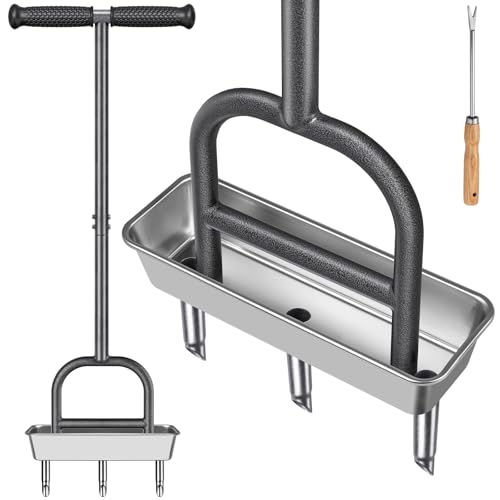
Dolibest 3-Plugin Coring Aerator with Core Tray

Walensee 30-Spike Rolling Lawn Aerator

LANDZIE 44-Inch Compost Spreader and Topsoil Roller

FLMAQE Manual Core Aerator, Orange
More On The Choices That Made The List
The Landzie design sits between a foot-punch tool and a full-size lawn roller. Its seven hollow stainless steel tines remove narrow soil plugs as you push, making it more substantial than a lightweight spike fork without approaching the footprint of a powered aerator.
That balance works well for a small backyard with compacted paths or isolated thinning areas. Compared with the sparklion 17-Spike Aerator, it creates fewer openings per stroke, so you may need more passes across a broad lawn. The rolling format still feels more natural for covering open turf.
Positive Points
- Rolling action reduces the repetitive lifting required by a handheld corer.
- Seven hollow tines extract cores rather than only making narrow perforations.
- Stainless steel tines suit damp soil and repeated seasonal use.
- The compact roller is easier to maneuver around garden beds than a full-width model.
Things To Consider
- Seven tines may feel slow across an expansive lawn.
- Owners must remove collected soil and dry the tines after damp sessions to limit caked material.
Made For
This model suits homeowners tending a compact lawn, family yard, or garden with several isolated areas of hard soil.
Where Another Pick Shines
The Walensee 30-Spike Rolling Lawn Aerator covers larger yards faster through its broader spike layout.
Walking into compacted turf usually calls for a tool that responds quickly, and the sparklion model puts 17 spikes directly under one foot. A spring mechanism rebounds after each press, shaking loose attached soil while helping the spikes enter hard ground with less sustained downward force.
This makes it useful along a narrow path, around a play area, or across a patch that a rolling aerator cannot navigate. Unlike the Landzie model, it perforates the surface rather than retaining removed cores, which simplifies use but changes the treatment of thatch and heavier debris.
Useful Highlights
- Seventeen spikes create a wider field of openings in each step.
- Spring recoil clears soil as the tool lifts, reducing interruptions during repetitive work.
- Foot operation leaves both hands free to maintain balance on uneven ground.
- Included gloves provide a more secure grip and help protect your hands during use.
Minor Gripes
- Spikes make holes but do not collect core plugs.
- For a very large lawn, repetitive stepping may become tiring despite the spring assistance.
Right Fit For
This pick fits beginners and apartment residents who need quick aeration around tight landscaping and worn footpaths.
Consider Something Else When
The Dolibest 3-Plugin Coring Aerator better serves you when collecting extracted soil matters more than speed.
Core aeration matters most when you want to see and handle the material coming out of the turf. The Dolibest combines three stainless steel coring plugs with a storage tray, keeping extracted soil close to the work area instead of leaving it scattered across the lawn.
Its three-plug arrangement makes this more of a targeted hand tool than a broad yard machine. You will likely choose it for compacted garden beds, worn edges, and small patches, where a larger rolling model would be cumbersome. The preassembled format also reduces setup before you begin.
The Good Stuff
- The tray makes the loose cores easier to gather and dispose of.
- Three coring plugs provide more extraction capacity than a single-slot hand tool.
- SUS 304 stainless steel gives the plugs corrosion resistance for damp use.
- A powder-coated solid-steel rod supports the working components without adding bulky machinery.
Small Caveats
- Three plugs require additional passes in a large lawn.
- Cleaning the tray and hollow plugs promptly prevents dried soil from becoming difficult to remove.
- The focused coring approach may be less efficient than a spike aerator for simple surface perforation.
Who Will Love This
This model appeals to careful gardeners working around raised beds, compact lawn edges, and small high-traffic patches.
Not Your Match When
The Landzie Rolling Lawn Aerator with Hollow Tines suits wider residential lawns where smooth rolling passes matter more.
Coverage separates this Walensee roller from the compact Landzie model. Thirty spikes spread across the drum create a broader pattern with each push, while the integrated dual-bar handle places your hands on a single structure instead of separate upright supports.
That geometry makes it a sensible match for a larger residential yard, particularly along high-traffic lanes that need repeated treatment. Depending on soil moisture and density, you may still need several passes, but the spike count reduces the number required. Avoid overlapping the rows too closely, as excessive puncturing can disrupt growing turf.
A Few Highlights
- Thirty spikes provide broad perforation across open lawn areas.
- The dual-bar handle offers two-handed steering and downward control.
- Rolling operation lets you work in measured passes without repeatedly lifting a handheld tool.
- The spike format loosens compacted soil without requiring a core-collection tray.
Practical Considerations
- More spikes increase resistance in hard, dry soil, so controlled pressure helps.
- Inspect and brush the spike drum after use, particularly around clay-heavy ground.
- The wider roll is less convenient than the sparklion tool inside narrow flower beds.
Built With In Mind
This roller serves homeowners with broad lawns who want several rows of soil punctures completed in a single session.
Another Choice May Suit
The sparklion 17-Spike Aerator with Gloves is a stronger fit for narrow beds and frequently walked lawn edges.
This is a topdressing roller rather than an aerator, so its role happens after core or spike aeration. The 44-inch drum helps distribute compost, peat moss, topsoil, manure, mulch, and other loose amendments across lawn or garden areas before you water them into the soil.
Its width makes it useful for keeping large material spreads even, particularly across open sections of a yard. Compared with the compact aerators, it handles a different maintenance stage and cannot create the openings needed for compacted turf. You’ll get the most functional setup by using a coring tool first, then spreading amendments over the opened ground.
What Stands Out
- The 44-inch width supports consistent coverage across larger lawn areas.
- Walk-behind handling gives you steady control as loose material leaves the drum.
- Multiple compost and soil materials can be handled with the same roller.
Trade-Offs To Consider
- The tool does not puncture soil or remove core plugs.
- Residue can remain on the drum, making prompt cleaning important after wet compost or topsoil work.
- A full-width tool requires storage space and open turning room.
Best Suited To
This roller suits homeowners topdressing broad lawn areas after another tool has opened compacted soil.
Swap It Out When
The FLMAQE Manual Core Aerator better serves you for mixed spike-and-core treatment of compact lawn patches.
Two spike tines and two hollow core slots give this compact aerator a mixed approach. Spike tines perforate the surface, while hollow slots remove small plugs, letting you treat one patch with two working methods without carrying separate tools.
The semi-assembled format should appeal to someone with limited storage, although assembly remains part of the setup. Compared with the Dolibest corer, it offers a more mixed tine arrangement but a narrower working pattern. It is most sensible for garden beds, lawn edges, and tightly confined spaces rather than broad residential turf.
Strong Points
- Mixed spike and core tines offer several opening styles.
- Four working elements suit concentrated treatment of small areas.
- Manual operation requires no cord, battery, or fuel system.
- The orange finish makes the compact tool easier to locate in a garage or shed.
Where It May Fall Short
- The small tine count makes repeated passes necessary on open lawn areas.
- Semi-assembly means the tool is not ready for immediate storage use.
- Extracted soil needs separate collection unless a tray is added.
Whose Shelf It Belongs On
This model fits small-space homeowners who need mixed aeration around beds, corners, and localized lawn damage.
Reach For A Different Pick When
The LANDZIE 44-Inch Compost Spreader and Topsoil Roller serves you better when distributing amendments across open lawn areas.
What Matters Before Bringing A Manual Aerator Home
Core Versus Spike Design
A spike aerator makes narrow holes in the ground and leaves the removed material in place. A core aerator lifts small plugs, giving you cleaner access to the soil and a visible sample of what lies beneath the turf. Compact lawns may respond well to simple perforation, while neglected areas benefit from fuller core removal.
Width And Tine Layout
Rolling tools cover more ground per push, making tine count and drum width important for larger yards. Handheld models are easier to turn and store, but they demand more repetitions. A broad spread of spikes may be useful for open turf, whereas a narrow layout gives you more control around beds and stepping stones.
Soil Moisture And Cleanup
Working overly dry ground can increase resistance and leave abrupt holes. Damp soil generally penetrates more easily, but excessive moisture creates heavier plugs and more mess. Clean hollow tines, spike drums, and collection trays after use, and store every component dry to prevent caked soil from becoming difficult to remove.
Compact Lessons For Smoother Lawn Work
Mistakes Worth Dodging
Avoid forcing a spike tool through severely dry soil or overlapping passes until the lawn looks excessively perforated. Check beneath the turf first, since rocky or heavily layered ground can blunt small tines. A topdressing roller cannot replace an aerator, either, because spreading material over compacted soil does not create the openings grass roots need.
What Separates Premium From Basic
A more advanced hand tool may add multiple core plugs, a spring cleaning mechanism, a collection tray, or a wider rolling layout. Those additions matter when you manage sizable areas repeatedly, yet a simpler spike aerator remains practical for a few worn patches. Match the mechanism and coverage to your lawn rather than the number of attachments.
Frequently Asked Questions
Is a manual lawn aerator effective for compacted soil?
Manual aeration can create openings in compacted soil and improve access for air and water. Results vary with soil density, spike design, and the number of passes you make.
Should you use a spike aerator or a core aerator?
Spike tools are convenient for light maintenance and narrow areas. Core tools suit more thorough work because they remove plugs and make soil conditions easier to inspect.
When is the best time to aerate a lawn?
Moist soil is easier to penetrate than bone-dry ground. Choose a period when the lawn is actively growing and the soil has enough moisture for the tines to enter without creating heavy mud.
Can a compost roller replace lawn aeration?
No. A compost or topsoil roller distributes loose material after the ground has been opened. It does not puncture compacted soil or remove core plugs.
Do lawn aerators work on garden beds?
They can, but use a light hand and check for buried stones, roots, and irrigation parts. Wider rolling models are usually less convenient than small spike or core tools in planted beds.
