
Slopes demand more control than a flat lawn, especially where footing is uneven and compacted soil limits water uptake. These manual aerators create openings for air, moisture, and nutrients without the footprint or setup of a powered machine. The right model depends on your soil, grip preferences, and tolerance for bending, lifting, and removing soil plugs.
The Choices Worth Comparing

sparklion Manual Lawn Aerator with 17 Spikes
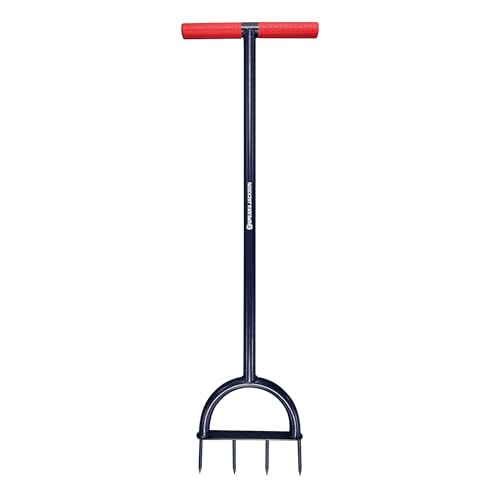
Spear & Jackson 4852LSA Lawn Spike Aerator

Jardineer 38-Inch Manual Core Aerator

SakerPlus Hand Metal Spike Lawn Aerator

SakerPlus Self-Cleaning Spike Lawn Aerator

iHoo Lawn Aerator with 15 Iron Spikes and 6-Spring
What Each Pick Brings To The Table
Compact hillside sections call for a lightweight tool that follows your stride without leaving a dense line of plugs behind. The 17-spike layout distributes contact across the head, while the spring assists each downward push and lifts the tool back into position. That motion suits short work runs and narrow strips between shrubs.
Unlike the Jardineer 38-Inch Manual Core Aerator, this model emphasizes puncture holes instead of extracted cylinders of soil. The supplied gloves add basic hand protection, but the spring mechanism does more for ownership comfort by limiting repeated bending and scraping.
A Favorable Mix
- Sevenenteen spikes create several openings with each planted step.
- Spring assistance eases downward pressure in compacted ground.
- Automatic rebound shakes away loose soil between presses.
- The compact head reaches awkward corners along a slope.
Small Caveats
- Solid spikes leave little material for collection, so you will still patch loose soil afterward.
- Hand pressure and balanced footing matter more on steep ground.
Quick Facts
Who Will Love This
Home gardeners handling small compacted patches will benefit most from its simple, low-bending operation.
Where A Sibling Pick Shines
The Spear & Jackson 4852LSA Lawn Spike Aerator offers a more substantial handle and frame for gardeners who value a wider grip.
Hillside work rewards a firm two-handed grip, particularly when your weight shifts between each step. Spear & Jackson combines carbon steel spikes with an all-metal body, a wide T-handle, a non-slip grip, and a dedicated footrest. Those features give you several ways to control the downward stroke without relying on a powered machine.
Compared with the spring-driven sparklion model, this aerator has fewer automated convenience features but a more conventional, substantial frame. For moderately compacted ground, that direct control may be preferable, depending on your balance and upper-body mobility.
The Good Stuff
- Wide T-handle improves steering and downward leverage.
- Non-slip grip supports a steadier hold over uneven terrain.
- Footrest allows body weight to drive the spikes.
- All-metal construction favors durability in outdoor storage.
Trade-Offs To Consider
- Unlike spring-return models, you must reposition the tool after every pass.
- Open spikes remain exposed during storage, so keep them away from walkways.
Technical Highlights
Made For
Gardeners working moderate slopes with firm soil and a preference for two-handed control fit this model well.
Another Choice May Suit
The SakerPlus Self-Cleaning Spike Lawn Aerator suits gardeners who would rather minimize repeated bending and foot adjustment.
Core aeration differs from spike aeration because hollow tines remove small cylinders of soil rather than only puncturing the surface. Jardineer uses two sharpened hollow tines to create those openings, making this the most deliberate soil-removal option in the group. The 38-inch height gives you more leverage while keeping your torso above much of the work.
A 38-inch tool can feel substantial on a level yard, while slopes demand careful spacing and a braced stance. Moderately moist soil should assist plug release, so avoid saturated ground or extremely dry conditions, which can increase resistance.
Advantages To Know
- Hollow tines remove visible soil plugs for immediate surface relief.
- The tapered tines help soil release under suitable moisture conditions.
- Steel construction supports the force needed for compacted earth.
- Foot bar and T-handle provide several control points.
Practical Considerations
- You will need to rake or redistribute extracted soil after each pass.
- The long frame requires deliberate placement to avoid tipping on steep sections.
- Loose plugs need collection before they wash downhill.
Best Suited To
Homeowners tending compacted, moderately moist ground will appreciate the more thorough core-aeration approach.
Consider Something Else When
The sparklion Manual Lawn Aerator with 17 Spikes fits quick hillside touch-ups that do not require plug removal.
Repeated yard work calls for a foot platform that remains stable under load. The SakerPlus tool uses thickened iron protected by a rust-resistant coating, while a high-strength screw connection secures its foot pedal. The double-layer structure and rebound spring add support and help separate soil from the spikes after pressure is released.
That construction is a sensible response to the flexing and impact common with manual tools. Compared with the sparklion model, SakerPlus places more emphasis on structural reinforcement, making it more relevant to dense soil and recurring seasonal work.
Where It Delivers
- Thickened iron gives the frame a substantial feel in firm ground.
- Coating helps reduce visible corrosion during outdoor storage.
- Screw-fastened pedal supports repeated loading and disassembly.
- Rebound spring assists soil separation after each step.
Details To Watch
- The weight may become tiring during a long uphill session.
- Inspect the screw connections periodically because they carry the pedal load.
Key Product Details
Right Fit For
Gardeners handling recurring aeration in dense soil will value the reinforced frame and replaceable fastening approach.
Reach For A Different Pick When
The Spear & Jackson 4852LSA Lawn Spike Aerator better serves gardeners who prefer a lighter, familiar T-handle design.
Walking a hillside can turn tool handling into a repetitive task, especially when each pass requires bending, pulling, and scraping. This SakerPlus model uses a spring-loaded, double-layer platform to rise after each step, while its self-cleaning tines release clinging soil. You can keep your attention on spacing and footing instead of constant tool repositioning.
The trade-off is less direct control than the conventional Spear & Jackson 4852LSA. For moderate slopes, the automatic return may preserve momentum; on sharp inclines, slower repositioning could matter more than convenience.
Where It Helps
- Automatic return reduces repeated bending and pulling.
- Self-cleaning tines limit pauses for manual soil removal.
- Walking motion suits broad, evenly spaced passes.
- The platform streamlines routine seasonal aeration.
Points To Note
- The rebound movement may make precise placement less tactile.
- Store the spike head away from paths because retraction is not documented.
Who Should Grab It
Gardeners with limited back flexibility benefit from the reduced lifting and scraping involved in each pass.
Not Your Match When
The Jardineer 38-Inch Manual Core Aerator suits those who prefer removing soil plugs rather than simply puncturing the surface.
Small terraces and narrow hillside channels call for controlled passes rather than a full-size coring setup. The iHoo aerator combines 15 iron spikes with six reinforced springs in a dual-layer platform. The spikes retract after use, reducing their exposure around steps, sheds, and storage areas.
Compared with the 17-spike sparklion, this option uses fewer points but a more explicitly layered spring arrangement. Depending on the soil, you may find that light foot pressure provides adequate penetration, while hard ground still requires leaning into each stroke.
Useful Strengths
- Fifteen spikes suit compact planting beds and edging areas.
- Six springs support quick rebound and soil shedding.
- Retraction keeps the spike points covered after use.
- Walking operation shortens setup for focused lawn sections.
Less-Strong Areas
- Hard slopes may require more body weight because penetration relies on foot pressure.
- Retracted spikes still need a dry storage place away from moisture and traffic.
Feature Snapshot
Whose Shelf It Belongs On
Gardeners with small terraces and a preference for compact, retractable tools will find this model practical.
A Better Fit Elsewhere
The SakerPlus Hand Metal Spike Lawn Aerator better serves larger jobs where reinforced framing outweighs compact storage.
What Matters On Uneven Ground
Start with the kind of opening you need. Spike aerators puncture narrow holes and suit repeated maintenance, while core aerators remove small soil plugs and provide a more visible treatment for compacted areas. Slope accessibility matters too, since a long tool can feel stable in open ground but awkward beside a retaining wall.
Grip and body position deserve equal attention. Wide handles, non-slip surfaces, footrests, and spring-assisted platforms change the effort involved in each pass. Work across the slope rather than directly up and down, and keep your weight positioned so a sudden release cannot pull you downhill.
Moisture changes maintenance more than the product name suggests. Hollow tines release plugs more cleanly in moderately moist ground, while saturated soil can smear and very dry soil can increase resistance. Clear extracted material before rain carries it toward steps or drainage channels.
Common Sense Before A Hill Session
Mistakes Worth Dodging
Forcing a tool into ground that is too wet or dry adds resistance and can produce uneven openings. Another common error is leaving loose plugs or exposed spikes near a path after work, especially on a sloped property.
Paying For A More Capable Design
What The Higher Tier Buys
A reinforced metal frame, wider grip, or core-style tine usually reflects added material and assembly complexity. That investment makes sense for frequent work, firm soil, or larger properties, while lighter spring-return designs remain sensible for occasional touch-ups on accessible slopes.
Frequently Asked Questions
Are manual lawn aerators suitable for steep slopes?
Manual aerators suit gradual slopes where you can maintain stable footing. Steep, narrow, or uneven areas require especially controlled steps and may be better approached with a lightweight tool.
What is the difference between spike and core aeration?
Spike aeration punctures the ground and creates small openings. Core aeration uses hollow tines to remove narrow cylinders of soil.
Does soil moisture affect manual aeration?
Yes. Moderately moist soil generally allows cleaner core removal, while very dry or saturated ground can increase resistance or clog openings.
Should I collect soil plugs after aeration?
Collecting major plugs helps keep walkways clear and returns loose soil to the lawn. This step matters more for core aerators than solid-spike models.
How often should a sloped lawn be aerated?
Timing depends on traffic, soil compaction, grass condition, and local growing conditions. Concentrate on areas that remain dense or show poor drainage rather than following a rigid schedule.
