
Basement projects punish imprecise layouts, especially when pipes, conduit, joists, cabinets, or ceiling fixtures need to line up across uneven rooms. A laser plumb bob projects a vertical reference point, helping you transfer marks from floor to ceiling with fewer ladder trips and fewer marks made by eye. The right model depends on whether you need a simple plumb dot, full horizontal and vertical coverage, outdoor visibility, or a complete kit with a tripod and receiver.
The Choices Worth Comparing

DOVOH H3-360G-KIT Outdoor Laser Level Kit

DOVOH H3 Outdoor Laser Level Kit with Tripod

DOVOH PV-360G Plumb Dot Laser Level

DOVOH 4D Laser Level Kit with Receiver

DOVOH Y4-360G-KIT 4D Laser Level Kit
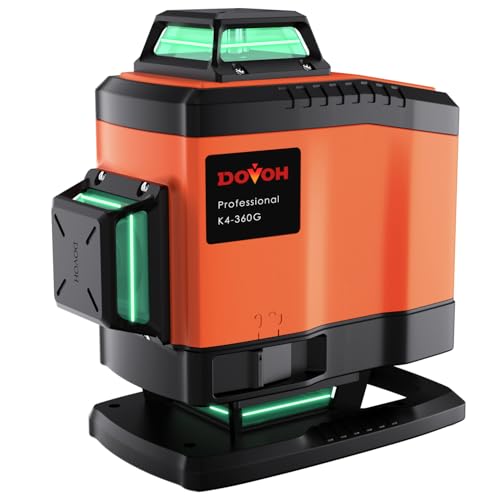
DOVOH K4-360G 4D Green Laser Level
More Details On Our Top Picks
Basements often have a single reliable vertical reference point for transferring a layout between concrete, framing, and finished surfaces. The H3-360G-KIT is aimed at that basic job, with a self-leveling 360-degree laser and a receiver for situations where ambient light makes the beam difficult to locate.
Compared with the larger kits later in the list, this is a leaner choice for marking pipe runs, checking upright positions, or carrying a reference from one basement level to another. The receiver becomes useful near a doorway, garage apron, or other bright work area, although indoor crews working only beneath dim joists may not need it.
Reasons It Performs
- Self-leveling operation reduces the need to manually level the housing.
- The included receiver supports outdoor layouts where the visible beam is difficult to follow.
- A stated 400-foot working range applies with the receiver, not to naked-eye beam visibility.
- The simple format suits repeated plumbing and framing reference checks.
Things To Consider
- The receiver adds another component to carry, charge, and store.
- Outdoor range should not be treated as visible line length, so a clear path and careful setup remain important.
Key Specs
Who It Suits Best
This fits DIYers and remodelers who need a straightforward vertical reference for basement plumbing, framing, and outdoor foundation checks.
Consider Something Else When
Choose the DOVOH Y4-360G-KIT instead when four horizontal and vertical planes will save repeated repositioning during a whole-room layout.
Exterior excavation and foundation work need more than a loose laser. The DOVOH H3 package combines the laser, a receiver, an aluminum tripod, and a grade rod, giving you a setup that can move from indoor framing references to grade and site layout tasks.
The green beam is listed at 110mW through the laser diode system, while the receiver handles signal detection when the line is hard to see. The tripod is rated for loads up to 5kg, a useful detail for anyone who already owns heavier laser accessories.
Practical Pluses
- Receiver support helps maintain a readable reference in direct sunlight.
- The aluminum tripod provides a more stable platform than placing the tool on an uneven basement floor or box.
- Rubber feet help limit movement during longer layout sessions.
- The grade rod adds measurement support for elevations and site work.
Minor Gripes
- Several components make storage and transport more involved than a standalone plumb tool.
- The 5kg tripod rating is generous for this use, but it does not mean every laser on the market is equally supported.
Feature Snapshot
Made For
It suits DIYers and small crews handling basement access, grading, drainage, or foundation layouts that extend beyond the interior.
A Better Fit Elsewhere
For a compact indoor-only reference point, the DOVOH PV-360G is more focused and less burdened by site accessories.
Some basement jobs need one dependable vertical point, not a wall of intersecting beams. The PV-360G focuses on upward and downward plumb dots, which makes it practical for aligning pipes, wires, and fixtures between floors or ceilings.
The tradeoff is deliberate simplicity. Compared with the H3-360G-KIT, it leaves outdoor receiver work outside its main role, but that can be a benefit in a crowded utility room where fewer lines make interpretation easier.
Features That Help
- Upward and downward dots support vertical transfer between separated surfaces.
- Self-leveling behavior simplifies setup around uneven basement floors.
- A focused plumb-dot format helps when ceiling and wall lines would add clutter.
Worth Noting
- This is a vertical alignment tool, not a substitute for a multi-plane floor and ceiling layout system.
- The listed edition is described as an essential configuration, so check the package contents before planning around extra accessories.
Who Will Love This
It fits homeowners and installers who repeatedly need to align a single pipe, wire run, or suspended fixture in a basement.
Where Another Pick Shines
The DOVOH 4D Laser Level Kit is the better fit for tile baselines, wall corners, and ceiling grids because it projects two horizontal and two vertical planes.
Basement renovations tend to expand from a single pipe into a full room of wall, floor, and ceiling references. This four-plane model covers two horizontal and two vertical lines, reducing the need to move the tool for each new orientation.
The included tripod and grade rod make it more of a working kit, while the DR1 receiver adds a path for outdoor layouts. For most renovation scenarios, that combination is easier to justify than carrying separate tools, though it will take more room in a crowded work van.
The Practical Payoff
- Four laser planes cover walls, floors, and ceilings in one setup.
- The upper line helps with ceiling installation while the lower line supports floor-tile layout.
- The receiver maintains signal detection in bright outdoor conditions.
- The tripod extends to 60.2 inches and supports up to 3kg, giving the tool a defined working height range.
Practical Considerations
- More beams can make dense mechanical rooms harder to read than a single plumb dot.
- Owners should store the grade rod and receiver together, since loose site components are easy to misplace.
Core Details
Built With In Mind
This kit suits renovators who need coordinated floor, wall, and ceiling lines for a basement finish or addition.
Not Your Match When
Use the DOVOH PV-360G instead when one clean plumb reference is more useful than simultaneous multi-plane coverage.
The Y4-360G-KIT balances interior coverage with a practical support package. Its four-plane arrangement is useful for checking a basement wall, floor baseline, and ceiling reference without changing the tool between each task.
The included tripod is the main convenience here. It extends to 60.2 inches and supports up to 3kg, while the self-leveling format helps preserve a consistent reference. You still need a clear surface and careful placement around pipes, ducts, and uneven slabs.
Everyday Wins
- Four-plane coverage supports cabinet, tile, wall, and ceiling references.
- The tripod provides a stable starting point without a separate support purchase.
- Self-leveling operation reduces setup time after moving between basement areas.
- The kit format is easier to organize for repeat residential work than separate small components.
Small Caveats
- It does not include the receiver listed with the DOVOH 4D kit, so outdoor work may require an additional accessory.
- Multiple planes can overlap around finished walls and stored materials, so a clear work zone matters.
Feature Card
The Right Fit
It fits DIYers and residential remodelers who want broad interior coverage plus a tripod for basement installation work.
Reach For A Different Pick When
The DOVOH H3 Outdoor Laser Level Kit is the better choice for grade and exterior work that needs the included receiver and grade rod.
The K4-360G focuses on the physical demands of a construction site. Its overmold rubber housing surrounds the tool body to add grip and impact resistance, which matters on a basement floor covered with gravel, dust, or leftover construction materials.
Like the other four-plane DOVOH models, it projects two horizontal and two vertical lines. The trade-off is that the supplied information does not mention a receiver, tripod, or grade rod, making it more of a core layout tool than a complete exterior kit.
What Earns Its Place
- Rubber overmolding improves handling around rough or dusty work areas.
- Four-plane coverage gives a practical way to establish room-wide references.
- Green beam visibility can help in unfinished areas with mixed lighting.
Trade Offs To Consider
- Bright outdoor work may need a receiver or another method for locating the beam.
- A tripod is not specified in the available details, so confirm your support setup before purchase.
Whose Shelf It Belongs On
It suits remodelers who want a green four-plane tool with a protective rubber housing for recurring basement construction work.
Swap It Out When
Choose the DOVOH 4D Laser Level Kit with Receiver instead when sunlight exposure and a larger outdoor range are central to the job.
Choosing Laser Plumb Bobs For Basement
A basement plumb tool should match the layout, not simply add more beams. Start by deciding whether you need a single vertical reference or simultaneous floor, wall, and ceiling lines. A plumb dot is easier to read in a crowded mechanical room, while a four-plane laser speeds up wider renovations.
Vertical Reference Versus Four Planes
A vertical plumb bob transfers a point from one surface to another. That simplicity makes it useful for pipes, electrical runs, and suspended fixtures. Four-plane models add horizontal references, which are more useful when setting tile, wall cabinetry, or ceiling grids.
Receiver Needs
A receiver is a detection accessory that helps locate the laser signal in bright conditions. It is useful outdoors or near open doors, though the visible beam and usable receiver range are different measurements. Indoor basement work may not need the added component.
Included Support
Tripods and grade rods make a kit more convenient for larger projects. A stable tripod matters in unfinished spaces, while a grade rod supports elevation and site-layout work. Confirm the listed support height and load capacity before combining a laser with an accessory.
Common Layout Tool Traps
Pitfalls Shoppers Hit
A common mistake is treating a long stated range as a visible beam distance. Another is selecting a multi-plane tool for a simple pipe drop, then struggling to identify the correct line in a crowded room. Check the basement surface, lighting, and number of reference lines before choosing.
What The Higher Tier Buys
A fuller kit may add a receiver, tripod, or grade rod rather than a more accurate plumb function. Those extras pay off when your project crosses indoor and outdoor areas or needs elevation references. For a single fixture installation, the added components may be more than the task requires.
Frequently Asked Questions
Are laser plumb bobs accurate enough for basement work?
They provide a consistent reference for transferring vertical points, especially across floors, ceilings, and walls. Accuracy also depends on stable placement, a clear surface, and careful checking against the actual framing or finished edge.
Do I need a receiver for a basement?
A receiver is most useful in bright outdoor spaces or near open garage doors and unfinished exits. For a typical enclosed basement, a visible green beam may provide enough guidance without the extra accessory.
What is the difference between a plumb dot and a 4D laser?
A plumb dot concentrates on a vertical reference point, which is useful for aligning one pipe or fixture. A 4D laser projects two horizontal and two vertical planes, making it better for room-wide layout work.
Should I choose a kit with a tripod?
A tripod is helpful when the laser must stay raised or when the basement floor is uneven. It also reduces the need to place the tool on boxes, pipes, or other temporary surfaces.
Can I use a green laser for outdoor basement work?
A green laser can be easier to see than a red beam in many conditions, but direct sunlight still reduces visibility. For larger exterior layouts, a receiver or another detection method is the more sensible setup.
