
Tile work leaves little room for a miscut grout line, an uneven wall, or a shortage of tile across one side of a room. A laser distance measurer gives you quick linear readings for wall runs, floor dimensions, cabinet bases, counters, and long tile courses, while Bluetooth and phone integration can simplify recordkeeping on larger jobs. The right model depends mainly on room size, beam visibility, measurement range, and how you document each dimension.
The Choices Worth Comparing
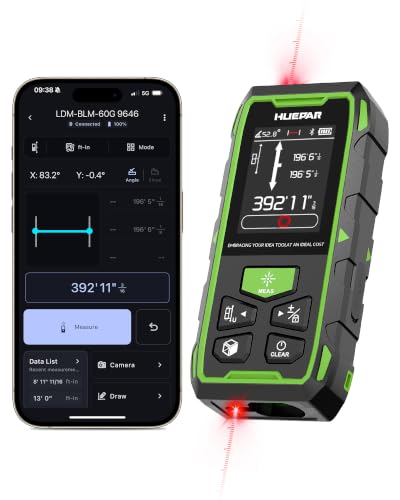
Huepar Dual Laser Distance Meter 395Ft, USB-C
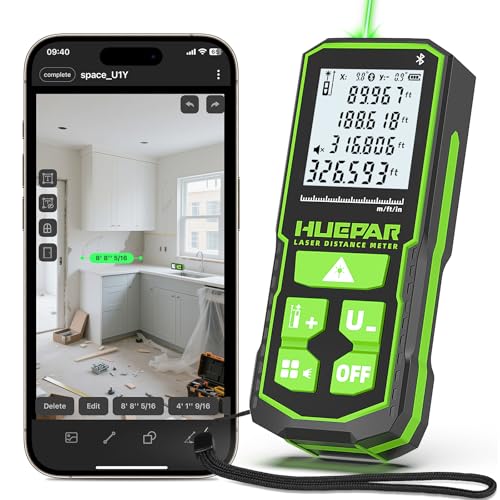
Huepar S100-G-BT Green Laser 330FT

Huepar S120-G-BT Green Laser 395FT

Huepar S120-G-BT Green Laser 395FT Bluetooth

Huepar Dual Laser Distance Meter 656Ft, USB-C

Huepar S60-G-BT Green Laser 200FT
What Each Pick Brings To The Table
Tile setters handling kitchens, baths, and medium-sized rooms get useful flexibility from this dual-laser configuration. Single-head operation reaches 1/16-inch accuracy, while the dual-head arrangement is specified at 1/8-inch accuracy and supports measurement from either direction, which suits checking long walls and staggered tile runs.
Its 395-foot range exceeds most residential interiors, and USB-C charging suits crews who prefer a common cable. Phone connectivity adds another layer, though its practical value depends on your recordkeeping habits, especially across a busy multi-room project.
The Value In It
- Dual-head mode provides a useful second reference point for long walls.
- The 395-foot range covers most homes without an oversized instrument.
- Single-head measurements offer the stated finer accuracy.
- USB-C charging reduces cable clutter on shared job sites.
Points To Note
- Dual-head accuracy is lower than the stated single-head figure.
- Laser measures require a suitable, reflective target and a clear line of sight.
Quick Facts
Built With In Mind
This model fits tile setters who alternate between detailed room measurements and longer wall runs.
Another Choice May Suit
Huepar S120-G-BT Green Laser 395FT Bluetooth may suit you better when a more visible green beam matters more than dual-head measurement.
Interior tile work often puts the measurement point in awkward positions, where a visible beam can save repeated repositioning. The S100-G-BT uses a green laser described as four times brighter than a standard red beam, with 1/16-inch accuracy and a 330-foot range, making it a sensible fit for kitchens, baths, renovation areas, and dim rooms.
Bluetooth is the distinguishing feature here rather than phone-app documentation, since the available details do not describe the same app workflow offered by other Huepar models. In a compact renovation, the instrument stays pleasantly focused on direct measurement.
The Good Stuff
- The green beam is easier to locate in dim interiors and cluttered work areas.
- One-sixteenth-inch accuracy supports tile layout and cut planning.
- Bluetooth connectivity can reduce manual transcription for compatible workflows.
- The 330-foot range exceeds typical bathroom and kitchen spans.
Small Caveats
- Green beams cost more than typical red-light options, making the range your main trade-off.
- A protective case helps limit damage from drops during transport, although the listing does not establish a waterproof rating.
At A Glance
Made For
This model suits tile setters working in dim rooms, tiled hallways, and renovation sites where beam visibility matters.
Look Elsewhere When
Huepar S60-G-BT Green Laser 200FT is the more portable option for small bathrooms where 200 feet leaves comfortable margin.
The S120-G-BT carries the 330-foot S100-G-BT concept into a 395-foot package, which can matter in open-plan rooms, long halls, and properties with several separate tile areas. Its green beam remains specified as four times brighter than a standard red laser, helping you locate the reference point across busy interiors.
For large residential work, the added 65 feet of range and Bluetooth support create a more versatile tool than the S100-G-BT. In a compact kitchen, you may never approach the limit, but you still receive the same stated 1/16-inch accuracy.
Positive Takeaways
- A 395-foot range reduces the need to move the tool during long measurements.
- Green-beam visibility supports interior layouts with mixed lighting.
- Bluetooth adds value for compatible device workflows.
Worth Noting
- The extra range offers little benefit in many single-room projects.
- Keep the aperture clean; dust on the lens can weaken target acquisition.
- Its app details are not specified here, so confirm phone compatibility before relying on digital records.
Who Will Love This
This choice appeals to tile professionals handling open rooms, long corridors, or several homes during the week.
Reach For A Different Pick When
Huepar Dual Laser Distance Meter 656Ft, USB-C is the stronger fit for measuring unusually long halls and commercial-scale tile runs.
Where the other S120-G-BT listing emphasizes straightforward Bluetooth measurement, this version puts phone integration at the center. Measurements can sync to a phone, where you can organize readings into groups, add annotated photos, create sketches, and change units or reference points, which helps keep multi-room layouts together.
That workflow deserves consideration during a whole-home renovation, where dimensions from several rooms become part of one plan. For one backsplash, opening a phone may be unnecessary, so the app-driven model can feel more elaborate than a basic direct-measure tool.
Practical Pluses
- Stored measurements reduce the chance of losing dimensions among handwritten notes.
- Annotated photos connect measurements with the rooms and materials they describe.
- Grouping readings makes multi-room floor plans easier to organize.
- The 395-foot range suits broad residential dimensions.
Practical Considerations
- Phone synchronization adds a step when quick standalone readings are enough.
- Check device compatibility before committing to an app-centered workflow.
Feature Snapshot
Right Fit For
This model best serves renovation teams that photograph, group, and reuse measurements across several rooms.
Skip It When
Huepar S100-G-BT Green Laser 330FT suits you better when quick indoor readings matter more than phone-based records.
Long communal halls, large tiled rooms, and expansive renovation sites put this model’s 656-foot range to meaningful use. It supports bidirectional and unidirectional measurement, so you can work from either end of a run or favor a simpler one-direction setup, while single-head accuracy reaches 1/16 inch.
Compared with the 395-foot dual-laser Huepar, this version adds 261 feet of reach without changing the stated single-head accuracy. That makes it more relevant to remodelers, inspectors, and tile setters who frequently cross larger spaces, though many bathroom jobs will not need its full capacity.
The Practical Payoff
- The 656-foot range reduces tool repositioning on long tile runs.
- Bidirectional measurement supports flexible reference-point choices.
- Single-head accuracy supports detailed cut calculations.
- Dual-head operation offers a broader reference for spatial checks.
- USB-C keeps charging simple across current devices.
Trade Offs To Consider
- Its extra range adds bulk for jobs that stay within a compact room.
- Dual-head accuracy is specified at 1/8 inch, so measurement mode affects precision.
Technical Reference
The Right Fit
Choose this model for large residential or commercial interiors where long-range tile and floor layouts are routine.
Where A Sibling Pick Shines
Huepar S120-G-BT Green Laser 395FT Bluetooth offers a lighter, app-centered option for typical homes with shorter runs.
Bathrooms, powder rooms, and standard kitchens rarely approach 200 feet, making the S60-G-BT a focused choice for smaller spaces. It retains the same stated 1/16-inch accuracy and four-times-brighter green beam found in the longer green-laser models, so smaller dimensions do not mean giving up precision or interior visibility.
Bluetooth support can keep compatible measurements out of the handwritten pile, though the supplied details do not promise the extensive photo and sketch workflow of the app-centered listing. For a solo tile setter moving between compact jobs, that streamlined approach may be exactly right.
Why It Works Well
- The 200-foot range comfortably fits most bathrooms and kitchens.
- Green-beam visibility helps in showers, alcoves, and unfinished rooms.
- Stated 1/16-inch accuracy supports careful tile planning.
Less-Strong Areas
- Long halls and open-plan rooms may exceed the practical range.
- Like other laser tools, it depends on a visible, stable target and clean lens.
Whose Shelf It Belongs On
This laser fits tile setters specializing in bathrooms, kitchens, and other compact residential installations.
Swap It Out When
Huepar Dual Laser Distance Meter 395Ft, USB-C makes more sense for long walls and layouts that need dual-head flexibility.
How To Match A Laser Measure To Your Tile Layout
Range And Accuracy
Range defines the longest distance the instrument can measure, while accuracy describes how closely the reading should match the actual dimension. A 200-foot model usually handles normal bathrooms and kitchens, but open plans, long corridors, and commercial rooms can reward 330 or 395 feet of capacity.
For tile, single-head measurements commonly serve detailed layouts where finer precision matters. Dual-head readings can help with broader spatial checks, but their stated accuracy differs from the single-head figure.
Beam Color And Job Conditions
A green laser produces a more visible reference point than a standard red beam, particularly under mixed indoor lighting. That visibility can reduce frustration around dark cabinets, tiled walls, unfinished rooms, and dim hallways, although a clear line of sight remains essential.
Range beyond your normal project size adds little practical value. Your most common room, hallway, or floor plan should guide the decision rather than the largest headline number on the package.
Recording And Connectivity
Bluetooth can reduce manual transcription, while a dedicated phone app may support grouped readings, annotated photos, and sketches. Those features are useful during multi-room renovations, where measurements become part of a larger record.
Compact jobs can move faster with direct readings and your existing notes. Confirm the supported phone, app functions, and connection process before relying on a digital workflow.
Care And Accuracy In Practice
Keep the lens and reference surface clean, since dust and adhesive haze can make a target harder to identify. Store the tool in a padded case to reduce impact damage during transport, and verify important dimensions against another reference before transferring them to the tile layout.
No laser specification replaces careful site checks. Corners may be uneven, walls may bow, and finished dimensions can differ from drawings, so your measurement process still needs a visual inspection.
Common Measurement Choices Explained
Common Shopping Slip Ups
Choosing by maximum range alone can leave important details overlooked. Compare accuracy, beam color, measurement modes, app behavior, and physical storage needs for the spaces you actually tile.
What The Higher Tier Buys
Longer-range models primarily reduce repositioning across large interiors, while advanced green lasers improve reference visibility. App-centered versions add digital organization rather than measurement precision, so the upgrade should match your documentation needs and job size.
Frequently Asked Questions For Laser Distance Measurers For Tile Setters
Are laser distance measurers accurate enough for tile?
The listed models provide stated accuracy up to 1/16 inch for single-head measurements, which supports detailed layout work. Confirm each dimension against site conditions before making final cuts.
What range does a tile setter need?
A 200-foot range covers most bathrooms and kitchens, while open plans and long corridors can justify 330 or 395 feet. Larger commercial spaces may require even more reach.
Are green laser beams easier to see?
Green beams are generally more visible than standard red beams under indoor conditions, especially in dim rooms. They do not remove the need for a clear path and clean lens.
Should I choose a laser with a phone app?
A phone app helps when you routinely organize measurements, photos, and sketches across multiple rooms. Direct measurement remains more efficient for smaller jobs with simple note-taking.
Can one laser measure both walls and floors?
These linear measuring tools handle wall runs, floor dimensions, cabinet bases, counters, and similar straight distances. They do not calculate area, account for corners, or replace checks for uneven surfaces.
