
A workshop thermometer earns its place by locating hot motors, uneven heating, electrical faults, and failing components without forcing you near the heat. These FKM infrared thermometers suit repair work, automotive maintenance, HVAC checks, and woodworking projects where surface-temperature differences matter. Your main choices are measurement range, targeting pattern, rechargeable power, and the practical limits created by reflective metal, distance, and surface conditions.
The Picks In Brief

FKM Infrared Thermometer Gun -58°F~986°F
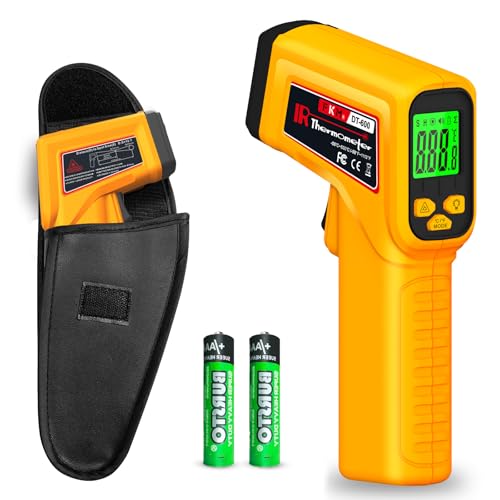
FKM 13-Point Laser Thermometer Gun

FKM Rechargeable Infrared Thermometer Gun

FKM Infrared Thermometer Gun -58°F~1112°F

FKM Non-Contact Thermometer Gun -58°F~1112°F

FKM 13-Point Infrared Thermometer Gun
More Details On Our Top Picks
The FKM Infrared Thermometer Gun -58°F~986°F suits routine workshop checks involving motors, appliances, exhaust components, and moderately heated surfaces. Its single-laser aiming system keeps the layout familiar, while the stated 12:1 distance-to-spot ratio helps you cover a larger area from a sensible working distance.
Compared with the broader-range models later in the list, this option makes more sense for everyday troubleshooting than furnace-adjacent work. The stated precision of ±2% or ±2°C also provides a clearer decision point for spotting abnormal heat, though reflective surfaces and measurement distance remain influential in real use.
Useful Touches
- Covers temperatures from -58°F to 986°F for common workshop faults.
- Single-laser targeting creates a straightforward aiming process.
- Adjustable emissivity lets you account for differences in surface properties.
- The 12:1 ratio reduces the need to approach hot components closely.
Worth Noting
- Its 986°F ceiling is lower than the 1112°F and 1472°F limits elsewhere in this list.
- Highly polished metal can distort infrared readings, so matte electrical tape can provide a more measurable surface.
- Keep the lens clean and dry because dust or residue can distort the sensor window during regular shop use.
Key Specs
Made For
You get the most benefit from this model during routine appliance, motor, automotive, and home repair checks that stay below its upper temperature limit.
Another Choice May Suit
Choose the FKM Rechargeable Infrared Thermometer Gun for mobile service work where cordless operation and a higher temperature range take priority.
Thirteen reference points give you a more defined target area than the single-laser FKM Infrared Thermometer Gun -58°F~986°F. That layout helps during fault isolation because small components, cable connections, and uneven heating patterns are easier to compare without placing the instrument directly against the machine.
The range reaches 1112°F, making this a more practical choice for hot exhaust systems, heating equipment, and electrical cabinets. The stated ±2% or ±2°C precision and adjustable emissivity support dependable cross-checking, although polished surfaces and oversized targeting areas can still affect the result.
What Makes Sense
- Thirteen laser points clarify the measurement area on uneven components.
- A -58°F to 1112°F range supports both cold checks and high-heat diagnostics.
- Adjustable emissivity improves your ability to compare different surface finishes.
- The 12:1 distance-to-spot ratio keeps cabinet and motor checks manageable.
Small Caveats
- Multiple laser points mark a wider area than a single center point, so very small components may require close positioning.
- The housing offers no stated ingress protection, making careful storage important in dusty or wet service environments.
Feature Snapshot
Right Fit For
This model fits HVAC technicians, automotive repairers, and serious hobbyists who need precise aiming across components of varying size.
Where Another Pick Shines
The FKM 13-Point Infrared Thermometer Gun offers similar multi-point guidance for beginners who place greater value on simple operation than higher measurement range.
Rechargeable power sets this FKM model apart from the other handheld options here, especially during service calls where a swappable battery or charging lead would be inconvenient. You can move between a vehicle bay, mechanical room, and electrical panel without planning around disposable cells.
The 1472°F ceiling is the highest stated limit in this group, while the 13-point laser and ±2% or ±2°C specification support detailed comparisons. In our view, that combination makes it the most mobile option for high-heat work, though charging access and runtime details should be confirmed from the final listing before you commit.
Where It Excels
- Rechargeable construction supports continuous mobile workshop use.
- Operation to 1472°F expands access to high-temperature equipment.
- Thirteen laser points help define uneven measurement areas.
- The stated precision keeps comparisons consistent across a broad range.
- Listed protection coverage addresses several common accidental-damage scenarios.
Things To Weigh
- The source does not provide charging time, runtime, or battery-removal details.
- Service plans can vary, so check the listing terms before relying on added protection.
- Store the charged unit away from moisture and extreme storage conditions when service work pauses.
Built With In Mind
You benefit most from the rechargeable design during mobile HVAC, industrial, and automotive service that repeatedly crosses 1112°F.
Consider Something Else
The FKM Infrared Thermometer Gun -58°F~986°F is a simpler fit for stationary diagnostics where a single laser and a lower upper limit meet the task.
HVAC cabinets, exhaust components, and electrical connections place different demands on a thermometer than basic woodworking checks. This FKM model combines a -58°F to 1112°F range with a 13-point laser pattern, giving you both broad coverage and a clearer definition of the area being measured.
Compared with the FKM 13-Point Laser Thermometer Gun, its core appeal is the unusually broad emissivity adjustment from 0.10 to 1.00. That gives you more room to account for different finishes, although correct surface preparation remains essential on reflective materials.
Points In Its Favor
- The 1112°F maximum covers many furnace, motor, and exhaust checks.
- Thirteen laser points support more controlled targeting than a single-point design.
- Broad emissivity adjustment accommodates several surface conditions.
Details To Watch
- Glossy metal can reflect surrounding infrared energy and distort the displayed value.
- The 13-point group still needs to fit entirely on the target for clean comparisons.
- Use a protective case or dedicated storage location to prevent drops and lens damage in a crowded tool area.
At A Glance
Best Suited To
HVAC technicians and electrical maintenance workers gain the most from its combination of broad range, multi-point aiming, and flexible emissivity control.
Swap It Out When
The FKM Rechargeable Infrared Thermometer Gun better serves mobile work that includes components approaching the 1472°F limit.
A stated 0.5-second response time makes this model useful when you need quick comparisons across several components rather than a prolonged investigation of one point. It fits automotive checks, HVAC service, electrical maintenance, and even kitchen tasks such as checking heating surfaces without touching them.
The -58°F to 1112°F range overlaps with several models here, but the cross-discipline use is the honest appeal. Compared with the FKM Infrared Thermometer Gun -58°F~986°F, it reaches hotter surfaces, while the lack of a stated multi-point laser pattern makes it feel less specialized for tiny, irregular parts.
Notable Gains
- Rapid readings support quick scans of motors, panels, and exhaust areas.
- The 1112°F limit supports demanding workshop and automotive tasks.
- Non-contact measurement keeps your hands away from hot equipment.
- One instrument can cover vehicle repair, HVAC work, and household checks.
Potential Drawbacks
- The source does not identify a multi-point laser pattern or distance-to-spot ratio.
- Fast scans can encourage comparisons from inconsistent distances, so establish a repeatable setup.
- Wipe the lens before and after dusty jobs to preserve reading consistency.
Who Will Love This
You will appreciate this option for quick household, kitchen, automotive, and HVAC checks across a broad temperature range.
Look Elsewhere When
The FKM 13-Point Laser Thermometer Gun is the stronger choice when narrow targeting on small or irregular components matters most.
Multi-point targeting reduces the guesswork that comes from aiming a single laser at a large or uneven surface. This FKM Infrared Thermometer Gun -58°F~1112°F is approachable for new workshop users who need to locate temperature differences on outlet housings, appliance panels, vehicle parts, and heating equipment.
The model offers the same broad temperature span as several FKM choices here, but its 13-point laser pattern makes it more useful for comparative scans. The honest limitation is missing detail: without a stated precision figure, distance ratio, or response time, you have less information for judging fine diagnostics.
Notable Upsides
- Thirteen laser points make the target area easier to visualize.
- The -58°F to 1112°F range handles many common workshop temperatures.
- Adjustable emissivity supports more appropriate readings across different surfaces.
Less-Strong Areas
- No accuracy statement is supplied, making direct comparisons with the ±2% or ±2°C models harder.
- Its 1112°F ceiling cannot match the FKM Rechargeable Infrared Thermometer Gun.
- A multi-point target can be too large for narrow components, so move closer without forcing the laser cluster off the surface.
- Store it separately from oily tools and use a soft wipe to keep the sensor window clear.
Feature Facts
Made For
New hobbyists and weekend repairers benefit from the visible target cluster and straightforward non-contact scanning process.
Not Your Match When
Choose the FKM 13-Point Laser Thermometer Gun instead when you want a stated precision figure for more demanding fault isolation.
What Matters Before Choosing a Workshop Thermometer
Measurement Range
Match the instrument to the temperatures you actually encounter. Motors, appliances, and household equipment often fall comfortably within a -58°F to 1112°F range, while the FKM Rechargeable Infrared Thermometer Gun reaches 1472°F for hotter exhaust and industrial components. A wider range offers useful headroom, but it does not replace safe positioning or suitable surface preparation.
Targeting and Distance
The distance-to-spot ratio describes how much the target area grows as you move away from the surface. A 12:1 ratio lets you inspect a small component from farther back, but moving too far away can place the measurement area beyond the intended part. Multi-point laser clusters show where the sensor expects you to aim, making them useful for uneven housings and diagnostic comparisons.
Emissivity and Surface Finish
Emissivity describes how effectively a material emits infrared energy. Paint, rubber, matte metal, and glossy metal behave differently, so a setting matching the surface is essential for meaningful comparisons. Apply a known matte tape surface to reflective components, then measure that patch rather than trusting a distorted reading from polished metal.
Power and Work Environment
Rechargeable operation fits technicians moving between vehicles, mechanical rooms, and client sites. Other handheld options may suit a fixed workbench or a shop where disposable cells are already part of your routine. Confirm charging method, runtime, storage requirements, and device support on the final listing before purchasing a cordless model.
Getting More From Your Infrared Readings
Mistakes Worth Dodging
Aiming at reflective metal, comparing readings from different distances, or ignoring emissivity can create false temperature differences. Keep the lens clean, establish a repeatable distance, and compare similar surfaces on adjacent components before drawing conclusions.
When Paying More Pays Off
A higher-end model may add rechargeable power, a wider range, or more defined targeting. Those features help only when your work includes mobile service, extreme heat, or repeated comparisons across small components. For a fixed bench and moderate temperatures, a simpler model may cover the task without extra complexity.
