
Renovation work rarely fails because you lacked a tool. More often, trouble starts with a hot outlet, an uneven ceiling, a stubborn draft, or a mechanical component running outside its normal range. These infrared thermometers help you screen those areas quickly without opening finished surfaces, although surface finish, distance, angle, and emissivity still influence the result. You’ll find a suitable match among these six options for HVAC checks, electrical troubleshooting, insulation surveys, and demanding high-temperature work.
The Main Contenders

FKM Infrared Thermometer Gun, 986°F
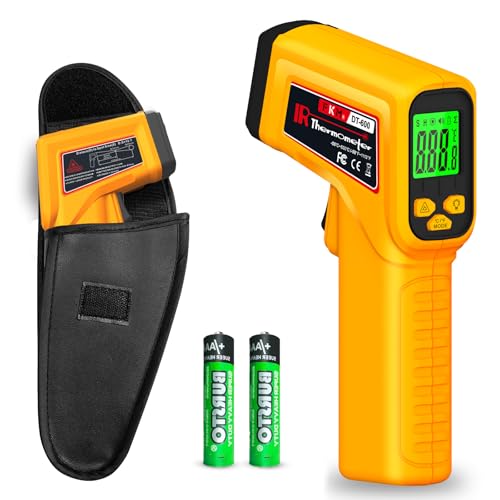
FKM 13-Point Laser Thermometer Gun

FKM Rechargeable 13-Point Thermometer
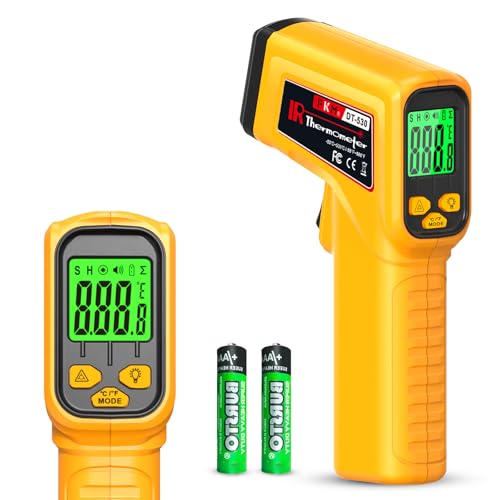
FKM Non-Contact Thermometer Gun, 986°F

FKM 3272°F Thermometer Gun, 50:1

FKM Instant Laser Thermometer Gun, 1112°F
Taking A Closer Look At The Options
Renovation diagnostics often come down to comparing a suspect area with a nearby reference surface. This FKM model covers -58°F to 986°F, giving it enough range for cold floors, warm walls, and many HVAC components. Its single-laser system is straightforward to aim, though the later 13-point models provide clearer guidance around small electrical parts.
Adjustable emissivity deserves attention because it lets you match the setting to the surface being measured. Emissivity describes how effectively an object emits infrared energy, and shiny metal or painted surfaces can distort a reading when set incorrectly. For broad household inspections, this pick feels suitably balanced.
Practical Pluses
- Wide-enough range for common building and HVAC checks
- Adjustable emissivity supports varied wall and equipment finishes
- Single laser provides uncomplicated point targeting
- Stated precision of ±2% or ±2°C suits preliminary diagnostics
Worth Noting
- A single laser offers less guidance around small electrical components
- Keep the lens clean, since dust or residue can affect practical accuracy
Key Specs
Made For
This model suits homeowners and general renovation contractors checking walls, floors, radiators, and accessible HVAC components.
Another Choice May Suit
Choose FKM 13-Point Laser Thermometer Gun for more precise visual targeting around crowded electrical panels.
Compared with the first FKM model, the defining upgrade is a 13-point laser pattern that outlines the approximate measurement area. That matters in renovation work because a single dot can cover more wall or equipment than you realize. Electrical panels, small terminals, and duct connections become much easier to frame.
The -58°F to 1112°F range also extends beyond the first pick’s ceiling. The honest read is that this model serves as a more deliberate diagnostic tool, particularly around mixed-temperature systems. Exact readings still depend on correct distance, angle, and emissivity.
Strong Points
- Thirteen laser points clarify the measurement footprint
- Higher ceiling suits hotter HVAC and equipment surfaces
- Adjustable emissivity helps accommodate different materials
- Useful visual contrast for identifying temperature variations
Small Caveats
- Multiple laser points require consistent distance and angle
- Reflective surfaces still call for cautious emissivity settings
Quick Facts
Right Fit For
This pick fits electricians, HVAC technicians, and serious home renovators who inspect small components from a safe working distance.
A Better Fit Elsewhere
FKM Rechargeable 13-Point Thermometer offers a better fit for large jobs where cable management around a work area becomes inconvenient.
Rechargeability changes the rhythm of a long renovation site. Instead of organizing work around a charging cable, you can carry this model between the mechanical room, attic, and unfinished walls. The 13-point laser pattern supports careful targeting, while its stated range reaches 1472°F.
That heat ceiling makes the tool more relevant for boilers, heating equipment, and other demanding components than the lower-range models here. The catch is charging discipline: owners commonly overlook a low battery before a full day of use, so a regular charging habit matters.
Everyday Advantages
- Rechargeable operation reduces cable clutter
- Thirteen laser points clarify small targets
- High range supports boiler and heating-system checks
- Adjustable emissivity improves material matching
- Useful during multi-room diagnostic sweeps
Points To Note
- Availability depends on keeping the internal battery charged
- The broad range exceeds what many household checks require
Built With In Mind
This model targets renovation teams and HVAC professionals moving repeatedly through unfinished buildings and mechanical areas.
Where Another Pick Shines
FKM Non-Contact Thermometer Gun, 986°F is the simpler alternative for routine household checks where rechargeable operation adds little value.
Not every renovation scan needs a complicated instrument. This FKM keeps the core functions compact: non-contact measurement, a single aiming laser, and a -58°F to 986°F range. It makes sense for comparing accessible heating surfaces, checking suspicious wall areas, and moving quickly through mechanical rooms.
The specification profile closely follows the first pick, so the choice comes down to listing details and availability rather than a dramatic performance difference. For a straightforward inspection, that simplicity can be more useful than carrying extra targeting features you may never use.
The Value In It
- Simple single-laser layout reduces aiming clutter
- Broad range suits common household systems
- Emissivity can be adjusted for multiple surface types
Practical Considerations
- The single dot can cover more area than expected
- Move closer to small components for a narrower target
- Lens cleaning should be part of routine tool storage
Who It Suits Best
This option fits beginners and general home renovators who want a direct instrument for accessible walls, floors, and heating equipment.
Consider Something Else
Choose FKM Instant Laser Thermometer Gun, 1112°F for faster routine readings and a wider high-temperature ceiling.
This FKM model separates itself through a -58°F to 3272°F range and a 50:1 distance-to-spot ratio. That ratio means a distant target appears much smaller than one measured nearby, which helps you isolate components around boilers, heaters, flues, and related mechanical equipment.
Its 13-point laser pattern adds a visible reference around the target, although the extremely broad measurement range is unnecessary for many wall inspections. For demanding heat diagnostics, though, the extra reach and tighter distant target make this the most specialized option in the group.
Reasons It Performs
- Exceptional upper range for very hot equipment
- 50:1 ratio narrows distant measurement targets
- Thirteen laser points aid precise alignment
- Multiple modes support comparative temperature checks
Trade Offs
- Specialized range offers little benefit for basic room checks
- Small distant targets still require careful alignment
- Store the unit securely after high-heat use
Technical Highlights
Whose Shelf It Belongs On
Heating professionals, mechanical renovators, and serious home-system troubleshooters gain the most from its extended range.
Reach For A Different Pick
FKM 13-Point Laser Thermometer Gun is the more practical fit for general electrical and HVAC work below 1112°F.
Fast follow-up readings make this model useful during renovation tasks that involve frequent comparisons. The stated response time is 0.5 seconds, allowing you to scan adjacent wall sections, duct surfaces, kitchen equipment, or HVAC components without pausing between measurements.
Its -58°F to 1112°F range sits between the mid-range FKM models and the extreme-heat pick. You still need suitable surface clearance and correct settings, but the quick response can make a busy diagnostic sweep feel more efficient in a tight mechanical room.
Why It Works Well
- 0.5-second response supports rapid comparisons
- Useful range covers common renovation temperatures
- Non-contact access reduces interference around equipment
- Convenient for kitchen, HVAC, and electrical checks
- Adjustable emissivity improves surface matching
Soft Spots
- Fast response does not prevent target-size errors
- Reflective metal can produce misleading results
- A protective case helps during crowded site work
Made For
This option suits busy renovators making repeated checks across HVAC, kitchen, and accessible electrical equipment.
Look Elsewhere When
FKM 3272°F Thermometer Gun, 50:1 serves you better for distant targets and very high-temperature heating components.
Matching The Tool To Your Inspection
Infrared thermometer specifications mean different things across a renovation site. Start with the surfaces and temperature range you actually expect to encounter, then narrow the choice by targeting pattern, response time, and power format.
Range And Target Size
The distance-to-spot ratio describes how much a target grows with distance. A 12:1 model suits many routine checks, while a 50:1 device gives you a much smaller reference area far from the equipment. Boiler rooms, flues, and recessed mechanical parts can reward that tighter distant target.
Emissivity And Surface Finish
Emissivity is the ability of a material to emit infrared energy. Painted drywall, tile, wood, bare metal, and reflective finishes respond differently, so a correct reading depends partly on matching the setting to the material. Keep the surface clean and avoid measuring through glass.
Laser Pattern And Response
A single laser is easy to understand, while a 13-point pattern helps you judge the measurement footprint. Quick-response models suit repeated comparisons, although speed cannot compensate for excessive distance, a steep angle, or an incorrect emissivity setting.
Power And Site Workflow
Rechargeable operation gives you freedom around ladders, unfinished rooms, and mechanical equipment. Any instrument still needs sensible charging, lens care, and dry storage. Choose the power format that fits your work pattern rather than paying more for a feature you will rarely use.
Making The Measurement More Reliable
Mistakes Worth Dodging
Holding the tool too close or too far changes the measured area, and angle matters because infrared readings can be affected by reflections. Clean the lens, match emissivity to the surface, and compare suspect areas with nearby reference areas rather than treating one isolated number as a final diagnosis.
What Separates Premium From Basic
Higher-end options add range, tighter distance ratios, multi-point lasers, quick response, or rechargeable power. Those improvements matter most for demanding equipment, crowded panels, and large job sites, while a straightforward single-laser model remains adequate for many routine home inspections.
Frequently Asked Questions
How accurate must an infrared thermometer be for renovation?
A stated tolerance around ±2% or ±2°C is useful for preliminary comparisons, but surface conditions still affect practical results. Confirm suspicious findings with a direct measurement or another suitable instrument.
What distance-to-spot ratio is most useful?
A 12:1 ratio handles many ordinary walls and components. Choose a higher ratio such as 50:1 for distant heating equipment or small targets.
Can infrared thermometers measure through walls?
No. Infrared thermometers detect energy emitted from the visible surface, so walls, insulation, and finishes block readings from hidden spaces.
Why does emissivity adjustment matter?
Different materials emit infrared energy differently. Correct emissivity settings reduce errors caused by surfaces such as painted walls, tile, wood, and bare metal.
Which range is best for HVAC work?
A model reaching at least 1112°F suits many common heating and ventilation components. A higher-range instrument becomes more useful around boilers, flues, and unusually hot equipment.
