
Finding a weak thermal bridge behind drywall takes more than pointing any infrared thermometer at a wall. Paint texture, lighting, distance, and the surface’s emissivity can all change the result, so the right tool needs adjustable settings, clear laser targeting, and a spot size suited to the area you’re checking. These models suit homeowners diagnosing drafts, property managers tracking heat loss, and trade professionals screening walls before opening them.
A Quick View Of The Lineup

FKM Infrared Thermometer Gun -58°F~986°F
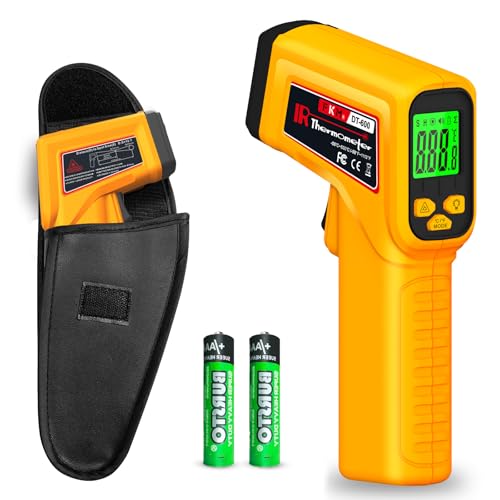
FKM 13-Point Laser Thermometer, 1112°F Max

FKM Rechargeable Laser Thermometer
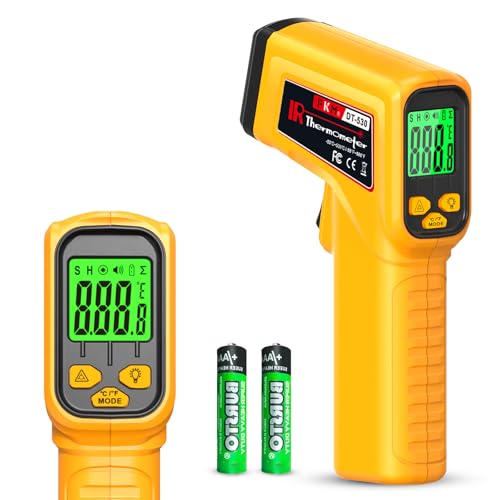
FKM Non-Contact Thermometer, 986°F Max

FKM 50:1 Thermometer, 3272°F Max

FKM Non-Contact Thermometer, 1112°F Max
The Strengths Of Each Pick
This model handles the temperature span most homeowners need for exterior-wall inspections, cold drafts, and uneven indoor heating. Its single laser gives you a clear aiming point without suggesting that the entire beam should be treated as the measurement area.
Compared with the later 13-point models, the targeting stays visually simple, which may be preferable in occupied rooms. Adjustable emissivity remains essential because painted drywall can reflect infrared energy differently from unfinished board.
The Case For It
- A -58°F to 986°F range covers common indoor and outdoor conditions.
- Adjustable emissivity supports different drywall finishes and painted surfaces.
- The 12:1 distance-to-spot ratio helps you stay back from the wall.
- Stated accuracy of ±2% or ±2°C suits routine thermal screening.
Small Caveats
- A single laser is less helpful for mapping several small temperature variations at once.
- Keep the lens clean and avoid dusty storage areas, since surface contamination can distort readings.
Feature Snapshot
Who It Suits Best
This pick suits homeowners and property managers who need dependable, non-contact screening without elaborate multi-point targeting.
Consider Something Else When
Choose FKM 13-Point Laser Thermometer, 1112°F Max when precise comparison points across a wall matter more than the simplest interface.
Thirteen laser points turn wall mapping into a more deliberate process, which is useful when you’re comparing a suspected thermal bridge with nearby reference areas. The 12:1 distance-to-spot ratio still defines a fairly focused measurement field, especially with the tool held several feet back.
Compared with the single-laser FKM model, this version gives you more visual landmarks without changing the basic approach. The -58°F to 1112°F range also extends beyond ordinary room-temperature inspection, adding versatility for appliance and HVAC work.
The Helpful Details
- Multiple laser points make side-by-side wall readings easier to interpret.
- The extended 1112°F ceiling suits hotter equipment and mechanical checks.
- Adjustable emissivity helps compensate for painted or reflective drywall.
- The narrow 12:1 spot supports more focused readings from a working distance.
Practical Considerations
- Thirteen markers can look busy on plain walls with only one visible temperature anomaly.
- Keep all laser points within the same drywall area for useful comparisons.
Quick Facts
Built With In Mind
This model fits property inspectors, energy auditors, and serious DIYers who compare several points while diagnosing uneven wall temperatures.
A Better Fit Elsewhere
FKM Non-Contact Thermometer, 986°F Max offers a calmer setup for beginners who mainly need a single clear aim point.
Recharging removes the routine of carrying spare cells between rooms, vehicles, and outbuildings. That matters most for property managers or HVAC technicians moving through several buildings without a convenient charging point.
The 13 laser points and 12:1 distance-to-spot ratio support careful wall mapping, while the -58°F to 1472°F range gives this model more high-temperature headroom than the two 13-point alternatives. In view, that combination favors mobility, though charging intervals and runtime remain important ownership considerations.
The Practical Payoff
- Rechargeable operation suits repeated inspections across a property.
- Thirteen laser points help you compare multiple wall locations.
- The 1472°F maximum supports a broader range of mechanical tasks.
- A 12:1 ratio helps limit the measured area at typical working distances.
Points To Note
- Rechargeable power requires access to a charger and adequate runtime for your workday.
- Multiple laser markers may be unnecessary for simple room-to-room comparisons.
The Right Fit
Choose this model for multi-site inspections where cordless operation matters more than a minimal display.
Reach For A Different Pick When
FKM 13-Point Laser Thermometer, 1112°F Max may serve you better when the tool spends most of its time in one workshop and standard replaceable-cell convenience matters more.
A straightforward single-laser layout keeps this thermometer approachable for basic household checks. You can screen around exterior windows, compare interior wall zones, and investigate uneven heating without learning a dense control scheme.
Its 12:1 ratio and adjustable emissivity match the first FKM option, including the -58°F to 986°F range. That makes it a direct alternative rather than a meaningfully different measurement class, so your decision rests on listing details and preferred handling.
Everyday Wins
- The single aiming point is easy to follow during a quick room scan.
- Adjustable emissivity supports varied drywall and paint finishes.
- The stated ±2% or ±2°C accuracy suits general thermal screening.
Worth Noting
- Its capabilities closely mirror the first FKM model, so side-by-side listing details deserve careful attention.
- Store the unit away from dust and wipe the lens gently, as facial oils and particles can degrade measurement clarity.
Made For
This pick suits beginners checking drafts, seasonal temperature differences, and broad sections of finished drywall.
Where A Sibling Pick Shines
FKM 50:1 Thermometer, 3272°F Max fits professionals who routinely need distant targeting and a much higher upper temperature limit.
The 50:1 distance-to-spot ratio is the important feature here, shrinking the measured footprint as you move farther from the surface. On large drywall sections, that lets you isolate narrower bands around suspected leaks, framing gaps, or thermal bridging.
Unlike the 12:1 models, this thermometer extends to 3272°F and adds MAX, MIN, DIF, and AVG functions according to its specifications. That makes it a broader diagnostic instrument, although the extra heat range adds little to ordinary room inspections.
What Earns Its Place
- A 50:1 ratio supports distant, narrow-area readings.
- The 3272°F maximum suits high-temperature mechanical work.
- Thirteen laser points simplify comparison of nearby target areas.
- Temperature statistics add context during repeated scans.
Trade-Offs To Consider
- Its broad capabilities may be excessive for basic household temperature checks.
- Complex wall maps need stable distance and a clean lens for consistent comparisons.
Technical Highlights
Who Will Love This
This model fits HVAC technicians, building inspectors, and advanced DIYers handling larger surfaces or hotter equipment.
Another Choice May Suit
FKM Non-Contact Thermometer, 1112°F Max is more restrained for beginners comparing normal room and wall temperatures.
Fast non-contact readings suit rapid movement across a wall, particularly during a whole-room comparison. The stated 0.5-second response is useful for following an outline of cold or warm areas rather than pausing at isolated points.
Its -58°F to 1112°F range exceeds the 986°F models, but that distinction matters mainly for equipment checks. For finished drywall, adjustable emissivity, clean optics, and consistent distance remain more consequential than the extra upper range.
Practical Advantages
- Rapid response supports continuous scanning across rooms.
- The 1112°F maximum broadens the practical use range.
- Non-contact measurement avoids contact with uneven wall surfaces.
- Adjustable emissivity helps account for different finishes.
Less-Strong Areas
- Speed can encourage casual scans, while steady distance and stable angles produce better comparisons.
- Frequent use calls for a protective storage habit and routine lens care.
Core Details
Best Suited To
This model serves homeowners and field technicians who need fast sweeps across large rooms or multiple wall sections.
A Better Fit Elsewhere
FKM 13-Point Laser Thermometer, 1112°F Max better supports methodical, point-by-point wall comparisons.
What Matters In A Wall Thermal Scanner
Distance-to-Spot Ratio
The distance-to-spot ratio estimates how much surface falls within the sensor’s reading area at a set distance. A higher ratio creates a narrower spot, which helps during inspections of large walls, HVAC equipment, or distant mechanical components. Hold the thermometer at a consistent distance because moving closer enlarges the area being measured.
Emissivity Adjustment
Emissivity describes how effectively a surface emits infrared energy. Paint, coatings, and drywall finishes can differ from the settings commonly associated with bare materials, so adjustable emissivity improves the setup for a finished wall. The laser identifies an aiming point, not the entire measured region, so you still need to keep the sensor’s spot within the area you want to inspect.
Range And Targeting
Most household wall checks occur well within the -58°F to 1112°F range, making the 986°F models more than adequate for normal thermal screening. High-temperature work gives the 1472°F and 3272°F options a stronger purpose. Thirteen laser points can help with visual comparison, while a 50:1 ratio favors distant, narrow measurements.
Power And Surface Care
A rechargeable model is convenient across multiple rooms and job sites, though you should account for charging time between work periods. Other models may suit stationary use or technicians who prefer a standard power setup. Keep the lens clean, avoid impact, and store the tool away from dust and moisture to preserve measurement clarity.
Avoid These Thermometer Pitfalls
Mistakes Worth Dodging
A large laser display does not guarantee a large or accurate reading area. Confirm the distance-to-spot ratio and keep the entire sensor spot on the drywall. Do not compare readings taken at different angles or distances, and remember that lighting, air movement, and surface finish can influence the apparent pattern.
Where The Extra Capability Helps
Higher-ratio optics and broader temperature ranges matter for distant equipment, HVAC work, and larger inspections. They matter less for checking a normal residential wall, where adjustable emissivity, fast response, and straightforward controls may provide more value. Choose advanced capability only when your routine creates a clear need for it.
Frequently Asked Questions
Can infrared thermometers detect moisture inside drywall?
They can reveal temperature patterns associated with moisture, but temperature differences alone do not confirm wet material. Confirm suspicious readings with moisture meters or direct inspection before opening the wall.
Why adjust emissivity for drywall?
Painted and coated drywall can emit infrared energy differently from unfinished board. Matching the setting helps align the thermometer’s assumptions with the surface being examined.
Does laser count improve measurement accuracy?
Multiple lasers add visual reference points but do not automatically increase accuracy. The sensor, distance, surface conditions, and correct setup remain more important.
Can I use these tools through walls?
No. Infrared thermometers measure radiant energy from the surface facing the sensor and cannot see through drywall.
How close should I hold a thermometer?
Match the distance to the stated distance-to-spot ratio and repeat readings from the same position. Move closer only when you intentionally need to inspect a wider area.
