
Contractors work around heat, cold, electrical panels, HVAC equipment, motors, and inaccessible surfaces. An infrared thermometer gives you a quick, non-contact way to check temperatures without touching energized components, hot machinery, or equipment in tight spaces. The right model depends on your working range, surface distance, emissivity needs, and how often the tool will handle rough job-site use.
The Picks In Brief

FKM Infrared Thermometer Gun -58°F~986°F
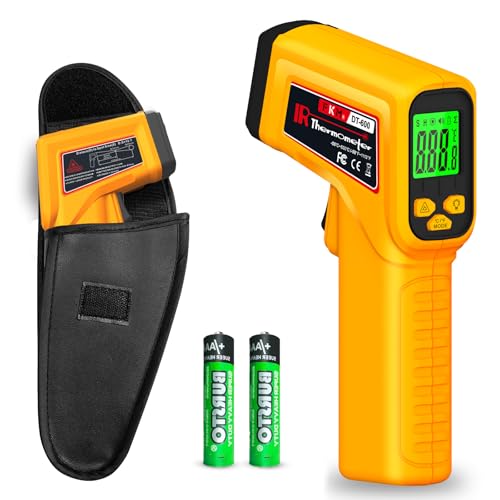
FKM DT-600 13-Point Laser Thermometer -58°F~1112°F

FKM DT-800 Rechargeable 13-Point Laser Thermometer
FKM Single-Laser Infrared Thermometer -58°F~986°F

FKM High-Temperature Thermometer -58°F~3272°F 50:1

FKM Infrared Thermometer Gun -58°F~1112°F
Meet The Standout Selections
This FKM model covers the range needed for many routine service calls, from cool readings around -58°F to temperatures approaching 986°F. Its non-contact measurement is useful around motors, vents, and electrical equipment where touching the surface is inconvenient or unsafe. The single laser gives you a simple aiming point, which can be easier to manage on a crowded work truck or during a quick diagnostic pass.
Unlike the 13-point models later in the list, this pick keeps the controls focused around a straightforward measurement setup. Emissivity, the surface property that affects how infrared radiation is read, can be adjusted from 0.1 to 0.99. You may find that feature especially valuable on painted metal, while shiny or dusty surfaces still call for careful placement and stable distance.
Strengths Worth Knowing
- The -58°F to 986°F range fits everyday HVAC, appliance, and maintenance checks.
- Single-laser targeting helps you line up smaller components without a cluster of aiming marks.
- Adjustable emissivity improves control across different painted and uncoated surfaces.
- The stated accuracy of ±2% or ±2°C provides a clear reference for routine field decisions.
Small Caveats
- A 12:1 distance-to-spot ratio means the laser mark does not guarantee that the entire reading area is the size you expect.
- Keep the lens clean; dust on the sensor window can affect readings in dusty work areas.
Key Specs
Made For Routine Maintenance
You will find this model useful for maintenance technicians, property managers, and remodelers who need a dependable general-purpose thermometer without a multi-point laser layout.
A Better Fit Elsewhere
For very hot equipment and distant targets, the FKM High-Temperature Thermometer -58°F~3272°F 50:1 serves a more specialized role.
The FKM DT-600 takes the basic single-laser approach used by the first pick and expands both its range and aiming pattern. Its 13-point laser layout makes it more useful when you need to identify a small hot spot on a breaker, duct, motor housing, or heating component. The extended 1112°F ceiling gives it room for hotter service environments while preserving a -58°F lower limit.
For electrical diagnostics, the clustered laser marks help show whether a reading represents a uniform area or a narrower hot section. You may find the extra aiming points useful in a busy mechanical room, though they can feel busy on a small target or at a low distance. The 12:1 distance-to-spot ratio still matters, so keep the instrument properly placed rather than assuming the entire laser pattern equals the sensor’s measurement area.
A Strong Showing
- The -58°F to 1112°F range covers a wider hot-side range than the first FKM pick.
- Thirteen laser points make small components and uneven temperature areas easier to frame.
- Adjustable emissivity supports more accurate interpretation across different finishes.
- The ±2% or ±2°C stated accuracy gives technicians a consistent reference.
Practical Considerations
- Multiple laser points need more attention than a single aiming dot, especially on small or moving targets.
- Surface glare, coatings, and angle of measurement can still distort infrared readings in reflective areas.
Built With In Mind
Electrical technicians, HVAC service providers, and equipment maintainers get the most benefit from the wider range and more precise targeting pattern.
Where A Sibling Pick Shines
You may prefer the FKM Infrared Thermometer Gun -58°F~986°F for simpler single-point work and fewer controls on small components.
The FKM DT-800 stands apart from the DT-600 through its rechargeable format and a higher stated upper limit of 1472°F. That combination suits technicians who move between jobs without wanting to keep disposable batteries in the same pocket as screws, probes, and test leads. The 13-point laser also carries forward the precise targeting that makes the DT-600 useful for components.
In a maintenance van or on a factory floor, a rechargeable instrument can simplify daily carry, assuming your charging routine is consistent. The -58°F lower limit helps with refrigeration and outdoor equipment, while the stated ±2% or ±2°C accuracy gives you a reference for comparison work. Its broad range does not replace a surface-contact measurement for every thermal inspection, so use the appropriate tool for formal diagnostics.
A Favorable Mix
- Rechargeable operation reduces the need to carry spare batteries on frequent service routes.
- The 13-point laser pattern helps narrow in on small switches, motors, and duct sections.
- A -58°F to 1472°F range supports both refrigeration and high-temperature checks.
- Adjustable emissivity lets you account for surface finishes during routine diagnostics.
Where It May Fall Short
- Charging becomes a field responsibility, so a dead battery is inconvenient during a busy route.
- The stated range is broad, but the high end does not make it a substitute for every industrial thermal camera.
Core Details
Right Fit For Frequent Service Calls
You will appreciate this rechargeable model most as a mobile HVAC, appliance, or facilities technician who measures temperature repeatedly throughout the day.
Consider Something Else When
Choose the FKM DT-600 13-Point Laser Thermometer -58°F~1112°F instead when a lower upper range and a simpler power approach suit your work.
The FKM Single-Laser Infrared Thermometer -58°F~986°F is a straightforward option for property inspections, appliance troubleshooting, and basic maintenance. A single laser reduces visual clutter when you are checking a thermostat, radiator, electrical enclosure, or heating unit. The -58°F lower limit is useful for outdoor work during cool weather, while the 986°F upper limit covers many common heat sources.
Compared with the DT-600 and DT-800, this pick uses a simpler aiming system and stops at a lower maximum temperature. That trade-off can be helpful on compact equipment where 13 points make the display harder to interpret. Adjustable emissivity from 0.1 to 0.99 remains important, since the surface and measurement angle can change what the sensor reports.
Advantages To Know
- Single-laser targeting is easy to follow on compact appliances and small service points.
- The -58°F to 986°F range serves everyday heating and cooling checks.
- Emissivity adjustment gives you control over painted, coated, and bare surfaces.
- The stated accuracy of ±2% or ±2°C is easy to reference in field notes.
Details To Watch
- The 12:1 ratio can make a distant target appear smaller than the surrounding area you need to assess.
- Keep the instrument stored dry and wipe the lens before use, especially after dusty attic or crawlspace work.
Who Should Grab It
You will find this model practical for home service, light commercial maintenance, and quick checks where a simple laser point is easier to manage.
Look Elsewhere When
The FKM High-Temperature Thermometer -58°F~3272°F 50:1 is the stronger choice for furnace work, hot industrial surfaces, and distant targets.
The high-temperature range separates this FKM from every other pick in the list. A -58°F to 3272°F span covers cold readings as well as furnaces, boilers, industrial ducts, and other hot equipment, making it more specialized than the general-purpose models. Its 50:1 distance-to-spot ratio lets you target smaller areas from farther away, which matters when approaching energized or heat-producing equipment.
Thirteen laser points help you frame the reading area, while adjustable emissivity supports more consistent measurements across different surfaces. The stated ±2% accuracy applies across the listed range, but reflective metal and heavily oxidized surfaces can still affect results. For furnace work, hold the tool steady and keep a safe distance, because the broad range does not make close-range readings more reliable.
Everyday Wins
- The 3272°F upper limit supports work involving furnaces, boilers, and hot industrial equipment.
- A 50:1 ratio helps you aim at smaller targets from a safer or more practical distance.
- Thirteen laser points make temperature variations easier to locate on larger equipment.
- MAX, MIN, DIF, and AVG functions support comparative readings during diagnostics.
Trade-Offs To Consider
- The specialized range may offer little value for technicians who only inspect ordinary HVAC and appliance temperatures.
- Storage deserves attention because the instrument is more specialized and should be kept away from moisture and impact during transport.
Feature Snapshot
Built With In Mind
You will find this model valuable for boiler technicians, furnace service providers, and industrial maintenance crews working with high-heat equipment.
Another Choice May Suit
Choose the FKM DT-800 Rechargeable 13-Point Laser Thermometer for frequent mobile service work where rechargeability matters more than a 3272°F upper limit.
This FKM Infrared Thermometer Gun sits between the simpler 986°F models and the more specialized high-temperature pick. Its -58°F to 1112°F range covers many refrigeration, heating, automotive, and electrical maintenance situations without reaching the furnace-focused extremes of the 3272°F model. The response time is listed at 0.5 seconds, which makes repeated spot checks feel more practical during a troubleshooting session.
You can use the non-contact design around hazardous machinery, boiling oils, and HVAC equipment, though you should follow your normal site safety procedures. The 12:1 distance-to-spot ratio and adjustable emissivity help with positioning and surface variation. Compared with the DT-600, the targeting system is more compact, so it may be easier to use on narrow electrical panels and small appliance housings.
Practical Pluses
- The 0.5-second response supports fast checks during HVAC and electrical troubleshooting.
- A -58°F to 1112°F range covers common heating, cooling, and automotive applications.
- Non-contact measurement helps around hot machinery and equipment that is difficult to touch.
- Adjustable emissivity supports more consistent readings across coated surfaces.
Points To Note
- The 12:1 ratio may still be less suitable for very small distant components than the 50:1 high-temperature model.
- Use a clean lens and stable distance, since dust, movement, and angle can affect practical accuracy.
Quick Facts
Who It Suits Best
You will find this pick useful for home repair, automotive service, cooking checks, and light commercial maintenance where fast readings matter.
Not Your Match When
The FKM High-Temperature Thermometer -58°F~3272°F 50:1 fits you better for industrial furnaces, boilers, and distant hot targets.
Choosing A Thermometer For Field Work
Range And Measurement Purpose
Start with the temperatures you actually encounter. A -58°F to 986°F range covers many routine HVAC and appliance checks, while a 1112°F or 1472°F upper limit gives you more room for hotter equipment. The FKM High-Temperature Thermometer -58°F~3272°F 50:1 makes sense for furnace and boiler work, not because a higher number is automatically better, but because it matches the job.
Distance And Target Size
The distance-to-spot ratio describes how the measurement area changes with distance. A higher ratio such as 50:1 can be useful for smaller, distant components, while 12:1 models are often easier to control on a nearby service panel. You should compare the target with the distance you can maintain safely, rather than relying on the largest number in the list.
Emissivity And Surface Finish
Emissivity affects how accurately an infrared sensor reads different materials. Adjustable settings help with painted, coated, and bare surfaces, but reflective metal, dust, moisture, and measurement angle can still affect results. Keep the lens clean and use a stable distance, especially on equipment with a changing surface temperature.
Power And Portability
A rechargeable model is convenient for technicians who make frequent calls, while a standard thermometer may be easier to manage for occasional checks. The DT-800’s rechargeable format reduces battery changes but adds charging responsibility. Consider the tool bag, storage conditions, and your typical workday before deciding which ownership pattern suits you.
Using These Picks With Confidence
Each FKM model serves a different working range and targeting pattern. The simpler single-laser designs suit compact equipment, the 13-point models help identify localized temperature differences, and the high-temperature pick handles hotter industrial work. You get the most consistent results by matching the instrument to the surface, distance, and diagnostic question in front of you.
Common Mistakes To Avoid
Wrong Turns To Avoid
Do not choose solely by the highest temperature number or the largest ratio. A broad range can be unnecessary for ordinary appliance checks, while a high ratio can make a small target easier to frame. You also need to account for surface finish and measurement distance, because a technically capable instrument can still give a misleading result on reflective metal or a dusty surface.
The Case For Spending Up
Higher-range or rechargeable models can be worthwhile when you regularly work with hot equipment, need tighter target identification, or want to avoid disposable battery changes. For occasional property checks, a simpler 12:1 single-laser model may provide the useful capability without extra specialized features. Match the upgrade to your actual workload.
Frequently Asked Questions
What temperature range do contractors need?
Most routine HVAC and appliance work fits within a -58°F to 986°F or -58°F to 1112°F range. Furnace, boiler, and industrial jobs can require a model that reaches much higher temperatures.
What does a distance-to-spot ratio mean?
The distance-to-spot ratio shows how the approximate measurement area grows as you move away from the target. A higher ratio generally helps you frame smaller surfaces from farther away.
Does adjustable emissivity improve accuracy?
It can help match the sensor to different surface materials. Reflective metal, coatings, dust, moisture, and measurement angle can still affect the result.
Are infrared thermometers safe for electrical work?
Non-contact readings can reduce the need to touch hot or energized equipment, but normal electrical safety procedures still apply. You should never remove covers or bypass protective equipment solely to use a thermometer.
Which FKM model is best for high heat?
The FKM High-Temperature Thermometer -58°F~3272°F 50:1 is designed for the highest range in this roundup. Its 50:1 ratio also helps with smaller, distant targets.
