
Renting usually limits you to security gear you can carry from one home to the next. Indoor cameras offer a practical solution, but installation ease, privacy controls, night visibility, and recurring storage costs deserve careful attention. The six options below cover everything from compact single cameras to wireless alarm bundles and two-camera sets. You’ll find especially useful options for apartments, shared homes, nurseries, pet care, and anyone who wants to avoid drilling or fixed wiring.
A Side-By-Side Look

SimpliSafe 11-Piece Wireless Security System Gen 3

SimpliSafe 8-Piece Wireless Home Security System White

SimpliSafe 10-Piece Wireless Security System with Outdoor Camera

TP-Link Tapo C100 1080P Indoor Camera with Night Vision
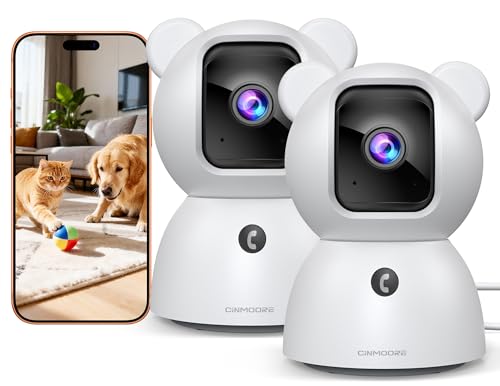
CINMOORE 2-Pack 2.5K Indoor Cameras with Local AI Detection

CAMSTRO 3K Window Camera with Display, 2-Pack
The Details Behind The Selections
A portable alarm system makes more sense than hardwired security in a rental, and this 11-piece bundle supplies both sensors and an indoor camera. The wireless format reduces installation constraints, while the camera’s controllable privacy shutter gives you a direct way to block its view.
Compared with the TP-Link Tapo C100, this option covers more than visual monitoring. You may find the larger assortment useful in an apartment with several entry points, although setup planning matters more than component count alone.
A Few Highlights
- The wireless components support easier repositioning between homes.
- A built-in privacy shutter provides a physical way to limit the camera’s view.
- The alarm, sensors, and camera create several layers of home monitoring.
- Optional professional monitoring avoids making that service a hardware requirement.
Points To Note
- Multiple sensors require thoughtful placement and regular battery checks.
- The system may exceed your needs in a studio or one-room apartment.
At A Glance
Who It Suits Best
This bundle fits renters who want visible coverage and entry sensors without running cables through their apartment.
Where Another Pick Shines
The TP-Link Tapo C100 is a simpler fit for anyone who only needs one movable camera and an indoor view.
Not every renter needs a camera in every room, and this eight-piece system concentrates on wireless alarm protection. Its base station includes a battery rated for up to 24 hours, a 100 dB siren, and network backup for power outages with a professional monitoring plan.
That makes it a compact alternative to the 11-piece Gen 3 bundle, though the lack of a listed camera limits visual context. Apartments with several doors and a manageable number of contact points benefit most from this layout.
Useful Strengths
- Wireless components simplify relocation and reduce visible cabling.
- The base-station battery preserves operation during a power interruption.
- The 100 dB siren creates a clearly audible alert in occupied spaces.
- A contract-free monitoring option supports more flexible service decisions.
Small Caveats
- No camera is listed, so visual verification requires separate equipment.
- Network backup depends on professional monitoring for the stated outage function.
- Keypad and sensor batteries need routine maintenance.
Made For
This system fits small apartments where alarm coverage matters more than live video or pet monitoring.
Consider Something Else When
The CINMOORE 2-Pack serves renters who prioritize two indoor views and local detection over a full alarm network.
Shared entrances, balconies, and parking areas can make an indoor-only camera feel incomplete. This 10-piece system adds an outdoor camera to its wireless alarm components, giving you a clearer view of activity around the property without turning to a wired installation.
It bridges the gap between the camera-only Tapo C100 and the broader 11-piece bundle. You may find the mix sensible for a one-bedroom rental with a ground-floor patio, provided exterior mounting permission comes from your landlord.
The Good Stuff
- An outdoor camera broadens coverage beyond interior rooms.
- Wireless components limit drilling and cable routing.
- Ten included components suit homes with several monitored points.
- Optional professional monitoring leaves the service decision open.
- Contract-free monitoring supports a more flexible setup.
Honest Caveats
- Exterior placement requires permission from the property manager.
- The system is more complex than a single indoor camera.
Feature Snapshot
Right Fit For
This configuration fits ground-floor renters who need entry sensors and exterior awareness in one portable system.
A Better Fit Elsewhere
The 11-piece Gen 3 system may suit you better when indoor video and a controllable privacy shutter carry more weight than exterior coverage.
A single camera is often the least disruptive choice for a rental, particularly in an apartment where a full alarm network would be excessive. The Tapo C100 records 1080P video, detects motion, and provides two-way audio, which covers many nursery, pet, and hallway-monitoring needs.
Its night vision extends visibility to as far as 30 feet, making the unit more useful after dark. Compared with the two-camera CINMOORE set, this option uses less storage planning, although you cover only one viewing area.
Good Reasons To Consider
- 1080P recording provides useful detail for close-range indoor monitoring.
- Two-way audio lets you speak with a pet or family member near the camera.
- Cloud and SD card options give you more than one storage route.
- Motion, person, and crying notifications support several everyday monitoring needs.
Practical Considerations
- Cloud retention can add a recurring service cost, depending on the selected plan.
- A single fixed viewpoint leaves other rooms uncovered.
- Placement takes care because nearby furniture can create reflections or block activity.
Quick Facts
Who Will Love This
This camera suits renters who need an affordable, movable view of one nursery, pet area, or apartment entrance.
Another Choice May Suit
CINMOORE’s two-camera set is a stronger option for homes that need simultaneous views of separate rooms.
Two cameras make more sense than a single unit for a pet that moves between rooms or a family balancing a nursery and living area. This CINMOORE set records 2.5K UHD video, uses 4MP sensors, and includes pan-and-tilt control for changing the field of view.
Local AI detection classifies people, pets, and crying on the camera itself, reducing the need to depend on cloud processing for basic alerts. The 2.4 GHz Wi-Fi connection may be an important check in older apartment networks, where that band can experience congestion.
Useful Highlights
- Two cameras cover more rooms without adding a second network ecosystem.
- Local human, pet, and crying detection supports targeted alerts.
- Pan and tilt controls let you redirect the view without moving the hardware.
- Infrared night vision supports monitoring in dim rooms.
- Two-way audio allows communication with a pet or household member.
Possible Compromises
- It connects only to 2.4 GHz Wi-Fi, limiting some network setups.
- On-device detection does not guarantee that every storage function is local.
- Two units require separate placement, power, and routine lens cleaning.
Built With In Mind
This set fits renters monitoring pets, children, or two separate rooms from a single app-based system.
Not Your Match When
The Tapo C100 is the simpler choice for one room, a lighter setup, or a Wi-Fi network that doesn’t favor 2.4 GHz-only equipment.
Upper-floor renters often have no useful ground-level camera position, so a window view can provide a practical look at a door, driveway, or courtyard. CAMSTRO’s two-pack adds a built-in 2.01-inch display, allowing a person-detection view without opening an app on every arrival.
This isn’t a conventional indoor camera, despite its place in the category. It is most relevant to people who can mount units safely on accessible windows and want dual-band Wi-Fi, which includes both 2.4 and 5 GHz connections.
Noteworthy Benefits
- The built-in display brings a live exterior view into the room.
- Two cameras can monitor separate window areas.
- Anti-glare design supports clearer outdoor visibility.
- Dual-band Wi-Fi offers more connection options in crowded networks.
Where It May Fall Short
- Window placement may require landlord permission and careful drilling.
- The screen occupies visible space and suits only some interiors.
- Condensation and outdoor weather can affect image clarity over time.
The Details
The Right Fit
This set suits upper-floor renters with secure, accessible window positions and a need to monitor outside areas.
Skip It When
The Tapo C100 fits you better when you need straightforward monitoring inside a nursery, hallway, or pet room.
What Matters in a Rental Camera Setup
Installation and Portability
Wireless placement is the priority in most rentals. Check each component for power requirements, mounting needs, and permission requirements before ordering. Battery-powered cameras offer easier relocation, while window-mounted models may still require careful drilling and landlord approval.
Resolution and Night Visibility
Resolution determines how much detail a camera records, but placement matters just as much. You’ll see more useful information from a 1080P or higher camera positioned at a sensible height and angle. Night vision becomes essential in hallways, nurseries, and living rooms where light levels change throughout the day.
Alerts, Audio, and Detection
Motion notifications should distinguish meaningful movement from changing light or shadows. Two-way audio is useful for speaking to a pet or household member, while person, pet, and crying detection can reduce unnecessary alert checks. Local detection may also help renters who prefer not to route basic analysis through cloud services.
Storage and Privacy
Cloud storage adds convenience but can introduce a recurring charge, while removable storage offers more physical control over recordings. Privacy shutters, strong account security, and thoughtful camera placement deserve attention in bedrooms, bathrooms, and shared living areas. You should also account for lens cleaning, battery checks, and firmware maintenance.
Key Decisions Before You Choose
Wrong Turns To Avoid
Don’t judge a camera solely by resolution. Placement, night visibility, network compatibility, and storage terms often affect daily use more. Confirm that your Wi-Fi supports the camera’s required band and review the recurring storage conditions before installation.
What Separates Premium From Basic
Higher-cost systems commonly add sensors, higher resolution, local detection, multiple cameras, or a built-in display. Those features make sense for frequent monitoring, several rooms, or a need for alarm components. A single room with basic alerts may need none of them, making the Tapo C100 the more restrained choice.
Frequently Asked Questions
Are indoor security cameras suitable for rented apartments?
They work well in apartments because wireless models can avoid fixed wiring and relocate with you. Confirm mounting rules, obtain landlord permission where required, and position cameras without capturing private neighboring areas.
Do indoor security cameras need a subscription?
Subscription requirements depend on the model and the features you use. Some offer local or SD card storage, while cloud access, extended recording, or professional monitoring may require a paid plan.
Is higher camera resolution always better?
Higher resolution can capture finer detail, but placement and lighting determine how much you actually see. A 2K or 3K camera placed poorly won’t outperform a correctly positioned 1080P unit.
Can one camera monitor an entire apartment?
One camera covers only its field of view, which may suit a studio or open-plan room. Larger apartments benefit from multiple cameras or a security system with entry sensors.
What should renters check before mounting a camera?
Review your lease, confirm permitted placement, and choose a location without a direct view into private spaces. You should also test the power connection, Wi-Fi coverage, and relevant notifications before treating the camera as active security coverage.
