
An extension cord looks simple until a compressor, workshop, or backup generator pushes it near its limits. The six options here cover long-distance generator connections, multi-outlet tool stations, and compact power links for equipment around the home. Your main concern should be electrical demand, connector compatibility, cord length, and how much room each outlet needs.
The Choices Worth Comparing

avxccdn 30 Amp 50-Foot Generator Extension Cord

HHSOET 16 Outlet Power Strip, 12 Gauge, Black, 4FT
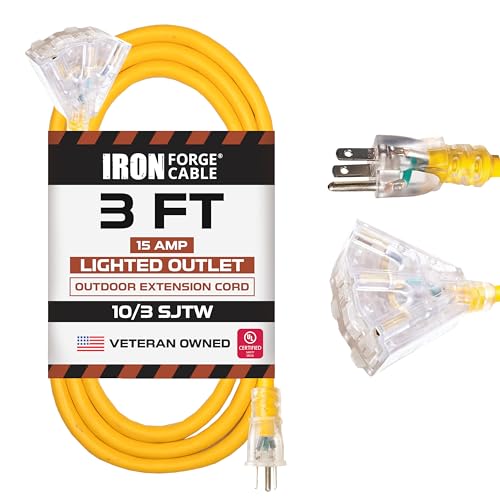
Iron Forge Cable 10 Gauge Multi-Outlet Cord, 3FT Yellow SJTW

KMC 12 Outlet Workshop Metal Power Strip, 3FT Cord

HHSOET 16 Outlet Power Strip, 12 Gauge, Yellow, 4FT

HHSOET 16 Outlet Power Strip, 12 Gauge, Yellow, 6FT
Inside Each Recommended Option
A backup generator parked across a driveway or lawn often needs more reach than a temporary indoor cord can provide. This 50-foot lead places a 30-amp generator connection closer to your transfer equipment, with L14-30 locking plugs that resist accidental separation.
Unlike the multi-outlet strips that follow, this is a dedicated high-current run rather than a general accessory hub. It suits RV power arrangements, portable generators, and manual transfer equipment, assuming the connected equipment uses matching 30-amp hardware.
The Helpful Details
- The 50-foot length reduces the need for improvised extensions or awkward cord placement.
- L14-30P and L14-30R locking ends create a deliberate connection for frequently used backup systems.
- 10-gauge SJTW construction suits high-load generator applications and outdoor environments.
- The 120/250-volt, 7,500-watt rating gives you a defined load ceiling to compare with your equipment.
Things To Consider
- Its single dedicated connection offers none of the convenience of a multi-outlet strip.
- Storage demands planning because 50 feet of heavy cord becomes awkward to coil compactly.
Key Specs
Built With In Mind
You benefit most from this cord in a home with a portable generator, RV, or manual transfer switch that uses 30-amp L14 connections.
Another Choice May Suit
The HHSOET 16 Outlet Power Strip is a better fit for garage tools that need several nearby outlets rather than one distant generator connection.
Garage power strips become difficult to use when every outlet sits shoulder to shoulder and large charger bodies cover neighboring sockets. This HHSOET model spreads 16 receptacles across a long metal housing, leaving room for bulky AC adapters in a busy work area.
The 12-gauge cord and stated 20-amp capacity make it more serious than a lightweight household strip. It works well for organized tool charging and workshop equipment, while the 4-foot lead remains short enough for a nearby wall outlet.
What Helps Most
- Sixteen outlets can support chargers, lights, and several smaller tools without stacking a second strip.
- Wide socket spacing improves access for large transformer and adapter housings.
- 12-gauge construction suits demanding workshop loads better than many light-duty strips.
- The on/off control and integrated 20-amp circuit breaker provide straightforward power control.
Practical Considerations
- A long metal housing takes up more bench or shelf space than a compact household power strip.
- Owners commonly keep this type of strip coiled loosely for storage, since tight bending can stress the conductors and outer jacket.
Feature Snapshot
Who It Suits Best
You’ll find this strip most useful in garages and workshops where several bulky plugs need one reachable power hub.
A Better Fit Elsewhere
The KMC 12 Outlet Workshop Metal Power Strip offers a more compact, mountable setup for fixed workstations with fewer devices.
A three-foot extension is most useful where equipment sits just beyond an outlet’s reach. Iron Forge takes that short-distance approach and adds three outlets through a pigtail-style body, giving you flexibility without carrying a large power strip across the floor.
Its 10-gauge pure-copper construction is aimed at high-draw equipment such as compressors, power tools, generators, and HVAC units. Compared with the 50-foot avxccdn generator cord, it prioritizes compact placement and multi-device access over long-distance power transfer.
Good Reasons To Consider
- The short length keeps high-current equipment close to its wall outlet and reduces loose cable across a work area.
- Three outlets let you group several smaller tools or accessories around a single connection.
- 10-gauge pure copper wire provides a substantial conductor size for demanding equipment.
- Yellow SJTW construction is easy to identify and suited to indoor or outdoor tool conditions.
Smaller Caveats
- Three receptacles offer much less expansion room than the 16-outlet HHSOET models.
- Wide-body plugs may block some adjacent sockets despite the multi-outlet design.
- The compact lead won’t bridge a distant outlet or generator location.
Right Fit For
This cord fits DIYers running high-draw equipment a few feet from a suitable wall outlet, especially in temporary workshop setups.
Where Another Pick Suits Better
The HHSOET 16 Outlet Power Strip, 12 Gauge, Black, 4FT is the stronger fit for a garage charging station with many bulky adapters.
Fixed workshop stations benefit from a power hub that stays put instead of sliding around a crowded bench. The KMC strip combines 12 widely spaced outlets, a metal housing, and keyhole mounting slots for a wall, panel, or under-bench position.
Its NEMA 5-15 plug and 4-foot lead fit standard 120-volt receptacle arrangements, while the switch includes a 15-amp circuit breaker. Compared with the 20-amp HHSOET strips, this model feels more deliberately organized around mounting and everyday workshop tools.
The Practical Payoff
- Wide outlet spacing leaves practical access for transformer and adapter plugs.
- The metal housing suits a utility room, bench, or production area where durability and organization matter.
- Keyhole slots reduce desk clutter by holding the strip in a fixed location.
- The 4-foot NEMA 5-15 lead adds reach without becoming difficult to route.
Points To Keep In Mind
- The 15-amp breaker and standard plug make it less suitable than the HHSOET models for 20-amp workshop distribution.
- Mounting requires suitable hardware and a stable surface; the slots alone don’t include a complete installation system.
Technical Sheet
Made For
You’ll get the most from this strip in a permanent workshop where a mounted 15-amp power hub organizes bench tools and accessories.
Reach For A Different Pick When
The HHSOET 16 Outlet Power Strip, 12 Gauge, Black, 4FT fits garages needing more sockets and a stated 20-amp capacity without wall mounting.
The yellow HHSOET model shares the same 16-outlet layout as the black version, but its color makes it easier to spot among cords around a garage or workshop. Sixteen spaced receptacles create one central connection point for chargers, work lights, and compact tools.
Its 12-gauge lead and stated 20-amp rating suit more substantial loads than a typical lightweight household strip. The honest fit, though, depends on reaching a compatible 20-amp circuit and keeping connected equipment within the strip’s capacity.
Why It Works Well
- The high outlet count reduces the need for daisy-chained strips around a shared workstation.
- Wide socket spacing improves access to large plugs and power adapters.
- The visible yellow jacket helps distinguish the lead from standard white household cords.
- A 4-foot length offers useful placement flexibility from a nearby receptacle.
- The on/off switch and 20-amp breaker centralize everyday control.
Where It May Fall Short
- Sixteen outlets can encourage more equipment than the source circuit can support.
- The long metal case needs clear storage space when you move the strip between jobs.
Who Will Love This
This model fits garage owners who need many accessible outlets and value a highly visible cord for routine tool charging.
Not Your Match When
The Iron Forge Cable 10 Gauge Multi-Outlet Cord, 3FT Yellow SJTW is the easier option for a compact, close-range connection with only three outlets.
Six feet of lead gives you more freedom to place a 16-outlet strip in a larger garage, basement, or shop where the nearest receptacle sits across open floor space. You gain the same wide socket layout and 20-amp breaker found on the 4-foot yellow model, with more distance between the wall and your tools.
That extra length is useful in a multi-bay workshop, although it also creates more cable to route and store. Compared with the KMC strip, this HHSOET model offers more outlets and higher stated capacity, but it sacrifices the wall-mounting flexibility of a fixed station.
Benefits That Matter
- The 6-foot lead reaches farther than the 4-foot yellow model without a separate extension.
- Sixteen outlets support extensive tool charging, lighting, and accessory arrangements.
- Wide spacing accommodates plugs with large power-supply housings.
- The yellow jacket remains easy to identify in a crowded workshop.
Possible Compromises
- Extra length needs deliberate routing so the lead stays away from moving equipment and pinch points.
- Sixteen sockets still share one source circuit, so each connected device contributes to the same load limit.
Essential Details
Best Suited To
You’ll appreciate this strip in a spacious workshop where several high-draw accessories need outlets farther from the wall.
Swap It Out When
The HHSOET 16 Outlet Power Strip, 12 Gauge, Black, 4FT is easier to manage in a compact garage where cable length matters more than reach.
Matching Cords to Power Demands
Start with the equipment, not the outlet count. A cord’s wire gauge, amperage rating, connectors, and length all affect how it handles power. A multi-outlet strip can provide convenience, but every connected tool still draws from the same source circuit.
Match the connector first
Locking generator plugs such as L14-30P and L14-30R are designed for dedicated 30-amp applications. A standard household strip uses different connections, so you need a compatible generator lead rather than forcing a general-purpose power strip into the assignment.
Treat the stated rating as a ceiling
A 20-amp strip supports loads only up to its rated capacity under compatible electrical conditions. Motors, compressors, heaters, and power tools can draw substantial current, so add the connected equipment carefully and respect the source circuit.
Length changes placement, not capacity
A 6-foot lead gives you more placement freedom, but adding length doesn’t increase the strip’s wattage rating. Longer or heavier-gauge connections can reduce voltage loss over distance, while a short 3-foot cord works well beside the intended receptacle.
Key Details That Shape Your Choice
Common Shopping Slip Ups
Avoid choosing by outlet count alone. Sixteen sockets do not increase the source circuit’s capacity, and an oversized plug can still cover neighboring receptacles. Match plug configuration, cord rating, and connector type before focusing on length or color.
The Upgrade Payoff
Higher-capacity options earn their place around compressors, generators, and workshop equipment that draw heavier current. A locking generator lead, 10- or 12-gauge construction, and a stated circuit breaker provide more relevant support than extra household outlets alone.
Frequently Asked Questions
What gauge is best for a heavy-duty extension cord?
Ten-gauge cord suits many high-draw tools, while 12-gauge cord offers a useful balance of capacity and handling for multi-outlet workshop strips. Your equipment’s current draw and the manufacturer’s cord requirements should guide the choice.
Can a power strip replace a generator extension cord?
No. Generator extension cords use dedicated locking connectors and ratings for high-load equipment. A multi-outlet household strip serves a different purpose and may not support the required current or connection type.
Does a longer extension cord carry more power?
No. Length changes reach and may affect voltage loss, but the cord’s amperage and wattage ratings define its maximum load. Use the stated rating and equipment requirements together.
Are widely spaced outlets easier to use?
Yes. Wider spacing gives bulky power adapters and transformer plugs more room without blocking adjacent sockets. This matters in garages where battery chargers and tool accessories often use large plug bodies.
Should extension cords lie under machinery?
No. Running a cord beneath equipment creates crushing and snagging risks, even with heavy insulation. Route it along walls, under protected cable covers, or across an area where vehicles and tools won’t pass over it.
