
Wooden doors fail at their hinges for predictable reasons: undersized hardware, excess weight, or a finish that cannot handle outdoor exposure. These six sets cover interior rooms, exterior doors, sheds, garden gates, and driveway entrances, giving you a practical match for both light residential doors and heavier wood construction.
The Picks In Brief

Design House Interior Hinge 3.5″

IOQ 4-Inch Matte Black Exterior Hinges

Lifeswell Self-Closing Gate Hinges 5-3/4″
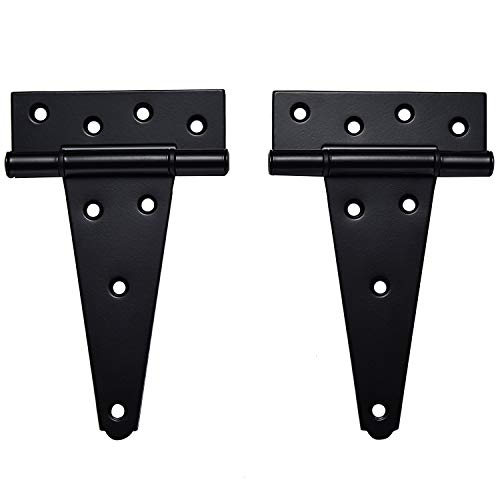
SANKINS 6-Inch Black T-Strap Hinges

Lifeswell Farm and Driveway Gate Hinges
Lifeswell 4.9-Inch Wall-Mount Gate Hinges
More On The Choices That Made The List
Standard residential doors rarely need oversized hardware, and the compact 3.5-inch format makes this set more appropriate for bedrooms, bathrooms, and interior closets. The satin nickel finish suits many modern hardware combinations without looking out of place beside brushed or silver-toned handles.
For most apartments, the three-pack provides practical coverage across several doors or replacements within the same home. Compared with the larger gate hinges later in the list, this set focuses on clean residential appearance rather than high-load support.
What Stands Out
- Compact sizing fits typical lightweight interior wood doors.
- Three hinges allow consistent replacement across multiple openings.
- Satin nickel coordinates easily with many residential fixtures.
- Included mounting screws support straightforward installation.
Practical Considerations
- The 3.5-inch format may be too small for a thick or unusually heavy door.
- Matching the existing finish helps avoid a mismatched hinge line.
Quick Facts
Made For
You benefit most with standard interior wood doors in apartments, condos, and similarly light residential spaces.
A Better Fit Elsewhere
IOQ 4-Inch Matte Black Exterior Hinges suit you better for a larger exterior door with dark hardware.
Matte black gives an exterior wood door a sharper profile, especially beside matching handles or contemporary lighting. These hinges use a 4-inch format and rounded corners, offering more visual presence than the smaller Design House set while remaining appropriate for conventional residential entry doors.
The three-pack suits a full door installation, and the removable pin can make future hinge work less awkward. Door handedness describes whether a door swings from the left or right, while the listed pins are designed to accommodate either orientation and a door stop.
What Earns Its Place
- Four-inch dimensions suit larger residential wood doors.
- Matte black creates a coordinated modern hardware line.
- Removable pins simplify later removal and reinstallation.
- Three hinges provide a complete door set.
Details To Watch
- Pin removal calls for a hammer, so protect nearby surfaces.
- Short screws may not penetrate deeply enough in thick jamb material.
Right Fit For
You get the strongest fit on a dark-finished exterior wood door where visual contrast and serviceable pins matter.
Consider Something Else When
Design House Interior Hinge 3.5″ is a quieter choice for a smaller interior door where black hardware would dominate.
A wooden garden gate that stays open across the yard creates a daily nuisance, and the fixed spring action in this set handles that job without manual adjustments. For most backyard gates, the 5-3/4-inch format offers a useful middle ground between compact interior hardware and the much heavier strap hinges used on driveways.
Reinforced steel carries the gate load, while the black electrophoretic coating adds a layer of corrosion protection, meaning resistance to environmental wear. Multi-point mounting helps control movement, though gate weight, post condition, and frame alignment still determine how neatly the hinges operate.
Positive Takeaways
- Built-in spring tension returns the gate without manual adjustment.
- Coated steel suits recurring outdoor moisture.
- Multi-point fastening limits unwanted hinge movement.
- Works across garden, fence, and backyard gate projects.
Worth Noting
- Fixed tension cannot be fine-tuned as gate weight changes.
- Seasonal wood swelling may affect closing speed and alignment.
Feature Snapshot
Who Will Love This
You benefit most with a backyard or garden gate that needs automatic closing and has a properly supported wood frame.
Another Choice May Suit
Lifeswell Farm and Driveway Gate Hinges suit you better for a substantially heavier entrance gate.
Wide strap hinges suit wood that needs more surface connection than a compact residential butt hinge. The T-shaped layout spreads attachment across the door edge and frame, which makes these hinges relevant to shed doors, yard gates, fences, and light-duty barn-style entrances.
At six inches long, the hinges offer a broad support zone, while 2 mm steel provides rigidity for heavier wood panels. The listed load figure exceeds 44 pounds per hinge, but frame condition and fastener placement still control real-world performance, especially on an old or uneven structure.
Benefits That Matter
- Six-inch straps create a broad wood-to-frame connection.
- Two-millimeter steel resists flexing under moderate loads.
- Powder-coated black finish suits exposed structures.
- Sixteen wood screws support a two-hinge installation.
Practical Considerations
- Wood screws may need pilot holes in dense or weathered timber.
- A sagging frame can reduce alignment even with strong hinges.
Built With In Mind
You get the best fit on sheds, yard doors, fences, and wooden gates built for strap mounting.
Swap It Out When
Lifeswell Self-Closing Gate Hinges 5-3/4″ suit you better when automatic return matters more than broad strap support.
Large wood gates place much more demand on their hinges than bedroom doors ever will. This four-piece set targets farm, ranch, driveway, and garden entrances, using 6 mm carbon steel and a listed 1,000-pound load capacity to support substantial wooden structures.
Built-in ball bearings, which use rolling contact to reduce sliding friction, support smoother movement across large posts. The black powder coating also suits year-round outdoor use, although the gate, posts, fasteners, and surrounding ground still need enough structural support to keep the entrance aligned.
A Few Highlights
- High listed capacity suits heavy wooden entrance gates.
- Ball bearings promote smooth movement and reduce hinge wear.
- Four-hinge pack supports broad gate installations.
- Strap construction spreads load across multiple mounting points.
Factors To Consider
- Ground settling can introduce binding even with strong hardware.
- The four-piece format may be excessive for a small garden gate.
The Numbers That Matter
Who Should Grab It
You benefit most with a large, well-supported wooden farm or driveway gate that needs smooth movement.
Look Elsewhere When
SANKINS 6-Inch Black T-Strap Hinges suit you better for a lighter shed or yard door.
Wall-mount hinges suit gates attached directly to posts or masonry, a setup common around barns, farm entrances, and fenced garden areas. This set includes two female and two male hinges, giving you paired hardware for a complete gate connection rather than a single one-sided mount.
The welded 6 mm steel construction carries a listed capacity up to 600 pounds, while the electroplated coating helps resist outdoor wear. Compared with the four-hinge driveway set, this package is shorter and less extensive, which can be sensible for a medium-weight gate that does not need the broader distribution of a four-piece system.
Positive Points
- Welded steel provides firm structural support.
- Four matched mounts cover both sides of a gate.
- Coating supports indoor and outdoor placement.
- Compact length suits medium-size wood gates.
Small Caveats
- Wall-mounted installation requires sound posts or masonry anchors.
- Post movement can create alignment problems over time.
Core Details
The Right Fit
You benefit most with a medium-weight wood gate mounted to strong posts, masonry, or a barn wall.
Reach For A Different Pick When
Lifeswell Farm and Driveway Gate Hinges suit you better for heavier gates needing four ball-bearing strap hinges.
What Matters Before You Choose Hardware
Match the hinge to the opening. Interior bedroom doors generally work with compact 3.5-inch hardware, while thicker exterior doors benefit from a 4-inch format. Gate hinges operate under a different set of demands, so their length, mounting pattern, and load rating matter more than appearance alone.
Weigh the moving structure. Gate weight includes the wood, frame, latch, and any decorative pieces. Large entrances also place leverage on the posts, so a structurally weak post can cause binding or sagging even with capable hinges.
Check the entire mounting surface. Measure the gate edge, post width, and available screw travel before ordering. Dense hardwood, weathered timber, and thin metal frames can require different fasteners or preparation.
Exterior finishes deserve attention. Satin nickel and matte black serve different visual roles, while outdoor hinges need coated steel to reduce corrosion risk. Inspect the finish periodically, especially around screw holes and moving joints where moisture can collect.
Hinge Details That Shape Daily Performance
Mistakes Worth Dodging
The most common mistake is choosing by appearance while overlooking gate weight or post construction. Another error is treating all outdoor steel as equally protected, so compare coating type and hardware dimensions before installation.
What Separates Premium From Basic
Higher-grade hinges commonly add thicker steel, wider straps, ball bearings, and more mounting points. Those features matter most on large gates where friction, leverage, and repeated movement accelerate wear.
Frequently Asked Questions
Are 3.5-inch hinges suitable for wood doors?
Yes, they commonly fit lightweight interior wood doors. Measure the door edge, frame thickness, and existing screw locations before installation.
Which hinges work best for exterior wood doors?
Four-inch exterior hinges offer broader coverage than compact interior models. Match the finish to the door hardware and confirm that the fasteners can penetrate the frame securely.
Do wooden gates need self-closing hinges?
Self-closing hinges suit yards and garden entrances where a gate must return after passing through. Heavier entrance gates may prioritize bearing support over automatic closing.
How much weight should a gate hinge support?
Choose a listed capacity above the gate’s estimated weight, then verify post strength and fastener support. A hinge cannot compensate for a weak or moving post.
Are ball-bearing hinges better for large gates?
They can suit large gates by reducing sliding friction during repeated movement. Proper alignment and rigid mounting remain necessary for smooth operation.
