
Replacing tired closet doors means matching hinge coverage, cabinet construction, and mounting depth before touching a screwdriver. These sets suit DIYers renovating face-frame kitchen or bathroom cabinets, though the list also helps you assess compatibility with some closet projects. The practical difference comes down to inset, partial-overlay, or full-overlay construction, plus exposed and concealed mounting styles.
A 3/8-inch inset hinge fits inside the cabinet frame, while overlay hinges position the door across the frame’s face. Soft-closing mechanisms and mounting hardware also vary, so measure your doors and check their construction before choosing a set.
A Quick View Of The Lineup

DecoBasics 3/8-Inch Inset Black Cabinet Hinges, 25 Pairs

DecoBasics 1/2-Inch Partial-Wrap Black Cabinet Hinges, 25 Pairs

DecoBasics 1/2-Inch Overlay Black Cabinet Hinges, 25 Pairs
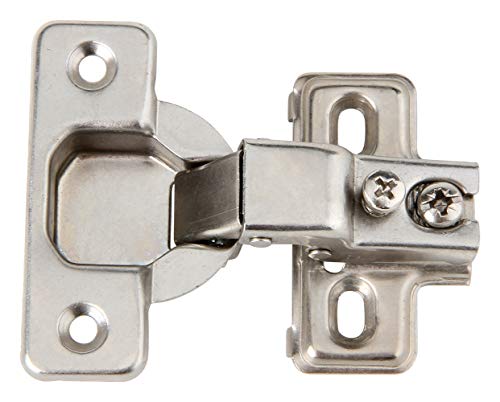
Silverline 1/2-Inch Self-Closing Concealed Face-Frame Hinges, 6 Pack

DecoBasics Full-Overlay Soft-Close Cabinet Hinges, 2 Pieces

Ravinte 105-Degree Full-Overlay Hinges, 1 Pair
Inside Each Recommended Option
Inset hinges sit within the cabinet opening rather than covering its face, making this set relevant to traditional face-frame doors. The 3/8-inch measurement matters because a door with any overlay becomes a poor fit despite the similar appearance.
Black cabinetry and dark hardware benefit from the matte finish, while 25 pairs cover a substantial replacement project. Compared with the concealed options later in the lineup, these exposed hinges prioritize recognizable hardware and straightforward cabinet-door upgrades.
Everyday Advantages
- Twenty-five pairs suit a room containing numerous inset doors.
- The matte black finish coordinates with dark pulls and cabinet accents.
- Offset, semi-concealed construction suits classic American face-frame cabinets.
- Bumpers support quieter closing contact against the cabinet frame.
Points To Note
- These hinges suit inset doors only, so cabinet construction must be checked first.
- Owners may need to align each door carefully because this is exposed-style hardware.
Key Specs
Made For
You need this set for restoring traditional inset doors across a kitchen, bathroom, or similarly built face-frame storage project.
Another Choice May Suit
DecoBasics 1/2-Inch Partial-Wrap Black Cabinet Hinges suit you better when the door overlaps part of the cabinet face.
Partial-wrap coverage occupies the compromise between inset and full-overlay construction, so this set fits doors that cover part of the face frame. That makes it worth checking against older cabinets with mixed door profiles.
The 25-pair count is the practical reason to notice this option for a full kitchen refresh. Compared with DecoBasics 3/8-Inch Inset Black Cabinet Hinges, the mounting position differs, yet the dark finish and self-closing format serve similar remodeling goals.
Notable Gains
- Fifty hinges support a large cabinet or pantry project.
- Partial wrapping accommodates doors that partially cover the frame.
- Self-closing action helps doors return neatly to the cabinet face.
- Quiet bumpers soften the door’s closing contact.
Small Caveats
- Partial coverage must match the exact distance between the door edge and cabinet face.
- Exposed screws remain visible, requiring careful alignment during installation.
- The matte appearance can show fingerprints on frequently touched high-contrast installations.
Who It Suits Best
You’ll find the most useful fit when replacing many partial-overlay doors on a face-frame kitchen or bathroom.
Consider Something Else When
DecoBasics Full-Overlay Soft-Close Cabinet Hinges suit you better for fully covering doors requiring three-way alignment control.
A half-inch overlay hinge belongs on a door that extends across the cabinet’s front edge. The matte black hardware gives dated cabinetry a sharper visual identity, especially beside dark pulls, although cabinet color and lighting will affect the result.
Twenty-five pairs make this a practical bulk set for several bathroom or kitchen doors. Unlike the partial-wrap DecoBasics model, these hinges cover the full designated face area, so your existing doors must have the correct overlay geometry.
The Helpful Details
- Half-inch overlay geometry fits doors covering the cabinet face.
- Self-closing behavior supports a controlled return.
- Door bumpers reduce the sound of direct frame contact.
- Upgraded screws support replacement work across numerous doors.
Areas To Watch
- Older face-frame doors may need a different hinge profile.
- Exposed hardware needs accurate alignment for an even cabinet gap.
Feature Snapshot
The Right Fit
You need this set for dark-finished, fully overlaid face-frame doors across a coordinated kitchen or bath renovation.
Look Elsewhere When
Silverline 1/2-Inch Self-Closing Concealed Face-Frame Hinges suit you better when the hardware must disappear inside the cabinet.
Concealed hinges change the door profile by mounting inside a 35mm cup cut into the cabinet door. That hidden placement suits cabinetry where exposed hardware interrupts the visual line, though it demands accurate boring and a face-frame cabinet.
The steel construction and nickel-plated finish give this set a utilitarian character suited to frequent kitchen use. Compared with the black DecoBasics hinges, appearance takes a back seat to a discreet installation and conventional self-closing movement.
Useful Highlights
- Concealed mounting keeps hinge hardware out of prominent view.
- Nickel-plated steel suits frequently opened cabinet doors.
- The short arm supports a 105-degree opening.
- Three pairs cover one typical two-hinge door.
Possible Compromises
- Door modification requires a 35mm cup bore.
- Face-frame compatibility rules out frameless cabinet boxes.
- Owners should support the door during installation to avoid damaging the plate.
Technical Highlights
Whose Shelf It Belongs On
You’ll appreciate this set on face-frame cabinet doors where concealed mounting and a 105-degree opening drive the installation.
Reach For A Different Pick When
DecoBasics 1/2-Inch Overlay Black Cabinet Hinges suit you better for inset-style projects needing visible matte black hardware.
Full-overlay doors cover the cabinet face, and the included clip-on plates make this set most relevant to a single-door repair. Three-way adjustment helps correct side, height, and depth alignment, a valuable feature in older cabinets with uneven openings.
Built-in dampers temper the final part of the door’s movement, reducing the abrupt conclusion associated with basic self-closing hinges. Unlike the bulk DecoBasics sets, the two-piece format focuses on precision hardware for one carefully adjusted door.
Real-World Strengths
- Three-way adjustment supports finer door alignment.
- Soft-close dampers reduce abrupt closing movement.
- Clip-on plates simplify mounting to the cabinet face.
- The nominal 5/8-inch overlay adjusts to a 1/2-inch arrangement with a gap.
Trade Offs To Consider
- Two hinges are enough for one door but not a room-wide installation.
- Full-overlay construction must match the door dimensions.
- Adjustable hinge mechanisms can require repeated alignment checks as doors settle.
Built With In Mind
You’ll find this pair useful for one full-overlay door that needs concealed mounting, soft closing, and careful alignment.
Not Your Match When
Ravinte 105-Degree Full-Overlay Hinges suit you better for a simple full-overlay door where compact soft-close hardware matters more than three-way adjustment.
A single pair keeps the scope narrow for replacing two hinges on one full-overlay cabinet door. The concealed format suits cabinetry where visible hardware would be distracting, and the supplied screws simplify a straightforward swap.
The integrated damper takes over near the closing point, where a basic hinge may complete its travel more abruptly. Compared with DecoBasics Full-Overlay Soft-Close Cabinet Hinges, the Ravinte pair is leaner, though the source details do not establish the same three-way adjustment range.
A Favorable Mix
- One pair replaces both hinges on a standard cabinet door.
- The damper supports a quieter final closing movement.
- A 105-degree opening provides generous interior access.
Details To Watch
- Confirm the door has full-overlay clearance before drilling.
- The single pair cannot cover a multi-door cabinet project.
- Installation instructions should be reviewed before modifying the door.
Quick Technical Notes
Who Should Grab It
You need this pair for replacing hinges on one full-overlay cabinet door with a concealed, damped closing system.
A Better Fit Elsewhere
DecoBasics Full-Overlay Soft-Close Cabinet Hinges suit you better when three-way adjustment will help correct door alignment.
Choose Hinges by Measuring the Cabinet First
Measure the door position
Start by identifying whether the door sits inside, partly covers, or fully covers the cabinet face. Inset doors need DecoBasics 3/8-Inch Inset Black Cabinet Hinges, while partial and full overlays call for different hinge bodies. Measuring the exposed cabinet edge prevents an attractive hardware choice from becoming a frustrating installation.
Match the cabinet structure
A face-frame cabinet includes a front rail that the door closes against, which fits the hinge styles in this roundup. Frameless construction and European cup hinges follow different mounting standards. Confirm the box style before ordering, especially in converted closets where original cabinet plans may be unavailable.
Decide how the door should close
Self-closing hinges return the door under spring action, while damped hinges temper the final movement. A busy kitchen benefits from the reduced closing sound, although a lightly adjusted concealed hinge can still shift over time. Recheck alignment and closing speed after the screws are fully seated.
Count actual mounting needs
Most cabinet doors use two hinges, so a 25-pair set covers 25 two-hinge doors. Two-piece and single-pair options suit a single-door repair. Measure twice, count every opening, and keep one spare hinge for future door adjustments.
Cabinet Hinge Details Worth Checking
Mistakes Worth Dodging
Don’t choose from door color alone. Overlay size, frame style, and mounting method decide compatibility, and an attractive matte black finish cannot compensate for the wrong hinge geometry. Measure the closed door before ordering.
The Upgrade Payoff
Damped concealed hinges add quieter closing and a cleaner appearance, while three-way adjustment helps correct alignment on older doors. Those benefits matter most in frequently used kitchens and bathrooms, not necessarily a low-traffic storage closet.
Frequently Asked Questions
How do I identify an inset cabinet hinge?
An inset door rests within the cabinet face, leaving its edges inside the opening. The DecoBasics 3/8-Inch Inset Black Cabinet Hinges suit that geometry.
Are overlay hinges suitable for face-frame cabinets?
Overlay hinges work with face-frame doors that cover some or all of the front face. Partial-wrap and full-overlay bodies suit different overlay distances, so measure before ordering.
What does full-overlay mean?
Full-overlay describes a door extending across the cabinet’s face frame. Decobasics 1/2-Inch Overlay Black Cabinet Hinges and the soft-close choices target that arrangement.
Do soft-close hinges reduce cabinet noise?
Damped hinges slow the final portion of door movement. This generally produces a gentler conclusion than an undamped hinge, particularly in quiet rooms or busy kitchens.
How many hinges does one cabinet door need?
Most cabinet doors use one hinge at the top and another at the bottom. Confirm the existing layout, then purchase pairs based on the number of replacement doors.
