
A hedge that has grown beyond the edge of a ladder can turn a quick yard job into an awkward climb. Cordless hedge trimmers give you ground-level control, cleaner passes, and the reach to shape tall shrubs without stretching a noisy cable across the garden. The right fit depends on blade length, cutting capacity, pole extension, battery system, and how much control you need around narrow beds or wide hedges. These six options cover everything from lightweight wired models to cordless pole trimmers for larger yards.
A Side-By-Side Look

SEESII 20V Cordless Pole Trimmer 8.5-Foot Reach
SEESII 2-in-1 Cordless Pole Hedge Trimmer

BLACK+DECKER 22-Inch Electric Hedge Trimmer BEHT350
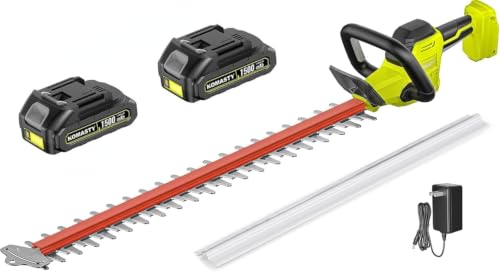
KOMASTY 20V Cordless Hedge Trimmer 22-Inch Blade

Greenworks 24V Cordless Hedge Trimmer 22-Inch Blade

SEESII 20V Cordless Pole Hedge Trimmer 20-Inch Blade
Meet The Standout Selections
Tall foundation shrubs give this pole trimmer a practical purpose, especially for gardeners trying to keep a dense hedge level from the ground. Its telescopic pole adjusts from 7 to 8.5 feet, adding reach without requiring you to plant your feet on a ladder.
The 16-inch dual-action blade uses opposing movements to reduce vibration during repeated passes. Compared with the shorter handheld approach of the BLACK+DECKER BEHT350, this model trades some maneuverability for better access to elevated foliage.
Strengths Worth Knowing
- Extends from 7 to 8.5 feet for taller hedges and foundation plants.
- Two 4.0Ah batteries help reduce pauses during larger trimming sessions.
- The 16-inch dual-action blade limits vibration and supports steadier passes.
- A 5/8-inch cutting capacity suits ordinary twigs and established shrubs.
Trade Offs To Consider
- The 16-inch blade is shorter than the 22-inch cutting bars offered by several alternatives.
- Extension length can make close shaping less precise, particularly around compact shrubs.
- Resin and leaf debris should be brushed from the pole and blade after use to prevent unnecessary wear.
Key Specs
Built With In Mind
This model suits homeowners maintaining elevated hedges where ground-level access matters more than close-up sculpting.
Another Choice May Suit
The GREENWORKS 24V model suits gardeners who prefer a longer 22-inch blade for broad hedges without pole extension.
Gardens rarely contain foliage at one height. This SEESII model changes from a handheld trimmer for low bushes to a pole tool for taller hedges, giving you two working positions without carrying separate equipment for each task.
The 20-inch blade makes broader passes than the SEESII 8.5-Foot Reach model, while dual-action movement helps soften vibration. In a mixed yard, that combination may prove more versatile, though the extended setup still takes planning around tight paths.
Useful Touches
- Converts between handheld and pole operation for shrubs at different heights.
- The 20-inch bar covers more hedge surface per pass.
- Dual-action cutting reduces vibration compared with a single moving blade.
- Ground-level pole use helps keep your body away from unstable ladders.
Some Limits To Know
- You may prefer a handheld configuration for tightly clipped ornamental shrubs.
- The longer 18mm cutting capacity limits dense or woody growth compared with 3/4-inch models.
- Cleaning trapped foliage from the blade joint takes care because disassembly adds a maintenance step.
Made For
You’ll appreciate the two-position format for a yard containing both knee-high shrubs and hedges extending above shoulder height.
Where A Sibling Pick Shines
The SEESII 8.5-Foot Reach model is the stronger fit for gardeners prioritizing maximum extension over cutting width.
For a straight hedge beside a grounded outlet, the BEHT350 keeps the process refreshingly simple. Its corded power supply removes battery charging and pole mechanics, leaving you with a compact tool built around controlled passes.
The full wrap-around handle supports grip changes, while the lightweight housing suits long maintenance sessions. Compared with the SEESII pole trimmers, the trade-off is clear: this model provides less reach but a direct handheld feel.
Good Reasons To Consider
- The 22-inch blade handles broad hedges in fewer passes.
- A 4.0 amp motor provides steady cutting for branches up to 3/4 inch.
- Dual-action hardened steel teeth reduce vibration through the cutting bar.
- The compact handle layout supports controlled shaping close to the ground.
Practical Considerations
- A nearby outlet limits where you can trim.
- Keeping the power cable clear of branches and wet ground requires deliberate routing.
Feature Snapshot
Right Fit For
This handheld model suits apartment gardens and suburban yards where an outlet is close to the hedge.
Look Elsewhere When
The KOMASTY 20V model better serves gardeners working far from outlets or across multiple garden areas.
The KOMASTY combines a broad 22-inch cutting bar with cordless freedom, a useful pairing for long hedges that sit beyond extension-cord reach. You can shape boxwood, shrubs, and small trees while keeping the working area free of cables.
Two 1.5Ah lithium-ion batteries support rotation during demanding jobs, although their lower capacity makes pack size the important trade-off. The motor is rated at 2,800 strokes per minute, a figure describing blade movement rather than finished cutting speed.
The Case For It
- Two batteries reduce downtime during multi-hedge projects.
- The included charger keeps the complete cordless setup together.
- A 22-inch hardened steel blade covers a wide swath per pass.
- The tool handles branches up to 3/4 inch across typical garden use.
Potential Drawbacks
- The 1.5Ah packs require more frequent charging than larger batteries.
- It lacks the elevated reach of the SEESII pole models.
- Sap and fine leaves should be removed promptly because buildup increases blade drag.
Key Product Details
Who Should Grab It
Cordless-focused home gardeners benefit most from the two-battery package and wide cutting bar.
Reach For A Different Pick When
The SEESII 2-in-1 model better fits mixed-height plantings that need handheld and pole configurations.
A four-amp-hour battery gives this Greenworks a practical balance for seasonal hedge work. The stated runtime reaches 60 minutes on a full charge, making battery rotation more relevant for expansive shrubs than for a single small hedge.
Its laser-cut 22-inch blades are designed to reduce tearing and leave a cleaner surface than rough tooth profiles. Compared with the 1.5Ah KOMASTY package, the larger battery supports longer work intervals, though it may also create a bulkier handling profile.
What Works In Its Favor
- The 4.0Ah battery supports up to 60 minutes of stated runtime.
- Laser-cut teeth promote a cleaner cut across dense hedge surfaces.
- Dual-action steel movement helps reduce vibration and improve control.
- The included battery and charger keep the cordless package self-contained.
Points To Note
- The 22-inch bar can feel cumbersome around small, isolated shrubs.
- There’s no pole extension, so elevated hedges require another approach.
Who Will Love This
Gardeners with several long hedges benefit from the larger battery and wide cutting bar.
A Better Fit Elsewhere
The BLACK+DECKER BEHT350 suits compact storage spaces where corded simplicity matters more than cordless operation.
Tall arborvitae, cedar, and dense hedge lines benefit from the combination found here: a broad 20-inch blade and a pole extending to 8 feet. That pairing covers more ground per stroke while keeping elevated work away from ladders.
Two 4.0Ah batteries provide useful rotation during prolonged trimming, but the model remains less nimble than the BLACK+DECKER BEHT350 around small ornamental forms. For most broad hedges, the extra reach changes the way you plan the job.
Positive Takeaways
- The 20-inch blade handles wide boxwood and shrub faces in fewer passes.
- The 6-to-8-foot pole extends your reach without a ladder.
- Dual-action teeth reduce vibration during extended cutting strokes.
- Two 4.0Ah batteries help maintain a steady work rhythm.
- An 18mm capacity suits established twigs within the stated limit.
Soft Spots
- The long pole reduces precision in confined garden beds.
- Heavy, wet leaves can cling to the blade and increase resistance.
Technical Highlights
Built For
Homeowners with tall, dense screening hedges get the most benefit from its extended pole and wide blade.
Swap It Out When
The BLACK+DECKER BEHT350 better serves compact beds where maneuverability takes priority over pole reach.
Choosing the Right Blade and Power Setup
Blade length should match the scale of your planting, not simply the biggest number in the category. A 22-inch bar covers broad hedges efficiently, while a shorter 16-inch cutting bar provides easier control around isolated shrubs and garden obstacles. Cutting capacity matters just as much because it defines the maximum branch thickness the tool is designed to handle.
Match the Blade to the Hedge
A dual-action blade uses two moving blades that pass each other, limiting vibration compared with a single-action design. That balance helps during repeated passes, particularly on dense arborvitae or boxwood, although blade condition remains important. Remove sap and leaf fragments after use and keep the teeth clean for smoother movement.
Choose Between Cordless and Corded
Cordless models offer mobility around fences, curved beds, and outdoor areas without nearby outlets. A larger battery generally supports longer sessions, while two smaller packs let you rotate charging. The BLACK+DECKER BEHT350 makes more sense beside a grounded outlet, where a lightweight corded setup avoids battery storage and charging entirely.
Consider Reach Before the Telescopic Pole
A pole helps with raised hedges but adds length during turns and close shaping. Measure the height of the foliage you plan to maintain and leave room to angle the blade without overreaching. For one-level shrubs, a handheld 20-inch or 22-inch model may deliver more control than an extended design.
Check Storage and Blade Care
Long poles and wide blades need more room than compact handheld trimmers. Loosen the pole before storage, wipe cutting teeth dry, and keep battery packs away from prolonged heat. Regular cleaning limits friction and keeps the tool responsive through wet garden seasons.
Lessons Before You Pick Up the Trimmer
Hidden Buying Traps
Focusing on reach alone can leave you with a tool that feels awkward around compact shrubs. Compare blade length, cutting capacity, power type, and storage space as one package. Batteries and chargers also need room, particularly when two packs are included.
What Separates Premium From Basic
A higher-end package may contribute a larger battery, longer bar, or dual-action blade, but costly specifications do not replace correct handling. A basic model can suit a small hedge near an outlet, while a cordless upgrade earns its place across large yards and tall screening plants. Pay for the features your maintenance routine will actually use.
Frequently Asked Questions
Is a 22-inch hedge trimmer better than a 16-inch one?
A 22-inch blade covers broad hedges in fewer passes, while a 16-inch blade is easier to control around compact shrubs. Choose according to hedge width and available maneuvering space.
Are dual-action blades easier on the hands?
Dual-action blades reduce vibration by moving in opposing directions, which can improve comfort during repeated passes. Grip technique, trimming speed, and blade condition also affect how the tool feels.
Do cordless hedge trimmers need much maintenance?
Keep the blade clean and dry, remove trapped leaves, and inspect the moving parts for visible damage. Store batteries in a dry, moderate-temperature location and loosen extended poles before putting the tool away.
Can a pole trimmer replace a ladder?
A pole trimmer keeps you on the ground for many hedge-cutting jobs, but the extended tool still requires balanced positioning. Avoid overreaching and use a stable work area for uneven ground.
Is a higher cutting capacity important?
Cutting capacity indicates the maximum branch thickness the tool is designed to cut. It matters for woody shrubs, while routine leafy hedging may not regularly reach that limit.
