
A heavy-duty garden hose has to withstand sharp lawn edges, repeated coiling, changing weather, and the occasional surprise from pets or vehicles. These options cover compact patios, broad lawns, irrigation setups, and long reaches around the home, with materials and connection details that make the differences easier to judge. One entry is a hose splitter rather than a full hose, so it serves a different but equally useful role in watering systems.
The Essentials At A Glance

ANDVANA Two-Way Heavy-Duty Hose Splitter
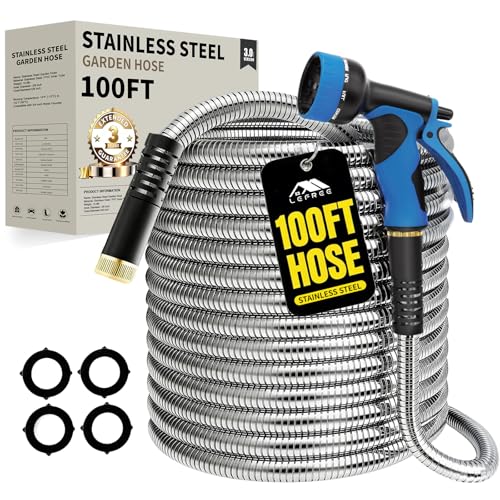
Lefree 100ft Metal Garden Hose

Yvnicll 10 ft 5/8-Inch Heavy-Duty Rubber Water Hose

Wdmiya 5/8 x 75FT Garden Hose

ARBUTUS 5/8 x 50ft Brass Rubber Heavy-Duty Water Hose

Lefree 50ft Metal Garden Hose
The Strengths Of Each Pick
This is a hose accessory, not a complete garden hose, so its place in the list comes from the control it adds to an existing watering setup. The Y-shaped body divides one supply into two independently managed outlets, a useful arrangement for running a sprinkler and a planter line at the same time.
Its all-metal body and 3/4-inch standard threads suit homeowners with conventional hose connections, while the paired shutoff valves let you isolate either branch during repairs. For most yards, that control is more valuable than carrying a second long hose.
What It Does Well
- Two independent valves provide separate flow control.
- The metal body suits exposed outdoor watering hardware.
- Standard 3/4-inch threads simplify connection planning.
- The compact Y shape fits crowded faucet areas.
Practical Considerations
- It needs a compatible incoming hose and two downstream connections.
- The valves require occasional checking for thread residue and drips.
Key Details
Built With In Mind
Homeowners managing sprinklers, drip irrigation, or multiple container-watering lines benefit most from this splitter.
Another Choice May Suit
For a hose that covers more ground, the Lefree 100ft Metal Garden Hose is a better fit for larger outdoor areas.
Long yards make ordinary hoses awkward, especially around garden beds, driveways, and outdoor cleaning areas. The Lefree 100ft Metal Garden Hose uses 304 stainless steel, a material associated with corrosion resistance and exposure to temperature swings, giving this option a different character from the rubber picks in the list.
The upgraded rubber sleeve around the handle targets a familiar failure point: flexing and wear near the grip. That detail matters during long watering sessions, although 100 feet of metal hose can feel less relaxed to carry than a shorter polymer model. You may also need to route it carefully around corners.
What Stands Out
- The 100-foot length reduces the need to move the spigot.
- Stainless steel construction supports outdoor durability.
- The flexible handle sleeve helps protect a high-wear connection.
- The puncture-resistant design suits active yards.
Small Caveats
- Its full length takes more space to coil and store.
- Metal construction may feel heavier during frequent repositioning.
- The longer run can be more than a small patio needs.
The Right Fit
You gain the most reach with this option in a large yard, garden, or property where a single outlet sits far from multiple watering zones.
Swap It Out When
The Yvnicll 10 ft 5/8-Inch Heavy-Duty Rubber Water Hose is easier to manage for patios, containers, and compact outdoor spaces.
Short outdoor tasks rarely need a 50-foot run. This Yvnicll model focuses on a 10-foot reach for patios, planters, watering cans, and washing small outdoor surfaces, using a flexible hybrid polymer rubber construction that is easier to handle than a long metal line.
The three-layer design and extra thickening are intended to resist kinking and improve pressure resistance. In real terms, a compact hose is easier to loop around furniture, carry across a deck, and hang after use, though the 5/8-inch diameter offers less reach and flow capacity than the larger options here.
A Few Strong Suits
- The short length simplifies carrying and coiling.
- Flexible polymer material suits frequent repositioning.
- The 5/8-inch size works for close-range watering.
- The layered construction targets kinking and pressure resistance.
- It stores more easily than the 75- and 100-foot options.
Room For Improvement
- Ten feet is limited for larger lawns and distant beds.
- The smaller diameter may feel restricted for high-volume washing.
- Short hoses still need regular rinsing to prevent dirt inside the layers.
Feature Snapshot
Made For
Balconies, patios, container gardens, and renters benefit from this short, flexible hose design.
Look Elsewhere When
The Wdmiya 5/8 x 75FT Garden Hose is a stronger match for broad lawns, vehicle washing, and longer irrigation runs.
Long-range pressure and cold-weather flexibility set the Wdmiya model apart from the shorter rubber option. Its stated 300 PSI working pressure and 1,100 PSI burst rating describe pressure thresholds, not a promise of universal performance, but they give you useful information when comparing hose construction for demanding outdoor tasks.
The hose is specified to remain usable from -40°F to 150°F, with solid brass fittings intended to resist corrosion and maintain a secure connection. Compared with the Lefree 50ft Metal Garden Hose, this is the more capable pick for expansive lawns, frequent washing, and cold-season storage areas.
What Works In Its Favor
- The 75-foot length covers large lawns and outdoor work areas.
- Brass fittings target corrosion resistance and dependable connections.
- Cold-weather flexibility makes seasonal storage more practical.
- The tangle-resistant design supports orderly coiling.
Worth Noting
- The 5/8-inch diameter is smaller than the 3/4-inch splitter connection on the ANDVANA option.
- A long hose needs deliberate storage to prevent avoidable tangles.
- Its heavier-duty profile may be unnecessary for a small patio.
Technical Highlights
Best Suited To
Homeowners with broad lawns, frequent outdoor cleaning, and cold-weather exposure can make good use of this hose.
Where A Sibling Pick Shines
The ARBUTUS 5/8 x 50ft Brass Rubber Heavy-Duty Water Hose offers a shorter, more compact alternative for medium-sized yards.
Halfway between a compact patio hose and a property-spanning line, the ARBUTUS 5/8 x 50ft Brass Rubber Heavy-Duty Water Hose suits medium-sized outdoor areas. Its 50-foot reach can cover garden beds, a patio, and a car-washing zone without the storage demands of the Lefree 100ft Metal Garden Hose.
The construction combines rubber and PVC layers with a woven middle section, a design intended to balance flexibility, abrasion resistance, and low weight. Solid brass fittings are another useful detail for connection durability, although a 5/8-inch hose may not deliver the same flow as a 3/4-inch line for broad irrigation.
Strengths Worth Knowing
- The 50-foot length handles medium yards without excess hose.
- Solid brass fittings resist corrosion at the spigot and nozzle.
- Rubber-PVC layers support flexibility and abrasion resistance.
- The woven middle layer adds structure without a rigid frame.
Trade Offs
- It offers less reach than the 75- and 100-foot options.
- Its 5/8-inch size may be narrow for high-volume outdoor cleaning.
- Rubber components need proper draining before cold storage.
Who Will Love This
Homeowners balancing reach, storage, and connection durability across a medium garden or driveway benefit from this configuration.
Reach For A Different Pick When
The Wdmiya 5/8 x 75FT Garden Hose is the better fit for larger properties that need more reach and stated high-pressure capability.
The Lefree 50ft Metal Garden Hose offers a middle ground between the compact Yvnicll model and the 100-foot Lefree version. Its 50-foot length reaches typical beds, patios, and driveway edges while taking up less storage space than the longer metal hose, making it practical for many suburban yards.
304 stainless steel provides the central material advantage, while the upgraded rubber sleeve adds flexibility around the handle and helps address wear at a common connection point. Compared with ARBUTUS, it trades a rubber-PVC body for metal construction, which may suit yards where puncture resistance and a rigid profile matter more than minimal weight.
Real-World Strengths
- The 50-foot length works across medium yards and patios.
- Stainless steel construction resists corrosion and puncture damage.
- The rubber handle sleeve adds flexibility at the grip.
- The compact metal design stores more easily than a 100-foot hose.
Where It May Fall Short
- It provides less reach than the Wdmiya 75-foot option.
- Metal construction can be heavier for repeated carrying.
- Its 50-foot length is still substantial for a balcony setup.
Core Details
Whose Shelf It Belongs On
You benefit most from this hose in a medium yard where stainless steel durability matters but 100 feet would be excessive.
A Better Fit Elsewhere
The Lefree 100ft Metal Garden Hose is the better match for large properties and distant garden zones that need additional reach.
Choose The Hose Around Your Yard
The right heavy-duty garden hose depends less on a single impressive specification than on reach, diameter, materials, and the way you water. A compact rubber hose makes sense beside a patio, while a long metal or high-pressure model earns its place across a broad lawn. Start with the distance from your spigot to the farthest task.
Reach And Diameter
Length determines whether you can water an entire garden without moving the connection. A 10-foot hose is convenient for containers and small surfaces, 50 feet suits medium yards, and 75 to 100 feet reduces the need to relocate the spigot. Diameter also affects flow: 5/8-inch hoses are common for targeted watering, while 3/4-inch lines move more water through broader irrigation setups.
Material And Connectors
Stainless steel emphasizes corrosion and puncture resistance, while rubber or hybrid polymer constructions prioritize flexibility and lighter handling. Woven reinforcement and layered construction can add strength without making a hose completely rigid. Brass fittings are worth checking because they resist corrosion at the points most often exposed to water and weather.
Pressure And Weather
A working-pressure rating and a burst rating describe different pressure thresholds. The burst figure represents the stated point at which structural failure may occur, while the working figure offers a more relevant reference for operating conditions. Cold-weather flexibility, drainage, and storage matter too, especially for hoses that sit outdoors through winter.
Daily Handling
Consider how often you will drag, lift, and coil the hose. Short polymer lines are easy to reposition around furniture, while long metal hoses need a clear route and dedicated storage. A tangle-resistant design helps, but draining the line and attaching it loosely to a wall or hook still reduces avoidable wear.
Practical Checks Before You Choose
Common Shopping Slip Ups
The most common mistake is choosing length without considering the actual layout. A hose that cannot reach the far bed forces repeated repositioning, while an oversized line creates unnecessary storage and handling work. Also check the connection diameter before buying, especially when pairing a hose with a splitter, sprinkler, or nozzle.
What The Higher Tier Buys
Higher-end materials and longer dimensions add capability rather than a magic upgrade. Metal construction can improve puncture resistance, extra length can cover larger properties, and higher pressure ratings may suit demanding irrigation or washing setups. You gain the most value when those features match your yard and routine; a small patio rarely needs all of them.
Frequently Asked Questions
What is the best length for a home garden hose?
A 50-foot hose suits many medium yards, while 75 to 100 feet works better for broad properties. Choose 10 feet for close-range patio and container tasks.
Is a stainless steel garden hose better than rubber?
Stainless steel generally emphasizes corrosion and puncture resistance, while rubber-style hoses often offer greater flexibility and lighter handling. Your yard layout and storage space determine the better fit.
What does a 5/8-inch hose diameter mean?
The 5/8-inch measurement describes the hose’s internal diameter and affects how much water it can carry. It is suited to many watering tasks but may move less water than a wider hose.
How do I store a heavy-duty garden hose?
Drain the hose before storage, dry the connections, and coil it loosely without tight bends. Keeping it away from standing water and direct prolonged moisture helps protect fittings and material layers.
Do I need a hose splitter for an irrigation system?
A splitter is useful when one water source needs to feed two controlled lines, such as a sprinkler and drip irrigation. Independent shutoff valves make each branch easier to manage.
