
Heating fences usually means repairing vinyl siding, softening adhesive, shrinking tubing, or stripping stubborn finish before installation. You need focused airflow, manageable heat, and enough control to avoid warping nearby surfaces. These options range from compact tools for detail work to higher-output models for demanding outdoor projects.
Heat guns remain poorly suited to setting structural fence posts, so use them only for compatible materials and accessories. Keep the airflow moving across lightweight plastic, work in ventilated areas, and store the tool only after its cooling cycle finishes.
Your Options, Compared

DEWALT D26950 Heat Gun, Yellow

SEEKONE 1800W Variable-Temperature Heat Gun
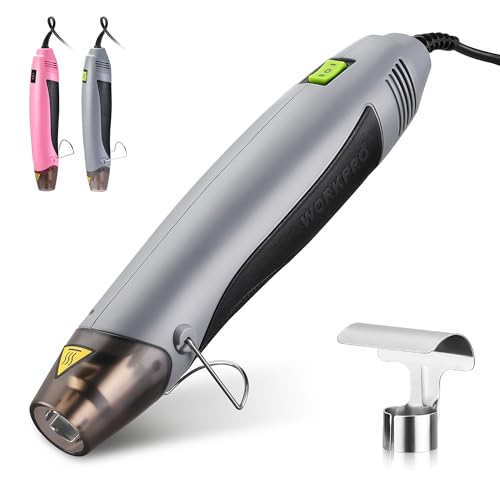
WORKPRO 400W Mini Heat Gun

SEEKONE 1800W LCD Heat Gun

SEEKONE 1800W Two-Setting Heat Gun

QWORK 300W Mini Heat Gun with Stand
A Closer Look At Each Pick
For fence repair benches and mobile installations, the D26950 offers a practical balance of adjustability, compact handling, and support. Variable temperature control lets you reduce heat as vinyl softens, while the kickstand keeps the tool from resting directly on a work surface.
You gain more control than a two-setting mini gun, though fewer numeric readouts than the SEEKONE LCD model. The built-in hang ring also helps with organized storage, making this a sensible fit for installers who regularly carry a heat gun between vehicles and outdoor projects.
Useful Strengths
- Variable heat supports gradual vinyl shaping rather than one fixed output.
- The kickstand improves stability during pauses and bench work.
- Compact construction suits mobile repairs and limited storage.
- A built-in hang ring keeps the tool accessible after use.
Worth Noting
- The lack of a digital display makes precise settings harder to identify.
- Owners still need to let the heated element cool before storage.
Key Specs
Built With In Mind
You benefit most from this model as a mobile fence installer or serious DIY hobbyist working on vinyl components.
Where Another Pick Shines
The SEEKONE 1800W LCD Heat Gun suits you better when numeric temperature feedback and delayed cooling matter more.
Fence jobs involving reshaping trim or activating compatible adhesive reward finer control than a basic low-and-high switch provides. This SEEKONE combines two operating modes with a continuously adjustable control, covering a stated range from 122°F to 1202°F.
For most outdoor repair work, that range gives you room to start conservatively and increase airflow as needed. Compared with the DEWALT D26950, you get broader numerical control, but you give up the integrated kickstand and hanging ring that simplify pauses and storage.
Useful Touches
- Continuous adjustment helps reduce abrupt jumps between heat levels.
- Two modes accommodate lighter craft work and heavier outdoor tasks.
- The broad range supports vinyl shaping, shrink wrap, and adhesive activation.
- Overload protection adds a practical electrical safeguard.
Points To Note
- Higher output can soften or distort fence pieces left in one spot too long.
- The dial-based control offers no visible temperature readout.
- Allow cooling before winding the cord tightly for storage.
The Right Fit
You get the most control from this model during repeated vinyl shaping, tubing work, and adhesive projects.
Reach For A Different Pick When
Choose the WORKPRO 400W Mini Heat Gun for smaller localized repairs where less airflow reduces the chance of affecting adjacent surfaces.
Loose caps, fence clips, and narrow areas around hinges call for airflow directed into a small workspace. The WORKPRO uses 400 watts and a reflector nozzle to concentrate that output, while two stated settings cover lower-temperature work and a hotter 842°F range.
For most detail repairs, the smaller format lowers the commitment required from you because the affected area stays easier to monitor. Unlike the SEEKONE 1800W models, you trade broad adjustment and sustained output for a more manageable tool for localized vinyl work.
Good Reasons To Consider
- The compact body fits around trim, hardware, and installed fence components.
- A focused 400-watt output suits small areas rather than broad fence panels.
- Two temperature levels simplify the decision between gentler and stronger heat.
- The reflector directs airflow toward a defined work area.
Minor Gripes
- The 482°F and 842°F settings provide less tuning than variable controls.
- Its lower output may require more passes on stubborn adhesive.
- Keeping the nozzle clear of residue remains important during maintenance.
Quick Facts
Made For
You benefit from this compact model as a homeowner fixing hinges, clips, and small pieces of vinyl trim.
Another Choice May Suit
The SEEKONE 1800W Two-Setting Heat Gun fits you better for larger panels that benefit from stronger airflow.
Removing an old finish from a wooden fence calls for steady movement and a visible way to track heat. The LCD gives you direct temperature feedback, so you can approach the work methodically rather than estimating from the dial alone.
Two modes span 122°F to 750°F and 122°F to 1112°F, with the lower range useful for cautious paint work. The power-off delay also keeps airflow running briefly after shutdown, a sensible feature for longer sessions where the heating element needs time to cool.
A Favorable Mix
- The LCD reduces guesswork while selecting a working temperature.
- Two modes provide both gentle and high-output ranges.
- Delayed shutdown cooling reduces rushed handling after power-off.
- Overheat protection supports controlled operation during extended work.
- Digital adjustment suits fence boards needing consistent surface preparation.
Small Caveats
- Paint removal depends on coating type, adhesion, and careful airflow control.
- The screen adds complexity compared with a simple two-setting control.
- Let the fan finish its cooling cycle before storage.
Technical Highlights
Whose Shelf It Belongs On
You gain the most from this model while removing finish from compatible wooden fence boards and trim.
Swap It Out When
The DEWALT D26950 Heat Gun fits you better when support, simpler controls, and built-in storage matter more than an LCD.
Two defined settings keep this SEEKONE approachable for first-time fence repairs. You can move between 752°F and 1112°F without navigating a display or continuously adjusting a dial, which helps you focus on airflow and material response.
The straightforward layout favors occasional use, although installers needing fine temperature changes may prefer another model. Compared with the LCD-equipped SEEKONE, you sacrifice incremental control but gain a simpler decision between a lower and higher operating level.
The Upside
- Two clearly separated settings reduce control complexity.
- The 1800-watt output suits demanding repair tasks.
- The lower level provides a starting point for compatible fence trim.
Where It May Fall Short
- No intermediate settings make gradual vinyl shaping more difficult.
- The higher level can distort thin plastic with prolonged exposure.
- Initial smoke and odor may accompany the anti-rust coating coming off the heating core.
- Allow the tool to cool in a ventilated position before storage.
Who Should Grab It
You benefit from this model as a beginner who prefers two clear heat levels over digital or continuous adjustment.
Look Elsewhere When
The SEEKONE 1800W LCD Heat Gun suits you better when precise, incremental temperature changes are essential.
Small fence accessories leave little room for a full-size gun, making the QWORK’s 300-watt output more appropriate for focused tasks. It reaches a stated 390°F and directs hot air toward shrink tubing, vinyl wrap, resin, paint drying, and other compact projects.
The retractable stainless-steel stand provides the standout benefit here, letting you set the tool down without balancing it on an edge. You may find that support especially useful on uneven work surfaces, though the lower output makes this a poor match for broad panels or resistant coatings.
Positive Points
- The stand keeps the tool stable during detailed or extended work.
- Compact 300-watt output suits small accessories and confined spaces.
- Portable construction simplifies storage in a crowded toolbox.
- The 390°F setting targets delicate materials with less aggressive heat.
Practical Considerations
- The lower output may feel slow on paint removal or large vinyl sections.
- Confirm that a 110-volt supply matches your work location.
- Retract the stand fully before placing the tool in storage.
Feature Facts
The Right Fit
You benefit most from this model when repairing small accessories in a cramped workshop or on a portable work surface.
Consider Something Else When
The WORKPRO 400W Mini Heat Gun suits you better for fence repairs needing a hotter setting and a reflector nozzle.
What To Weigh Before Heating Your Fence
Match The Tool To The Material
Heat guns work best on materials designed to soften or respond to controlled hot air. You should check the fence component and any adhesive documentation before applying heat, because wood, vinyl, and composite surfaces respond differently. Mini models suit clips and trim, while full-size tools handle broader panels.
Control Matters More Than Maximum Heat
Higher output does not automatically mean better handling. You benefit from variable control or a digital display when material response changes quickly, especially around thin vinyl. A basic two-setting tool is easier to manage, yet it demands more attention during each pass.
Airflow And Surface Area Set The Pace
A narrow nozzle concentrates air for detailed work, while a broader setup distributes heat across a larger area. You want the nozzle shape to match the component rather than simply pointing maximum heat at the smallest spot. Move the tool continuously and maintain distance to reduce localized distortion.
Storage Details Matter Outdoors
A kickstand, hang ring, or retractable support improves handling during pauses. The cooling cycle still matters after shutdown, especially in a dusty truck bed or humid workshop. Let the fan and heating element cool before enclosing the tool.
Avoiding Costly Heat-Tool Errors
Mistakes Worth Dodging
Choosing by power alone can lead you to soften a small clip with excessive airflow. Check temperature range, nozzle shape, and stand features before ordering. Learn the shutdown behavior too, since a tool may continue running its fan after the switch is turned off.
What Separates Premium From Basic
More control and stronger output often justify spending more on demanding materials. An LCD, broad adjustment, or integrated stand can improve repeat work and reduce guesswork. A compact fixed-setting model remains sensible for occasional detail repairs where simplicity matters more.
Frequently Asked Questions
Can A Heat Gun Install A Fence Post?
You cannot use these tools to anchor structural posts. They only soften, shape, shrink, dry, or strip compatible materials during a separate installation task.
Which Heat Gun Is Best For Vinyl Fence Repair?
The DEWALT D26950 suits vinyl work needing variable control and a stable stand. Continuous adjustment from the SEEKONE 1800W model offers finer control, while the LCD-equipped SEEKONE provides visible temperature feedback.
Do Mini Heat Guns Work On Fence Hardware?
You can use mini models for small compatible clips, tubing, trim, and accessories. Their lower output suits localized work better than broad boards or stubborn coatings.
Is Digital Temperature Control Necessary?
Digital feedback is useful for repeated work because you can monitor the selected setting directly. Variable controls without a display cost less and still provide incremental adjustment, making them a practical middle ground.
What Should You Do Before Storing A Heat Gun?
You should unplug the tool and allow its heating element and fan to cool. Then remove any loose debris from the nozzle, retract the stand, and store the cord without wrapping it tightly around the hot housing.
