
Installing floating hardwood, laminate, or vinyl planks demands more than a hammer alone. Spacers establish expansion room, while gap-repair tools draw separated boards back together without forcing the locking mechanism or damaging the finish. The picks below cover both fresh installations and repairs, with options for beginners, careful finishers, and workshops that already rely on a complete set. Most of the repair tools share one important restriction: they suit floating floors, not surfaces nailed or glued in place.
The Main Contenders

kosjund Floor Gap Fixer with 4-Sided 45° Surface

NAACOO 20-Piece 1/4-Inch and 1/2-Inch Flooring Spacers
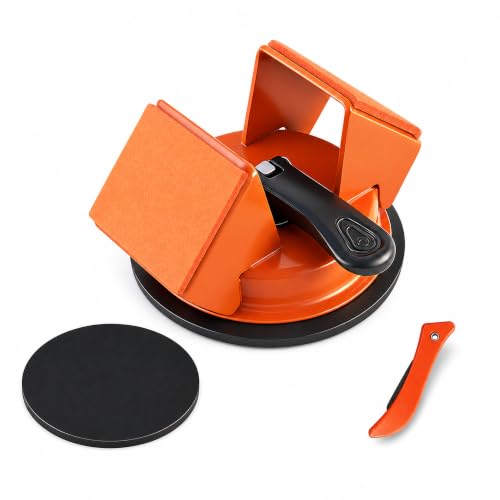
kosjund Iron Floor Gap Fixer with Dual Striking Surfaces

kosjund Iron Floor Gap Fixer with Dual Suction Cups

kosjund Heavy-Duty Iron Floor Gap Fixer

kosjund Iron Floor Gap Fixer with Cutter and Pads
More On The Choices That Made The List
A repair tool earns its place by translating light hammer taps into controlled movement. This kosjund model uses a four-sided 45° tapping surface, so you have several contact angles while drawing a floating plank back toward its neighbor. That flexibility matters along walls and in narrow work zones, where a single-sided head may sit awkwardly.
The washable sticky pad, included hammer, and coarse-surface grip make this a broader kit than the minimalist repair tools. For a first floating-floor repair, it looks easier to control than assembling separate parts. The honest limitation is compatibility: nailed or glued flooring sits outside its intended use.
Points In Its Favor
- Four striking faces provide useful contact angles around walls and obstructions.
- The washable pad can be maintained when dust or adhesive residue reduces adhesion.
- Including a hammer keeps the basic repair setup together.
- It suits laminate, vinyl plank, hardwood, and engineered floating floors.
Practical Considerations
- Confirm that your floor floats freely before applying pulling force.
- The pad needs occasional cleaning for dependable contact on dusty surfaces.
Key Specs
Made For
You benefit most from this tool during a small floating-floor repair using laminate, vinyl plank, or a compatible hardwood construction.
Another Choice May Suit
NAACOO 20-Piece Flooring Spacers suit a fresh installation where expansion gaps must be set before the boards lock together.
Spacers do the quiet work that determines whether a floating floor has room to move. NAACOO includes both 1/4-inch and 1/2-inch sizes, giving you a practical choice as wall irregularities and plank requirements change. An expansion gap is intentional space, not an installation error, and consistent spacing helps preserve that allowance.
The 20-piece count suits a modest room, a focused repair, or replacing spacers that shifted during transport. Unlike the kosjund repair tool in the previous section, this set does not close a separated seam; it establishes the gap before installation. Carry a few extras so a misplaced piece does not stop the row.
Where It Excels
- Two gap widths support different spacing requirements.
- Twenty pieces provide practical coverage for a small installation.
- The simple set keeps spacing visible during plank placement.
Small Caveats
- Twenty pieces may not suit a large room by themselves.
- Spacing must follow the flooring maker’s installation requirements.
- These spacers do not replace a tool for closing a later seam.
Quick Facts
Who It Suits Best
First-time floor layers benefit most from these spacers because the size remains visible while each row is aligned.
Consider Something Else When
kosjund Floor Gap Fixer with 4-Sided 45° Surface better serves a floating floor that is already installed with an open seam.
A compact repair head can be more useful than a full kit in a confined work area. This kosjund model combines an iron body with two 45° striking surfaces and an enhanced suction cup, creating multiple ways to engage a floating plank. That makes it a practical option for one stubborn seam rather than a room-sized installation set.
Compared with NAACOO spacers, it addresses a later stage of the job: the boards are already in place, and the joint needs alignment. You may find the two-surface geometry particularly useful near cabinets or tight corners, where the body cannot rotate freely. Light, measured strikes remain the sensible approach.
Advantages To Know
- Dual striking faces suit corners and limited working clearances.
- The iron construction provides a compact, solid striking body.
- The suction system helps stabilize the head during targeted repairs.
Worth Noting
- It suits floating floors rather than nailed or glued installations.
- Clean the contact area when dust weakens suction or changes the pull.
Right Fit For
This tool fits homeowners repairing one isolated seam near a wall, cabinet, or other space where access is limited.
Where A Sibling Pick Shines
kosjund Iron Floor Gap Fixer with Dual Suction Cups offers a stronger feature set for sustained work along walls.
The dual-suction arrangement gives this repair head a distinct advantage along walls. Both suction cups can engage a board for a more stable pull, while either side can operate alone where a wall blocks full placement. That flexibility is more useful than adding extra accessories without a practical task.
Dual 45° striking faces direct taps at the joint, and each face carries a felt pad that reduces vibration and impact noise. The kit also includes a slot cutter, hammer, and five sticky pads. For careful hardwood or engineered-floating-floor work, that combination gives you useful preparation and finishing tools around the main repair head.
A Favorable Mix
- Single-cup access supports repairs beside walls and fixed obstacles.
- Combined suction cups improve stability across open floor areas.
- Felt-padded striking faces soften vibration during seam correction.
- Five spare sticky pads support repeated or multi-area maintenance.
Potential Drawbacks
- The larger feature set occupies more storage space than the compact model.
- Cleaning and storing the pads matters after dusty or adhesive-heavy work.
Feature Snapshot
Built With In Mind
Careful DIYers benefit most from the dual-cup control and padded strikes when repairing visible seams in occupied rooms.
Another Choice May Suit
NAACOO 20-Piece Flooring Spacers are the better fit for setting consistent expansion gaps before floating planks are installed.
The central design here is the relationship between the angled striking face and the suction cup. The 45° geometry turns each measured tap into combined forward and downward pressure, helping the floating board settle toward the adjoining plank. That makes the tool straightforward for common seam correction where open floor space surrounds the work.
This is a leaner setup than kosjund Iron Floor Gap Fixer with Dual Suction Cups because the supplied data does not identify a hammer, spare pads, or cutting accessory. For experienced floor layers, that simplicity can be useful; the required hammer and any wall-adjacent placement concerns still shape the choice.
Real-World Strengths
- Angled striking surfaces direct force into the joint.
- Suction gripping helps prevent lateral slipping during taps.
- The compact tool handles isolated repairs without extra accessories.
- Accessible geometry suits routine floating-floor maintenance.
Trade Offs
- A separate hammer is needed unless one is already part of your setup.
- Wall-adjacent work offers less positioning freedom than a dual-cup design.
- Its dual faces do not provide the four contact angles offered by the first pick.
Who Will Love This
You benefit most from this tool during open-floor seam repairs, especially with prior hammer-and-plank experience.
Look Elsewhere When
kosjund Floor Gap Fixer with 4-Sided 45° Surface is a better fit for narrow access and multiple tapping angles.
This set serves a broader workshop routine by placing seam repair, slot cutting, and replacement pads near one another. The iron repair body uses a 45° striking surface to convert measured hammer taps into forward pressure, while the enhanced suction cup steadies the contact point. It suits floating hardwood, laminate, engineered flooring, and vinyl applications.
Five sticky pads matter more than they may first appear, since contamination and repeated use can make a grip surface less consistent. The included cutter also helps prepare a suitable slot without requiring a separate accessory for that stage. Compared with kosjund Heavy-Duty Iron Floor Gap Fixer, this package better anticipates jobs where several repair steps follow one another.
What Pays Off
- The slot cutter supports preparation around the repair area.
- Five sticky pads provide spares for multiple grip changes.
- The angled head helps transfer tapping force into seam movement.
- One package covers several recurring repair tasks.
Possible Compromises
- It is less streamlined for a single open-floor seam than the fifth pick.
- Spare pads and the cutter add storage requirements to a mobile toolkit.
- It remains limited to floating-floor repairs.
Core Details
Whose Shelf It Belongs On
Renovation-focused DIYers benefit most from this kit when repeated floating-floor repairs justify keeping several accessories together.
A Better Fit Elsewhere
NAACOO 20-Piece Flooring Spacers are better for controlling expansion gaps during a new floating-floor installation.
Choosing Tools That Match Your Floor System
Start with how the floor is attached. Floating planks need room along walls and enough open seam for a repair head to attach. Nail-down or glue-down installations require different correction methods, so the gap tools featured here should stay out of those projects. Confirming the construction prevents you from forcing a joint that cannot move as intended.
Match the task to the stage of work. Spacers establish a consistent expansion gap before boards are locked, while floating-floor gap fixers correct a seam after installation. A visible opening does not automatically call for the same approach, especially when a locking edge is damaged or the boards are no longer free to move.
Consider access and control before choosing a repair head. Dual 45° faces help in corners, four-sided designs offer additional tapping angles, and two suction cups can provide stability along a wall. Clean the floor and grip surfaces before use, since dust can reduce suction and interfere with consistent pulling force.
Tool Details That Change Floor Work
Common Shopping Slip Ups
Do not treat a gap-repair tool as a substitute for installation spacers, or use either on a glued or nailed floor without verifying compatibility. Expansion gaps and repair seams serve different purposes, so matching the tool to the installation stage prevents wasted effort.
What The Higher Tier Buys
More elaborate kits add dual suction, padded striking faces, cutters, spare pads, or wider angle options. Those additions help with access, noise control, and repeated work, but a simple hammer and repair head may suit a small floating-floor seam.
Frequently Asked Questions
Can these tools repair hardwood flooring?
Yes, only hardwood constructions that float freely over a suitable underlayment qualify. Nailed and glue-down floors require different repair methods.
Are hardwood flooring installation kits complete sets?
The listed products focus on individual tasks. NAACOO supplies spacers, while the kosjund choices center on seam correction with varying accessories.
What is a flooring expansion gap?
It is intentional space between floating flooring and the wall or another boundary. It gives the floor room to expand without compressing the installation.
Can a floor gap fixer close large openings?
Small alignment separations are the intended use. A wide opening, damaged locking edge, or immobile board may require plank replacement or a different repair approach.
Do gap-repair tools need maintenance?
Clean the floor and contact surfaces before use, and keep sticky or suction components free of dust and residue. Replacement pads help restore grip as they wear.
