
Framing a wall means driving structural screws into dimensional lumber, assembling trim, and securing joints, sometimes while working overhead or between studs. A cordless drill driver handles most of that work, but a rotary hammer becomes valuable for concrete anchors, masonry fasteners, and repeated impact drilling. These six options cover compact kits, expandable tool sets, and corded rotary hammers with different power levels.
A Fast Comparison Of The Options
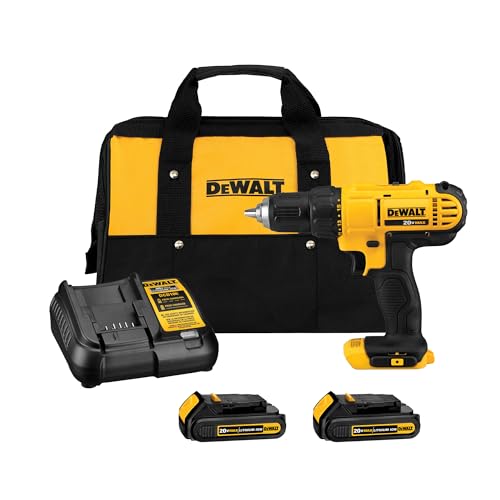
DEWALT DCD771C2 20V MAX 2-Speed Drill Driver Set

DEWALT DCK240C2 Drill and Impact Driver Combo

DEWALT DCK551D1M1 20V MAX 5-Tool Combo Kit

ENEACRO 1-1/4 Inch SDS-Plus 13 Amp Heavy Duty Rotary Hammer Drill

ENEACRO 1-1/4 Inch SDS-Plus 12.5 Amp Heavy Duty Rotary Hammer Drill

DEWALT DCD777D1 20V MAX Brushless Drill Driver Kit
What Each Pick Brings To The Table
Compact handling makes the DCD771C2 easier to control between studs, inside cabinets, or above your head during finish work. Its two-speed transmission lets you choose between controlled driving and faster drilling, making it more adaptable than a basic single-speed fastener driver.
Two 1.3Ah batteries help keep the kit moving, although their lower capacity may require more charging pauses than larger packs. For one-room framing or weekend projects, the included batteries, charger, and contractor bag form a practical entry point.
What It Does Well
- The compact body reduces wrist strain during overhead fastening.
- Two speeds suit both delicate trim and everyday wood drilling.
- Two batteries reduce downtime between setup tasks.
- The contractor bag keeps the kit together at the jobsite.
Practical Considerations
- It is a drill driver, not a rotary hammer, so masonry work requires separate tooling.
- The smaller batteries may feel limited during long framing sessions.
Quick Technical Notes
Who It Suits Best
Home framers and weekend renovators benefit most from its compact shape and straightforward fastening setup.
Another Choice May Suit
DEWALT DCK551D1M1 offers broader on-site coverage for projects requiring saws and an oscillating tool.
Pairing a DCD771 drill driver with a DCF88M2 impact driver covers most framing tasks without moving between two battery systems. The drill handles pilot holes and general fastening, while the impact driver uses brief rotational impacts to drive long screws with less wrist twist.
An impact driver is not a substitute for a true hammer drill, particularly when drilling large holes in masonry. Even so, this two-tool setup works well for deck frames, wall studs, and cabinet installation, provided the included fasteners match your material and connector requirements.
Real Benefits
- Separate drill and impact tools match different fastening demands.
- The shared 20V MAX platform simplifies battery charging.
- The impact driver reduces effort on long structural screws.
- The bag keeps both tools and accessories organized.
Worth Noting
- Owners doing extensive concrete work may still need a rotary hammer.
- Charger size and battery capacity can affect continuous framing pace.
Made For
Framing contractors and serious home renovators get the most value from the complementary drill-and-impact pairing.
A Better Fit Elsewhere
ENEACRO 13 Amp SDS-Plus Rotary Hammer Drill suits installers working primarily with concrete anchors.
The DCK551D1M1 reaches beyond basic framing by adding a 1/2-inch drill driver, 1/4-inch impact driver, reciprocating saw, 6-1/2-inch circular saw, and brushless oscillating multi-tool. That range helps you cut members, trim openings, drive fasteners, and handle repair work from one battery platform.
Two batteries with 2.0Ah and 4.0Ah capacities support longer mixed-tool sessions, and the 6-1/2-inch circular saw can cross a 2×4 in one pass at a 45-degree angle. The honest tradeoff is weight and storage bulk: carrying every tool may feel excessive for a single interior wall.
The Upside
- Five tools cover drilling, fastening, cutting, and demolition tasks.
- Two battery capacities provide useful runtime flexibility.
- The circular saw handles common framing cuts.
- The oscillating tool expands repair capabilities.
- A shared platform reduces charging logistics.
Trade Offs
- The full kit is heavier and bulkier than a drill-driver-only setup.
- Some specialty framing tools may remain necessary.
Feature Snapshot
Built With In Mind
Renovators building a first compact workshop benefit from having several project-ready tools in one coordinated kit.
Swap It Out When
DEWALT DCD777D1 is more focused for installers who need one stronger drill driver rather than five tools.
This corded rotary hammer shifts attention from wood framing to concrete, masonry, and structural anchoring. SDS-Plus is a bit-holder system designed for hammer-drill bits, while the 1-1/4-inch chuck accepts larger bits and supports heavier drilling or chiseling work.
The 13-amp motor produces 5.5 foot-pounds, or 7.4 joules, of impact energy, giving it more force than the 12.5-amp ENEACRO model below. Its heat-resistant copper winding and lower dust-management structure support sustained jobsite use, though a cord and masonry bit add weight to a typical renovation setup.
Strengths Worth Knowing
- Higher impact output suits demanding concrete drilling.
- The broad chuck accepts multiple bit sizes.
- Impact energy helps bore through dense masonry.
- Wiring and dust controls target extended use.
Points To Note
- Owners must manage the power cord during confined framing work.
- Concrete bits and eye protection add maintenance and setup costs.
Core Details
Right Fit For
Masonry contractors and renovation crews installing dense concrete anchors benefit from its higher impact output.
Where Another Pick Shines
ENEACRO 12.5 Amp SDS-Plus Rotary Hammer Drill offers a lighter power alternative for moderate anchor work.
The 12.5-amp model lands between a general-purpose drill and the more forceful 13-amp ENEACRO option. Its 7-joule, 5.2-foot-pound impact rating is suited to concrete drilling and chiseling, particularly where anchor holes, masonry bolts, and repeated impact cycles are central to the job.
The heat-resistant copper winding and sealed lower structure are intended to limit heat and dust exposure during sustained work. For a small renovation involving several anchors, this could be more capability than needed; for a contractor with regular masonry demands, the corded format makes more sense than carrying a separate cordless battery system.
Bright Spots
- Seven joules support concrete anchor installation.
- The 1-1/4-inch chuck broadens bit compatibility.
- Heat-resistant wiring supports extended operation.
Small Caveats
- The cord becomes cumbersome in tight interior spaces.
- Wood framing tasks favor the lighter cordless drill driver options.
- Cleaning dust from the chuck and vents remains an ownership task.
Who Should Grab It
Installers who repeatedly drill masonry but need less output than the 13-amp model can focus on this midrange rotary hammer.
Reach For A Different Pick
DEWALT DCK240C2 better serves framing work centered on wood screws, pilot holes, and impact fastening.
The DCD777D1 takes a focused approach with a 1/2-inch chuck, two-speed transmission, and 340 units of wrenching output for structural screw installation. A brushless motor uses electronic controls rather than physical brushes, which generally reduces friction and supports longer runtime during repetitive fastening.
Compared with the compact DCD771C2, this model offers a larger chuck and brushless motor, making it more suitable for substantial wood screws and general construction drilling. The single 2.0Ah battery keeps the package small, although a second pack would be preferable for uninterrupted framing work.
Useful Touches
- The brushless motor supports efficient repeated screw driving.
- Two speeds accommodate control and higher-speed drilling.
- The 1/2-inch chuck accepts common drill bits.
- The LED helps illuminate confined framing cavities.
- Its focused design avoids carrying unrelated tools.
Details To Watch
- Only one 2.0Ah battery is included.
- It lacks the dedicated impact mode of the DCK240C2.
Technical Highlights
Who Will Love This
Framing finishers and remodelers appreciate the combination of cordless mobility, variable speed, and higher fastening output.
Another Choice May Suit
DEWALT DCD771C2 is more attractive for overhead work where compact handling outweighs maximum fastening capability.
Matching The Tool To Your Framing Demands
Start by separating wood fastening from masonry drilling. A drill driver handles screws, pilot holes, and wood bits, while an impact driver applies brief rotational bursts to long fasteners. A rotary hammer uses sustained impact energy for concrete and masonry, making it a supporting tool for a concrete-anchored frame rather than the main fastening tool.
Torque, Speed, And Chuck Size
A two-speed drill provides useful control: lower speed supports careful starting and fastener control, while the higher setting handles drilling. Chuck size also matters. The 1/2-inch chuck on the DCD777D1 accepts a broader range of bits than a compact drill with a smaller keyless chuck, so you should match the chuck to the shank sizes you actually use.
Battery Strategy Matters
Small Ah ratings measure battery capacity, with higher numbers generally supporting longer work between charges. Two 1.3Ah batteries can be convenient for swapping, but larger packs may keep a sustained framing crew moving longer. The DCK551D1M1 includes 2.0Ah and 4.0Ah batteries, providing a practical mix of weight and capacity.
Separate Concrete Requirements
SDS-Plus describes the bit-retention system used by these ENEACRO rotary hammers. Impact energy, measured in joules or foot-pounds, indicates the force delivered with each blow. The 13-amp model leads this group at 7.4 joules, while the 12.5-amp version provides 7 joules, so your workload should determine whether the added output earns its place.
Practical Traps In Tool Selection
Mistakes Worth Dodging
Choosing by name alone can lead to a poor match. “Drill driver,” “impact driver,” and “rotary hammer” describe different mechanisms rather interchangeable labels. Match the tool to the material, fastener length, workload, and access around the framing cavity.
What The Higher Tier Buys
Additional capability often comes through brushless electronics, larger chucks, higher output, more batteries, or additional tools. That expansion pays off for frequent framing work or broad renovation needs, while a compact single drill can be more rational for occasional interior projects.
Frequently Asked Questions
Do I need a hammer drill for wood framing?
A standard drill driver is usually sufficient for wood framing and common structural screws. You need rotary-hammer capability primarily for concrete, masonry, or specialized anchor installation.
Is an impact driver better than a drill driver?
An impact driver handles long screws more efficiently, while a drill driver offers better control for pilot holes, smaller fasteners, and general drilling. A two-tool pairing covers both tasks well.
What does SDS-Plus mean?
SDS-Plus identifies the bit interface used by the ENEACRO rotary hammers. Compatible bits lock into the chuck and are intended for impact drilling and chiseling.
How many batteries do I need for framing?
Two batteries improve continuity because one can charge while the other powers the tool. A single compact battery may suit short sessions, though extended projects benefit from additional capacity.
Are corded rotary hammers suitable for renovation work?
They are well suited to concrete and masonry anchoring, but their cords can be inconvenient in confined spaces. Keep a cordless drill driver nearby for wood fastening and interior access.
