
Deck construction punishes weak tools. A capable hammer drill helps you bore into masonry, drive structural fasteners, and place supports without fighting the tool at every turn. You’ll also need to match the drill and bit to the material, since ordinary wood bits and SDS-Max accessories won’t safely fit every model. The six options below cover everything from compact cordless work to pneumatic installation and flexible wire-pulling bits, helping you choose the right tool for your deck project.
A Quick View Of The Lineup

Berserker 26FA SDS-Plus Rotary Hammer
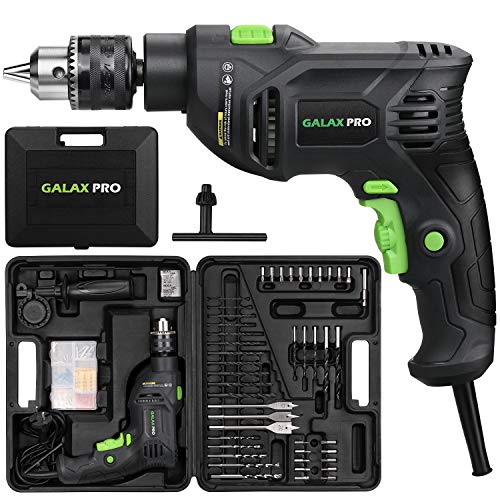
GALAX PRO 5Amp Hammer Drill and 105-Piece Kit

Chicago Pneumatic CP789HR 1/2-Inch Air Hammer Drill

BLACK+DECKER BEH200-GB 500W Hammer Drill

DECKRKAT 54-Inch Flexible 9/16-Inch Auger Bit

DECKRKAT 54-Inch Flexible 1-Inch Auger Bit
The Picks, Examined More Closely
Concrete footings and masonry anchors call for more than a conventional drill, and the Berserker 26FA provides the impact energy and rotary motion needed for that heavier work. Its 9.5-pound body is more manageable than many full-size rotary hammers, particularly for downward drilling into a footing or overhead work beside a deck ledger.
Unlike GALAX PRO’s conventional hammer drill, this is a rotary hammer built around an SDS-Plus chuck. You gain concentrated impact action for concrete and masonry, but you must use SDS-Plus bits only, as SDS-Max and regular drill bits will not fit.
What It Does Well
- The 1,050-watt, 9-amp motor provides substantial power for concrete anchors and masonry drilling.
- A 3.3-foot-pound impact output helps the bit break into hard material more efficiently.
- The relatively light housing reduces strain during overhead or downward drilling.
- SDS-Plus retention suits common masonry bits without requiring a separate keyed chuck.
Worth Noting
- SDS-Plus is a specific bit retention system, so incompatible bits cannot be used.
- You’ll need to clear concrete dust regularly to keep the chuck and bit area from becoming unnecessarily dirty.
Feature Snapshot
Built With In Mind
You benefit most from this rotary hammer when building masonry footings, installing wall anchors, or drilling repeatedly into concrete around a deck.
Look Elsewhere When
GALAX PRO 5Amp Hammer Drill and 105-Piece Kit suits you better when you need a conventional keyed chuck and a broad collection of everyday drilling accessories.
A stocked kit can be useful during a deck build because you’re less likely to stop for a missing bit or small attachment. GALAX PRO combines a 5-amp hammer drill with 105 accessories and a carrying case, giving you a broad selection for wood screws, masonry anchors, and mixed household drilling.
The adjustable trigger and speed control help you manage the transition from pilot holes to faster driving work. Compared with the Berserker 26FA, this drill offers broader everyday versatility, though it lacks the same dedicated rotary-hammer format and high impact output for substantial concrete.
Where It Delivers
- Variable speed gives you finer control at startup and during repetitive fastening.
- The 105-piece kit reduces the need for separate accessory purchases.
- A carrying case makes the drill and loose pieces easier to organize between jobs.
- The 1/2-inch chuck accepts common drill bits and accessories for mixed materials.
Minor Gripes
- The large accessory count can become clutter unless you return each piece to its assigned place.
- It is less specialized for heavy concrete drilling than the Berserker 26FA rotary hammer.
- You may carry unused attachments simply to keep the kit complete.
Made For
You’ll appreciate this kit most as a homeowner handling deck repairs, furniture assembly, anchors, and ordinary wood construction.
Consider Something Else When
The Berserker 26FA SDS-Plus Rotary Hammer is a better fit when concrete impact energy matters more than a large collection of general accessories.
Repeated fastening on a busy job site is where a pneumatic hammer drill can make sense. The Chicago Pneumatic CP789HR uses compressed air, has a 1/2-inch keyed chuck, and includes a pistol handle for controlled work on timber and light masonry applications.
Its reversible setting changes drilling direction, which is useful when you need to back out a fastener or extract material. Unlike GALAX PRO’s self-contained kit, you’ll need a suitable air compressor and hose, and the aluminum housing makes this a more workshop-oriented option than a simple residential tool.
Points In Its Favor
- The 0.43-horsepower motor provides useful torque for repetitive fastening work.
- The reversible mechanism simplifies direction changes during installation and removal.
- The pistol grip supports a natural two-handed position.
- Pneumatic operation suits shops already equipped with compressed-air service.
Points To Keep In Mind
- You need a compatible compressor and hose before the drill is ready for use.
- The fixed 500-RPM speed offers less adjustment than the GALAX PRO variable-speed drill.
- Air-line maintenance matters because moisture or debris can damage pneumatic components over time.
Technical Highlights
Who It Suits Best
You’ll find this drill most useful in a professional or advanced home workshop that already has reliable compressed-air equipment.
Another Choice May Suit
BLACK+DECKER BEH200-GB 500W Hammer Drill suits you better when portability and a cordless setup matter more than pneumatic torque.
For straightforward deck repairs, the BLACK+DECKER BEH200-GB keeps the tool selection uncomplicated: a 500-watt hammer drill and a side handle. The auxiliary handle gives you two points of control, which is useful for longer fasteners, larger masonry bits, or drilling that places more twisting force on the chuck.
Compared with the air-powered Chicago Pneumatic CP789HR, this is the more practical residential option because it does not require a compressor. You’ll still need to confirm bit and chuck compatibility, and the available source details are limited, so you shouldn’t treat it as a heavy-duty concrete specialist.
Useful Highlights
- The side handle improves control during demanding drilling or fastening.
- A 500-watt motor targets common home-improvement applications.
- No compressor setup is needed for ordinary workshop use.
- The straightforward design suits common deck repair tasks.
Less-Strong Areas
- The listed information does not establish suitability for heavy concrete demolition work.
- You may need a separate keyed chuck adapter or bit system depending on the accessories you own.
- The side handle adds bulk when you switch between drilling and fastening.
Best Suited To
You’ll likely enjoy this drill for household deck maintenance, furniture assembly, and light masonry work around the house.
Reach For A Different Pick When
Chicago Pneumatic CP789HR 1/2-Inch Air Hammer Drill fits workshop users who already have compressed air and value reversible pneumatic control.
This isn’t a drill, but it solves a specific deck-access problem: routing wire through a wall, ceiling, or sidewalk path. The 54-inch flexible auger bit bends around studs and pipes, while its fish-eye opening gives cable a starting point for the pull. For electrical work beneath a deck, that reach can be more useful than carrying a full-size drill into a narrow cavity.
Compared with the 1-inch DECKRKAT bit, the 9/16-inch head makes sense for smaller service openings and tighter framing. You’ll need a compatible high-torque drill, and you should check the shank and chuck arrangement before use because the flexible body still transmits substantial turning force.
A Favorable Mix
- The 54-inch length reaches through studs, joists, and concealed wall spaces.
- Flexible spring steel helps the bit navigate around pipes and framing.
- The fish-eye opening assists with attaching and pulling wire.
- The 9/16-inch head is useful where a 1-inch opening would be excessive.
Small Caveats
- It is an installer bit rather than a complete hammer-drill package.
- You must confirm that your drill’s chuck and operating power suit the shank.
- You’ll need to clear chips from the auger head during longer passes.
Feature Facts
Right Fit For
You’ll benefit most from this bit when running new wiring through walls, ceilings, or beneath an existing deck.
Swap It Out When
DECKRKAT 54-Inch Flexible 1-Inch Auger Bit is the better choice when you need a wider opening for larger cable bundles.
The larger DECKRKAT 1-inch head is suited to service openings where a 9/16-inch path won’t comfortably accommodate the cable bundle. Its 54-inch flexible body can reach through concealed framing, ceilings, and sidewalk areas, which makes it useful while connecting deck lighting, controls, or other electrical runs.
Where the smaller DECKRKAT bit prioritizes maneuverability, this version trades some of that control for a wider opening. The fish-eye opening helps you catch the cable, and the three-flat shank is intended to resist slipping, though you should still verify compatibility with your drill and use controlled pressure.
Well-Handled Touches
- The 1-inch opening creates more room for cable and service connections.
- Flexible construction helps you route around studs and pipes.
- Fish-eye design supports wire attachment during long pulls.
- The long body reduces the need to remove finished wall sections.
Where It Is Less Suited
- The larger head is less convenient in narrow cavities than the 9/16-inch version.
- You’ll need a drill with enough torque and a compatible shank arrangement.
- Auger debris can accumulate quickly in a larger opening.
Key Product Details
Who Should Grab It
You’ll find this bit most useful for wider service openings and cable routes that need more clearance than the 9/16-inch model provides.
Where A Sibling Pick Shines
DECKRKAT 54-Inch Flexible 9/16-Inch Auger Bit is the better fit for tight spaces where a smaller opening and easier maneuvering matter more.
Choosing Tools for Deck Construction
Match the tool to the material
A conventional hammer drill combines rotation with a hammering action and is generally more suitable for wood screws, masonry anchors, and moderate concrete work. A rotary hammer, such as the Berserker 26FA, uses a different SDS-Plus retention system and delivers more specialized impact energy, so you should verify bit compatibility before purchasing accessories.
Check chuck and shank compatibility
A keyed chuck accepts bits with a keyed or three-flat shank arrangement, while SDS-Plus uses a different locking mechanism. You’ll need to confirm the exact connection before assuming a bit will fit, because forcing an incompatible bit can damage the chuck and create an unsafe setup.
Balance power against handling
More power helps with hard concrete, overhead anchors, and large fasteners, but weight matters during vertical work. The Berserker’s 9.5-pound body is comparatively manageable for a rotary hammer, while the BLACK+DECKER side handle gives you added control for steadier residential work.
Consider your work environment
Cordless tools suit outdoor projects without a nearby outlet, and pneumatic tools fit workshops already connected to an air compressor. The Chicago Pneumatic CP789HR is a strong workshop option, but the added hose setup makes it less convenient for a remote deck job.
Avoiding Common Tool Mistakes
Common Shopping Slip Ups
Don’t start with the largest accessory set. Choose the drill for the materials, then match the chuck or SDS-Plus system to the bits. Flexible DECKRKAT auger bits are specialized accessories, not substitutes for a complete hammer drill.
What The Higher Tier Buys
Higher-output tools can help with hard concrete, repeated fastening, and demanding overhead work. You may find the added power worthwhile on substantial masonry projects, while simpler cordless equipment remains more convenient for light residential repairs.
Frequently Asked Questions
Are hammer drills suitable for concrete deck footings?
Yes, but the concrete’s hardness, hole diameter, and fastener size determine which tool you need. A standard hammer drill handles many light masonry tasks, while heavy concrete drilling may justify a rotary hammer with higher impact energy.
Can a regular hammer drill use SDS-Plus bits?
No. SDS-Plus requires a compatible SDS-Plus rotary hammer, and SDS-Max tools use a different system. You should match the bit designation to the chuck before starting a project.
Do I need a side handle for deck drilling?
A side handle improves control when drilling into concrete, driving long fasteners, or working overhead. For small holes in wood, you may be able to use the drill with its standard handle, but stable two-handed control is valuable on harder materials.
What bit helps pull wire through a wall?
A flexible auger bit with a guide opening can help route wire through framing and concealed spaces. You’ll need a drill with sufficient torque and a compatible shank connection.
Should I choose a corded or pneumatic hammer drill?
Choose a corded tool for consistent power near a reliable outlet, and choose pneumatic equipment for a workshop with suitable compressed air. Portable residential work is often more convenient with a cordless model.
