
A hacksaw earns its place by cutting cleanly through pipe, trim, drywall, hardware, and awkward household materials without taking over your toolbox. The six options here cover pointed drywall saws, compact metal-cutting frames, and multi-blade kits for mixed repair work. You’ll find a focused tool for small openings, a seasonal pumpkin-carving companion, and compact frames that reach into spaces full-size saws struggle to enter. Each selection serves a distinct job, so matching blade type, frame geometry, and tooth spacing to your usual repairs matters more than owning the most complicated model.
A Snapshot Of The Selections

KATA Folding Drywall Jab Saw with Soft Grip Handle

KATA 6 Inch Drywall Saw for Pumpkin Carving

TOOLAN 8-In-1 Multi Blades Hand Saw
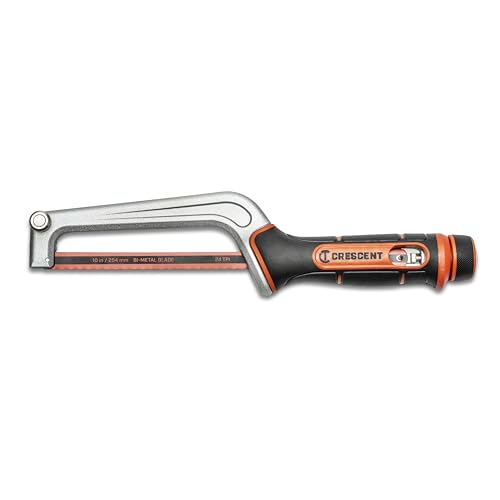
Crescent Tools 10-Inch Compact Hacksaw CTMHACK
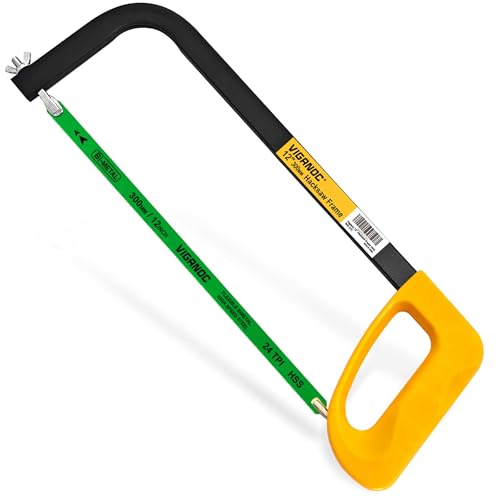
Viganoc 12-Inch Hacksaw with 24 TPI Blade

Stanley 20-807 10-Inch Mini-Hack Utility Saw
A Closer Look At Each Pick
Wall repair rarely needs a large frame, especially for making a service opening for plumbing or electrical work. The KATA Folding Drywall Jab Saw with Soft Grip Handle uses a pointed 65Mn steel blade to enter drywall with less guesswork, while the 7 TPI triple-tooth pattern supports the cut through the face paper and gypsum core.
Its folding construction reduces the exposed cutting area, making this more practical than a fixed drywall knife in a crowded repair kit. Compared with the broader KATA 6 Inch Drywall Saw, the focus here is compact wall work, and you may find the 7-inch format better suited to small patches than long panel cuts.
Key Advantages
- The pointed tip starts small drywall openings without requiring a long entry cut.
- Seven teeth per inch balance rapid penetration with control around outlets and access holes.
- The folding blade folds down for safer, more compact storage in a drawer or repair bag.
- The soft-grip handle suits trimming tasks performed above shoulder height or in awkward positions.
Small Caveats
- The short format lacks the reach of a full hacksaw for thick wood or bundled material.
- Gypsum dust settles into the teeth, so cleaning the blade after each substantial cut helps maintain smooth strokes.
Key Specs
Built With In Mind
Homeowners handling outlet changes, plumbing access holes, and small drywall patches will get the most benefit from its pointed folding design.
Where Another Pick Suits Better
Choose the TOOLAN 8-In-1 Multi Blades Hand Saw for broader mixed-material work that extends beyond drywall and thin household stock.
Carving a pumpkin rewards a blade that pierces the rind immediately and changes direction without wandering. The KATA 6 Inch Drywall Saw for Pumpkin Carving combines a pointed tip with an 8 TPI SK5 steel blade, giving you a controlled starting point for eyes, mouths, and narrow decorative cuts.
That geometry also serves light household projects, although it remains purpose-built for relatively thin material. Unlike the KATA Folding Drywall Jab Saw with Soft Grip Handle, this model emphasizes a six-inch cutting length and pumpkin shaping, so seasonal decorators gain more useful capacity while wall-repair users may prefer the more compact fold-away arrangement.
Everyday Perks
- The point pierces pumpkin skin cleanly, reducing the need for a separate starter hole.
- Triple-ground teeth support directional cuts around curved facial features.
- The six-inch blade offers useful maneuverability for detailed seasonal patterns.
- A pointed drywall saw also handles light DIY cutting tasks beyond Halloween projects.
Worth Noting
- Its fixed 8 TPI spacing is less suitable than a full hacksaw for thick pipe or hard metal stock.
- Pumpkin residue can coat the teeth and reduce glide, so wiping and drying the blade after carving matters.
At A Glance
Who It Suits Best
Pumpkin carvers and beginners making controlled facial or decorative cuts will appreciate the pointed 6-inch format most.
Another Choice May Suit
The Stanley 20-807 10-Inch Mini-Hack Utility Saw is the better fit for light repair work requiring a longer traditional hacksaw stroke.
A single blade rarely handles drywall, wood, and metal with equal precision. The TOOLAN 8-In-1 Multi Blades Hand Saw addresses that problem with eight blades and a clamping design intended to accept different sizes, letting you match tooth spacing and tooth form to the material at hand.
The TPR grip, meaning thermoplastic rubber, is designed to resist slipping and reduce hand fatigue during repeated strokes. Compared with the two pointed KATA saws, this kit is less specialized and may prove less convenient for a single drywall patch, but it is more useful across scattered jobs involving wood, plasterboard, and light hardware.
Reasons It Performs
- Eight interchangeable blades reduce the need to own several separate saws for common household materials.
- The clamping system holds large or small blades securely within the frame.
- A lockback mechanism helps keep the installed blade stable during short, controlled cuts.
- The non-slip TPR handle supports repeated use during larger household projects.
Trade-Offs To Consider
- You’ll need to switch blades between materials, so setup takes longer than using one permanently installed frame.
- Storing eight blades and the saw together requires a case or a dedicated tool-bag pocket.
- The broader kit offers less focused control than the KATA Folding Drywall Jab Saw for tiny wall openings.
- Resin, metal dust, and wood residue require separate cleaning for each blade type.
Made For
DIYers handling mixed repairs benefit most from a single handle that can accept several tooth patterns and blade sizes.
A Better Fit Elsewhere
Select the Crescent Tools 10-Inch Compact Hacksaw CTMHACK for repeated metal and PVC work where blade placement and tension control matter more than extensive interchangeability.
Metal and PVC repairs often punish a saw positioned too high or too far from the frame. The Crescent Tools 10-Inch Compact Hacksaw CTMHACK allows the blade to sit in two positions, including a lower arrangement for cuts that need closer access to the work surface, while its compact proportions remain manageable around fittings.
Unlike the TOOLAN 8-In-1 Multi Blades Hand Saw, this frame concentrates on efficient strokes and placement rather than carrying a varied blade inventory. It accepts both 10-inch and 12-inch blades, so you can use reach when clearance allows and reposition the frame for flush work when it does not.
Strengths Worth Knowing
- Dual blade positions support both normal cuts and lower, flush-cutting setups.
- Compatibility with 10-inch and 12-inch blades gives you options for reach and stroke length.
- The long throat clears more of the work than a shallow frame, improving access around pipe and fittings.
- A dual-material handle provides distinct contact zones for grip stability and comfort.
Practical Considerations
- The 12-inch blade position may be awkward behind wall surfaces or inside crowded cabinets.
- An in-handle tensioning system requires regular checking to keep the blade secure during a cut.
- Metal filings collect beneath the lower blade, so cleaning the frame prevents debris from scratching nearby surfaces.
Technical Sheet
The Right Fit
Home repair users cutting copper, PVC, and light metal sections around fittings will benefit from its adjustable blade position.
Where A Sibling Pick Shines
The Viganoc 12-Inch Hacksaw with 24 TPI Blade better suits repeat cuts that call for a supplied fine-tooth blade and additional frame blades.
The Viganoc 12-Inch Hacksaw with 24 TPI Blade is built around a 300 mm frame and a finely toothed bi-metal blade, where TPI means teeth per inch. That denser tooth pattern favors controlled progress through aluminum, PVC, copper tubing, and similar material, particularly when the cut demands a cleaner edge than a coarse-tooth frame provides.
A tensioning system keeps the installed blade secure, and the non-slip handle is intended to remain comfortable through repeated strokes. The package includes three blades according to the supplied listing, which reduces the inconvenience of having an old or damaged blade stop a small repair project.
Good Reasons To Consider
- Twenty-four teeth per inch support slower, more controlled cuts through pipe and tubing.
- The bi-metal blade combines a flexible body with a harder cutting edge for repeated hand-tool use.
- A 12-inch frame provides useful cutting reach for stock that exceeds the short KATA saws.
- Three included blades make it easier to continue a project after one blade becomes dull or damaged.
- The textured handle supports steady control during multiple passes through pipe and metal.
Details To Watch
- The full 12-inch frame needs more clearance than the Stanley 20-807 in recessed walls and narrow cabinets.
- Fine teeth can load with soft residue, so cleaning the blade after PVC or copper work helps preserve its glide.
Feature Snapshot
Who Will Love This
Weekend repairers cutting pipe and tubing will value the 12-inch reach, supplied 24 TPI blade, and extra blades.
Reach For A Different Pick When
The Stanley 20-807 10-Inch Mini-Hack Utility Saw is easier to maneuver where a 12-inch frame cannot approach the cut.
Getting a blade behind a wall stub, inside a cabinet, or around a crowded pipe often matters more than maximum frame length. The Stanley 20-807 10-Inch Mini-Hack Utility Saw uses its compact geometry and lightweight frame to bring the cutting line closer to the work, improving control in confined repair areas.
This is a light-duty utility tool rather than a heavy cutting platform. Compared with the Viganoc 12-Inch Hacksaw with 24 TPI Blade, the Stanley sacrifices frame length and supplied tooth selection for easier access, which may be the more sensible exchange for routine household tasks.
Practical Pluses
- The 10-inch mini-hack profile reaches narrow gaps where a full-size frame cannot sit correctly.
- A lightweight frame helps you guide the blade with one hand during light cutting tasks.
- The ergonomic handle supports a steady grip during short repair cuts.
- Its smaller format is easier to organize in a frequently carried tool bag.
Some Limits To Know
- The light-duty frame is not the natural choice for heavy stock or prolonged metal-cutting sessions.
- Its 10-inch capacity offers less reach than the Viganoc 12-inch frame for cutting through larger pieces.
- Keeping the blade clean remains important because metal particles can pit the frame and neighboring work surfaces.
Whose Shelf It Belongs On
Apartment residents, maintenance workers, and homeowners needing a lightweight saw for light cuts in confined spaces will find this format practical.
Look Elsewhere When
Choose the Crescent Tools 10-Inch Compact Hacksaw CTMHACK for repeated metal and PVC work requiring flush positioning and two blade sizes.
What Matters Before You Choose a Hacksaw
Match the frame to the work area
A compact frame is valuable behind access panels, inside cabinets, and around crowded plumbing. Longer models provide greater reach and may make straight cuts through larger stock easier, but the extra length also demands room around the workpiece. Measure the narrowest part of the workspace before choosing based solely on blade capacity.
Match the teeth to the material
Teeth per inch, abbreviated TPI, describes how many cutting teeth occupy one inch of blade. A lower count generally removes material with fewer, broader passes, while a higher count produces finer, slower cuts. The KATA pointed saws suit thin drywall and pumpkin material, whereas the Viganoc 24 TPI configuration is oriented toward controlled pipe and tubing cuts.
Check tensioning and blade changes
Blade tension keeps the cutting line stable, while a secure frame connection reduces movement during a stroke. Hands-on users benefit from a tensioning system accessible without complicated tools, although you’ll still need to check the blade after installation. Interchangeable systems are convenient for mixed work, but they add setup and storage steps.
Consider maintenance before adding another saw
Metal filings, gypsum dust, and pumpkin residue affect different tools in different ways. Brass and iron filings can settle into the frame, while gypsum packs into pointed teeth and soft pumpkin flesh slows a seasonal blade. A clean, dry frame and blade remain easier to inspect for damage, looseness, and corrosion.
Avoiding Common Hacksaw Buying Errors
Wrong Turns To Avoid
Don’t choose by frame length alone. A pointed drywall saw handles small wall openings better than a mini hacksaw, while a long metal frame is poor at entering a tight recess. Match the tool to the material and access conditions rather than treating every hand saw as interchangeable.
The Upgrade Payoff
A higher-tier frame may add adjustable blade positioning, in-handle tensioning, or additional blade options. Those features matter during repeated metal and pipe repairs, but a seasonal decorator or occasional drywall patcher may gain little from the added complexity. Pay extra for control that matches work you actually perform.
Frequently Asked Questions
Is a hacksaw suitable for general home repairs?
Yes, a hacksaw handles many thin metals, plastic pipe, trim, and small hardware pieces. Blade tooth count and frame strength determine which materials it cuts most effectively.
What size hacksaw works in tight spaces?
A compact 10-inch frame offers a useful balance of reach and maneuverability. The Stanley 20-807 and Crescent Tools 10-Inch Compact Hacksaw both suit confined areas more readily than a 12-inch frame.
Is a drywall jab saw a hacksaw?
A drywall jab saw is a specialized pointed saw rather than a conventional metal hacksaw. It begins cuts in thin wall material, so it does not replace a framed hacksaw for pipe or metal.
What does 24 TPI mean?
Twenty-four TPI means the blade places 24 cutting teeth within one inch. That finer pattern generally supports slower, more precise cuts through pipe and tubing.
Should a general repair kit contain multiple blades?
Multiple blades help when you regularly cut different materials or tooth counts. A single well-chosen blade remains sufficient for occasional, focused household tasks.
