
A speed square helps you check angles, mark straight lines, and transfer measurements during woodworking, roofing, framing, and general repairs. The General Tools options here cover a broader range of jobs, from compact aluminum layout tools to moisture meters for wood, walls, and subfloors, so you can match the tool to the task rather than forcing one instrument to do everything. The right choice depends on whether you need a layout reference, an angle gauge, or a moisture check before installation.
The Picks In Brief

7 Inch Aluminum Rafter Square, Triangle Carpenter Square with Laser-Etched Markings
12 Inch Rafter Square, Carpenter Measuring Layout Tool, Aluminum Alloy Metal Triangle Ruler

General Tools Digital Moisture Meter MMD7NP – Humidity Sensor- Pinless and Non-Invasive

PEC Tools Protractor Head for 12 Inch or Larger Blades, Combination Square Component
General Tools MMD4E Moisture Meter for Wood, Walls & Water Leak Detection

General Tools Moisture Meter MMD950 – Humidity Sensor – Pin Type / Pinless Device
A Deeper Look At The Lineup
This compact aluminum triangle suits bench work, small cuts, and quick layout checks where a full-size square would take up more room than necessary. The 7-inch format is easier to maneuver around a workpiece, while laser-etched markings provide a practical reference for repeated measuring and marking.
It is a sensible match for hobbyists working in a crowded garage or for anyone who handles trim, shelves, and small furniture pieces. Compared with the 12-inch INJOYTEC rafter square, it favors portability over broader framing reach.
What Works In Its Favor
- Small triangular shape fits comfortably into compact tool bags.
- Aluminum construction keeps the tool light during repetitive marking.
- Laser-etched scales offer a durable visual reference for layout work.
- Seven-inch reach is useful for short boards and localized measurements.
Points To Note
- The shorter format is less convenient for large panels and full-size framing.
- Fine debris can settle into the etched markings, so wipe the surface before reading it.
Made For
This square fits hobbyists and weekend woodworkers who need a portable layout reference for small projects.
Another Choice May Suit
Choose the 12-inch INJOYTEC rafter square when larger boards and roof-layout work matter more than compact storage.
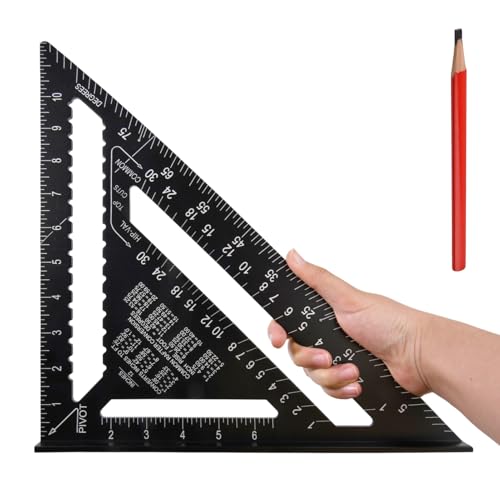
The 12-inch INJOYTEC rafter square gives you a larger working surface for framing, roofing, cabinetry, and stair layout. Aluminum alloy keeps the body light enough for daily handling, while the triangular form provides a clear reference for right angles and common roof pitches.
Its lip edge helps the tool follow a board edge for parallel or diagonal marks, which matters when working with long pieces of wood. For a garage renovation or a weekend trim project, this is a more substantial layout tool than the compact 7-inch option.
Notable Gains
- 12-inch span handles larger layout references than a compact triangle.
- Aluminum alloy supports a light tool that resists rust in changing work areas.
- Integrated ruler, square, protractor, and marking functions reduce tool switching.
- Lip-edge placement helps keep marks consistent along a board edge.
Trade Offs To Consider
- Its larger body needs more table or bench space than the 7-inch square.
- Aluminum can still be dented by hard knocks, so avoid dropping it on a concrete floor.
Right Fit For
This triangle suits carpenters, renovators, and serious hobbyists handling framing, roofing, and cabinetry.
Look Elsewhere When
The 7-inch aluminum square is the better fit for a small tool bag or lightweight mobile setup.
The MMD7NP takes moisture readings without pinholes, making it useful for finished walls, flooring, and areas where you do not want to mark the surface. Pinless sensing means a quick scan across wood or building material, which is useful during early-stage home inspections and cabinet or trim installation.
It is not a speed square, so it serves a different purpose from the first two picks. You will use it to answer whether a material feels wet before you cover it, cut it, or install trim, rather than to establish a 90-degree layout.
The Good Stuff
- Non-invasive scanning preserves finished surfaces during routine checks.
- Digital readings give you a quick reference before starting a project.
- Pinless operation is convenient for large wall or floor areas.
Small Caveats
- Surface conditions can influence a reading, so compare several spots rather than one location.
- It does not replace a square, ruler, or protractor for layout work.
Who It Suits Best
This meter fits homeowners, property maintainers, and remodelers who need quick surface-level moisture checks.
Where A Sibling Pick Shines
The MMD950 is the better choice for users who want both pin and pinless measurement modes.
The PEC Tools protractor head is a component for a combination square rather than a complete standalone triangle. It attaches to a compatible 12-inch or larger blade, letting you set, check, and transfer angles across a longer measuring surface.
That arrangement works well for cabinetry, drafting, and repetitive angle layouts, especially in a workshop where a fixed protractor head is more useful than a loose gauge. The cast-iron body gives it a different feel from the aluminum squares in this lineup.
Reasons It Performs
- Works with 12-inch or larger combination-square blades for broader coverage.
- Locking bolt supports repeatable positioning during layout work.
- Cast-iron construction suits a tool that will stay on a bench or in a shop.
Practical Considerations
- You need a compatible blade; this is not a complete square system.
- Cast iron adds weight compared with the aluminum picks.
Built With In Mind
This head fits cabinetmakers, woodworkers, and trade users who already use combination-square blades.
Reach For A Different Pick When
Choose the 12-inch INJOYTEC rafter square for a self-contained triangle with built-in layout scales.
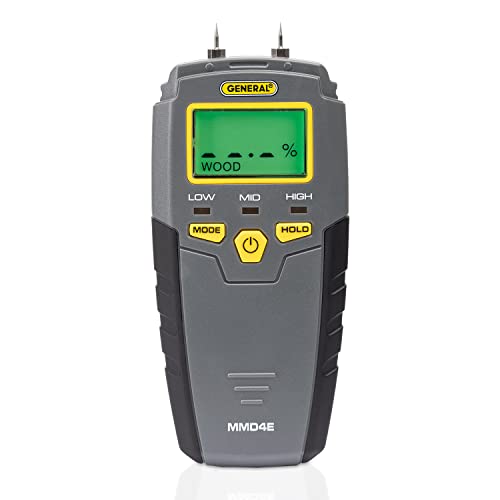
The MMD4E uses pin-style measurements for wood, concrete, drywall, and subflooring, giving you a more direct reading than a surface scan in some materials. Its compact, handheld shape is practical for checking a wall before paint, a subfloor before repair, or lumber before installation.
The pin approach means you will make small holes in the material, so this is less appealing for finished surfaces than the MMD7NP. Still, it is a straightforward option for contractors and homeowners who want a clear digital reading across several building materials.
Everyday Advantages
- Pin measurements suit wood, drywall, concrete, and subfloor checks.
- LCD display makes readings easy to view during a project.
- Ergonomic handheld size supports repeated checks around a room.
Details To Watch
- Pins can leave small marks, especially in visible drywall or finished wood.
- Clean the pins after use to reduce carryover between materials.
Who Will Love This
This meter suits homeowners, installers, and remodelers checking raw building materials before repair or finish work.
A Better Fit Elsewhere
The MMD7NP is a better fit when preserving finished surfaces matters more than using pin-based readings.
The MMD950 combines pin and pinless modes, so you can choose a non-invasive scan for a quick look or use the pin side when a more involved material check is useful. It suits contractors, woodworkers, and homeowners working across carpets, ceilings, subfloors, wood, drywall, or concrete.
Its display includes a large LCD and a colored indicator bar, which helps you interpret the result at a glance. Compared with the simpler MMD4E, the MMD950 offers more flexibility, though the added features can make it more than a casual homeowner needs.
Why It Works Well
- Dual measurement modes fit both quick scans and pin-based checks.
- Colored indicator bar makes relative readings easy to compare.
- Large LCD supports clear viewing during repairs and installations.
- Automatic shutoff supports varied work sessions.
Things That May Matter
- Multiple modes add complexity compared with a single-purpose meter.
- Pin readings can mark delicate surfaces, so inspect the test area first.
Best Suited To
This model fits contractors and serious home maintainers who work across several materials and need flexible measurement methods.
Consider Something Else When
The MMD4E is simpler and may suit a focused wood-and-wall workflow with fewer controls.
Choosing The Right Layout And Measuring Tool
Match the Tool to the Job
A speed square is defined as a triangular layout tool with reference markings for checking right angles and drawing straight lines. Choose a larger triangle for framing or roofing, while a smaller square is easier to carry for trim, shelves, and compact projects.
Decide Between Layout and Moisture Tools
A moisture meter answers a different question. You may need the MMD7NP for a non-invasive surface scan, the MMD4E for pin-based checks, or the MMD950 for both approaches.
Check Blade Compatibility First
The PEC Tools option depends on a 12-inch or larger combination-square blade. Confirm that you already own a compatible blade or need a separate system before choosing that head.
Think About Surface Protection
Pin-style meters can leave small marks. Pinless models are more suitable for finished walls and flooring where appearance matters.
Match the Tool to the Job
A speed square is defined as a triangular layout tool with reference markings for checking right angles and drawing straight lines. Choose a larger triangle for framing or roofing, while a smaller square is easier to carry for trim, shelves, and compact projects.
Key Details Before You Choose
Mistakes Worth Dodging
Don’t treat a moisture meter as a substitute for a square, since one checks material condition while the other establishes geometry. Confirm blade compatibility for a combination-square head, and consider surface damage before choosing a pin-style meter.
The Upgrade Payoff
A dual-mode meter can be worth the extra complexity when you work across wood, drywall, concrete, and finished surfaces. A heavier cast-iron head earns its place when a compatible blade system and repeatable angle transfers are already part of your workflow.
Frequently Asked Questions
Can a speed square replace a protractor?
A speed square handles common right angles and layout references, while a protractor is better for transferring arbitrary angles.
Is a 7-inch square useful for woodworking?
Yes. It works well for small boards, trim, shelves, and localized marking tasks.
Which moisture meter avoids surface marks?
The MMD7NP uses pinless measurement, making it a better fit for finished surfaces.
Do all combination-square heads fit every blade?
No. The PEC Tools head requires a compatible 12-inch or larger combination-square blade.
Which tool fits roofing work?
The 12-inch INJOYTEC rafter square provides the broader layout size suited to roofing and framing tasks.
