
Outdoor monitoring becomes easier when resolution, field of view, power, and connectivity match the property. I prioritize these details for driveways, side yards, gates, and entry points, where a single misplaced camera can leave an important gap. Wi-Fi, cellular service, solar exposure, and local storage all shape daily ownership, so the right camera depends on the site rather than resolution alone.
A Snapshot Of The Selections

aosu T2 Ultra 4K Wireless Outdoor Camera

aosu T2 Dual-Lens 3K PTZ Camera

AUKIN 4G LTE Solar Security Camera 2K

aosu T2 Pro 3K Solar Dual Camera
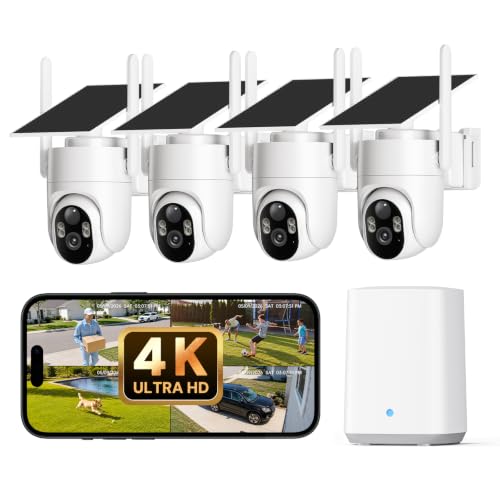
ELYSOO 4K Solar Security Camera 4-Cam Kit

AMLINK 5MP PoE Security Camera 2-Pack

REOLINK Duo 3 PoE Dual-Lens Camera
More On The Choices That Made The List
The aosu T2 Ultra puts its emphasis on usable detail after dark, which matters for a porch, side entrance, or driveway with little ambient light. Its 4K recording and large sensor can preserve faces, plates, and other small features more effectively than a basic wide-angle view, particularly across the later evening hours.
Compared with the aosu T2 Dual-Lens 3K PTZ Camera, this model favors sensor quality over a separate telephoto lens. For most properties, that trade feels sensible, although placement and Wi-Fi reach remain important.
Notable Gains
- 4K video captures useful detail across yards, walks, and entrances.
- An F1.0 aperture and 1/1.8-inch sensor support low-light recording.
- The 360-degree viewing angle reduces the need to follow motion manually.
- Triple detection is intended to distinguish relevant activity from common movement.
Small Caveats
- The camera depends on a stable Wi-Fi connection, so distant buildings may need a stronger router or network extension.
- Night detail still depends on correct placement, and overlapping foliage or reflected light can create motion alerts.
Key Specs
Who It Suits Best
This camera fits homes that need detailed 4K evidence from entrances or dim driveways without the complexity of a multi-camera system.
Another Choice May Suit
Property owners needing a dedicated zoom view should consider the aosu T2 Dual-Lens 3K PTZ Camera instead.
Two lenses give the aosu T2 Dual-Lens 3K PTZ Camera a practical advantage across long driveways and front yards. A 135-degree wide view handles general coverage, while the 8mm telephoto lens can bring activity roughly 50 feet closer for closer identification.
That makes it more specialized than the aosu T2 Ultra, which concentrates on 4K and low-light capture. The honest trade is that this camera’s 3K views may offer less overall detail than a 4K single-sensor setup, but the two perspectives improve situational coverage.
The Upside
- Wide and telephoto feeds appear together for quicker context.
- PTZ movement helps isolate activity without a second camera.
- The telephoto lens suits gates, driveways, and people approaching from the street.
- One mounting point covers several distinct sightlines.
Worth Noting
- Motorized positioning takes longer to settle than a fixed bullet camera, so motion can briefly move out of frame.
- Wi-Fi strength at the mounting point should be checked before drilling, particularly near a detached structure.
Made For
Long driveways, gated properties, and front yards benefit most from the paired wide and telephoto perspectives.
Consider Something Else When
Very dark entrances favor the aosu T2 Ultra 4K Wireless Outdoor Camera and its larger low-light sensor.
Wi-Fi isn’t a realistic option for every corner of a property, which is where the AUKIN 4G LTE Solar Security Camera makes its strongest case. It connects through a built-in cellular module, making it suitable for a remote gate, workshop, barn, or parking area beyond the router’s reach.
The dedicated cellular arrangement avoids a traditional router connection and ongoing monthly subscription, though cellular reception remains essential. I’d expect it to be most convincing for off-grid monitoring rather than close-range home coverage.
Strengths Worth Knowing
- Cellular connectivity removes the need to extend Wi-Fi.
- Solar power supports unattended outdoor installations.
- A 32GB TF card provides removable local storage.
- Two-way audio enables communication from another location.
Practical Considerations
- Weak cell reception can interrupt remote viewing, so signal should be checked at the exact location.
- Solar output varies with shade, season, and panel orientation, making maintenance important after storms.
Feature Snapshot
Built With In Mind
Farmers, property managers, and homeowners with remote gates benefit most from independent cellular operation.
A Better Fit Elsewhere
Installations with dependable Wi-Fi are better served by the ELYSOO 4K Solar Security Camera 4-Cam Kit.
Fixed context and movable detail shape the aosu T2 Pro’s design. A 170-degree wide lens keeps the yard, street, or driveway in view, while the 360-degree PTZ camera can follow activity and isolate closer details from the same installation point.
Compared with the aosu T2 Dual-Lens 3K PTZ Camera, this model shifts away from a telephoto perspective. That creates broader scene coverage but makes distant identification less specialized, while solar power reduces cable routing.
Useful Highlights
- Two cameras reduce blind spots around one mounting point.
- AI tracking directs attention toward moving subjects.
- Solar operation suits driveways without nearby outlets.
- The fixed view provides context while the PTZ camera follows activity.
Soft Spots
- No telephoto lens means the model may struggle with very distant identification.
- Solar panels need unobstructed daylight, and seasonal shade can reduce charging.
Core Details
The Right Fit
This camera suits single-point surveillance where a broad overview matters as much as following motion.
Where A Sibling Pick Shines
People approaching from much farther away may prefer the aosu T2 Dual-Lens 3K PTZ Camera and its telephoto lens.
Four cameras make the ELYSOO kit a different proposition from the single-camera models. It can spread solar-powered coverage across front and rear approaches, side yards, gates, and parking areas without requiring each unit to operate independently.
Local recording is its strongest ownership feature for me. The included 32GB memory card sits in the base, supports expansion to 256GB, and uses H.265 compression to extend retained footage while keeping cloud subscriptions out of the setup.
Points In Its Favor
- Four cameras provide broader property coverage.
- Local encrypted storage keeps recordings off a subscription service.
- H.265 compression supports up to 60 days of loop recording.
- Solar panels make remote placements more practical.
- The included memory card reduces the need for another purchase.
Trade-Offs To Consider
- A multi-camera system requires careful placement to prevent overlapping or missed footage.
- Each solar camera needs a clear view of direct sunlight.
Product Snapshot
Whose Shelf It Belongs On
Homeowners who want a coordinated multi-camera system and local storage benefit most from this package.
Reach For A Different Pick When
Single-point monitoring offers a simpler path through the aosu T2 Pro 3K Solar Dual Camera.
Power over Ethernet, usually shortened to PoE, carries electrical power and network data through one cable. That makes the AMLINK pair well suited to structured installations where a wired camera is preferable to a battery-dependent or Wi-Fi-only unit.
The two 5MP bullet cameras cover indoor or outdoor areas and record at 20fps, a practical rate for identifying routine movement. Compared with the four-camera ELYSOO package, this is a leaner setup with more deliberate network installation.
Features That Help
- PoE simplifies cable runs compared with separate power and network leads.
- Human, face, and vehicle detection reduce irrelevant event notifications.
- Dual illumination combines white LED and infrared night modes.
- Two-way audio allows two-sided communication.
- MicroSD support extends recording beyond network storage.
Points To Note
- Cable routing requires planning, and exposed Ethernet runs need proper weather protection.
- PoE installation depends on compatible network equipment and a suitable power supply.
- The fixed bullet form offers less positional flexibility than a PTZ camera.
Right Fit For
Installers and property managers with a wired network benefit from the AMLINK pair’s stable connection and event filtering.
Look Elsewhere When
Remote sites without Ethernet access favor the AUKIN 4G LTE Solar Security Camera 2K.
The REOLINK Duo 3 combines two 4K sensors to create a 16MP panoramic scene, giving a long driveway or frontage line substantial visual coverage from one camera. Dual-image stitching joins the feeds into a broad 180-degree view, which makes it useful for reducing camera count.
Its six infrared LEDs reach about 100 feet, so nighttime coverage is more substantial than many single-lens alternatives. The wired PoE connection trades mobility for dependable power and data, and fixed installation makes careful cable planning worthwhile.
Practical Pluses
- Dual 4K sensors create detailed panoramic footage.
- The 180-degree field covers long gates, driveways, and building fronts.
- Infrared illumination supports visibility up to 100 feet.
- PoE simplifies a permanent wired installation.
Possible Compromises
- The panoramic image can distort objects near the outer edges.
- PoE requires cable planning, unlike solar models that can mount with greater flexibility.
Technical Highlights
Who Will Love This
Aspen or Reolink installations with a strong network benefit most from a single, detailed panoramic view.
Another Choice May Suit
Flexible, off-grid locations favor the AUKIN 4G LTE Solar Security Camera 2K over wired panoramic hardware.
What Matters Before Installation
Start with the property, not the resolution. Walk through the yard after dark, note trees, reflective windows, vehicle routes, and entry points, then mark the exact field of view from each possible mounting location. A 4K image cannot restore detail that falls outside the camera’s view.
Connection method follows the site. Wi-Fi cameras suit homes with strong exterior coverage, cellular models serve remote gates, and PoE installations favor structured networks. Solar cameras remove some cable constraints, although direct exposure and seasonal maintenance still affect daily reliability.
Optical design shapes practical identification. A wide lens records more context, a telephoto lens isolates distant activity, and a dual-sensor model combines both wide coverage and detail. PTZ cameras add repositioning, while fixed bullets require precise initial alignment.
Finally, storage and maintenance deserve early attention. Local memory cards avoid routine cloud charges, but capacity must match the number of cameras and desired retention period. I also check firmware support, lens cleanliness, solar-panel orientation, cable entry points, and seasonal vegetation before considering an installation finished.
Smart Choices And Common Traps
Where Shoppers Go Wrong
Resolution alone rarely solves a coverage problem. Too many cameras aimed identically can leave entry points uncovered, while cameras placed too low collect more passing vehicles than useful detail. I would map each view first, confirm the recording location, and verify that nighttime subjects remain inside the frame.
What Separates Premium From Basic
Higher-tier cameras commonly add larger sensors, dual lenses, intelligent detection, and stronger low-light optics. Those features help with distant identification or activity filtering, so the added cost is more useful on a dark driveway or busy street than beside a well-lit door. PoE and local storage can also justify an upgrade for permanent installations.
Frequently Asked Questions
Do outdoor security cameras work without Wi-Fi?
Yes. Cellular cameras use a mobile connection, while PoE models transmit power and data through Ethernet. Each option suits a different property, and remote sites need reliable service or cabling.
Is 4K resolution necessary outside?
It helps on large properties, narrow driveways, and busy entrances where distant identification matters. Smaller areas may still be covered effectively at lower resolutions, especially with close mounting and a suitable field of view.
Are solar security cameras maintenance-free?
No. Panels need unobstructed sunlight and periodic cleaning, while mounts and cable entries should be checked after severe weather. Shade and seasonal changes can reduce charging.
What storage option is easiest to manage?
Local storage keeps recordings in the camera system, while cloud storage adds remote access. Local memory is straightforward, although the card must have enough capacity for the desired retention period.
What matters most in a telephoto security camera?
Lens reach and scene-light levels determine how clearly a camera records distant activity. A telephoto lens can identify details better, but night image quality also depends on the sensor and illumination.
Final Verdict
I favor the aosu T2 Ultra for low-light detail, the aosu T2 Dual-Lens for mixed wide and distant views, and the REOLINK Duo 3 for a large wired panorama. Remote locations shift the reasoning toward the AUKIN cellular model, while multi-property coverage favors the ELYSOO kit. Match the power and connection method to the property first, then refine the view from eye level in daylight and darkness.
