
A camera trained on a living-room window can reveal more than the view outside the glass. I focus on dual lenses, pan-and-tilt movement, optical zoom, solar power, cellular service, and wired reliability to help people monitoring porches, driveways, yards, cabins, or worksites.
The right model also depends on the property. Wireless solar cameras suit remote locations, PoE cameras serve homes with Ethernet access, and a whole-home system makes sense for expansive coverage. None of these models is specifically designed for indoor use, so I treat “living room” as a monitoring location rather than a weather-protection claim.
A Closer Look At The Lineup

aosu T2 Dual-Lens 3K Telephoto 360° PTZ
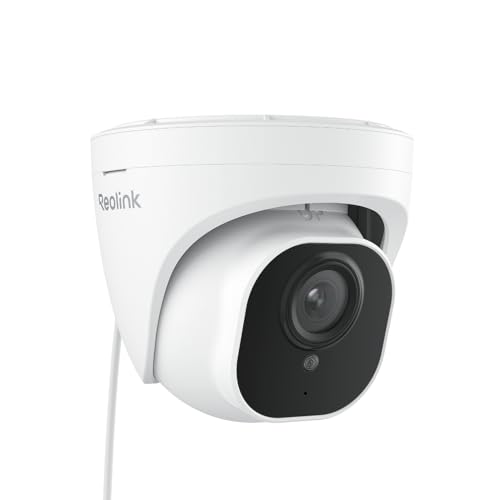
REOLINK RLC-820A 4K PoE Dome Camera
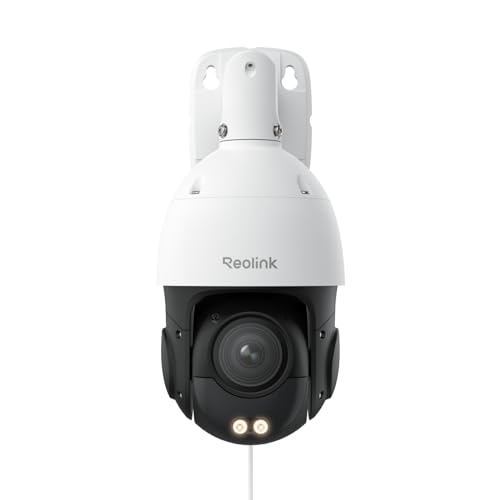
REOLINK RLC-823S2 4K 16X PTZ Camera

REOLINK RLK8-520D4-5MP 8CH 2TB System

REOLINK 4K Solar 4G LTE Camera

REOLINK Solar Argus PT 360° Camera
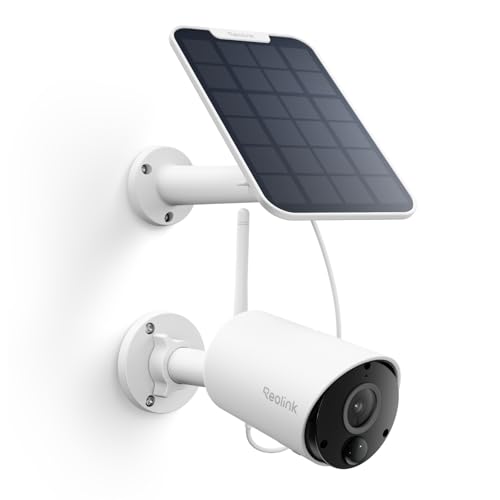
REOLINK Argus Eco 2K 5MP Solar Camera
Why These Options Stand Out
The aosu T2 brings a wide 135-degree lens and a separate 8mm telephoto lens to the same camera, which reduces the need for two devices overlooking a front yard. That combination looks useful from a living room because I can frame the entire approach while keeping distant activity visually closer.
Its 3K recording and 360-degree pan-and-tilt movement suit driveways, porches, and moderately large outdoor spaces. For most backyards, the dual-view arrangement offers more flexibility than the fixed perspective of the REOLINK RLC-820A, although continuous repositioning and two lenses add more complexity.
Advantages To Know
- The 135-degree lens captures broad property activity without constant movement.
- The telephoto lens brings details from as far as 50 feet into a more useful view.
- Pan-and-tilt control helps cover approaches that sit outside a fixed camera angle.
- 3K resolution provides a practical balance for daily outdoor monitoring.
Things To Consider
- Two lenses and motorized movement make this a more involved installation than a fixed dome camera.
- Owners still need to maintain a clear line of sight for both the wide and telephoto views.
Quick Facts
Who It Suits Best
This model suits households wanting wide and close views from one wireless outdoor camera without installing a multi-camera system.
Consider Something Else When
People needing uninterrupted electrical power and simple Ethernet installation may prefer the REOLINK RLC-820A.
Moving from the aosu T2 to the REOLINK RLC-820A trades remote lens movement for a steadier wired arrangement. Power and data travel through PoE, meaning Power over Ethernet, so one cable handles both needs at an outdoor installation with a suitable network connection.
The dome format works neatly under an entryway or soffit, while 4K detail benefits porches where identifying clothing, vehicles, or facial features matters. Compared with the solar models later in the lineup, this camera suits households that prefer dependable cabling and already have Ethernet infrastructure.
Positive Points
- 4K resolution holds more image detail than the 5MP cameras later in this list.
- On-device detection separates people and vehicles from other moving objects.
- PoE removes the need for a separate outdoor power connection at the camera.
- The dome housing blends neatly beneath many covered entry points.
Practical Considerations
- Running Ethernet through outdoor cable requires planning around landscaping and access points.
- Its fixed dome view cannot follow a vehicle, unlike the aosu T2 or RLC-823S2.
Feature Snapshot
Made For
Homeowners with Ethernet access need a discreet, fixed camera for a porch, entryway, or driveway.
A Better Fit Elsewhere
Remote cabins and mobile installations fit the REOLINK 4K Solar 4G LTE Camera better because cellular service replaces local Wi-Fi and Ethernet.
The RLC-823S2 goes further than the aosu T2 for distant activity because its 16x optical zoom magnifies without cropping into the same blocky digital image. Optical zoom changes the lens magnification, so distant vehicles, gates, and paths retain more detail than they would under software enlargement alone.
I see the strongest fit around long driveways, gates, and front approaches where one camera must cover a broad area and a distant target. A 3D zoom function centers the selected region, while color and infrared night modes provide different low-light viewing options.
What Makes Sense
- 16x optical zoom is meaningful for distant gates, vehicles, and entrances.
- 4K resolution complements magnification with finer source detail.
- PTZ movement broadens the scene beyond the initial camera direction.
- Color and infrared modes accommodate different nighttime conditions.
Potential Drawbacks
- A wired PoE installation adds network and mounting work.
- The complexity of PTZ controls may be unnecessary for a small patio or narrow path.
- Lens alignment may need occasional adjustment after wind or physical disturbance.
Technical Highlights
Best Suited To
This camera fits properties with long sightlines, distant gates, or driveways where optical magnification is more useful than full 360-degree rotation.
Another Choice May Suit
Smaller outdoor spaces are easier to cover with the fixed REOLINK RLC-820A, which needs less lens adjustment.
Where the RLC-823S2 concentrates capability in one moving camera, the RLK8-520D4-5MP spreads monitoring across an eight-channel system. That architecture suits a large house with several entries, a garage, a side passage, and a backyard rather than a single living-room window.
The included 2TB hard drive provides local storage, and the PoE cameras can identify people, animals, and vehicles. The cameras capture 5MP footage with infrared illumination reaching up to 100 feet, though 5MP provides less fine detail than the 4K Reolink models in this lineup.
Everyday Advantages
- Eight channels support broad property coverage from one recorder.
- The 2TB hard drive stores recordings locally within the system.
- Smart detection separates people, animals, and vehicles from environmental movement.
- Infrared visibility reaches up to 100 feet in darkness.
Less-Strong Areas
- 5MP footage contains less detail than 4K for distant facial or vehicle identification.
- Multi-camera cable routing requires planning and ongoing dust and connector maintenance.
- The system is excessive for a porch or one compact urban yard.
Right Fit For
Large homes and properties benefit most from this system because several fixed cameras can cover separate outdoor zones simultaneously.
Reach For A Different Pick When
Apartment residents and small-yard households may find the standalone REOLINK Argus Eco easier to deploy without an eight-channel recorder.
The REOLINK 4K Solar 4G LTE Camera solves a different problem from the wired models: there may be no home network, electrical outlet, or Ethernet route at the location. Solar power supplies the camera, while 4G LTE carries its connection over a cellular network, making it relevant to remote cabins, work trailers, and isolated gates.
The 4K sensor records in color and can operate in darkness, but cellular signal quality remains the critical variable. A living-room view of a distant property may be useful, yet this model is better suited to genuinely off-grid placement than a nearby patio.
Key Advantages
- Solar charging removes the need for a nearby power outlet.
- 4G LTE supports locations without local Wi-Fi or Ethernet.
- 4K recording preserves more detail than the Argus Eco’s 5MP footage.
- Color night imaging adds detail in darkness.
Details To Watch
- Reliable cellular reception remains necessary at the mounting site.
- The solar panel needs an unobstructed position with suitable sunlight.
- Remote cellular service can introduce ongoing service and connectivity considerations.
Core Details
Built With In Mind
This model is built for cabins, job sites, and remote entrances that have dependable cellular service but lack conventional wiring.
Where A Sibling Pick Shines
The REOLINK Solar Argus PT is a better fit near a home with strong 2.4 or 5 GHz Wi-Fi because broad local network coverage can fit properties without cellular service.
Solar power and broad pan-and-tilt movement make the Argus PT easier to reposition than a wired dome, yet easier to maintain than an eight-camera installation. It supports 2.4 and 5 GHz Wi-Fi, so its practical value depends on distance from the router and the walls between both devices.
The camera pans 355 degrees horizontally and tilts 140 degrees vertically, which covers most of a yard from one elevated mounting point. That movement favors flexible family spaces, although the RLC-823S2 offers much stronger magnification for a distant driveway.
Positive Takeaways
- Solar power reduces cable clutter and battery-charging interruptions.
- 355-degree pan covers nearly the full horizontal scene.
- 140-degree tilt helps capture both ground activity and higher approaches.
- Support for both common Wi-Fi bands gives installation more flexibility.
- Color night vision supports low-light outdoor monitoring.
Possible Compromises
- The camera depends on local Wi-Fi reach rather than cellular service.
- Solar performance changes with panel placement, weather exposure, and shade.
Feature Breakdown
Who Will Love This
Homeowners wanting flexible yard coverage and solar power will appreciate this model, particularly with dependable home Wi-Fi.
Not Your Match When
Long driveways benefit more from the optical magnification and 4K detail of the REOLINK RLC-823S2.
The Argus Eco keeps the core outdoor formula straightforward: a fixed 5MP bullet camera, solar charging, and wireless placement. Its 3W panel makes it practical where running a cable would be inconvenient, while the compact bullet form suits a garden edge, side path, or small backyard.
Resolution still trails the 4K models, but 5MP remains sharper than 1080p footage for many entrances. Compared with the movable Argus PT, this camera sacrifices pan and tilt for a simpler fixed view, which may be easier to maintain and less likely to drift out of position.
Practical Advantages
- A 3W solar panel supports continuous charging without a nearby outlet.
- 5MP footage provides a clear upgrade over 1080p imagery.
- The fixed bullet design requires fewer position adjustments than a PTZ model.
- Smart detection helps distinguish people, animals, and vehicles.
Small Caveats
- 5MP captures less distant detail than the 4K models in this list.
- Panel shade and seasonal sunlight can reduce charging consistency.
- A fixed view cannot follow movement beyond its original field of sight.
- Routine lens cleaning is important because outdoor surfaces collect dust and weather residue.
The Right Fit
This camera suits simple backyard and garden monitoring where solar power matters more than 4K resolution or motorized movement.
Swap It Out When
Properties needing richer detail or adjustable coverage fit the REOLINK RLC-823S2 better, especially around long gates and distant approaches.
Matching Cameras to Outdoor Coverage
Start with power and connectivity. PoE provides steady power and data through Ethernet, which suits a home with existing cabling. Solar cameras reduce visible wiring, but panel placement matters. Cellular models extend coverage to cabins and gates, although reception at the camera is essential.
Next, match optics to the scene. A 135-degree lens handles broad areas, while fixed 4K domes provide detailed porch views. Optical zoom becomes valuable across long driveways because it enlarges distant subjects with more detail than digital cropping. PTZ movement helps flexible tracking, though it takes more maintenance than a fixed camera.
Storage and detection influence daily convenience. Local storage is useful for properties with several cameras, while smart detection can reduce irrelevant alerts from moving branches, insects, or other objects. Confirm that the intended viewing app, network, and recording arrangement suit the household before installation.
Common Mistakes Worth Avoiding
Where Shoppers Go Wrong
Many outdoor cameras are selected by resolution alone, yet a distant scene needs suitable magnification and a stable connection. I would also avoid placing a solar panel under trees, crowding a fixed lens with obstructions, or installing a PTZ model where continuous movement is unnecessary.
What Separates Premium From Basic
Higher-tier models tend to add optical zoom, 4K capture, more capable movement, cellular connectivity, or multi-camera storage. Those features matter most for long driveways, remote sites, and large properties. A compact yard can get more practical value from a simpler 5MP solar model.
Frequently Asked Questions
Can an outdoor security camera be viewed from a living room?
Yes, a phone, tablet, desktop, or television-connected display can show a compatible camera’s live feed and recordings. Network quality and viewing-angle placement affect how clearly the outdoor scene appears.
Is a solar security camera suitable for daily monitoring?
Daily monitoring is practical when the panel receives adequate sunlight and the camera has a reliable connection. Shaded or irregularly exposed locations may require more attentive placement and battery checks.
Is PoE better than wireless security cameras?
PoE offers a stable wired connection without a separate power cable at each camera. Wireless or solar models are easier to place remotely, but Wi-Fi range, cellular reception, and solar exposure become more important.
What type of camera works best for a long driveway?
A 4K model with optical zoom and pan-and-tilt control offers the most useful combination of detail and movement. A fixed camera can still cover a driveway, though it cannot follow a subject across the scene.
Do outdoor security cameras need Ethernet?
No, but Ethernet supports PoE power, data, and a stable network path. Battery, solar, and cellular models can operate without cabling, making them better suited to locations without network infrastructure.
