
A backyard camera has to make useful details visible across uneven lighting, from the gate to the back fence. I focus on resolution, viewing angle, tracking, night coverage, power options, and the inconvenience of installation in this 2026 roundup. Seven options cover different needs, including high-resolution single cameras, dual-lens systems, solar power, wired connections, and a four-camera package with its own monitor.
The Essentials At A Glance

aosu T2 Ultra 4K Wireless Outdoor Camera

aosu T2 Dual-Lens 3K 360° PTZ Camera

aosu T2 Pro 3K Solar Dual Cam
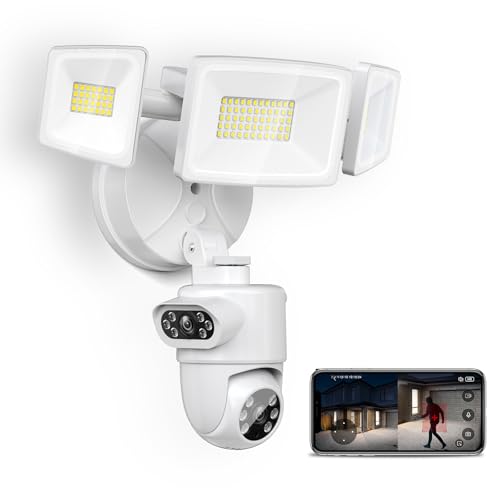
Onforu 360° Dual-Lens 4MP Camera

REOLINK Duo 3 PoE 180° Camera
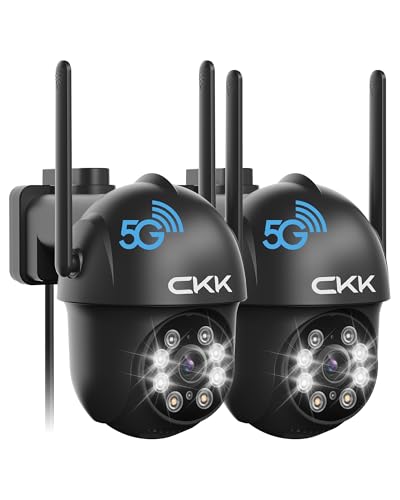
CKK 2K Two-Camera 3MP PTZ Set

Camcamp Wireless System, 4 PTZ Cameras
What Each Pick Brings To The Table
The aosu T2 Ultra places 4K detail and 360-degree rotation in one wireless unit, making it a strong fit for open yards where a second camera would be unnecessary. Its F1.0 aperture and 1/1.8-inch starlight sensor also suit dim gardens and back gates, although nighttime clarity still depends on placement and ambient light.
Triple detection combines motion, human, and vehicle recognition, so I can narrow alerts around a busy home. Compared with the aosu T2 dual-lens model, this camera favors resolution over a separate telephoto perspective.
Reasons It Performs
- 4K recording captures more texture across a fence, path, or garden.
- The wide aperture gathers light in dim outdoor scenes.
- 360-degree rotation reduces the need to aim every view manually.
- Round-the-clock support can assist with setup and connectivity questions.
Points To Note
- Wireless placement requires a dependable signal at the mounting point.
- Regular lens cleaning may be necessary near trees, dust, or splash zones.
Key Specs
Who It Suits Best
I favor this model for homeowners who need one high-resolution camera with motorized coverage rather than several basic units.
Another Choice May Suit
The aosu T2 Dual-Lens 3K 360° PTZ Camera better serves properties needing simultaneous wide and magnified views.
The second aosu model changes the priority from sheer 4K resolution to flexible observation. A 135-degree wide lens surveys the property, while an 8mm telephoto lens draws distant activity closer from as far as 50 feet, useful for a long driveway or street-facing gate.
Both perspectives appear together, which reduces the need to switch feeds. The tradeoff is a lower 3K ceiling than the aosu T2 Ultra, but this dual-lens design makes more sense where magnification matters as much as fine texture.
What It Does Well
- Dual lenses combine yard-wide context with distant detail.
- The telephoto perspective helps identify activity near a gate or driveway entrance.
- 360-degree pan-and-tilt control follows changing sightlines.
- Side-by-side views make tracking easier to interpret.
Trade Offs
- 3K output trails the 4K aosu T2 Ultra for fine detail.
- Two lenses add more complexity than a fixed single-lens design.
- Long-distance clarity remains sensitive to weather and lens alignment.
Feature Snapshot
Made For
I recommend this camera for long properties where a single position must handle both broad surveillance and a distant entrance.
Where A Sibling Pick Shines
The REOLINK Duo 3 PoE 180° Camera fits a household able to install wired networking and seeking higher-resolution panoramic imagery.
Solar power gives the aosu T2 Pro a different ownership rhythm from the other aosu cameras. A fixed 170-degree lens maintains a broad overview, while the movable camera follows important movement, helping one mounting point cover more of a driveway or back entrance.
I see the strongest fit in locations with dependable sun exposure and no nearby outlet. In shaded yards, the solar panel may receive too little energy, making this less predictable than a wired or mains-powered option.
The Practical Payoff
- Solar operation reduces recurring battery-charging routines.
- The fixed overview preserves context while the PTZ camera follows movement.
- A 170-degree lens covers broad areas from a single mount.
- 3K resolution supports practical detail across typical yard distances.
Small Caveats
- Panel placement needs direct sunlight and careful orientation.
- Dense tree cover can reduce solar charging performance.
- Installation planning matters more than with a standard wired camera.
Core Details
Built With In Mind
I favor this model for remote yard corners and sunny properties where running a power cable would be inconvenient.
A Better Fit Elsewhere
The Camcamp Wireless System, 4 PTZ Cameras better serves a household needing several pre-paired cameras and a dedicated viewing monitor.
The Onforu combines a rotating tracking lens with a fixed perspective and built-in floodlighting, making it especially useful at a dim gate or side entrance. The moving view covers 340 degrees horizontally and 120 degrees vertically while the fixed lens retains a separate area on screen.
Compared with the aosu T2 Pro, this design offers illumination but lacks the same solar emphasis. A bright floodlight can improve a dark corner, while excessive brightness may also create glare around reflective windows or pale walls.
The Case For It
- Auto tracking follows movement across the rotating view.
- The fixed lens preserves a continuous secondary perspective.
- Floodlighting improves visibility around poorly lit entrances.
- 4MP color night vision provides a practical balance of detail and clarity.
Worth Noting
- Floodlight placement needs adjustment to reduce glare.
- Weather-exposed installations may accumulate dirt on the light and lens.
- 4MP resolution sits below the 4K alternatives.
Who Will Love This
I recommend the Onforu for entrances that combine motion tracking, broad rotation, and dedicated exterior lighting.
Look Elsewhere When
The aosu T2 Ultra 4K Wireless Outdoor Camera better serves a dark yard needing finer recorded detail without floodlight glare.
Power over Ethernet, or PoE, carries both power and network data through one cable, giving the REOLINK Duo 3 a steadier infrastructure path than Wi-Fi-only models. Two 4K sensors combine into 16MP panoramic output, while their stitched image covers approximately 180 degrees.
This camera rewards planning. I see the strongest fit around a wide patio, driveway, or perimeter wall where wall mounting and a wired route are practical, rather than at a remote garden corner.
Where It Excels
- Two 4K sensors create detailed panoramic imagery.
- The 180-degree view covers a broad section of a backyard.
- PoE simplifies power and data through one wired connection.
- Infrared illumination supports nighttime visibility up to 100 feet.
Practical Considerations
- Installation requires a suitable PoE network connection.
- Wall mounting and cable routing can add complexity.
- The wide lens leaves less flexibility for isolated close-up areas.
Technical Highlights
The Right Fit
I favor the Duo 3 for experienced homeowners who can plan wiring and value panoramic resolution over wireless flexibility.
Swap It Out When
The CKK 2K Two-Camera 3MP PTZ Set better suits a household wanting two movable wireless cameras at a more modest resolution.
The CKK package changes the calculation by including two PTZ cameras, making broader property coverage possible without mounting two unrelated systems. Motion tracking follows detected activity, and mobile alerts provide a practical way to check events from the CKK app.
For a medium backyard with a driveway and side garden, that two-camera arrangement can be more useful than one higher-resolution unit. Resolution is the compromise, so distant faces and license plates may occupy fewer pixels than footage from the REOLINK Duo 3.
Where It Delivers
- Two cameras cover separate areas from one package.
- PTZ movement reduces reliance on a fixed viewing direction.
- Automatic tracking keeps a moving subject within the selected view.
- Full-color night viewing supports low-light recognition.
Points To Keep In Mind
- The listing combines 2K and 3K terminology, so output deserves careful comparison.
- Two wireless units both need stable signal and suitable mounting points.
- Two lenses require occasional cleaning in dusty exterior locations.
- Lower resolution limits distant identification.
Best Suited To
I recommend this set for first-time outdoor camera owners who value two viewpoints and flexible movement over 4K detail.
Not Your Match When
The aosu T2 Ultra 4K Wireless Outdoor Camera better serves a single-camera setup centered on maximum image detail.
The Camcamp package is built around a complete viewing setup: four pre-paired PTZ outdoor cameras and a 10-inch LCD monitor. Split-screen viewing works without a separate laptop, while the CloudEye365 app adds remote access for household members away from home.
Each camera pairs a 4mm wide lens with an 8mm telephoto lens and offers 10x hybrid zoom. That combination gives a home office, garage, side yard, or family property several points of coverage, though four mounts increase the signal and maintenance workload.
Noteworthy Benefits
- Four cameras cover a large home or several exterior zones.
- The included monitor provides immediate split-screen viewing.
- Dual lenses support both broad context and closer inspection.
- Pre-pairing reduces the initial setup work.
Details To Watch
- Four cameras require adequate Wi-Fi coverage throughout the property.
- Each weather-exposed lens benefits from occasional cleaning.
- Monitor placement and cable management demand available indoor space.
Included Details
Whose Shelf It Belongs On
I favor this package for families and larger properties that value an integrated monitor and several viewing points.
Consider Something Else When
The aosu T2 Pro 3K Solar Dual Cam better serves a single remote location where sunlight can sustain continuous operation.
Choosing The Right Backyard Coverage
Coverage should start with the spaces that matter, not the resolution printed on a box. A fence, driveway, patio, and side gate create different viewing problems, so camera placement often matters more than another small jump in image quality. I start by marking blind corners, likely approach paths, and available power or network connections.
Resolution And Low-Light Detail
A 4K camera records more pixels than a 2K or 3K model, which helps separate small shapes across a wide yard. Night performance also depends on aperture, sensor size, infrared or color-night capability, and nearby illumination. Floodlights can reveal a dark gate, although excessive brightness may wash out close subjects or create reflections.
Lens Choice And Movement
PTZ means pan, tilt, and zoom, allowing a camera to move between preset areas or follow tracked motion. Dual-lens designs can show a broad perspective and a telephoto view at once, making them useful for long driveways. A fixed wide lens is simpler, yet it can leave narrow blind spots near the edges of its view.
Power And Connectivity
Solar power suits sunny remote corners, while PoE provides a stable wired route for fixed installations. Wi-Fi keeps cable placement simple, but walls, trees, and long paths can weaken the signal. For a multi-camera home, checking wireless coverage at every mounting point prevents frustrating setup interruptions.
Storage And Everyday Use
Local viewing, phone apps, and optional cloud services shape the daily experience. A monitor can help households monitor several feeds without opening an app, though storage capacity and subscription choices still require attention. Motion zones, alert sensitivity, and tracking behavior should match a neighborhood where trees, pets, or passing traffic could otherwise create constant notifications.
Practical Decisions Before Installation
Common Shopping Slip Ups
Choosing by resolution alone can hide a narrow field of view or weak night capability. I would also check the exact power method, networking requirement, mounting hardware, and app support before ordering. A camera that promises remote access is less convenient when the wall location has weak Wi-Fi.
What Separates Premium From Basic
Higher-end cameras commonly add larger sensors, telephoto lenses, flexible tracking, panoramic stitching, or wired stability. Those improvements help when activity occurs far from the camera or across a large property. A basic PTZ model remains sensible for closer coverage, especially across several modest viewing areas.
Frequently Asked Questions
Is 4K necessary for a backyard camera?
It helps when people, pets, or vehicles appear far from the camera. For close coverage around a gate or patio, lens choice and lighting can matter more.
Are dual-lens cameras better than single-lens models?
They suit properties needing both wide context and distant detail. A single fisheye-style view may be simpler for small, open yards.
Does every outdoor camera need solar power?
No. Solar is convenient in sunny locations without an outlet, while wired power is predictable for fixed installations.
Is a wired PoE camera difficult to install?
It requires cable routing and compatible network equipment, but it can provide a stable power and data connection. That setup favors permanent installations.
Wrap Up
I favor the aosu T2 Ultra for high-resolution single-camera coverage, the aosu T2 Dual-Lens for combined wide and telephoto views, and the REOLINK Duo 3 for a planned wired installation. Larger or less accessible properties may receive more balanced coverage from the CKK or Camcamp multi-camera packages, while the aosu T2 Pro suits sunny solar placements. The soundest choice is the one that matches coverage, light, connectivity, and maintenance to the actual yard.
