
A large backyard planter should do more than hold soil; it must handle mature roots, seasonal rain, and frequent movement without turning the patio into a landscaping project. I compare rolling metal containers, resin planters, elevated beds, window boxes, and tall plastic pots for patios, decks, gardens, and homes with limited floor space. The right choice depends on root depth, drainage, material, storage, and how often the container needs to move.
The Essentials At A Glance

Vego Garden Rolling Metal Citrus Tree Planter 20 Gallon
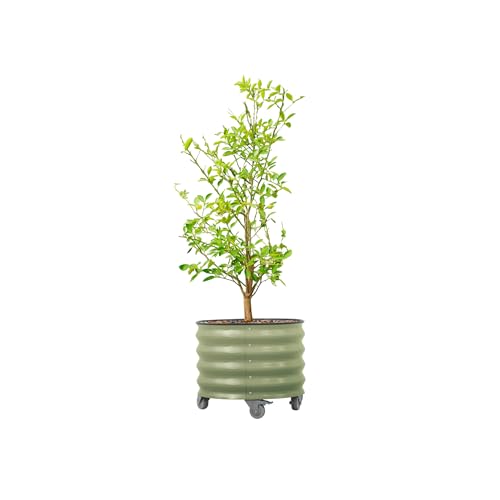
Rolling Metal Citrus Tree Planter Pot 20 Gallon Olive Green

Rolling Citrus Tree Planter Gen 3 30 Gallon

Step2 Tremont Tall Square Tapered Planter

Vego garden Elevated Raised Garden Bed 2′ x 4′

Oliz Window Box Planter Set of 8 Grey

Large Plastic Planters with Drainage Set of 3
Taking A Closer Look At The Options
This pair handles the scale problem that trips up many container gardens. Each rounded container measures about 21 by 17.5 inches and holds 20 gallons, giving citrus, olive trees, tomatoes, and mixed flowers enough room for substantial root growth.
The locking casters make seasonal repositioning practical, which matters on a patio where a young tree eventually crowds an entryway. Compared with the lighter window boxes and plastic pots later in the list, this Vego garden set carries a much more deliberate outdoor profile.
Good Reasons To Consider
- Two containers provide a useful matched pair for trees, vegetables, or flowers.
- Locking casters keep each heavy planter stable while allowing seasonal changes in placement.
- Drainage holes support routine outdoor watering without trapping excess moisture.
- The steel construction suits patios and backyards that need durable, movable containers.
- The olive finish blends more naturally into garden settings than bright plastic.
Worth Noting
- The two-pack occupies more patio space than a single-container arrangement.
- Filled soil is heavy, so the casters help but do not make repositioning effortless.
- Rigid steel needs careful storage to prevent surface marks when empty.
Quick Facts
Who It Suits Best
This set fits home cooks and gardeners managing two substantial container trees or mixed backyard crops.
A Better Fit Elsewhere
The Rolling Citrus Tree Planter Gen 3 suits a single tree owner who prioritizes self-watering and larger 30-gallon capacity.
A single olive-green planter offers a more manageable starting point than a two-container setup. The rounded steel body is listed at about 21 by 17.5 inches with 20 gallons of capacity, enough for a compact fruit tree, olive tree, or a productive group of vegetables.
Rolling casters and locking hardware matter during seasonal rearrangement, especially around patios where winter protection changes available space. For people unable to drag a full container, that convenience can outweigh the benefit of a matched pair.
What Pays Off
- The single-container format uses patio space efficiently.
- Wheels reduce the strain involved in moving trees as light conditions shift.
- Twenty-gallon capacity is practical for established container crops.
- The olive finish suits both contemporary and traditional outdoor settings.
Small Caveats
- There is no integrated water level indicator, unlike the 30-gallon Gen 3 option.
- One container limits matched plantings or crop rotation.
- Wet soil can leave marks on the rim or body and requires routine cleaning.
Technical Sheet
Built With In Mind
This planter suits a patio gardener with one compact tree or a focused vegetable crop.
Where A Sibling Pick Shines
The Vego garden two-container option fits home cooks who need matching rolling planters for separate crops.
The 30-gallon format gives long-lived trees a more settled root environment than the 20-gallon metal picks. It is aimed at citrus, figs, dwarf fruit trees, olives, and patio vegetables that need more soil volume as their root systems expand.
Its integrated reservoir, wick, fill tube, and water gauge create a controlled watering loop. That system reduces frequent surface watering, while stainless steel hardware and VZ 2.0 coated steel address the durability concerns that come with year-round outdoor placement.
Noteworthy Benefits
- Thirty-gallon capacity supports deeper root development.
- The self-watering reservoir delivers moisture near the root zone.
- A water gauge makes moisture conditions easier to monitor.
- Locking casters simplify seasonal relocation.
- Coated steel and stainless hardware suit outdoor exposure.
Practical Considerations
- The fill tube and reservoir require occasional cleaning to prevent sediment buildup.
- A full 30-gallon container remains heavy despite the rolling base.
- Regular monitoring is still necessary in changing weather conditions.
Feature Snapshot
Right Fit For
This planter suits growers of container citrus who value root volume, water control, and seasonal mobility.
Swap It Out When
The Step2 Tremont fits spaces that need self-watering convenience with a cleaner architectural profile.
The Step2 Tremont changes the visual language of the round and box-shaped planters before it. Its 28-inch resin body, tapered square form, and onyx black finish suit entryways, back doors, and decks where the container itself is part of the decor.
Self-watering construction makes that appearance more useful than a purely decorative pot. For a large shrub, ornamental grass, or compact tree, the tall proportions create a strong vertical accent, though moving a full container calls for care.
A Strong Showing
- The tapered silhouette gives patios a cleaner architectural accent.
- Resin offers a lighter alternative to the steel planters.
- The 28-inch height is suitable for prominent entry placements.
- Self-watering design reduces routine watering attention.
Honest Caveats
- Fewer construction details are provided than for the rolling metal options.
- Resin planters can shift or scratch depending on the surface.
- The large format needs enough floor space to preserve its tapered outline.
Who Will Love This
This planter suits design-conscious gardeners decorating a front porch, patio door, or modern deck.
Another Choice May Suit
The Rolling Citrus Tree Planter Gen 3 suits a grower who needs casters, higher capacity, and direct water-level monitoring.
Raised beds serve a different purpose from single tree containers. This Vego garden model measures 2 by 4 feet, elevates the growing area on legs, and provides a 700-pound load capacity, making it a concentrated workstation for herbs and vegetables.
A lower storage rack turns otherwise unused space into practical organization. Compared with the 17-inch Oliz boxes, this bed handles larger, mixed crops and keeps the growing surface at a comfortable working height, while the VZ 2.0 coated steel keeps material selection consistent with the rolling planters.
Bright Spots
- The 2-by-4-foot bed concentrates several crops in one footprint.
- Legs create a workable standing height for routine gardening.
- The storage rack holds tools and supplies beneath the bed.
- Seven hundred pounds of stated capacity suits dense soil and mixed vegetables.
- VZ 2.0 coated steel provides a garden-oriented metal body.
Potential Drawbacks
- The rectangular footprint requires clear patio or yard space.
- The frame may need careful leveling before filling.
- Soil and water add substantial weight, making permanent placement practical.
Core Details
Made For
This raised bed suits patio growers and home cooks who want a compact workstation for herbs and vegetables.
Look Elsewhere When
The Vego Garden 20-gallon rolling planter suits gardeners focused on individual trees rather than a broad raised bed.
Eight narrow boxes create a distributed growing system rather than one dominant planter. Each measures roughly 17 inches long by 7 inches wide and 6 inches high, making the set useful across windowsills, balconies, porch rails, and patio shelves.
Drainage holes and trays support container gardening with herbs, flowers, ferns, succulents, and compact vegetables. I see the real value in organization: eight separate boxes can divide plants by type and make watering routines easier to manage.
Features That Help
- Eight boxes allow herbs, flowers, and vegetables to remain separated.
- The long rectangle shape fits windowsills and narrow balcony rails.
- Drainage holes and trays help manage routine watering.
- The grey finish stays understated across indoor and outdoor spaces.
Details To Watch
- The shallow profile is less suitable for deep-rooted trees.
- Mounted boxes need consistent structural support when filled.
- Eight containers require more attention than one large planter.
- Tall or spreading plants can quickly overwhelm the narrow boxes.
The Right Fit
This set suits apartment and balcony gardeners who want several small, organized planting areas.
Not The Right Match
The Step2 Tremont suits a gardener who prefers one substantial architectural planter to multiple small boxes.
Three staggered heights create a layered display without requiring three unrelated containers. The set measures 24, 21, and 11 inches, so it works well beside a house, along a deck, or around an entry where graduated proportions make the arrangement feel intentional.
Plastic keeps the containers lighter than filled steel or resin planters, while the drainage holes and matching saucers help contain runoff. The tradeoff is that tall plastic can flex or tip more readily, so broad plants need stable placement and attentive watering.
Key Advantages
- Three heights create a coordinated display in one purchase.
- The 24-inch pot gives tall plants meaningful vertical space.
- Drainage holes reduce standing moisture around roots.
- Saucers help collect water that leaves the drainage opening.
- Lightweight plastic simplifies repositioning.
Less-Strong Areas
- The round forms are less suitable for compact square patio layouts.
- Plastic can scratch or discolor with prolonged outdoor exposure.
- Large wet plants may need extra support in wind.
Product Snapshot
Whose Shelf It Belongs On
This set suits homeowners arranging large floor planters for patios, decks, and entry displays.
Consider Something Else When
The Vego garden 2-by-4-foot raised bed suits growers prioritizing edible planting and organized storage over decorative pots.
Choosing Containers by Root Space and Layout
Root space comes before decoration. A 20-gallon rolling planter suits compact trees and substantial vegetables, while the 30-gallon Gen 3 gives expanding roots additional soil. The 2-by-4-foot raised bed serves a different purpose by concentrating many crops into one elevated workstation.
Mobility and stability must be considered together. Locking casters help move a heavy tree container across a patio, but the filled load still demands smooth surfaces and deliberate steering. Large resin or plastic pots without wheels fit fixed displays better.
Drainage and watering methods shape daily ownership. Drainage holes prevent trapped water, while the Gen 3 reservoir, wick, tube, and gauge add a controlled watering system. Window-box trays manage runoff in a different way, making them useful where a saucer or shelf can catch excess water.
Material influences weight, maintenance, and placement. Steel handles demanding outdoor conditions but brings higher weight; resin suits decorative architectural spaces; plastic remains easier to move. I account for the full container, not the empty listing, because wet soil changes handling more than the product photo suggests.
Practical Details That Change the Fit
Mistakes Worth Avoiding
Choosing by height alone can leave a tree cramped or a shallow box overfilled. I check mature dimensions, drainage, full weight, and available light before selecting a container. Ignoring the surface beneath a wheeled pot can also make seasonal movement harder than expected.
What The Higher Tier Buys
Higher-tier models often add metal construction, larger root capacity, locking wheels, or integrated water control. Those upgrades help in frequent-use gardens and changing weather, while a simple plastic set can handle a fixed decorative display. The extra investment matters most when the container supports a mature plant or becomes part of daily gardening.
