
Outdoor lighting can turn a dark driveway, unfinished patio, or neglected entryway into a safer, more usable space. The right fixture also helps weekend projects look finished, whether I need a compact bulb, adjustable wall light, or wired camera with integrated illumination. I’ve separated these options by brightness, color temperature, installation needs, and coverage so DIYers can choose without overspending on unnecessary features.
The Picks In Brief

PAR38 LED Bulbs, 5000K Daylight 4-Pack
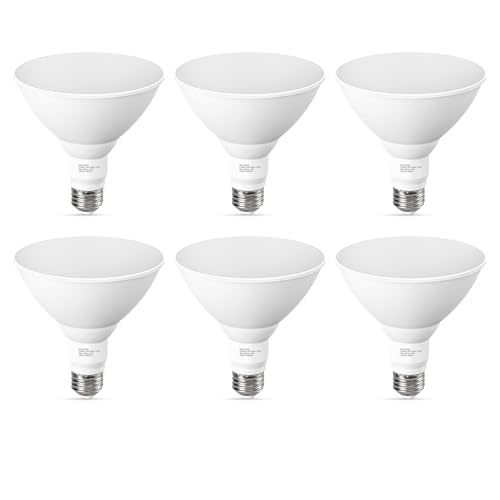
GvvooHome PAR38 LED Flood Bulbs, 3000K 6-Pack

SZPOWER 150W IP65 Three-Head Outdoor Floodlight

GvvooHome PAR38 5000K LED Bulbs, 3-Pack

UME 2500-Lumen Dual-Head Floodlight, 2-Pack

LUTEC 1300-Lumen Single-Head Floodlight, 2-Pack

REOLINK Elite 4K Floodlight Camera
A Deeper Look At The Lineup
Existing fixtures make this the least disruptive upgrade in the lineup. Installing four PAR38 bulbs can refresh a porch, courtyard, or driveway without adding new wiring, and the 5000K daylight color favors visibility over atmosphere.
The color is crisp enough for a work area but may feel less welcoming beneath a covered patio. Compared with the GvvooHome 3000K set, these bulbs suit DIYers who value clear visual detail more than a soft residential glow.
What Makes Sense
- Retains familiar PAR38 fixtures without a fixture replacement
- 5000K output supports clear visibility around entrances and driveways
- Four bulbs provide a useful set for matching outdoor sockets
- Smooth dimming gives evening scenes more than one brightness level
Worth Noting
- Daylight color can appear stark under a porch roof
- Owners still need compatible dimmers and a properly rated outdoor fixture
Quick Facts
Made For
DIYers replacing several PAR38 bulbs in already installed, compatible exterior fixtures benefit most.
Another Choice May Suit
GvvooHome PAR38 LED Flood Bulbs, 3000K 6-Pack suit people who prefer warmer light and a larger replacement set.
Warm light changes the feel of a front porch or patio more than a higher lumen count alone. These bulbs use 3000K color temperature, a measure of the light’s warm-to-cool appearance, to create a softer look around seating areas and entryways.
The six-pack reduces repeated shopping trips, while 13W power and 1,050 lumens provide a practical balance. For most residential projects, that output is easier to live with than the 15,000-lumen approach of the SZPOWER fixture reviewed later.
A Favorable Mix
- 3000K color complements porches and patios
- Dimmability allows softer nighttime settings
- Six E26-base bulbs cover several sockets
- 13W operation lowers household energy demand
Small Caveats
- Warm color is less suited to detailed workshop lighting
- Water resistance still depends on the installed fixture and gasket
- Dimmers must support the bulb’s LED load
Key Product Details
Right Fit For
Homeowners creating softer patio and porch lighting with existing E26 fixtures are the strongest match.
Where Another Pick Shines
PAR38 LED Bulbs, 5000K Daylight 4-Pack serve DIYers who need clearer, cooler task illumination.
Large properties need more than the focused pool of light produced by a single wall head. This fixture spreads output through three adjustable lamps, making it a practical option for wide driveways, backyards, and garage approaches.
Its claimed 15,000-lumen output and 6500K color temperature prioritize visibility. For many suburban homes, that brightness may be excessive around a door, but it can suit darker rural driveways where the fixture sits well away from living spaces.
What It Does Well
- Three heads can be aimed across a broad area
- High output supports large exterior coverage
- 6500K color makes dark spaces easy to inspect
- IP65 rating indicates protection against dust and water jets
Practical Considerations
- Bright output may create glare near neighboring properties
- Wall mounting and electrical connection require basic care
- Owners should confirm local electrical requirements before installation
Who Should Grab It
DIYers lighting broad driveways or dark exterior work areas can use the three-head adjustment effectively.
Consider Something Else When
UME 2500-Lumen Dual-Head Floodlight, 2-Pack offers a more restrained alternative for compact residential walls.
This three-bulb set fills the middle ground between a single maintenance replacement and the larger GvvooHome six-pack. The 13W output is presented as equivalent to a 100W incandescent bulb, giving existing PAR38 sockets a useful upgrade in efficiency.
At 1,050 lumens and 5000K, it handles patios, garages, and yards where color clarity matters. Depending on the fixture design, dimming compatibility remains the detail to verify before replacing working bulbs.
The Value In It
- Three matching bulbs simplify multi-fixture replacement
- 5000K light supports detailed outdoor visibility
- 13W consumption reduces operating demands
- A stated lifespan above 15,000 hours lowers replacement frequency
Minor Gripes
- Three bulbs may not cover a larger multi-socket project
- Fixture weather seals contribute to long-term performance
- Existing dimmer compatibility is worth checking
Feature Snapshot
Built With In Mind
DIYers maintaining several compatible exterior sockets benefit from a matched three-bulb replacement set.
A Better Fit Elsewhere
GvvooHome PAR38 LED Flood Bulbs, 3000K 6-Pack suit homeowners who prioritize warmer color and a larger inventory.
The two-head layout gives this fixture more coverage than a single-head wall light without reaching the scale of the SZPOWER three-head model. Each head adjusts, so light can be directed toward a door, path, and adjoining outdoor area.
Aluminum and polycarbonate form the housing, while 5000K light keeps the output crisp. In my view, this is the most balanced wall-fixture option for a garage or back entrance where brightness and footprint both matter.
Points In Its Favor
- Adjustable heads serve multiple exterior directions
- Aluminum and polycarbonate construction suits outdoor use
- 2,500 lumens provide substantial light without extreme glare
- Two fixtures support matching front and rear entrances
Details To Watch
- Head adjustments may need occasional tightening
- Wall spacing determines how much overlap the beams provide
- Cleaning is straightforward, though outdoor dust can reduce visual clarity
The Right Fit
DIYers covering two medium-sized exterior areas benefit from adjustable dual heads and a two-pack format.
Swap It Out When
SZPOWER 150W IP65 Three-Head Outdoor Floodlight fits people who need much higher output over a wider property.
Focused light is often enough for a side door, patio, or garden path. This LUTEC model uses one adjustable head to concentrate 1,300 lumens where needed, making it less visually substantial than the dual-head UME option.
The 14W integrated LED and 5000K color provide useful brightness with low power demand. Its compact single-head format may be the more sensible choice for narrow walls where two beams would overlap excessively.
Bright Spots
- Single head directs light into a defined area
- 180-degree head adjustment supports flexible positioning
- Two-pack supports consistent lighting at separate entrances
- Waterproof housing suits exterior installations
Some Limits To Know
- Coverage remains narrower than dual- or three-head fixtures
- Daylight color may feel stark in small courtyards
- Cleaning and wall-seal inspection help maintain performance outdoors
Core Details
Made For
DIYers lighting a side entrance, short path, or narrow patio wall can use the single adjustable beam effectively.
Look Elsewhere When
UME 2500-Lumen Dual-Head Floodlight, 2-Pack better serves properties that need broader, overlapping coverage.
Light and surveillance converge in this wired fixture, replacing several simple functions with one wall-mounted unit. A dual-lens system creates a 180-degree panoramic view, while 8MP resolution supports detailed monitoring across a broad exterior scene.
Built-in dimmable floodlighting reaches 3,000 lumens and illuminates as far as 40 feet according to the source details. Compared with the passive fixtures earlier, this option adds network configuration, camera maintenance, and a higher level of homeowner involvement.
Good Reasons To Consider
- Combines surveillance and exterior illumination
- Panoramic field covers more ground than a single-head lamp
- Dimmable output supports different nighttime conditions
- Wired design supports a stable connected-camera setup
Potential Drawbacks
- Installation requires power, mounting, and network planning
- Privacy settings and camera placement require deliberate attention
- Lens cleaning and weather exposure add maintenance beyond a plain fixture
Who Will Love This
Tech-comfortable DIYers who want lighting and panoramic property monitoring in one wired fixture make the strongest match.
Reach For A Different Pick When
LUTEC 1300-Lumen Single-Head Floodlight, 2-Pack suits projects needing only simple exterior illumination.
What Matters Before Installation
Fixture Or Replacement Bulb
The first decision is simple: replace bulbs in existing fixtures or install complete wall lights. PAR38 bulbs reduce installation work when the sockets, wiring, and housings are already suitable, while complete fixtures handle their own light source and provide adjustable coverage.
Brightness And Beam Coverage
Lumens measure total light output, but beam placement determines how useful that output feels. A single-head lamp can handle a side door, while dual- and three-head models spread illumination across wider driveways. For most entries, 1,300 to 2,500 lumens is easier to manage than an extremely bright fixture mounted close to a walkway.
Color Temperature And Dimming
Color temperature is measured in kelvin. Values around 3000K create warmer residential light, while 5000K to 6500K produce a cooler, more utilitarian appearance. Dimmable bulbs and fixtures offer more control after sunset, but existing dimmer and fixture compatibility needs verification.
Weathering And Electrical Fit
A water-resistant rating does not remove the need for suitable fixtures, secure seals, and proper electrical connections. DIYers should compare bulb base, fixture dimensions, wall-mounting hardware, local electrical requirements, and the manufacturer’s installation guidance before removing anything.
Keep the Project Simple
Mistakes Worth Dodging
A frequent mistake is choosing brightness before considering placement. A huge output aimed across a path can create glare and wasted light, while an overly narrow beam may leave the rest of the yard dark. I also check fixture dimensions and bulb base before ordering, because a close base or clearance mismatch can turn a simple swap into a larger project.
Why Advanced Models Cost More
Higher-priced options commonly add multiple adjustable heads, integrated cameras, or broader optical systems. Those features help with large properties, detailed monitoring, or flexible aiming, but simpler fixtures are more economical for a single doorway or garden path.
Frequently Asked Questions
Are outdoor flood light bulbs suitable for wet fixtures?
Only bulbs and housings approved for the location should be exposed to moisture. A waterproof rating on the bulb does not compensate for a damaged or incompatible outdoor fixture.
What color temperature works best for a porch?
A 3000K bulb creates warmer, more residential illumination around a porch. A 5000K option offers cooler light that can make doors, steps, and outdoor work areas easier to inspect.
Is higher lumen output always better?
No. Proper beam placement matters more than maximum output. High-lumen fixtures suit large driveways, while lower-output lights often work better near doors and neighboring properties.
Can I use a dimmer with every LED flood bulb?
Not necessarily. The dimmer and existing wall switch must support the LED bulb’s electrical load. Compatibility information for both devices is the safest starting point.
Should I choose bulbs or complete fixtures?
Choose bulbs when compatible PAR38 or E26 sockets already exist. Complete fixtures make more sense for new wiring, broader adjustable coverage, or locations that need a more integrated outdoor installation.
Closing Verdict
The best choice depends on the project’s scale, not merely the brightest specification. Bulbs offer the simplest upgrade, dual-head fixtures balance coverage and scale, and the REOLINK camera makes sense for connected monitoring. I favor the fixture that fits the space, weather conditions, and electrical setup with the least unnecessary complexity.
