
A laser plumb bob projects a vertical reference that helps you align pipes, posts, cabinets, shelves, and fixtures. The right model matters in a workshop, where a stable mount, visible beam, and usable outdoor range can prevent small alignment errors from becoming costly mistakes. The options below cover focused vertical work, complete 4D layouts, and larger projects where a receiver and tripod matter.
The Choices Worth Comparing

DOVOH H3-360G-KIT Outdoor Laser Level

DOVOH H3 Outdoor Laser Level Kit

DOVOH PV-360G Plumb Dot Laser Level

DOVOH 4D Laser Level with Receiver Kit

DOVOH Y4-360G-KIT 4D Laser Level
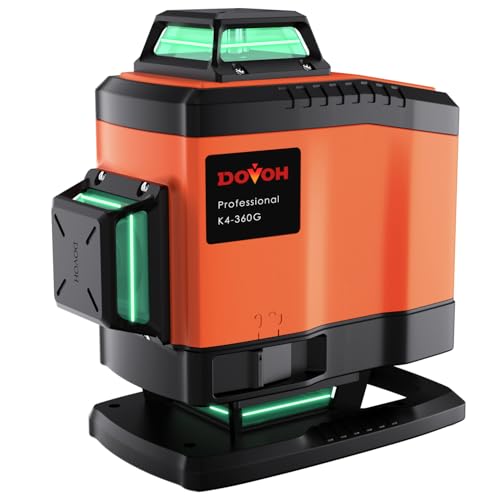
DOVOH K4-360G 4D Green Laser Level
Taking A Closer Look At The Options
Outdoor layout work exposes ordinary levels to glare, long sightlines, and vibration from nearby activity. The H3-360G-KIT pairs its 360-degree self-leveling projection with a receiver, which detects the beam where you may struggle to see it directly. That setup makes more sense for fence posts, grading work, and long pipe runs than a compact indoor-only plumb reference.
Compared with the later PV-360G, this model prioritizes broad outdoor reach rather than a dedicated plumb-dot layout. You benefit from a stated 400-foot operating range with the receiver, but that figure does not represent the distance at which the beam itself remains visible.
Useful Highlights
- The receiver extends practical use into bright outdoor conditions.
- 360-degree coverage simplifies placement around posts and fixtures.
- The 400-foot receiver-assisted range suits large properties and long foundations.
- Self-leveling operation reduces repeated manual adjustments during layout.
Honest Caveats
- Outdoor range depends on receiver use and may not match the visible beam distance.
- A stable mount is not identified, so tripod compatibility deserves careful checking.
- Owners commonly wipe the lens and store the unit dry after dusty site work.
Key Specs
Made For
This kit suits experienced workshop users and property builders managing long outdoor alignments.
A Better Fit Elsewhere
DOVOH PV-360G fits installers who mainly need upward and downward plumb dots rather than long-distance outdoor detection.
Unlike the slimmer H3-360G-KIT, this package gives you the supporting equipment needed to establish a full outdoor layout immediately. An aluminum tripod, receiver, and dual-scale grade rod cover setup, elevation checking, and beam detection. That completeness matters for contractors who would otherwise need separate accessories before placing a level on a rough site.
The green projection is easier for many people to distinguish against mixed workshop clutter than a red beam. You still need clear sightlines for indoor work, and the receiver carries most of the burden in direct sunlight.
A Few Highlights
- The aluminum tripod supports laser levels up to a 5 kg load.
- Rubber feet help limit movement on uneven surfaces.
- The grade rod adds a practical height-reference tool for grading and foundation layouts.
- Green beam visibility and receiver detection suit both indoor and outdoor jobs.
Practical Considerations
- More included equipment means a larger storage footprint.
- The tripod needs careful tightening and level placement on soft ground.
- You must use the receiver to realize the stated outdoor operating range.
Technical Highlights
Right Fit For
This kit fits contractors and serious DIY users who want a supported outdoor layout setup in one package.
Look Elsewhere When
DOVOH Y4-360G-KIT is the closer match for indoor work centered on two horizontal and two vertical planes.
A plumb dot is a compact vertical reference rather than a long, visible line through the entire workspace. The PV-360G projects upward and downward points, giving you a practical way to transfer alignment across floors and ceilings. That focused output makes it useful for pipe drops, fixture positioning, and cabinet installation in a workshop.
The source describes this as the essential edition, so you should treat it as a dedicated alignment tool rather than a full outdoor kit. Unlike the H3 models, it does not center its value on receiver-assisted distance or an included support system.
Strong Points
- Upward and downward dots support vertical alignment between separated work areas.
- The 360-degree self-leveling format reduces manual reorientation.
- A plumb-dot approach keeps the task focused on exact fixture and pipe positions.
Less-Strong Areas
- It is less suitable for long outdoor layouts that depend on receiver detection.
- Spot-style references offer less continuous guidance than full 4D planes.
- Clean the optical openings before precision work and store the level away from moisture.
Who It Suits Best
This model best fits plumbers, cabinet installers, and finish carpenters who need dependable overhead-to-floor alignment.
Reach For A Different Pick When
DOVOH H3-360G-KIT offers a better fit for broad outdoor foundations where a receiver and longer operating range matter.
Two horizontal and two vertical planes give you a much broader reference network than a single plumb-dot tool. The upper and lower horizontal lines support ceiling work and tile layouts, while vertical planes help square walls, cabinets, and fixtures. This makes the kit more useful across mixed renovation tasks.
Compared with the plumb-focused PV-360G, this package also supports outdoor work through its receiver. You gain greater flexibility, along with a tripod and grade rod that reduce the need to assemble a full support setup separately.
Good Reasons To Consider
- Four projected planes simplify tiling, wall alignment, and overhead installation.
- The receiver supports outdoor detection up to 400 feet with the specified laser level.
- The included tripod extends to 60.2 inches for a wider range of working heights.
- The grade rod supports elevation references beyond basic horizontal projection.
Details To Watch
- The receiver cannot make a laser line visible where glare overwhelms the naked eye.
- Four planes create useful references but need clear space around the tool.
- Check the tripod locks regularly during long floor-tiling layouts.
Feature Snapshot
Built With In Mind
This kit suits renovation professionals handling tile, ceilings, walls, and outdoor elevation layouts.
Where A Sibling Pick Shines
DOVOH K4-360G may suit you better when a rubberized housing is more important than the included receiver and grade rod.
The Y4-360G-KIT brings continuous 4D references into a practical indoor renovation setup. Two horizontal and two vertical planes let you check a tile grid, align wall features, and transfer the same reference across adjoining rooms. That makes it more versatile than a dedicated plumb dot for projects that keep changing direction.
Its included tripod supports up to 3 kg and extends to 60.2 inches, giving you useful height adjustment. Unlike the receiver-equipped model, though, the listed package does not establish the same level of outdoor detection support.
Bright Spots
- Four planes cover walls, floors, and ceilings without changing projection modes.
- The tripod provides a stable starting point for common renovation work.
- A 60.2-inch extension reaches higher reference points than a compact tabletop setup.
Possible Compromises
- No receiver is identified, so bright outdoor layouts are less convenient.
- Continuous planes are less focused than the PV-360G for one transfer point.
- You need unobstructed room space for the projected lines to remain useful.
Who Should Grab It
This model fits interior remodelers, cabinet installers, and DIY users handling floors, walls, and ceilings.
Another Choice May Suit
DOVOH 4D Laser Level with Receiver Kit better serves mixed indoor and outdoor projects requiring distance detection.
The K4-360G prioritizes the tool itself rather than a broad accessory package. Its four-plane projection supports repeated wall, floor, and ceiling checks, while the green beam offers a distinct reference around materials and workshop equipment. The overmold rubber housing adds protection around the body, which is useful in crowded work areas.
Unlike the Y4-360G-KIT, you would need to account separately for a stable tripod and working height. The lack of a listed receiver also makes this model less compelling for long layouts where direct visibility becomes difficult.
A Few Strong Suits
- Two horizontal and two vertical planes support diverse room layouts.
- The green beam can stand out clearly against many ordinary surfaces.
- Rubber overmolding adds grip and protection in a demanding workshop.
Soft Spots
- No receiver or tripod is identified in the available product information.
- Bright sunlight and long sightlines may limit practical beam visibility.
- Dust around the openings can reduce clarity, so routine lens cleaning matters.
Core Features
Built With In Mind
This laser fits experienced workshop users who value projection flexibility and a grippy protective housing.
Swap It Out When
DOVOH H3 Outdoor Laser Level Kit fits you better when receiver detection, a tripod, and a grade rod are priorities.
Choosing The Right Vertical Layout Tool
Start with the work you actually need to align. A plumb-dot model concentrates on transferring one vertical reference between floors and ceilings, which suits pipes, fixtures, and cabinet runs. A four-plane level spreads references across walls, floors, and ceilings, making it more useful for renovation work that keeps shifting between surfaces.
Visibility And Receiver Support
Laser visibility depends on color, ambient light, distance, and surface conditions. Green beams often stand out well indoors, but a receiver matters when direct sunlight overwhelms the line. A receiver detects the modulated laser signal and indicates its position on a staff, so it extends useful outdoor measurement rather than making the beam visible through glare.
Stability And Working Height
A level that shakes or sits on uneven ground can undermine an otherwise careful layout. Tripod material, adjustable height, foot grip, and load capacity determine whether the instrument remains stable. For tiling and overhead installation, a 60.2-inch tripod offers a practical range, while heavier systems may require a more substantial support.
Included Accessories
A grade rod adds an elevation reference for foundations and grading work. Tripods improve setup speed, while receivers extend outdoor detection. Choose accessories according to your environment rather than assuming a larger bundle suits every workshop task.
Layout Details That Shape Your Choice
Common Shopping Slip Ups
Do not treat a stated operating range as the distance at which the beam remains directly visible. A receiver changes the detection method, not the line itself. You should also check whether a tripod, grade rod, or receiver is actually included, since similarly named kits can carry different bundles.
Where The Extra Money Goes
A higher-tier kit may add four-plane projection, a receiver, and a stable tripod. Those components matter for outdoor foundations, extensive tiling, and multi-surface renovation work. A focused plumb-dot model remains more economical for installers who primarily transfer a vertical reference between floors and ceilings.
Frequently Asked Questions
Do Laser Plumb Bobs Work Indoors And Outdoors?
They work in both settings, though outdoor visibility depends on beam color, sunlight, distance, and receiver support. Indoors, four-plane models generally provide more continuous references.
What Is The Difference Between A Plumb Dot And A 4D Laser?
A plumb dot concentrates on upward and downward vertical references. A 4D laser projects two horizontal and two vertical planes, making it more flexible for walls, floors, and ceilings.
Do I Need A Receiver For Outdoor Projects?
A receiver helps locate the beam in bright conditions or across longer distances. Direct visibility may still work at shorter ranges, depending on ambient light and surface contrast.
Is A Tripod Necessary For Workshop Layouts?
A tripod creates a more consistent working height and reduces movement. Small handheld tasks may not require one, but larger installation benefits from a stable platform.
