
A dependable crimper turns a loose wire and terminal into a connection that stays secure, yet many general-purpose tools force you to compromise between stripping, cutting, and crimping. Electricians, vehicle technicians, installers, and serious DIY hobbyists need dies matched to the wire gauge and connector type, along with handles that remain comfortable through repetitive work. These six options cover terminal crimping, ferrule work, cable cutting, connector assembly, and DIN rail preparation.
The Choices Worth Comparing
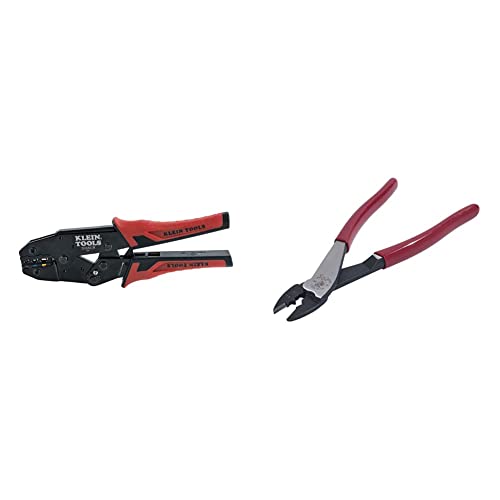
Klein Tools 3005CR and 1005 Tool Set

Klein Tools 1019 and 11061 Multi-Tool Set

Klein Tools J63050 and 1005 Tool Bundle

JIGONGSUN Electric DIN Rail Cutter 35mm

JIGONGSUN 4-Corner Ferrule Crimper AWG 23-7

JIGONGSUN 6-Corner Ferrule Crimper AWG 23-7
Meet The Standout Selections
This set gives you two different crimping approaches for 10-22 AWG work. The 3005CR uses a full-cycle ratchet, meaning its compound action cycles through the crimp before releasing, which suits technicians who value repeatable terminal compression.
The smaller 1005 adds a hardened cutter and tapered nose for accessible work inside panels. Compared with the ferrule tools later in this list, this set focuses on conventional terminals rather than four- or six-sided ferrules.
Notable Upsides
- The ratcheting mechanism supports consistent crimps during repeated panel work.
- Color-coded cavities simplify terminal selection across 10-22 AWG wire.
- Marked dies accept both insulated and non-insulated terminals.
- Dual-material grips reduce slipping and improve comfort during extended sessions.
Small Caveats
- The ratchet requires a full handle stroke, so it offers less positional freedom than a direct crimper.
- Keep the cutting jaws free of metal scraps and inspect the crimp cavities periodically.
Quick Facts
Made For
You benefit most from this set during panel installation, equipment repair, and routine electrical terminal work.
Another Choice May Suit
JIGONGSUN 6-Corner Ferrule Crimper AWG 23-7 offers a better fit for installations centered on ferrule sleeves and hexagonal compression.
Connector variety sets this bundle apart from the Klein Tools 3005CR and 1005 set. The 1019 handles B connectors, insulated and non-insulated terminals, and Scotchlok IDC connectors, while its stripping and cutting functions reduce tool changes during low-voltage work.
The 11061 adds automatic wire stripping across 10-26 AWG solid and 12-28 AWG stranded wire. For service benches or vehicle interiors, that combination may be more useful than carrying a separate stripper beside every crimper.
Where It Delivers
- Dedicated B and IDC crimping cavities broaden connector compatibility.
- The 1019 strips, cuts, twists, loops, shears, and crimps for compact tool-kit use.
- A reinforced head helps limit flex during forceful stripping operations.
- The included stripper broadens the usable solid and stranded wire range.
Trade-Offs To Consider
- Multiple functions make the bundle less specialized than the single-purpose 3005CR.
- You’ll need to identify the correct connector cavity before each crimp.
- Wire chips can settle around the stripping blades, so cleaning after repeated use is sensible.
Right Fit For
Installers handling alarms, controls, telecom connections, and mixed solid or stranded wire get the most versatility from this pair.
A Better Fit Elsewhere
Klein Tools J63050 and 1005 Tool Bundle serves you better when cutting heavy copper, aluminum, or communications cable is a central task.
Heavy cable cutting separates this bundle from the more compact terminal tools above it. The J63050 handles up to 4/0 aluminum AWG, 2/0 soft copper AWG, and 100-pair 24 AWG communications cable, making it relevant to service entrances, control rooms, and building infrastructure.
Its shear-type design grips and cuts cable as the handles close. The 1005 covers smaller terminal work, though for repeated 10-22 AWG ratcheting terminations, the Klein Tools 3005CR and 1005 Tool Set remains the more specialized pairing.
The Case For It
- The cable cutter handles substantially heavier material than conventional terminal tools.
- One-handed shearing suits service work where controlling cable movement is difficult.
- Beveled jaw tips support clean mating while protecting the leading cutting edges.
- The tapered 1005 nose reaches crimps inside crowded enclosures.
Factors To Consider
- The 1005 crimper lacks the 3005CR ratchet mechanism.
- Do not apply the aluminum capacity to ACSR cable.
- Residue and flattened strands around the jaws may require occasional cleaning and inspection.
Built With In Mind
Telecommunications crews, industrial service technicians, and electricians cutting substantial cable benefit most from this pairing.
Where Another Pick Shines
JIGONGSUN Electric DIN Rail Cutter 35mm is more practical for cabinet installers who repeatedly need accurately sized 35 mm rail.
DIN rail, a slotted mounting standard used inside electrical and control cabinets, is the focus here rather than wire termination. The electric drive reduces the sustained hand effort associated with repeated rail cuts, and the one-touch control suits assembly work where speed matters.
Its double-groove guide accepts slotted aluminum and steel rail measuring 35 mm wide and 6.5-7.5 mm high. You’ll still need to confirm dimensions before placing a rail, especially in older cabinets with mixed standards.
Key Advantages
- Electric operation reduces manual cutting effort during cabinet assembly.
- The double-groove structure supports aluminum and steel rail.
- A compact body fits more readily into equipment rooms and tight cabinets.
- Portable construction simplifies transport between installation sites.
Points To Keep In Mind
- Compatibility ends at 35 mm width and 6.5-7.5 mm height.
- Rail specifications should be measured before use.
- Keep the guide channels clear of metal fragments between cuts.
Feature Snapshot
Who Will Love This
You’ll appreciate this tool most while building control cabinets, automation panels, or equipment racks with matching rail dimensions.
Not Your Match When
Klein Tools 1019 and 11061 Multi-Tool Set fits your work better when connector crimping and wire stripping are the main tasks.
Ferrule crimping requires a different die profile from the conventional terminal tools listed earlier. This JIGONGSUN model compresses ferrules from four sides into a square profile, which can suit control cabinets, automotive wiring, audio installations, and equipment leads using 23-7 AWG wire.
A built-in ratchet adjusts the crimping stroke to the ferrule size, helping place each termination through a controlled cycle. In a crowded panel, the anti-slip handle offers useful control, although you must still confirm that the terminal’s profile matches the four-corner die.
Positive Points
- Four-corner compression supports square ferrule terminations.
- The self-adjusting ratchet reduces manual pressure variations between sizes.
- A 23-7 AWG range covers fine signal leads through heavier power wiring.
- The included case, gloves, connectors, batteries, and charger support transport and setup.
Details To Watch
- The ferrule dimensions and wire range must correspond for proper compression.
- The bundle adds more components than a bare crimper requires.
- Store the case away from moisture and clear debris from the jaws periodically.
Made For
Panel builders and automotive technicians who install square-profile ferrules across mixed wire gauges get a strong fit here.
Consider Something Else When
JIGONGSUN 6-Corner Ferrule Crimper AWG 23-7 serves you better when your terminals require a hexagonal profile.
Hexagonal compression makes this ferrule crimper the natural counterpart to the preceding four-corner model. Its six-sided profile is relevant to wiring systems that specify hexagonal ferrules, particularly in vehicle electrical work, audio installations, control panels, and larger project leads.
The ratchet controls pressure according to ferrule size across a 23-7 AWG range. You benefit from the anti-slip handle during long sessions, while the carrying case and included accessories keep the pliers and supplies together in a service van or workshop.
A Strong Showing
- The six-corner die forms a defined hexagonal ferrule profile.
- Self-adjusting ratchet action supports consistent compression across terminal sizes.
- AWG 23-7 coverage accommodates control, signal, and power wiring.
- Contoured anti-slip grips improve handling during extended crimping tasks.
Practical Considerations
- Square-profile ferrules require the 4-corner crimper instead.
- Ferrule length and diameter must suit both the conductor and selected die.
- The accessories increase storage needs compared with a standalone crimper.
Technical Highlights
Who It Suits Best
Automotive specialists, installers, and workshop hobbyists using hexagonal ferrules benefit most from this profile.
Another Choice May Suit
JIGONGSUN 4-Corner Ferrule Crimper AWG 23-7 fits you better when your wiring standard calls for square compression.
Matching The Tool To The Terminal
A terminal’s construction determines the correct tool more than its overall wire size. Conventional insulated or non-insulated terminals use color-coded crimp cavities, while B and IDC connectors need dedicated profiles. Ferrule sleeves require either square or hexagonal compression, so the four- and six-corner tools are not interchangeable.
AWG, or American Wire Gauge, describes wire diameter on a reversed scale where higher numbers indicate thinner conductors. Match the tool’s marked range to the conductor, then confirm that the barrel, die, and terminal type agree. You’ll also need the conductor to be fully seated in the ferrule or terminal barrel before closing the handles.
Ratcheting action adds a controlled release point, which helps standardize repetitive terminal work. Conventional cutters and crimpers remain simpler and often more maneuverable in confined panels, while electric rail cutters address a different task entirely: cutting 35 mm mounting rail to length.
Tool care matters less dramatically than people expect. Keep cutting blades and crimp cavities free from metal fragments, store ratcheting tools in their cases, and inspect the jaws and guides periodically. Your terminal type and project environment should carry more weight than a long accessory list.
Common Mistakes And Upgrade Value
Mistakes Worth Dodging
Do not select a crimper from wire gauge alone. Connector shape, insulation, and required crimp profile also have to match. Measure DIN rail before cutting, and avoid using a four-corner ferrule tool on terminals designed for a hexagonal profile.
What Separates Premium From Basic
Ratcheting mechanisms, reinforced heads, and case-hardened cutting components add value through repeatability and durability. The premium tier is most useful for frequent panel work, while occasional repairs may need only a matched, well-maintained hand tool.
