
Garage smoke detection becomes more complicated because the building may sit near bedrooms, an attached workshop, or a busy electrical system. You need an alarm that fits the space’s temperature range, connects cleanly with compatible units, and remains audible from the workbench or vehicle bay. The options below cover wireless, hardwired, battery-powered, combination smoke and carbon monoxide, and single-alarm configurations for different homes.
A Closer Look At The Lineup

X-Sense SC07-W Interconnected Smoke and CO Detector 6-Pack

Kidde 20SAR Hardwired Smoke Detector

Heiman Interconnected Photoelectric Smoke Alarm

BRK 9120BFF Interconnected Hardwired Smoke Detector

Kidde 20SAR Interconnectable Hardwired Detector 4-Pack
Kidde 20SDR-VRF Battery-Powered Smoke Detector
Meet The Standout Selections
The six-unit arrangement makes this a strong fit for a garage, nearby hallway, utility room, and other connected living spaces. Combination units respond to both smoke and carbon monoxide, while wireless interconnection carries an alarm through the group. That makes the arrangement more useful than six isolated devices in a large workshop.
Compared with the hardwired Kidde options, installation does not depend on running new alarm wiring. The sealed lithium battery removes routine battery replacement, although the units still need periodic alarm testing and appropriate placement. You’ll also need to confirm the SC07-W and its intended locations comply with local requirements.
Noteworthy Benefits
- Six units support broad coverage across a garage and connected home areas.
- Dual sensing addresses both smoke and carbon monoxide risks.
- Wireless interconnection lets every compatible unit sound together.
- The sealed battery removes scheduled battery swaps.
Points To Note
- Wireless interconnection does not include Wi-Fi connectivity.
- Garage temperature and local placement rules still apply; the listing doesn’t establish suitability for every garage environment.
Quick Facts
Built With In Mind
You benefit most with an attached garage, workshop, or several connected rooms needing smoke and carbon monoxide coverage.
A Better Fit Elsewhere
The Kidde 20SAR Interconnectable Hardwired Detector 4-Pack suits a larger wired home that already has compatible alarm wiring.
For a home with existing interconnected wiring, the 20SAR offers a more conventional path than a six-unit wireless system. Hardwiring means the alarm draws normal household power continuously, while two AA cells take over during an outage. That arrangement suits a renovation where the wiring run is already planned.
The source doesn’t establish a wireless connection or CO-sensing function, so this model is a smoke-only choice. Its 85-decibel alert and red status light give you both audible and visible prompts, while sensing technology is designed to reduce nuisance alarms from cooking or steam. For a garage, installation clearance and environmental suitability deserve attention.
Key Advantages
- AA backup cells preserve operation during a power interruption.
- The 85-decibel signal provides a clear audible warning.
- Sensing technology helps distinguish everyday vapor from smoke.
- Hardwired power suits homes with established alarm circuits.
Trade Offs
- The single pack does not cover several rooms on its own.
- Installation generally requires compatible wiring and a suitable mounting location.
- AA cells need periodic replacement, unlike the X-Sense sealed battery.
- Source information describes smoke detection, not CO detection.
The Right Fit
This option suits a skilled homeowner adding a hardwired smoke alarm to an existing residential alarm circuit.
Another Choice May Suit
The X-Sense SC07-W Interconnected Smoke and CO Detector 6-Pack better fits households prioritizing wireless placement and dual-hazard sensing.
A photoelectric alarm responds to smoke through an optical sensing method, which makes this a sensible design for homes where visual disruption matters. The compact profile also suits a garage or hallway with a small ceiling area. Its listed interconnection function gives you a path toward linked coverage, depending on compatibility and pairing requirements.
Unlike the X-Sense six-pack, this listing doesn’t establish a sealed decade battery, CO detection, or a specific number of linked units. You’ll need the full compatibility instructions before purchase. The absent size details also make a physical clearance check sensible, particularly in a dusty or temperature-variable garage.
Good Reasons To Consider
- Photoelectric sensing offers a different detection approach from ionization models.
- Interconnection supports coordinated alarms across compatible locations.
- Battery power simplifies placement where alarm wiring is absent.
Some Limits To Know
- Compatibility details need confirmation before linking a mixed-brand system.
- Owners still need to follow battery and alarm-check routines.
- The compact size and low-profile appearance can make ceiling placement less obvious.
Technical Snapshot
Made For
You’ll appreciate this compact model most in a finished living space where appearance and battery-based placement matter.
Where A Sibling Pick Shines
The Kidde 20SAR Hardwired Smoke Detector better suits a home already equipped with AC alarm wiring and AA backup cells.
BRK/First Alert compatibility is the defining advantage here, especially in a home already fitted with units from that network. Hardwired power supports continuous operation, while battery backup covers a power interruption. The 9120BFF is therefore more compelling as part of a planned multi-level network than as a single retrofit.
Its ionization sensor is designed primarily to respond to fast-burning fires, which differs from the Heiman photoelectric approach. That distinction matters in placement decisions and local code compliance. The honest catch is that the source doesn’t provide a temperature range, so you should confirm the alarm suits the actual garage rather than assume it does.
A Favorable Mix
- Hardwired operation suits established residential alarm networks.
- Battery backup maintains coverage during outages.
- Interconnection lets compatible BRK and First Alert units alert together.
- The 85-decibel alarm gives you a strong audible cue.
Details To Watch
- Mixed wiring compatibility must be checked before installation.
- Ionization sensing focuses on fast flaming fires, not every smoke pattern.
- The single-unit pack may leave a large home needing additions.
Feature Card
Who Should Grab It
This pick suits households already committed to compatible BRK or First Alert hardwired smoke alarms.
Reach For A Different Pick When
The Heiman Interconnected Photoelectric Smoke Alarm better suits a battery-powered installation with an emphasis on compact design.
Four units make this a practical starting point for spreading a hardwired network across several levels or rooms. Each detector uses AC wiring with two AA cells for backup, while the interconnectable design lets compatible units share an alert. In a garage-and-home layout, that group approach can improve awareness beyond the work area.
The Kidde 20SAR shares the sensing and backup concept of the single-unit version, but the multipack reduces the need to source identical units separately. Its 85-decibel alert uses three long beeps with a flashing red light, giving you distinct audio and visual signals. Weekly manual testing remains part of responsible alarm ownership.
The Good Stuff
- Four matching units streamline a multi-location hardwired setup.
- Two AA cells keep coverage available during power loss.
- Interconnection distributes alerts through compatible alarms.
- Red LED and three-beep pattern clarify the warning signal.
- Sensing technology targets reduced nuisance alarms from cooking.
Practical Considerations
- Hardwired installation requires compatible wiring and suitable mounting points.
- The pack can exceed what a small detached garage needs.
- AA backup cells require periodic replacement.
Who Will Love This
This multipack suits homeowners building a coordinated smoke-alarm network across a garage, hallway, bedrooms, and additional levels.
Swap It Out When
The X-Sense SC07-W Interconnected Smoke and CO Detector 6-Pack better fits a household wanting wireless placement and carbon monoxide sensing.
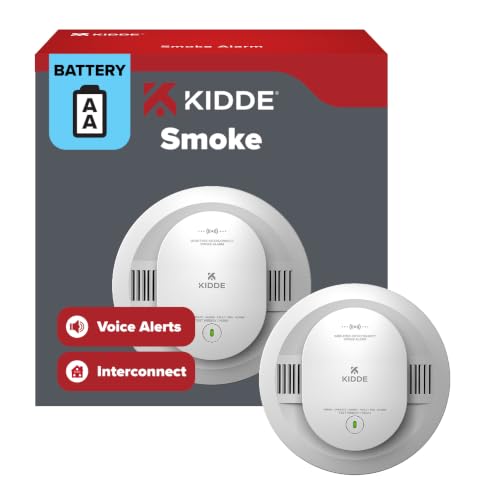
Battery power gives you more freedom in an older garage, finished ceiling, or room without dedicated alarm wiring. The 20SDR-VRF adds wire-free interconnect capability, so compatible units can notify one another. That makes it a useful alternative to the Kidde 20SAR’s hardwired approach, especially for staged installations.
Its supplied context identifies an 85-decibel warning, red LED, and voice notification, although the structured source data only explicitly labels it as a smoke and carbon monoxide detector category. Confirm the final functions and compatibility on the listing. You’ll also need to account for battery maintenance and verify that the location meets the alarm’s environmental requirements.
Advantages To Know
- Wireless installation avoids dependence on new alarm wiring.
- Wire-free interconnect supports communication among compatible units.
- Voice and audible alerts can provide clearer event information.
Where It May Fall Short
- Interchangeable brands may not share the same connection protocol.
- Battery maintenance remains part of long-term ownership.
- The source does not provide dimensions or a garage temperature range.
Feature Facts
Best Suited To
This model suits homeowners adding wire-free interconnected coverage without cutting channels for new alarm wiring.
Look Elsewhere When
The Kidde 20SAR Interconnectable Hardwired Detector 4-Pack better fits a large home with established wiring and a need for several matching alarms.
Choosing Alarms That Suit Your Garage Layout
Start with placement rules rather than appearance. A garage can experience dust, humidity, temperature swings, and exhaust fumes that influence alarm selection, so you should verify local requirements and the manufacturer’s environmental guidance before mounting anything. The shortlist doesn’t provide enough temperature data to make that decision for you.
Power Source And Wiring
Hardwired alarms suit homes with existing interconnected wiring, while battery-powered models simplify additions in finished ceilings. The X-Sense SC07-W offers wireless interconnection and sealed batteries; the Kidde 20SAR and BRK 9120BFF use hardwired power with backup cells. Choose the route that matches the building rather than forcing new wiring through a finished garage.
Smoke, Carbon Monoxide, And Sensor Type
Smoke alarms detect combustion particles, while combination units also monitor carbon monoxide, a colorless gas associated with incomplete combustion. Ionization and photoelectric sensors represent different detection approaches, so you should review placement guidance for either technology. You should also confirm whether a listed CO function is appropriate for the exact location.
Compatibility And Daily Maintenance
Interconnection only works as intended with compatible alarms and the required setup. You need to check brand, model, wiring method, and pairing requirements before mixing units. Battery alarms need cell checks and replacements, while hardwired installations need routine testing and professional electrical work where required.
Key Details Before Installation
Mistakes Worth Dodging
A common mistake is counting units without checking where the sound needs to travel. A garage alarm may need reinforcement near bedrooms, an attached workshop, or a hall outside the work area. Another mistake is assuming every wireless model links across brands; compatibility is specific to the protocol and model.
The Case For Spending Up
Higher-tier systems can add sealed batteries, carbon monoxide sensing, larger multipacks, or broader interconnection options. Those additions help when you need more placement flexibility or a multi-room network, not merely a single replacement alarm. A basic smoke alarm can still make sense for a small, compatible installation, so extra features should match the layout.
