
An infrared thermometer helps you locate uneven temperatures across tile, flooring, and nearby surfaces without touching the finished material. The tricky part is aiming: glossy tile reflects infrared energy, while its surface finish changes the reading. These FKM options offer adjustable emissivity, laser targeting, and broad measurement ranges for renovation checks, HVAC work, kitchen maintenance, and home projects.
A Closer Look At The Lineup

FKM Infrared Thermometer Gun 986°F
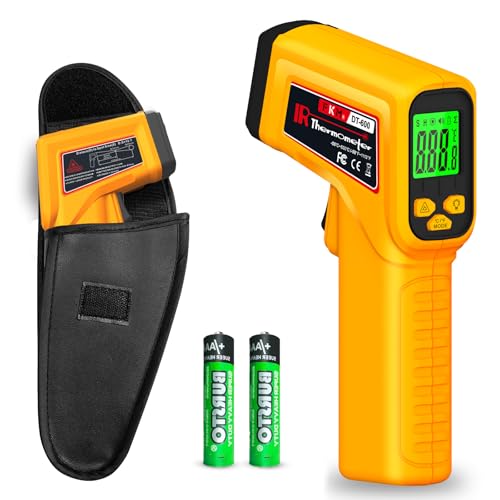
FKM 13-Point Laser Thermometer 1112°F

FKM DT-800 Rechargeable Thermometer

FKM 13-Point Laser Thermometer 1112°F

FKM Non-Contact Thermometer 1112°F

FKM Non-Contact Thermometer 1112°F
More On The Choices That Made The List
The single-laser layout makes this model straightforward for routine floor and backsplash checks. You can scan a tiled surface quickly, hold the gun at a consistent distance, and compare readings across several areas. It suits homeowners making practical non-contact measurements rather than technicians who need elaborate targeting.
Unlike the later 13-point models, the simpler sight pattern may feel more approachable in a busy renovation space. The 12:1 distance-to-spot ratio still helps limit the targeted area at greater distances, though gloss and reflected light remain important considerations for tile.
Where It Delivers
- The -58°F to 986°F range covers common indoor surfaces and moderately heated equipment.
- Adjustable emissivity from 0.1 to 0.99 supports different surface finishes.
- The 12:1 distance-to-spot ratio helps isolate smaller areas during a room scan.
- A single laser creates a simple aiming point for everyday checks.
Small Caveats
- The lower maximum range makes it less suitable for very high-temperature work than the DT-800.
- Tile reflections can distort results, so hold the device steady and compare similar materials.
- Keep the lens clean; dust can blur the signal, particularly during repeated maintenance checks.
Feature Snapshot
Made For
This model fits homeowners and property caretakers checking moderate-temperature tile, appliances, and finished indoor surfaces.
A Better Fit Elsewhere
Choose the FKM DT-800 Rechargeable Thermometer for broader temperature coverage and rechargeable operation.
Thirteen laser points turn aiming into a more deliberate process, which helps during close comparisons of adjacent tile sections. The display, single sensor, and laser array work together to identify the area being measured. That makes the device most useful for renovation specialists, HVAC technicians, and careful home inspectors.
Compared with the FKM 986°F model, this version reaches 1112°F and provides a more detailed visual target. In your own home, that extra guidance is useful around warmed floors, kitchen installations, and maintenance checks where small temperature differences shape your next diagnostic step.
What Makes Sense
- Thirteen points make it easier to center the measurement area.
- The -58°F to 1112°F range suits more demanding thermal checks.
- Adjustable emissivity helps account for different tile coatings.
- The laser pattern gives clearer visual guidance during repeated scans.
Worth Noting
- The multiple points add visual complexity compared with a single-laser design.
- Emissivity settings remain important on polished or reflective tile.
- Use a soft cloth for the sensor window during routine maintenance.
Who It Suits Best
Technicians and serious home renovators benefit most from the detailed laser pattern and extended upper temperature range.
Another Choice May Suit
The FKM Infrared Thermometer Gun 986°F offers simpler aiming for routine household surface checks.
The DT-800 brings together rechargeable operation, thirteen-point targeting, and a range reaching 1472°F. That combination makes it the most capable option here for demanding work around heated equipment, industrial maintenance, or high-output HVAC components. Tile installers can also use its broader range during underfloor heating checks.
You trade a little more complexity for a device that stays useful beyond ordinary household checks. Compared with the FKM 1112°F models, the DT-800 raises the upper limit and avoids disposable-battery ownership, provided you establish a sensible charging routine.
Reasons It Performs
- The 1472°F maximum supports hotter equipment and heated-floor diagnostics.
- Rechargeable operation fits repeated maintenance work.
- Thirteen laser points assist with careful area placement.
- A 12:1 distance-to-spot ratio supports more focused distant readings.
Practical Considerations
- Charging access becomes another routine to manage during daily use.
- The broad range offers little practical value for basic room-temperature checks.
- Reflective tile still calls for consistent distance and adjusted emissivity.
Technical Highlights
Built With In Mind
Installers, HVAC technicians, and maintenance crews get the most from its rechargeable design and extended range.
Where Another Pick Shines
The FKM Non-Contact Thermometer 1112°F serves routine checks with less need for a very broad measurement range.
This model balances a 1112°F ceiling with adjustable emissivity and thirteen-point laser guidance. That combination works well for homeowners comparing matte tile, cabinetry, and nearby mechanical surfaces after installation. You receive more visual guidance than the single-laser FKM without moving up to the DT-800’s 1472°F limit.
For glossy ceramic, placement remains decisive. The laser points show the intended measurement area, but they cannot remove reflection or material-related error by themselves. Repeated checks look more meaningful when you use the same distance, angle, and emissivity setting.
Key Advantages
- The 13-point pattern helps reveal the exact area under examination.
- Emissivity adjustment supports different painted and ceramic finishes.
- A 1112°F maximum covers more demanding household equipment.
- The broad range suits both property care and installation checks.
Points To Keep In Mind
- High-gloss tile may produce readings that differ with angle and distance.
- Several laser points can distract beginners during their first scan.
- Store the device away from moisture and clean its optical window regularly.
Right Fit
Home renovators comparing multiple indoor surfaces benefit from the adjustable laser target and practical temperature span.
Reach For A Different Pick
The FKM DT-800 Rechargeable Thermometer fits professionals who need rechargeable operation and a higher maximum.
A stated response time of 0.5 seconds makes this a natural fit for moving around a kitchen, workshop, or mechanical space. You can check several points without waiting through a slow reading cycle, which is useful during a quick scan of a tiled backsplash or floor. Its range reaches from -58°F to 1112°F.
The focus here is speed rather than visual targeting detail. The 13-point laser and adjustable emissivity still help, but you should treat repeated readings as a comparison tool rather than a substitute for a contact thermometer. That approach works well in most home diagnostic situations.
The Value In It
- The half-second response suits rapid scans across multiple areas.
- Non-contact measurement avoids touching hot or sensitive surfaces.
- A 1112°F maximum covers common cooking, heating, and maintenance scenarios.
- Thirteen laser points provide more guidance than a single dot.
Minor Gripes
- Fast response does not compensate for incorrect emissivity on reflective tile.
- You may need a steadying hand while moving between measurements.
- Lens smudges can affect consistency, so keep a cloth nearby.
At A Glance
Made For
Busy homeowners benefit from the quick response during kitchen, floor, and general household checks.
Consider Something Else
The FKM 13-Point Laser Thermometer 1112°F is a more focused choice for careful target placement on glossy tile.
The FKM 13-point laser arrangement makes this option useful for targeted tile comparisons, particularly in installations with several nearby finishes. Its 1112°F maximum matches most industrial and household needs in this lineup, while the non-contact format keeps your distance from heated components.
Compared with the FKM Infrared Thermometer Gun 986°F, this model gives you a more detailed visual target and a higher ceiling. Compared with the DT-800, it avoids unnecessary range for many jobs. You still need to control emissivity, angle, and distance for consistent results on reflective surfaces.
Positive Takeaways
- Thirteen-point guidance helps define the measurement area on finished surfaces.
- Non-contact use keeps you away from hot equipment.
- The 1112°F maximum supports a wide range of maintenance tasks.
- Adjustable emissivity improves control across different materials.
Things To Weigh
- Polished tile can reflect energy from nearby objects into the sensor.
- The laser pattern takes a little more attention than a single aiming point.
- Routine cleaning and careful storage help protect the optical window.
Feature Facts
Who Should Grab It
Renovators and maintenance-oriented homeowners benefit from its visual target, non-contact design, and broad upper range.
Swap It Out When
The FKM Infrared Thermometer Gun 986°F is the simpler option for moderate-temperature household checks.
What Matters Before You Choose A Tile Thermometer
Emissivity And Surface Finish
Emissivity describes how effectively a surface emits infrared energy, and glossy tile often produces a different reading from matte ceramic or painted material. Select a model with adjustable emissivity so you can account for the finish instead of treating every tile surface alike.
Targeting And Distance
A multi-point laser pattern helps you see the area being measured, while the 12:1 distance-to-spot ratio narrows that area as you move farther away. Hold the thermometer at the same distance and angle during comparisons. This consistency matters more than chasing a single isolated reading.
Range Versus Everyday Use
A higher temperature ceiling helps with heated floors, ovens, and mechanical equipment. For basic room checks, the 986°F FKM model may be enough. Choose the DT-800 only when its 1472°F range and rechargeable design serve a clear purpose in your routine.
A Reliable Reading Process
Use the same settings, observe reflections, and compare nearby areas rather than relying on one number. An infrared thermometer is especially useful for spotting variation, but tile finish, distance, angle, and emissivity can all affect the result. Keep the lens clean and store the device away from moisture.
Small Details That Change Tile Checks
Mistakes Worth Dodging
Glossy tile can reflect nearby heat, so pointing the device at a reflective patch may produce a misleading result. Keep a consistent distance and compare similar surfaces. A quick cleanup of the lens also helps preserve reading consistency during repeated scans.
What Separates Premium From Basic
The main upgrades are thirteen-point laser targeting, rechargeable operation, and a higher temperature ceiling. A basic single-laser model handles moderate checks well. The premium features earn their place only when your work requires finer targeting, extended range, or repeated use.
Frequently Asked Questions
Can an infrared thermometer measure tile temperature?
Yes, an infrared thermometer can measure tile surface temperature without contact. Adjust emissivity for the finish and hold a consistent distance and angle.
Why do nearby tile sections show different readings?
Surface finish, reflections, moisture, underfloor heating, and contact with underlying materials can create variation. Compare similar points under consistent conditions.
What is the benefit of a 13-point laser?
It shows a wider visual target, making it easier to keep related areas in view. This is useful on large tiles and floors with small features.
Is a higher temperature range necessary for tile?
Not for normal indoor floors. A higher range helps with heated floors, ovens, boilers, and maintenance around hotter equipment.
Are infrared readings enough for installation checks?
They help reveal uneven areas and temperature patterns, but they do not replace every technical inspection. Confirm measurements against the tile material, heating system, and installation requirements.
