
Flooring work often requires finding a temperature difference before the surface looks different. An infrared thermometer can reveal uneven heating, cold patches, and heat-related installation concerns without forcing you to touch a floor, access a crawlspace, or reach an awkward wall. These models suit flooring installers, property inspectors, HVAC technicians, and homeowners checking comfort or underfloor heating.
The most useful unit combines a broad measurement range, adjustable emissivity, and laser targeting precise enough for small floor areas. Emissivity is a surface setting that helps the sensor interpret how strongly a material emits infrared energy, making it important to match the setting to flooring such as wood, vinyl, concrete, or tile.
A Fast Comparison Of The Options

FKM Infrared Thermometer Gun -58°F to 986°F
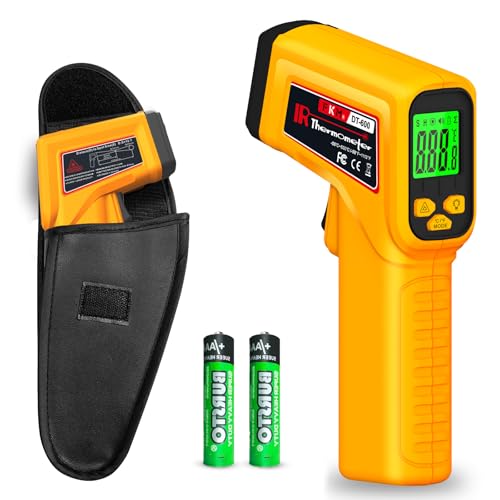
FKM DT-600 Infrared Thermometer

FKM DT-800 Rechargeable Thermometer

FKM 13-Point Infrared Thermometer

FKM Laser Thermometer -58°F to 1112°F

FKM 13-Point Laser Thermometer
A Closer Look At Each Pick
This FKM gun covers the temperature span most flooring diagnostics require, from -58°F through 986°F. That makes it a practical choice for comparing hardwood, laminate, concrete, radiant-floor areas, and nearby HVAC surfaces without moving your hand through the measurement field.
Single-laser targeting keeps the layout straightforward, so it may feel more approachable than the 13-point models in this group. Adjustable emissivity adds important control across differently reflective surfaces, although flooring veterans may prefer a denser laser pattern for pinpoint work.
What Makes Sense
- The -58°F to 986°F span covers normal rooms, crawlspaces, and heated floors.
- Adjustable emissivity from 0.1 to 0.99 supports measurements across varied finishes.
- The 12:1 distance-to-spot ratio helps you keep the sensor away from hot or awkward locations.
- Stated accuracy of ±2% or ±2°C provides a clear reference for comparison scans.
Points To Note
- Single-point aiming is less visually guided than the 13-point laser patterns.
- Keep the lens clean and dry, since dust and fingerprints can affect practical floor-site use.
Quick Facts
Made For
This model suits homeowners, property managers, and flooring installers who need dependable room and underfloor temperature comparisons.
A Better Fit Elsewhere
Choose the FKM DT-600 Infrared Thermometer instead when denser 13-point guidance is more useful than single-laser aiming.
The DT-600 trades the first model’s single laser for 13 points arranged around the target area. That pattern is more useful during a flooring survey because you can see exactly which part of a tile, plank, concrete patch, or heating strip the instrument is addressing.
Its stated range reaches 1112°F, well above ordinary room conditions. You benefit from that headroom around boilers and heating equipment, but flooring installers focused strictly on floor comfort may find the FKM 986°F model sufficient.
Standout Benefits
- Thirteen laser points make small floor sections easier to center during a scan.
- The -58°F to 1112°F range supports both cold-space and heating-system checks.
- Emissivity adjustment from 0.1 to 0.99 improves control over different floor finishes.
- The ±2% or ±2°C accuracy specification gives consistent reference figures.
- A 12:1 distance-to-spot ratio allows contact-free work near equipment and finishes.
Small Caveats
- The multi-point pattern requires a steady hand when comparing very narrow floor seams.
- Correct emissivity setup remains essential, particularly on shiny tile or metallic surfaces.
Technical Highlights
Right Fit For
This DT-600 fits flooring professionals inspecting radiant systems, suspended floors, and uneven heating patterns across finished surfaces.
Look Elsewhere When
The FKM DT-800 Rechargeable Thermometer serves you better when regular use and a measurement range reaching 1472°F matter more than the DT-600’s slightly lower ceiling.
Rechargeable operation sets the DT-800 apart from the simpler FKM choices, particularly for HVAC technicians moving between properties or flooring crews checking several rooms in one day. You avoid reaching for disposable cells during repeated diagnostics, depending on the charging interval in your normal routine.
The -58°F to 1472°F range is this model’s clearest technical advantage. It handles a much wider thermal span than the DT-600, although you may not need that upper reach for standard residential flooring.
Reasons It Performs
- Rechargeable construction suits frequent flooring and HVAC inspections.
- Thirteen laser points clarify the target on small planks and flooring joints.
- The range extends to 1472°F for demanding heating and equipment checks.
- A ±2% or ±2°C stated accuracy supports consistent floor comparisons.
Practical Considerations
- Rechargeable power makes charging management part of your routine maintenance.
- Its extended range adds bulk conceptually but may be unnecessary for basic room-temperature surveys.
- The 12:1 ratio still requires careful control at very short distances.
Built With In Mind
The DT-800 suits technicians and installers who repeatedly inspect radiant heating, HVAC equipment, and residential flooring systems.
Where A Sibling Pick Shines
The FKM 13-Point Laser Thermometer is a simpler alternative for occasional scans that don’t call for a rechargeable design or the DT-800’s higher range.
Floor surfaces rarely behave alike: matte wood reflects infrared energy differently from polished tile, and concrete carries heat at a different rate from vinyl. This FKM model’s adjustable emissivity range gives you a practical way to accommodate that variety rather than treating every floor as an identical target.
Like the DT-600, it uses 13 laser points, but this listing emphasizes non-contact measurement across a -58°F to 1112°F range. It may suit a general-purpose tool kit where flooring checks sit alongside appliance and HVAC diagnostics.
Where It Delivers
- Adjustable emissivity from 0.1 to 1.0 supports varied flooring materials.
- Thirteen-point targeting helps you center measurements on compact floor areas.
- Non-contact reading reduces the need to touch sensitive or installed surfaces.
Honest Caveats
- The specifications supplied do not state a numerical accuracy figure, so you have less detail for comparison.
- Laser and sensor dust commonly becomes an issue around dusty renovation sites, making a soft cloth useful for upkeep.
- The broad range is more than some floor inspections require.
Feature Facts
Who Should Grab It
This choice fits home inspectors and remodelers who alternate among wood, concrete, tile, and other reflective surfaces.
Consider Something Else When
Select the FKM Infrared Thermometer Gun -58°F to 986°F instead for simpler single-laser operation and a stated accuracy figure.
A stated 0.5-second response time makes this model appealing for broad floor scans. You can move across radiant panels, check a new floor installation, and quickly identify areas that deserve a closer look rather than waiting at every measurement point.
Its -58°F to 1112°F range also reaches beyond typical indoor conditions, and the listing positions the tool for HVAC, automotive, cooking, and electrical work. That versatility may suit a shared workshop, although flooring-specific users mainly benefit from the quick readout.
Where It Excels
- The 0.5-second stated response supports rapid room-to-room comparisons.
- A -58°F to 1112°F span covers cold spaces and heated equipment.
- Non-contact readings are useful near hot machinery and difficult-to-reach floor areas.
- Its general-purpose range suits technicians who also service HVAC or electrical systems.
Details To Watch
- The supplied description does not clarify the laser pattern, so targeting layout is less certain.
- Fast readings still require stable distance and a clean lens, particularly on glossy flooring.
Best Suited To
You benefit most from this laser thermometer during quick scans of large floors, radiant heating zones, and mixed maintenance tasks.
Swap It Out When
The FKM DT-600 Infrared Thermometer is the stronger fit when a clearly specified 13-point laser pattern matters for exact targeting.
The 13-point arrangement gives this FKM model a useful visual footprint across the final section of the list. It fits flooring surveys where isolated cold spots, narrow heating strips, and differences between adjacent surfaces deserve more attention than a single laser dot can provide.
Adjustable emissivity from 0.1 to 1.0 helps accommodate reflective finishes, while the -58°F to 1112°F title range covers normal rooms and hot equipment. You may still prefer the DT-800 for repeated work because rechargeable operation better supports daily diagnostics.
What It Does Well
- Thirteen laser points guide measurements across small or irregular floor areas.
- Emissivity adjustment supports different flooring and building materials.
- Non-contact operation avoids touching installed surfaces during routine checks.
- The broad temperature range also suits household HVAC and equipment tasks.
- One instrument can serve flooring, kitchen, and workshop diagnostics.
Possible Compromises
- The supplied information does not state a numerical accuracy specification.
- The measurement range may exceed what a basic floor survey needs.
- Several laser points can overlap on very small targets, requiring a steady aiming position.
Core Details
Whose Shelf It Belongs On
This FKM belongs with homeowners, property managers, and maintenance technicians who need a versatile temperature scanner.
Reach For A Different Pick When
Choose the FKM DT-800 Rechargeable Thermometer for frequent use, higher-range checks, and the convenience of rechargeable power.
What Matters Most Before You Choose
Emissivity controls the reading. Wood, metal, tile, and painted surfaces emit infrared energy differently. Choose a model with adjustable emissivity and set it to match the material under the laser before comparing floor readings.
Targeting matters at close range. A 13-point pattern helps you locate narrow heating strips and small floor patches. The 12:1 distance-to-spot ratio also determines the spot size at a given distance, so use a consistent working distance across your survey.
Range should match the job. Normal residential flooring usually requires less than the high limits offered here. The broader ranges help with boilers, ovens, machinery, and heating equipment, but they don’t replace correct aiming, distance, and emissivity.
A stated accuracy figure adds context. The FKM models with ±2% or ±2°C specifications provide a clearer comparison baseline. A range alone tells you what the instrument can cover, not how closely a reading may follow the manufacturer’s reference measurement.
Common Flooring Thermometer Traps
Mistakes Worth Dodging
A fast reading is not automatically a precise reading. Holding the unit at inconsistent distances, aiming across reflected light, or leaving the lens dusty can distort a flooring comparison, so establish a repeatable method before scanning.
What Separates Premium From Basic
A higher spending level may buy rechargeable power, 13-point targeting, a wider range, or a stated accuracy figure. Those additions help during repeated diagnostics, while occasional room checks may need none of them.
Frequently Asked Questions
Can infrared thermometers measure underfloor heating?
Yes, an infrared thermometer can compare exposed heating surfaces, pipes, and surrounding areas without direct contact. It cannot see through most finished floors, so access or a surface-level comparison is required.
What is a good temperature range for flooring?
A range that comfortably covers expected room and floor temperatures is enough for routine inspections. Broader limits add value for boilers, HVAC equipment, and other hot-surface work.
Why does adjustable emissivity matter?
Different materials reflect infrared energy differently, which changes how a sensor interprets temperature. Adjustable emissivity helps align the instrument with wood, tile, concrete, metal, and other surfaces.
Are 13-point lasers more accurate than a single laser?
A 13-point pattern primarily improves aiming by showing the target area; it does not automatically increase measurement accuracy. Distance, angle, surface condition, and correct emissivity still influence the result.
Can an infrared thermometer replace floor moisture testing?
No, temperature readings reveal thermal differences rather than moisture content. You still need an appropriate moisture meter or other inspection method to assess suspected dampness.
