
Infrared thermometers help DIYers locate heat loss, check exhaust systems, compare appliance temperatures, and diagnose uneven heating without opening walls or touching hot equipment. The six FKM options below cover ranges from -58°F to 986°F or 1112°F, with several models adding 13-point laser targeting and adjustable emissivity. That setting accounts for how different surfaces reflect infrared energy, which explains why the same target can produce different readings until you adjust the device. Each model suits a slightly different project, so the most useful choice depends on your target temperature, need for precise aiming, and preference between a rechargeable model and a more straightforward handheld design.
A Closer Look At The Lineup

FKM Infrared Thermometer Gun -58°F~986°F
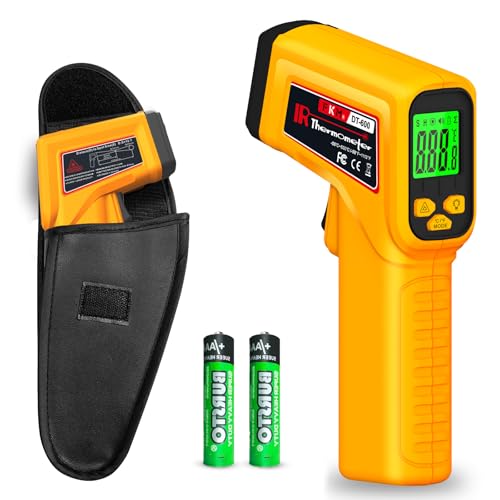
FKM High Precision 13-Point Laser Thermometer

FKM Rechargeable Infrared Thermometer Gun

FKM Infrared Thermometer Gun -58°F~1112°F

FKM Non-Contact Laser Thermometer -58°F~1112°F

FKM Non Contact Laser Thermometer -58°F~1112°F
The Picks, Examined More Closely
FKM’s 986°F ceiling makes this a sensible first tool for household heat checks, from radiators to oven surfaces. Its single-laser system keeps aiming simple, while the 12:1 distance-to-spot ratio helps you keep a safe distance from hot equipment.
Unlike the later 13-point models, this one prioritizes a straightforward target. For a home repair project involving a vent, appliance, or heating zone, that simplicity may be easier to manage than a denser laser pattern.
A Strong Showing
- Covers -58°F through 986°F for common household temperature checks.
- Single-laser aiming gives you an easy-to-follow reference point.
- The 12:1 distance-to-spot ratio reduces close contact with hot surfaces.
- Stated measurement precision is ±2% or ±2°C.
Minor Gripes
- The 986°F upper limit is lower than the 1112°F offered by several alternatives.
- Single-point targeting offers less detail on a large or uneven area.
- Keep the lens clean, since dust or grease can interfere with consistent readings.
At A Glance
Made For In Mind
This model suits homeowners handling radiators, ovens, vents, and other accessible household components.
Consider Something Else When
Choose FKM High Precision 13-Point Laser Thermometer for smaller targets and more detailed aiming.
The 13-point laser pattern gives this FKM model a more detailed aiming reference than the single-laser first pick. You can use it to inspect electrical cabinets, heating components, and other compact targets during home maintenance, although the denser pattern takes a little more attention.
Its stated range reaches 1112°F, and adjustable emissivity helps you account for surface differences. In practice, those settings matter more than the laser count on large, uniform targets, so careful adjustment remains part of the process.
Real-World Strengths
- 13-point laser pattern helps center measurements on small or irregular areas.
- Adjustable emissivity from 0.1 to 0.99 supports different surface materials.
- Wide -58°F to 1112°F range suits hot household and workshop checks.
- Stated precision of ±2% or ±2°C supports comparative temperature work.
- The 12:1 ratio helps maintain distance from hot components.
Small Caveats
- The multiple lasers require a steadier hand than a single aiming dot.
- Storage in a padded case is sensible for a handheld tool used around equipment.
Right Fit For
DIYers working on electrical panels, heating systems, or small mechanical components benefit most from the detailed target pattern.
Another Choice May Suit
FKM Rechargeable Infrared Thermometer Gun is the more natural fit for projects where you need mobility between several work areas.
Rechargeable power is the defining advantage here, especially for someone moving between a garage, utility room, and kitchen. The stated -58°F to 1472°F range also reaches higher than the other models, making it appealing for demanding heating and workshop scenarios.
Like the second pick, it uses a 13-point laser and adjustable emissivity, but the rechargeable format changes how you use it across a project. One practical caution: charging access matters, so keep the device in a dry place and avoid relying on an unreadable battery during urgent diagnostics.
Real Benefits
- Rechargeable design supports use across multiple rooms and work areas.
- 13-point laser targeting helps you center on compact components.
- The 1472°F maximum offers extra range for high-heat equipment.
- Adjustable emissivity supports more accurate surface comparisons when set correctly.
Points To Note
- The higher range may be unnecessary for basic household projects.
- The denser laser pattern takes more care than a single dot.
- Keep charging contacts and the storage area dry.
- Expect to plan charging before a long inspection session.
Who Will Love This
This model fits DIYers who move between several systems and want a broader temperature range without reaching for a spare device.
Where Another Pick Shines
FKM Non-Contact Laser Thermometer -58°F~1112°F may be easier to manage for routine kitchen and workshop checks.
This FKM model combines a 13-point laser, adjustable emissivity, and a -58°F to 1112°F range in one general-purpose tool. It fits projects involving ovens, radiators, electrical equipment, and HVAC components, where you need to compare several surfaces without touching them.
The trade-off is that the denser aiming pattern demands more attention than the single-laser FKM first pick. For a single large surface, that extra targeting detail may not matter, but it becomes useful around small fittings and uneven edges.
Everyday Perks
- 13-point laser pattern assists with smaller or less even targets.
- Emissivity adjustment helps compensate for differing surface finishes.
- The -58°F to 1112°F range covers many home heating checks.
- Non-contact measurement keeps your hands away from hot components.
- 12:1 distance-to-spot ratio supports safer positioning around equipment.
Trade Offs
- Its targeting system is less simple than a single-dot model.
- Accurate comparisons depend on setting emissivity for the surface.
- Wipe the lens before readings after dusty workshop use.
Technical Sheet
Built With In Mind
It suits DIYers who want one flexible tool for household heating, appliance, and electrical inspections.
Reach For A Different Pick When
FKM Rechargeable Infrared Thermometer Gun is the better fit for mobile work requiring a higher temperature ceiling.
Fast non-contact readings make this model useful for a quick look at cookware, vents, and household equipment. The stated 0.5-second response time helps you move through several spots without waiting, though actual results still depend on surface condition and aiming.
Compared with the FKM 13-point options, this one emphasizes quick setup over detailed target mapping. That’s a sensible trade for a kitchen or workshop where you mostly need to identify a noticeably hot or cool area.
Where It Excels
- Quick 0.5-second response suits rapid spot checks.
- Non-contact use helps inspect hot cookware and equipment.
- The -58°F to 1112°F range covers broad household tasks.
- Laser targeting provides a clear place to aim.
Less Ideal Details
- Fast readings do not eliminate the need for correct aiming.
- Surface gloss and distance can affect the displayed value.
- Store it away from oily kitchen residue and dust.
Best Suited To
This pick suits home cooks and DIYers who want quick scans of cookware, appliances, vents, and accessible equipment.
Skip It When
Choose FKM High Precision 13-Point Laser Thermometer when small components and detailed targeting matter more than speed.
The FKM Non Contact Laser Thermometer is a practical choice for routine household inspections where you want a broad range and clear laser reference. It can be used for heating zones, appliance exteriors, and workshop surfaces without placing your hand near the target.
Its 13-point laser pattern offers more detail than a single dot, while adjustable emissivity helps you compare different finishes. You still need to hold the device steadily and clean the sensor window after dusty work, since surface contamination can make the display less useful.
The Case For It
- 13-point targeting supports more controlled measurements.
- Adjustable emissivity accommodates varied surfaces.
- The wide range handles many household heating checks.
- Non-contact operation improves access to hot components.
Practical Considerations
- Correct emissivity settings require some surface knowledge.
- The 1112°F ceiling is lower than the rechargeable FKM model.
- Use a wipe to keep the lens free of dust and fingerprints.
- The 12:1 ratio still needs enough distance for a usable spot.
Quick Facts
Whose Shelf It Belongs On
It belongs on a home workshop shelf for DIYers handling appliances, vents, radiators, and general maintenance checks.
Where A Sibling Pick Shines
FKM Rechargeable Infrared Thermometer Gun serves DIYers whose work requires mobility and a higher temperature range.
What Matters In A DIY Infrared Thermometer
Temperature range and target size
Choose a range that covers the temperatures you expect to inspect. A 986°F ceiling may suit household heating and oven checks, while the 1472°F maximum on the rechargeable FKM gives you more room for demanding equipment. A 13-point laser is particularly useful for small fittings, whereas a single laser can be easier to follow on broad surfaces.
Emissivity and surface finish
Emissivity describes how a surface emits infrared energy. Glossy metal, painted parts, and matte materials can behave differently, so adjustable settings help you avoid comparing unlike surfaces with the same setting. Clean the lens and hold the device at a consistent distance for more useful comparisons.
Comfort, storage, and charging
A handheld thermometer is easier to keep near the tools you use most. Rechargeable power suits work spread across multiple rooms, while a conventional handheld is convenient for a stationary toolbox. Protective storage matters for all six choices because drops and lens contamination can interrupt a project.
Useful Checks Before You Buy
Mistakes Worth Dodging
A larger temperature range does not automatically make a model more useful for your home. Match the upper limit to the equipment you actually check, and pay attention to target size instead. For broad surfaces, a single laser may be easier to manage; for compact components, the 13-point pattern can provide a more useful reference.
What Separates Premium From Basic
The higher-tier choices usually add targeting detail, broader range, or rechargeable convenience. Those upgrades help in mobile maintenance, small-target diagnostics, and higher-heat inspections, while basic models can cover routine household scans. Choose the extra capability only when your usual projects need it.
Frequently Asked Questions
What temperature range do DIYers need?
Your useful range depends on the equipment you plan to inspect. Household radiators, vents, and many appliances fit below 1112°F, while higher-temperature tools give you more room for demanding repairs.
Is a 13-point laser better than a single laser?
It is better for small or irregular targets because the pattern provides several reference points. A single laser can be easier to follow across a large, flat surface, so choose based on your typical targets.
What does adjustable emissivity do?
Emissivity controls how the device interprets a surface’s infrared output. Adjusting it helps account for different finishes, but the correct setting depends on the material being measured.
Can infrared thermometers measure hot appliances safely?
Non-contact operation keeps your hands away from hot components. You still need to keep the device pointed safely and follow the equipment’s own operating instructions.
Which FKM model is rechargeable?
FKM Rechargeable Infrared Thermometer Gun is the rechargeable option in this lineup. Its stated range reaches 1472°F, making it suited to DIYers who need mobility and additional temperature headroom.
