
A basement can become uncomfortably cold because heat settles below ground level, while portable units also face dampness, storage constraints, and uneven outlet placement. These heaters suit finished recreation rooms, workshops, home offices, and compact living areas, with each model balancing output, dimensions, controls, and installation demands. The right choice depends less on raw wattage than on your basement layout and the amount of space needing steady warmth.
The Picks In Brief

EdenPURE CopperPLUS Portable Infrared Heater 1500W

EdenPURE GEN40 PLUS Infrared Heater and Cooler

EdenPURE GEN70 Infrared Heater and Cooler
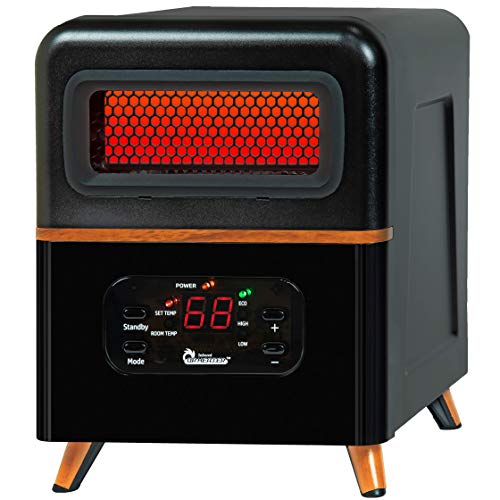
DR. INFRARED HEATER DR-978 Dual Heating Hybrid Heater

Pelonis 1500W PTC Tower Space Heater

COMFORT ZONE CZ230ER Ceiling-Mount Space Heater
A Breakdown Of The Leading Choices
The CopperPLUS suits finished basement offices, exercise rooms, and media areas where you want portable zone heating rather than whole-house warmth. Its 1,500-watt rating provides more capacity than the smaller GEN70, while the wheeled format makes repositioning practical as you move from a desk to a sofa.
Copper forms a broad heating surface over 3.5 square feet, a construction choice intended to spread warmth more evenly than a narrow element. You may find the 24-setting remote particularly useful in a busy recreation room, where walking over to adjust the unit becomes an interruption.
The Helpful Details
- The broad copper surface supports steadier room-level warmth than a slim tower design.
- Wheels help you move 1,500 watts of heat between finished zones.
- Twenty-four settings offer finer control during changing basement temperatures.
- Tip-over protection adds a practical safeguard around stairs and busy floor plans.
- The remote keeps routine adjustments within reach.
Trade Offs
- Its larger heating surface and output make it less convenient than the GEN70 for compact rooms.
- Portable ownership calls for careful storage because the wheeled unit still occupies meaningful floor space.
- No listed room-size information guarantees consistent comfort throughout an open finished basement.
Feature Snapshot
Made For
You benefit most from this model in a furnished finished basement with moderate insulation and several movable heating zones.
Look Elsewhere When
The EdenPURE GEN70 suits you better when floor space is tight and 950 watts provide enough warmth.
Seasonal basement rooms benefit from the GEN40 PLUS because it handles both heating and cooling rather than serving only one temperature extreme. That versatility works especially well in an office converted for occasional summer use, where a single appliance can replace separate seasonal devices.
Its positive temperature coefficient, or PTC, heating element responds without the fragile filament found in some quartz designs. Compared with the CopperPLUS, the GEN40 PLUS shifts emphasis from a large copper surface to precise temperature selection, which may suit you better in a frequently occupied room.
Strong Points
- Heating and cooling functions make it useful beyond winter.
- High and low settings accommodate quick warm-up and steadier room maintenance.
- The 1,500-watt maximum offers substantial capacity for medium zones.
- Temperature-specific ECO control reduces manual output changes.
Small Caveats
- Cooling performance is separate from infrared heating, so it does not replace whole-room air conditioning.
- Owners still need clearance around the housing for airflow and careful dry storage.
- The 1,500-watt maximum may feel excessive in a small finished office, depending on insulation.
Right Fit For
This choice fits you well in a multipurpose basement office or recreation room that needs heating in winter and cooling during warmer months.
Another Choice May Suit
The EdenPURE CopperPLUS offers a stronger case for winter-only rooms where broad copper heating matters more than summer flexibility.
The GEN70 targets small basement bedrooms, reading nooks, and converted storage areas where a 950-watt unit offers a more measured approach. Its lower output can make it easier to manage than the 1,500-watt CopperPLUS, particularly in a compact room where continuous maximum output may feel excessive.
The PTC element avoids exposed heating filaments, reducing the need for lamp replacement. Owners commonly favor that low-maintenance construction, although you still need to keep vents unobstructed and wipe dust from exterior surfaces as basement air circulates.
A Few Strong Suits
- The 950-watt rating fits focused personal-comfort spaces.
- PTC construction removes fragile filament bulbs from the ownership equation.
- Its compact format suits rooms where tower depth affects furniture placement.
- Heating and cooling functions provide useful seasonal flexibility.
- Lower maximum output can simplify temperature management in small rooms.
Less Ideal Details
- It may need a second unit for a large, poorly insulated recreation room.
- The built-in cooling function should not be confused with whole-house cooling.
Quick Facts
Built With In Mind
You’ll appreciate the GEN70 most in a compact basement bedroom or home office where low-maintenance heating and a modest footprint matter.
Reach For A Different Pick When
The DR. INFRARED HEATER DR-978 is the stronger option for a larger damp room needing 1,500 watts and hybrid infrared heating.
The DR-978 fits finished basements that need more than a single heating technique. Its hybrid system pairs PTC heating with quartz infrared elements, combining a broad, filament-free heat surface with the rapid response associated with quartz technology.
For a damp recreation room, frequent television lounge, or larger home office, the 1,500-watt rating feels more substantial than the GEN70’s 950 watts. The remote is useful during long evening sessions, while overheat and tip-over protection add practical safeguards in an active room.
Notable Upsides
- Hybrid PTC and quartz elements support responsive room heating.
- The 1,500-watt capacity handles medium zones better than a compact 950-watt unit.
- Overheat protection helps manage sustained operation.
- A tip-over sensor adds protection around basement stairs or uneven transitions.
Details To Watch
- Quartz components require more care during cleaning than a sealed ceramic-only design.
- Portable placement still requires a clear area around the heater.
- The mixed heating system gives you fewer reasons to favor the CopperPLUS copper surface for a single finished zone.
Feature Rundown
Who Will Love This
You’ll find this model well suited to finished basements that need responsive 1,500-watt heating and separate safety sensors.
A Better Fit Elsewhere
The Pelonis 1500W PTC Tower Space Heater offers a more directional format for narrow basement offices where oscillation and under-desk placement matter.
A basement office often needs warmth aimed at one workstation, not blanket heating across the entire room. The Pelonis tower format suits that task because oscillation spreads the warm direction across a desk zone, while the slim profile leaves more open floor space than a broad cabinet heater.
Its 1,500-watt PTC element delivers quick directional warmth without exposed filaments. Compared with the DR-978, the Pelonis places more emphasis on targeted air movement, which may feel more practical during focused desk work, though quietness specifications are not provided here.
Good Reasons To Consider
- Oscillation distributes warmth across a workstation rather than one fixed direction.
- The tower profile fits narrow desks and compact finished rooms.
- A thermostat supports steadier automated temperature selection.
- Remote control reduces repeated bending or walking to the unit.
- The PTC element avoids fragile filament maintenance.
Practical Considerations
- Directional heating may feel limited in a large open basement with several seating areas.
- Keep the tower on a stable, level surface and clear of desk edges.
- Under-desk positioning requires checking clearance and preventing cable interference.
Best Suited To
This heater is built for basement workspaces with a narrow footprint, frequent desk use, and a need for directional warmth.
Where A Sibling Pick Shines
The EdenPURE CopperPLUS is a better fit for a larger finished recreation area where broad copper heating and mobile placement take priority.
The CZ230ER serves unfinished basements, garages, and workshops where a portable unit would occupy valuable floor or workbench space. Ceiling mounting moves the 7,500-watt heater overhead, while a fan distributes warmth through a much larger volume than the portable models in this list.
Its 240-volt hard-wired installation is a major commitment rather than a simple room addition. Using the remote, digital thermostat, and 12-hour timer becomes straightforward after installation, but a qualified electrician remains important for a project involving this dedicated heating circuit.
Why It Works Well
- The 7,500-watt output is sized for workshops and garage-scale spaces.
- Ceiling mounting preserves floor and bench areas.
- Fan-forced air spreads warmth beyond the heater’s mounting point.
- The digital thermostat supports consistent room control.
- A 12-hour timer allows predictable operating periods.
Factors To Consider
- Hard-wiring requires installation planning and appropriate electrical service.
- Its 240-volt setup is excessive for a small finished recreation room.
- Ceiling placement requires structural confidence, correct clearances, and clean access for maintenance.
- Unlike portable models, the unit remains fixed after installation.
Technical Highlights
Whose Shelf It Belongs On
You need this ceiling-mounted model for a large unfinished basement workshop with dedicated 240-volt electrical service.
Skip It When
The Pelonis 1500W PTC Tower Space Heater suits you better for a finished basement office that needs simple portable placement.
Basement Heating Starts With The Right Fit
Start by measuring the space and noting where cold air collects. Portable infrared units work best as localized heat, so close off empty sections where possible and position the heater where its warmth can reach your seating or work area. Basement insulation, ceiling height, and drafts can matter as much as advertised output.
Match The Heating Method To Your Routine
PTC uses a ceramic element whose resistance rises with temperature, providing controlled heat without fragile filaments. Quartz elements respond quickly but need more careful cleaning and clearance. Hybrid designs combine both approaches, which can suit a frequently used room where you want rapid response alongside a filament-free component.
Think Beyond Maximum Output
A 1,500-watt portable heater may suit a medium finished zone, while a 950-watt unit is easier to manage in a compact bedroom. The 7,500-watt ceiling model addresses a different category entirely, bringing enough capacity to workshops and garages but requiring dedicated 240-volt installation. Check controls, remote access, storage, and outlet placement before choosing.
Keep Basement Moisture Separate From Heat
Portable indoor heaters are designed for dry interior spaces, not standing water or damp building materials. Keep the unit away from washing machines, exterior foundation walls, and visible moisture, and follow the clearance instructions supplied with your specific model. Improve airflow and address persistent dampness separately instead of expecting a heater to remove it.
Avoidable Mistakes In Basement Heater Choices
Pitfalls Shoppers Hit
Many mistakes come from treating a heater’s maximum wattage as the only consideration. Oversized output can make temperature control awkward, while undersized units leave large rooms cold. Portable models also need clear airflow, and ceiling-mounted units require proper electrical planning.
What The Higher Tier Buys
Higher output can matter in workshops and large garages, not necessarily in finished rooms. Added controls, broader heating surfaces, and installation hardware improve convenience, but the real upgrade is better heat in the spaces you use. A compact office rarely needs more capacity than a carefully placed portable unit provides.
Frequently Asked Questions
Can Infrared Heaters Be Used In A Basement?
Infrared heaters can provide localized warmth in dry, finished basements with suitable power. Use only indoor-rated models, maintain clearance around vents, and keep the unit away from standing water or persistent dampness.
Which Power Level Suits A Finished Basement?
A 950-watt model may suit a compact bedroom, while 1,500 watts offers more capacity for medium rooms. Poor insulation, high ceilings, drafts, and open floor plans can increase your heating needs.
Are Portable Infrared Heaters Safe To Leave Running?
Follow the model’s operating instructions and avoid leaving it unattended or within reach of children. Overheat and tip-over protection add safeguards, but normal electrical and clearance precautions still apply.
Do Basement Heaters Need To Be Hard-Wired?
Portable infrared models use standard household power, while the 7,500-watt ceiling heater requires 240-volt hard-wiring. A qualified electrician should assess the circuit, wiring, breaker, and load requirements.
Is One Heater Enough For A Large Basement?
One portable unit may cover a defined seating or work zone, but open basements often need several heat sources. The 7,500-watt ceiling model offers greater capacity for workshops and garages, where a portable design would be unsuitable.
