
Infrared heaters suit people seeking focused warmth without warming an entire home. They’re especially useful in home offices, drafty bedrooms, workshops, garages, and other spaces where one person or work area needs extra heat. The right choice depends on room size, portability, controls, electrical output, and whether you need indoor-only or outdoor-capable construction. This roundup covers compact bedroom models, desktop-friendly options, feature-rich room heaters, and weather-resistant equipment for covered spaces.
The Choices Worth Comparing

TrendGear 1500W Infrared Heater

EdenPURE CopperPLUS 1500W Heater with Remote

EdenPURE GEN40 PLUS Heater-Cooler Combo

EdenPURE GEN70 Portable Heater-Cooler

EZ-HEAT MT1198N 6-Element Quartz Infrared Heater
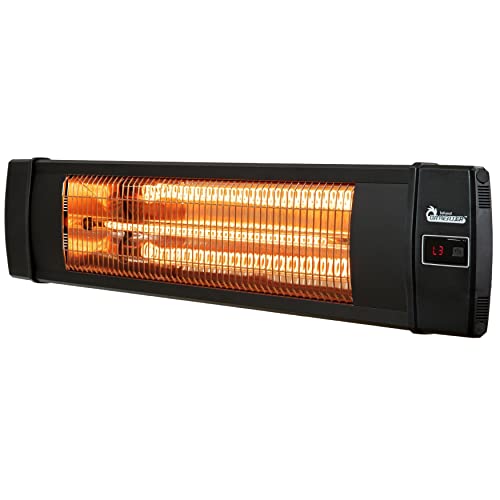
DR. INFRARED DR-238 Indoor/Outdoor Heater, Black
Meet The Standout Selections
The TrendGear 1500W Infrared Heater is built for rooms where direction matters. Instead of presenting a narrow heating zone like many tower-style options, it distributes infrared warmth from four sides, making it useful in a square room, open office, or shared living area.
Each 375-watt carbon-fiber element has an individual on/off control, so you can heat only the sides facing occupied areas. The 1-to-9-hour timer also helps limit unnecessary operation in a home office or workshop. Compared with the remote-controlled CopperPLUS, this model offers fewer settings but more direct control over where warmth travels.
Strong Points
- Four independently controlled sides direct warmth toward the areas you occupy.
- The 1,500-watt total output provides a useful balance of power and portability.
- A programmable timer simplifies heating around workdays or evening routines.
- Carbon-fiber tubes avoid the fragile filaments associated with some quartz designs.
Points To Note
- No remote or digital display is listed, so adjustments require physical access.
- Individual side switches offer less precise temperature control than the GEN40 PLUS.
- Allow the casing and vents unobstructed space for routine cleaning and airflow.
Who It Suits Best
This model suits people heating open rooms, shared work areas, or spaces with more than one frequently occupied side.
Another Choice May Suit
The EdenPURE CopperPLUS offers finer remote adjustment for a home office where you want simple temperature changes without walking to the heater.
Copper-oriented PTC technology, meaning a heating element whose resistance changes with temperature, forms the core of the CopperPLUS. Its listed coverage area reaches 1,000 square feet, though room insulation, layout, and desired temperature still determine how evenly it performs in a specific home.
The remote, 24 settings, and wheels suit a busy bedroom or office where you frequently change positions or want to adjust warmth from across the room. Compared with the TrendGear’s directional four-sided layout, the CopperPLUS concentrates more attention on remote adjustment and portable room use.
Useful Strengths
- Twenty-four settings allow finer control than the TrendGear’s side switches.
- The remote reduces frequent trips across a room during long work sessions.
- Wheeled mobility makes it easier to move warmth between a bedroom and office.
- Tip-over protection adds a practical layer for homes with children or pets.
Worth Noting
- The 1,000-square-foot figure is a maximum room-use claim, not a promise of identical warmth in every layout.
- Its many settings may feel excessive for someone who only needs low and high heat.
- Wheels and the power cord need room behind the cabinet during storage.
Made For
Home-office workers, bedroom occupants, and people who want remote control benefit most from this flexible model.
A Better Fit Elsewhere
The EZ-HEAT MT1198N is the stronger fit for someone who values a digital display and a longer countdown timer over a 24-setting remote.
The GEN40 PLUS serves two seasonal needs in one cabinet: infrared heating and cooling. Its ceramic PTC element is designed without fragile incandescent filaments, while the listed 1,500-watt maximum supports faster warm-up than the lower-output GEN70.
ECO Mode is the distinguishing feature for anyone who prefers a target temperature to continuous manual adjustment. A 1,500-watt heater-and-cooler combination can serve a multipurpose office or living area, but the benefit is greatest where seasonal temperature swings make two operating modes practical.
What Stands Out
- Heating and cooling functions make the cabinet useful beyond winter.
- The target-temperature setting reduces repeated manual adjustments.
- A ceramic PTC element offers low-maintenance operation without replaceable bulbs.
- Two heat levels support quick warm-up and gentler background comfort.
Small Caveats
- The combination format occupies more shelf space than a heating-only tower.
- ECO Mode depends on accurate placement and an unobstructed airflow path.
- For a small desk area, the higher GEN40 PLUS output may exceed what you need.
Best Suited To
People living in climates with both cold and warm seasons get the most balanced use from this heater-cooler combination.
Consider Something Else
The TrendGear 1500W Infrared Heater is a better fit for cold-season-only rooms that benefit from several independently controlled heating directions.
At a listed 950 watts, the GEN70 uses less maximum power than both EdenPURE models above it. That makes it a practical option for a bedroom, compact office, or personal workspace where consistent local warmth matters more than rapid heating of a large room.
Its infrared heating and cooling functions serve spring and fall as well as winter. Compared with the GEN40 PLUS, the GEN70 trades some output for a more compact proposition, though the available details do not include its exact dimensions, so desk clearance should be checked on the listing.
Real Benefits
- The 950-watt output supports targeted heating in compact spaces.
- A filament-free PTC design avoids bulb replacement tasks.
- Cooling adds value during shoulder seasons and warm afternoons.
- The simpler format suits personal rooms better than a full-room cabinet.
Details To Watch
- Its lower output may take longer to warm a large or poorly insulated room.
- Cooling specifications are not provided, making the seasonal performance harder to compare.
- Keep the rear and top vents clear to maintain consistent operation.
Right Fit For
This model suits people heating one compact bedroom or office rather than an open living space.
Where Another Pick Shines
The CopperPLUS offers a stronger fit for larger listed coverage and finer remote adjustment across 24 settings.
Quartz elements produce infrared heat by warming objects and people in the heater’s path, which makes the MT1198N a practical choice for an office chair, sofa, or drafty living area. Six elements provide a broad heating arrangement, while the cabinet directs warmth toward the room in front.
The digital display, remote, and 12-hour timer reduce daily interaction compared with the TrendGear’s physical side switches. The trade-off appears in maintenance, because quartz bulbs can be more delicate than solid-state PTC elements and should be handled carefully during cleaning.
Points In Its Favor
- Six quartz elements create a substantial infrared-heating arrangement.
- The 12-hour timer accommodates long evenings and overnight schedules.
- A digital display gives you immediate visibility into operating status and settings.
- The metal safety grille helps shield the quartz elements from contact.
Practical Considerations
- Quartz elements require more care during cleaning than filament-free ceramic elements.
- Its directional cabinet design makes careful placement important.
- The remote replaces direct knobs but adds another item to store.
Built With In Mind
Office workers and people relaxing near a drafty seating area appreciate the remote, display, and scheduled heating.
Reach For A Different Pick When
The GEN40 PLUS is a better fit for a year-round personal space where cooling and target-temperature control matter more than quartz heating.
Feature Snapshot
The DR-238 expands this roundup beyond indoor rooms. Its anodized aluminum body and weather-resistant construction suit covered patios, garages, workshops, and commercial areas where a conventional indoor cabinet would be exposed to less suitable conditions.
Three output levels, at 900, 1,200, and 1,500 watts, let you match warmth to changing conditions without a thermostat. The lack of temperature sensing is the main compromise, so placement and output selection carry more responsibility than with the GEN40 PLUS.
A Strong Showing
- Indoor and outdoor construction widens its use beyond a home office or bedroom.
- Anodized aluminum supports durability in damp or exposed areas.
- Three power levels provide useful control for changing evening temperatures.
- Remote operation adds convenience across a workshop or covered patio.
Trade Offs To Consider
- No thermostat means output adjustment remains under your control.
- Outdoor suitability does not make it suitable for every exposed installation location.
- The supplied power cord and wall or ceiling mounting accessories require proper setup.
The Right Fit
This heater fits people needing portable warmth in a garage, covered patio, workshop, or commercial area.
Skip It When
The CopperPLUS is a better fit for an indoor bedroom that benefits from wheels, a remote, and fine-grained settings.
Essential Details
Choosing the Right Heating Setup
Match the Heater to the Room
Start with the area you actually occupy, not the heater’s largest claimed coverage. Bedrooms and compact offices may work well with lower-output models, while larger rooms benefit from more power and broad heat distribution. You should also account for ceiling height, window drafts, insulation, and how often the door remains closed.
Decide How Much Control You Need
A remote makes long work sessions more comfortable, while a digital display provides visible operating feedback. Temperature targeting is useful for rooms that need stable warmth, but manual output levels can be sufficient for covered patios or temporary garage use. Choose controls you will use rather than paying attention to options that merely add complexity.
Consider Portability and Storage
Wheels help in home offices and bedrooms, while compact dimensions matter in smaller rooms. Before placing a portable model, check the clearance needed around its vents and the path of its cord. Cabinets with quartz elements may also deserve more careful handling than solid-state ceramic heaters.
Separate Indoor and Outdoor Needs
Weather-resistant construction is meaningful for covered patios, garages, and similar spaces. An indoor-only cabinet may offer a narrower feature set, but it does not carry the same material demands. For exposed areas, follow the placement and electrical guidance in the product documentation rather than assuming all outdoor-rated models suit every installation.
Common Heating Heater Mistakes
Pitfalls Shoppers Hit
The biggest mistake is judging only wattage. Higher output does not guarantee uniform warmth in a drafty room, while an oversized unit can waste energy in a small space. Placement matters too: leaving vents blocked or pointing a directional cabinet into an empty corner reduces practical performance.
What The Higher Tier Buys
A higher-tier model may add a timer, remote, target-temperature control, or a second seasonal function. Those features save repeated adjustments and improve daily convenience, but they matter most in frequently used rooms. For occasional garage heat or a compact bedroom, a simpler portable model can be more appropriate.
Frequently Asked Questions
How long should an infrared heater run?
Run it only while the room is occupied or you’re actively heating the space. Timers and target-temperature controls can reduce unnecessary operation.
Can infrared heaters heat large rooms?
Coverage depends on power, room insulation, ceiling height, and placement. Use the stated coverage as guidance, not a promise of identical conditions in every home.
Are quartz infrared heaters difficult to maintain?
Quartz elements need careful handling because they can be more fragile than solid-state ceramic elements. Keep the grille and vents clean without bumping the tubes.
What is the advantage of heater-cooler combinations?
They provide seasonal heating and cooling in one cabinet. That added function makes sense in climates with meaningful warm and cold periods.
Can infrared heaters be used outdoors?
Use only models labeled for outdoor use, even under a patio cover or inside a garage. Follow the manufacturer’s placement, mounting, and electrical instructions.
